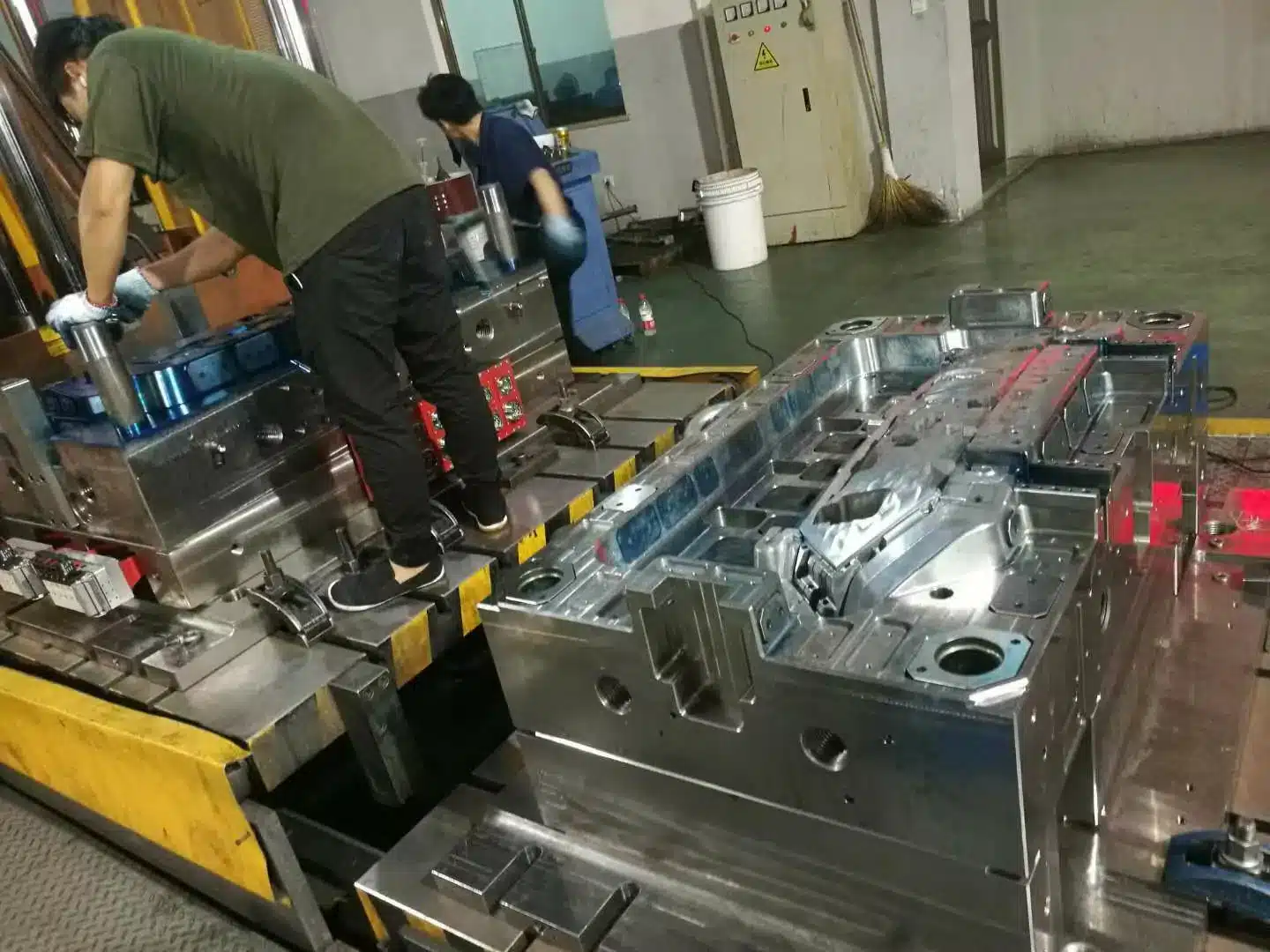

How to Reduce Total Part Cost
Without Compromising Quality
A comprehensive, multi-disciplinary framework for design engineers, procurement managers, and operations leaders — covering DFM, material strategy, supplier intelligence, value engineering, and process optimization.
Introduction: The Cost-Quality Paradox — And Why It’s a Myth
Why the best cost reduction never compromises quality — it eliminates waste
There is a deeply ingrained assumption in manufacturing and product development: that cost and quality exist on opposite ends of a fixed spectrum — that reducing one inevitably sacrifices the other. This guide exists to permanently dismantle that assumption.
The reality, understood by world-class manufacturers, is far more nuanced. The majority of unnecessary part cost is embedded in decisions made long before a single component is ever produced — long before the injection molding production process begins. It lives inside over-specified tolerances, inefficient geometries, misaligned supplier relationships, redundant quality checks, and untested material assumptions. None of these cost drivers have anything to do with quality. They are, in fact, the enemies of both cost efficiency and quality simultaneously.
“The best cost reduction is the cost that was never incurred in the first place. Design decisions made in the first 20% of a product’s development timeline determine 80% of its lifetime manufacturing cost.” — Principle of Proactive Cost Engineering
This guide gives you a complete, actionable, multi-disciplinary framework to identify, analyze, and systematically eliminate cost from your parts — while simultaneously protecting, and in many cases improving, quality outcomes. Whether you’re working with a local manufacturer or sourcing injection molding from China, the principles apply universally.
Who This Guide Is For
| Role | What You Will Gain | Key Sections |
|---|---|---|
| Design & Product Engineers | DFM strategies, tolerance optimization, geometry simplification | Sections 2, 3, 6 |
| Procurement & Sourcing Managers | Should-cost modeling, supplier negotiation frameworks | Sections 4, 7 |
| Operations & Manufacturing Leaders | Process waste elimination, cycle time reduction | Sections 5, 8 |
| Business Owners & Product Managers | Total cost visibility, strategic make-vs-buy decisions | Sections 1, 7, 10 |
| Quality Assurance Professionals | Leveraging QA as a cost reduction tool | Section 8 |
Understanding Total Part Cost Architecture
You cannot reduce what you cannot see
Before any cost reduction initiative can succeed, you must develop a precise understanding of where cost actually lives within a manufactured part. Most teams focus exclusively on unit price — the number on the purchase order. This is a critical mistake.
As detailed in deep analyses of injection mold cost components, Total Part Cost (TPC) is a composite of multiple cost layers, many of which are invisible to anyone looking only at the supplier’s invoice.
1.1 The Cost Iceberg Model
TOTAL PART COST — FULL ARCHITECTURE───────────────────────────────────────────────────────── VISIBLE COSTS (Typically ~40–60% of TPC)
├── Raw material cost
├── Direct labor cost
├── Tooling & fixturing cost (amortized)
└── Unit purchase price / quoted price HIDDEN COSTS (Typically ~40–60% of TPC)
├── Inspection & quality control overhead
├── Scrap & rework costs
├── Inventory carrying costs
├── Logistics & freight costs
├── Supplier management overhead
├── Engineering change order (ECO) costs
├── Warranty & field failure costs
└── Transaction & administrative costs KEY INSIGHT: Attack BOTH layers simultaneously.
In most organizations, procurement teams negotiate aggressively on the visible 40–60% while leaving the hidden 40–60% completely unmanaged. World-class cost reduction programs attack both layers simultaneously. Learn more about uncovering hidden costs in injection moulding that most buyers never see.
The Cost Iceberg in Action — Worked Example
A precision-machined aluminum bracket is quoted at $12.50 per unit. Your team negotiates it to $11.80. Success?
Negotiated Unit Price: $11.80
Inbound freight (air, expedited): + $ 1.40
Incoming inspection labor: + $ 0.85
Scrap rate 3% (amortized): + $ 0.36
Inventory carrying cost (45 days): + $ 0.55
Supplier management overhead: + $ 0.22
Engineering changes (avg annual): + $ 0.18
──────────────────────────────────────────ACTUAL Total Part Cost: $15.36The team saved $0.70/unit while true
cost remained $3.56 above the quoted price.
1.2 The Cost Driver Hierarchy
Not all cost drivers are equally addressable. Understanding their hierarchy allows you to prioritize effort where it yields the greatest return.
70% of a part’s manufacturing cost is locked in during the design phase, before any RFQ is ever sent to a supplier. This is why design-phase cost reduction yields the highest return on investment of any cost strategy. Review the key factors that determine injection mold cost before your design is frozen.
Design for Manufacturability (DFM)
The highest-leverage cost reduction tool available to any engineering team
Design for Manufacturability is the single most powerful cost reduction methodology available in manufactured goods. When applied rigorously and early, DFM consistently delivers 15–40% cost reductions while simultaneously improving part quality, reducing defect rates, and shortening lead times. According to a comprehensive analysis of DFM principles in injection molding, the key discipline is treating manufacturability not as a post-design review, but as a parallel design constraint from day one.
Every geometric decision — every rib, boss, hole, undercut, and surface finish specification — carries a manufacturing cost consequence. DFM is the discipline of making those consequences visible and deliberate before design is frozen. The 7 crucial questions for DFM evaluation are your starting checklist.
2.1 The Seven Principles of DFM for Injection Molded Parts
Minimize Part Count Through Consolidation
Every part in an assembly carries its own tooling cost, unit cost, inventory cost, quality inspection cost, and assembly labor cost. Part consolidation — combining two or three separate components into one injection-molded part — can eliminate all of those costs simultaneously. Target any assembly with five or more components for consolidation review. A well-executed injection molding design process should challenge every multi-part assembly on whether it could become one.
Design for Optimal Wall Thickness Uniformity
Inconsistent wall thickness is one of the most expensive design errors in injection molding. It causes sink marks, warpage, extended cycle times, increased scrap rates, and cooling system complexity — all adding cost without adding value. Target a uniform wall thickness of 2–4mm for most resins, with transitions no greater than a 3:1 ratio. Understand precisely how wall thickness affects mold cost before committing your cross-sections.
Eliminate Undercuts Wherever Possible
Every undercut in a part design requires either a side-action (slider), lifter, or collapsible core in the mold. These mechanisms add $3,000–$15,000 or more per action to tooling cost, increase mold complexity, slow cycle time, and create additional maintenance requirements. Before finalizing any external or internal feature that creates an undercut, explore redesign alternatives. A thorough examination of undercuts and draft angle strategies details the full range of design alternatives.
Apply Correct Draft Angles Consistently
Insufficient draft causes parts to stick in the mold, leading to ejection failures, surface damage, extended cycle times, and mold wear that increases maintenance frequency. The cost of drafting every vertical wall correctly during design is zero. The cost of retrofitting draft after the mold is cut — or tolerating high scrap rates — is substantial. Minimum 1° draft for smooth surfaces; 2–3° for textured surfaces; 5° or more for deep draws.
Design Rational, Cost-Effective Bosses and Ribs
Poorly designed bosses and ribs are a primary source of sink marks, weld lines, and structural failure in injection-molded parts — all of which drive up scrap and warranty costs. Follow rigorous guidelines: boss diameter should be 60% of wall thickness; rib thickness should be 50–60% of adjacent wall thickness; rib height maximum 3× adjacent wall thickness. These ratios are not arbitrary — they are derived from flow analysis and shrinkage mechanics.
Specify Gate Location Collaboratively With Toolmakers
Gate location determines fill pattern, weld line placement, surface appearance, material orientation, residual stress distribution, and cycle time. All of these have direct cost consequences. Many engineering teams treat gate location as a toolmaker decision — this is an error. Gate location should be a collaborative, analyzed decision made before tool design begins. Explore the principles behind strategic gate placement for injection molding to understand the full cost impact.
Use Simulation Before Steel
Mold flow simulation (using tools such as Autodesk Moldflow or Moldex3D) allows engineers to validate fill patterns, detect potential weld lines, predict warpage, and optimize gate and cooling system layout — all before any steel is cut. The cost of simulation is trivial compared to the cost of mold modifications after sampling. As confirmed by extensive analysis, simulation is essential for injection molding cost control at the design stage.
2.2 Tolerance Rationalization — The Hidden Cost Multiplier
Over-specification of tolerances is one of the most pervasive and costly practices in mechanical design. Every tolerance tighter than functionally necessary drives up cost through longer machining times, higher scrap rates, additional inspection requirements, and reduced supplier pool. According to data on injection molding tolerances and their impact on part quality, tightening a general tolerance from ±0.25mm to ±0.05mm can increase manufacturing cost by 200–400% for that feature.
| Tolerance Class | Typical Range | When to Apply | Relative Cost Impact |
|---|---|---|---|
| Commercial (Standard) | ±0.25 – ±0.50mm | Non-mating, non-critical surfaces | Baseline (1×) |
| Fine | ±0.10 – ±0.25mm | Mating surfaces, general assembly fits | 1.5–2.0× |
| Precision | ±0.025 – ±0.10mm | Critical functional interfaces only | 3–5× |
| Ultra-Precision | < ±0.025mm | Optical, medical, aerospace only | 10–20× |
For every tight tolerance on your drawing, demand a written functional justification. “We’ve always done it this way” is not a justification. The tolerance must be required by fit, function, or regulatory compliance. Relaxing just 30–40% of over-specified tolerances on a typical design typically yields 8–18% reduction in manufacturing cost without a single change to part function.
2.3 DFM Pre-Freeze Checklist
Before finalizing any injection-molded part design, verify the following:
- Wall thickness is uniform (max 3:1 transition ratio) and within resin-appropriate range
- All vertical faces carry at least 1° draft (2–3° for textured surfaces)
- All undercuts have been reviewed and either eliminated or justified by function
- Boss dimensions comply with 60% wall-thickness rule
- Rib thickness is ≤ 60% of adjacent wall; height ≤ 3× adjacent wall
- Gate location has been simulated and approved by tooling engineer
- All tolerances have written functional justifications
- Part count has been challenged — consolidation opportunities exhausted
- Mold flow simulation completed and warpage/weld-line report reviewed
- Secondary operations (painting, machining, assembly) minimized
- Material selection finalized and shrinkage rate confirmed with toolmaker
- DFM report submitted to and approved by DFM and FMEA review process
Material Strategy & Optimization
Material selection is a cost decision as much as a technical decision
Material cost typically represents 30–50% of total part cost in injection molding, making it one of the highest-leverage levers available. Yet in most organizations, material selection is treated as a purely technical decision — made by engineers early in development and never revisited. This is a significant missed opportunity.
Understanding the full implications of how plastic material types affect the final size and cost of injection-molded parts is essential for any cost-conscious design team.
3.1 The Material Cost Matrix
| Material | Typical Price Range | Key Cost Drivers | Cost-Saving Consideration |
|---|---|---|---|
| PP (Polypropylene) | $1.20–$2.00/kg | Commodity pricing, high volume | Baseline — lowest cost |
| ABS | $1.80–$3.50/kg | Styrene feedstock costs | Consider PP+TPE for non-structural uses |
| PC (Polycarbonate) | $3.50–$7.00/kg | Complex synthesis, transparency grades | PC/ABS blends reduce cost 20–35% |
| Nylon PA6/66 | $2.50–$5.50/kg | Drying requirements, moisture sensitivity | PP+GF for non-precision structural parts |
| POM (Acetal) | $3.00–$5.50/kg | Gear/bearing grade premiums | Evaluate nylon alternatives for wear parts |
| Glass-Filled Grades | +40–80% over base resin | Fiber cost, mold wear acceleration | Optimize fiber % — often 10% GF sufficient vs. 30% |
| PLA (Bioplastic) | $2.00–$4.50/kg | Agricultural feedstock, processing temp | PLA injection molding cost depends heavily on grade |
3.2 Six Material Cost Reduction Strategies
Material Substitution With Functional Equivalence Testing
The most direct material cost reduction is switching to a lower-cost resin that meets functional requirements. The key is rigorous functional equivalence testing — not assumption. For example, many ABS applications are safely met by PP+TPE blends at 20–40% lower material cost. Always validate: tensile strength, impact resistance, heat deflection temperature, chemical resistance, dimensional stability, and surface finish requirements.
Regrind & Recycle Rate Optimization
Many manufacturers allow 10–25% regrind content in non-critical parts without measurable property degradation — yet leave 100% virgin material specified “by default.” Work with your material and part engineers to establish maximum allowable regrind percentages, test validated. This can reduce effective material cost by 8–15% on eligible parts.
Resin Consolidation Across Part Families
Organizations that run 12–20 different resin grades across their product portfolio often find that 60–70% of parts could be molded with just 3–5 standardized resins. Each resin consolidation reduces supplier count, increases volume leverage for price negotiation, simplifies inventory management, and reduces color-change downtime. Map your full resin inventory and identify consolidation opportunities.
Optimize Glass Fiber Content
Specifying “30% glass-filled nylon” as a default for structural parts is extremely common — and often unnecessary. In many applications, 10% or 15% GF meets structural requirements at significantly lower material cost and reduces glass fiber surface issues and mold wear simultaneously. Always run structural FEA with reduced fiber content before elimination.
Wall Thickness Reduction for Material Volume Savings
Reducing average wall thickness from 3.5mm to 3.0mm reduces material volume — and therefore material cost — by approximately 15% while often improving cycle time. This must be coupled with structural validation, but for cosmetic or non-structural sections, systematic wall reduction is one of the cleanest cost reduction opportunities available.
Strategic Material Drying Optimization
Hygroscopic resins (nylon, PC, PET, ABS) require controlled drying before molding. Over-drying — common in cautious operations — wastes energy and can degrade material properties. Under-drying causes surface defects and scrap. Calibrated injection molding material drying protocols eliminate both waste streams simultaneously.
Supplier Strategy & Procurement Intelligence
Know what things should cost before you negotiate what they do cost
Most procurement teams negotiate with suppliers using only the information the supplier provides — starting from the supplier’s price and negotiating downward. This is the least effective procurement posture possible. The world-class alternative is to arrive at every supplier conversation knowing precisely what a part should cost, based on your own analysis — independent of any supplier’s quotation.
Whether you are choosing the right injection molding manufacturer in China or evaluating domestic suppliers, the same analytical discipline applies.
4.1 Should-Cost Modeling
Should-cost modeling is the process of independently calculating what a part or assembly should cost, based on a bottom-up analysis of material, process, overhead, and margin. It transforms procurement from a reactive negotiation into a proactive analytical discipline.
UNIT SHOULD COST = Material Cost + Direct Labor Cost + Machine/Process Cost + Overhead Allocation + Supplier Profit Margin
──────────────────────────────────────────────────────────MATERIAL COST
= Part Volume (cm³) × Material Density (g/cm³) × Material Price ($/kg) ÷ 1000 × Scrap/Runner Factor (typically 1.05–1.20)
──────────────────────────────────────────────────────────PROCESS/MACHINE COST
= (Clamping Force Required × Machine Hourly Rate) × Cycle Time (seconds) ÷ 3600 × (1 ÷ Cavity Count)
──────────────────────────────────────────────────────────TOOLING COST (amortized per unit)
= Total Tool Cost ÷ Expected Tool Life (shots)
──────────────────────────────────────────────────────────USE THIS AS YOUR OPENING NUMBER IN EVERY NEGOTIATION.
For practical calculation tools, use the smart injection mold cost calculator and the injection molding piece price calculator to validate your should-cost estimates across different production scenarios.
4.2 Sourcing Geography Decision Framework
Geography is one of the most significant levers in total part cost — but also one of the most misunderstood. A detailed comparison of injection mold manufacturing in China vs. the US vs. Japan reveals that geography decisions involve far more than tooling price.
| Factor | China Sourcing | Domestic / Nearshore | Decision Weight |
|---|---|---|---|
| Tooling Cost | 20–50% lower | Higher — skilled labor costs | Medium |
| Unit Production Cost | Often 15–35% lower | Higher but improving | Medium |
| Lead Time | 8–14 weeks + freight | 4–8 weeks | High |
| IP & IP Risk | Moderate — manageable with contracts | Low | High (some sectors) |
| Tariff Exposure | High — volatile in 2025–2026 | None | High |
| Quality | Tier-1 capable — supplier-dependent | Generally consistent | Medium |
| Communication | Time zone + language management required | Direct | Low–Medium |
US tariffs on Chinese-manufactured goods have escalated significantly in 2025–2026, fundamentally altering the cost calculus for China-sourced injection molding. Before committing to China-based tooling or production, model the full landed cost including current tariff rates, freight, and inventory carrying costs. Many parts that appeared 25% cheaper from China are now equivalent or more expensive on a total landed cost basis. Review the current 2026 guide to choosing China injection molding suppliers for the latest strategic framework.
4.3 Supplier Negotiation Strategies That Actually Work
Beyond geography and should-cost modeling, specific negotiation strategies consistently deliver cost reductions without damaging supplier relationships or quality outcomes. Understanding how to properly compare injection molding quotes is the foundation of effective supplier negotiation.
Multi-Supplier Competitive Quoting — Correctly Structured
Always obtain a minimum of three competitive quotes per tool or production order — but ensure all quotes respond to identical specifications. Misaligned RFQs (different tolerances assumed, different cavity counts quoted, different steel grades) make quotes incomparable. Learn how to structure RFQs for accurate supplier quotes and ensure your comparisons are valid.
Volume Commitment Leverage
Suppliers price risk into every quote. Reducing their risk — through longer-term volume commitments, blanket purchase orders, or guaranteed annual quantities — typically unlocks 5–15% price reductions independent of any other negotiation. The supplier’s cost model improves when their capacity utilization is more predictable.
Mold Steel Specification Negotiation
Tool steel grade is one of the most negotiable elements of injection mold cost. P20 pre-hardened steel costs significantly less than H13 hardened steel — and for medium-volume tools (<500K shots), P20 is frequently entirely appropriate. Understanding why mold prices vary is essential for targeted negotiation.
Payment Terms as a Cost Lever
For suppliers with working capital constraints — common in China’s manufacturing sector — offering faster payment terms (net 15 vs. net 60) frequently unlocks 2–5% price improvements. This is especially true for tooling payments where the supplier carries significant upfront material and machining costs.
Process Optimization & Waste Elimination
Every second of unnecessary cycle time is money leaving your business
Even with optimal design and supplier selection, significant cost reduction opportunities remain inside the manufacturing process itself. Cycle time, scrap rate, machine utilization, cooling efficiency, and setup time are all cost levers that can be addressed systematically through process engineering. Review a comprehensive injection molding cycle time calculator to benchmark your current performance before initiating optimization.
5.1 Cycle Time Reduction — The Highest-Frequency Cost Lever
In injection molding, cycle time directly determines machine utilization cost per part. Reducing cycle time by 10% reduces machine cost per part by 10% — at every volume level. The key phases of injection molding cycle time each offer specific optimization opportunities.
TYPICAL CYCLE TIME PHASES SHARE OPTIMIZATION LEVER
────────────────────────────────────────────────────────
Cooling time ~55–65% Conformal cooling channels Water temperature optimization Wall thickness reduction Beryllium-copper inserts
Fill / Injection time ~15–20% Gate size optimization Melt temperature tuning Injection speed profiling
Pack & Hold time ~10–15% Hold pressure optimization Pack time validation by process
Mold open / Eject / Close ~5–10% High-speed clamp settings Ejector timing optimization Robot integration
────────────────────────────────────────────────────────TARGET: 10–25% cycle time reduction
through cooling optimization alone.
5.2 The Eight Wastes — Applied to Injection Molding
Lean manufacturing identifies eight categories of waste. Each maps directly to cost in injection molding operations:
| Waste Type | Injection Molding Manifestation | Elimination Strategy |
|---|---|---|
| Defects | Sink marks, warpage, shorts, flash | SPC, FMEA, process validation |
| Overproduction | Running beyond forecast to “fill machine time” | Pull-based scheduling, JIT principles |
| Waiting | Machine downtime awaiting material, tooling, maintenance | Predictive maintenance, material kanban |
| Transportation | Excess part handling between operations | Cell layout optimization, automation |
| Inventory | Excess raw material, WIP, and finished goods | MOQ analysis, consignment inventory |
| Motion | Operator travel to retrieve tools, materials, documentation | 5S workplace organization, shadow boards |
| Extra Processing | Unnecessary secondary operations, over-finishing | Design review, specification rationalization |
| Underutilized Skills | Experienced process engineers on routine manual tasks | Automation and robotics integration |
5.3 Cooling System Optimization
Since cooling time typically represents 55–65% of total cycle time, cooling system design and optimization offers the highest single return of any process-level investment. Conformal cooling — channels that follow the contour of the mold cavity rather than running in straight lines — can reduce cooling time by 20–40% in complex geometries. A comprehensive review of injection mold cooling system design details the full range of options from conventional to conformal to beryllium-copper inserts.
Value Engineering vs. Value Analysis
Maximize the function-to-cost ratio of every part and assembly
Value Engineering (VE) is applied during the design phase — optimizing the function-to-cost ratio before production begins. Value Analysis (VA) is applied to parts already in production — identifying cost reduction opportunities in existing designs. Both methodologies ask the same fundamental question: “Can this function be delivered at lower cost without compromising performance?”
“Value is not low cost. Value is maximum function per unit of cost. A part that costs $1.00 and delivers 100 units of function is better value than a part that costs $0.50 and delivers 30 units of function.” — Lawrence D. Miles, originator of Value Analysis methodology
6.1 The VA/VE Process — Step by Step
Function Identification & FAST Diagram
List every function the part performs. Classify each as Primary (why the part exists) or Secondary (how it performs the primary function). FAST (Function Analysis System Technique) diagrams visualize the function hierarchy and often reveal secondary functions that exist only because of design choices — not because they are required.
Cost-Function Matrix
Allocate the current part cost across its identified functions. This reveals which functions absorb the most cost. Invariably, some secondary functions cost more than they contribute in value — these are the primary targets for value improvement efforts.
Idea Generation (Creative Phase)
With functions clearly defined, generate alternatives for delivering each function. Constraints: must meet the functional requirement, must be producible. Remove the constraint of “how we do it today” entirely. Cross-functional teams — including toolmakers, material suppliers, and assemblers — consistently generate higher-value alternatives than design teams working alone.
Evaluation, Prototyping & Validation
Promising alternatives move to prototype and test. For injection-molded parts, early-stage evaluation can leverage 3D printing, CNC machining, or vacuum casting for rapid functional prototypes before committing to tooling. Only validated alternatives move forward.
Implementation & Tracking
Approved VE/VA changes are implemented through formal ECO processes and results tracked against baseline cost. Successful programs measure and report cost savings quarterly, creating continuous organizational motivation for ongoing value improvement.
Advanced Cost Reduction Strategies
Beyond the basics — strategies that separate best-in-class from average performers
7.1 Multi-Cavity Tooling Strategy
For high-volume parts, the shift from single-cavity to multi-cavity tooling is one of the most powerful unit cost reduction levers available. A 4-cavity tool producing the same parts at the same cycle time delivers 4× the output — reducing machine cost per part by approximately 75%. The full analysis of 2-plate, 3-plate, and hot runner mold configurations details how cavity count and runner system selection interact with total cost.
| Cavity Count | Typical Tooling Cost | Unit Cost at 500K shots | Break-Even vs. 1-Cavity |
|---|---|---|---|
| 1-Cavity | Baseline ($15,000) | Baseline ($0.85) | — |
| 2-Cavity | 1.5× ($22,500) | ~52% of baseline ($0.44) | ~85,000 parts |
| 4-Cavity | 2.2× ($33,000) | ~28% of baseline ($0.24) | ~120,000 parts |
| 8-Cavity | 3.5× ($52,500) | ~16% of baseline ($0.14) | ~175,000 parts |
7.2 Hot Runner vs. Cold Runner Economics
Hot runner systems eliminate the runner scrap inherent in cold runner molds. For high-volume production with expensive resins, the elimination of runner scrap alone frequently justifies the $5,000–$25,000 premium for a hot runner system over a cold runner in just a few production cycles. The complete comparison of hot runner system design and economics provides a full break-even analysis framework.
7.3 Family Mold Strategy
A family mold consolidates multiple related parts — typically parts of the same assembly — into a single tool, sharing base, runner, and machine time costs. When parts are similar in size and shot weight, the tooling cost savings are significant. Understanding what a family mould is and when to use one can reduce per-part tooling amortization by 40–60% for multi-component assemblies.
7.4 Insert Molding & Overmolding as Cost Reduction Tools
Counter-intuitively, adding operations through insert molding or overmolding can reduce total assembly cost by eliminating downstream fastening, adhesive, or welding operations. When a metal insert is molded directly into a plastic part, the resulting assembly is stronger, requires no secondary fastening operation, has lower labor cost, and often has better quality consistency — all at a net lower total cost.
7.5 AI & Automation Integration
The integration of AI-driven process monitoring and smart injection molding automation is delivering measurable cost reductions across early adopters. Specific results include 15–25% defect rate reductions, 8–15% cycle time improvements through real-time parameter optimization, 30–40% reductions in unplanned downtime through predictive maintenance, and significant labor cost reductions through robotic part handling. Machine learning applications in injection molding are now accessible to mid-market manufacturers, not just large OEMs.
Quality Assurance as a Cost Lever
Prevention is always cheaper than detection — detection is always cheaper than failure
Quality is not the enemy of cost reduction. In fact, the highest-cost manufacturing operations are almost always the lowest-quality ones — drowning in scrap, rework, warranty claims, and customer returns. The relationship between quality investment and total cost is counterintuitive to many managers: investing more in quality upstream consistently reduces total cost downstream.
Understanding how quality control in injection molding functions as an integrated cost management system — rather than an inspection overhead — is the critical mindset shift this section delivers.
“The cost of poor quality is not visible on the income statement. It is hidden inside scrap accounts, rework labor lines, expediting premiums, warranty reserves, and lost customer lifetime value — typically 5–20% of total revenue in manufacturing organizations.” — Philip Crosby, Quality Is Free (1979) — principle validated repeatedly in modern manufacturing research
8.1 The Cost of Quality Framework — Four Categories
| Category | Description | Injection Molding Examples | Strategy |
|---|---|---|---|
| Prevention Costs | Investment to prevent defects from occurring | Mold flow simulation, DFM review, FMEA, SPC setup, operator training | Maximize Investment Here |
| Appraisal Costs | Cost of detecting defects before shipment | CMM inspection, visual inspection, incoming QC, first article reports | Optimize — Don’t Minimize |
| Internal Failure Costs | Cost of defects found before leaving the facility | Scrap parts, rework labor, mold repair due to flashing, downtime | Target for Elimination |
| External Failure Costs | Cost of defects that reach the customer | Field returns, warranty claims, customer sorting, recalls, relationship damage | Zero Tolerance — Most Expensive |
Preventing a defect costs $1. Detecting and correcting it internally costs $10. A defect that reaches the customer costs $100 or more — in returns, warranty, expediting, relationship repair, and lost future business. This ratio has been validated across hundreds of manufacturing sectors. The implication for injection molding is clear: every dollar spent on FMEA and defect prevention returns $10–$100 in downstream cost avoidance.
8.2 Statistical Process Control (SPC) for Cost Reduction
SPC uses statistical methods to monitor production processes in real time, detecting drift before it produces defective parts. The cost benefit is direct: catching a process drift early — when perhaps 20 parts are affected — versus discovering it during receiving inspection when 10,000 parts are shipped is a cost difference of multiple orders of magnitude.
For injection molding, key SPC control variables include melt temperature, injection pressure, hold pressure, cycle time, and part weight. Part weight control is particularly valuable — it is a non-destructive, rapid measurement that correlates strongly with dimensional consistency and material properties. Review process control and SPC for injection molding for a complete implementation guide.
8.3 First Article Inspection (FAI) as a Cost Gate
A rigorous First Article Inspection (FAI) process for every new tool and every major tool modification is one of the most cost-effective quality investments available. FAI catches design-tooling discrepancies, dimensional deviations, material non-conformances, and process instability before mass production begins — when correction cost is at its lowest point. Organizations that skip or rush FAI to hit a launch deadline consistently pay 10–50× more in downstream corrections.
8.4 Supplier Quality Agreements — Transferring Accountability
A well-structured supplier quality agreement (SQA) — sometimes called a Quality Assurance Agreement — formally defines quality responsibilities, inspection methods, acceptable quality levels (AQLs), defect response protocols, and cost recovery mechanisms for supplier-caused quality failures. Organizations with strong SQAs in place report 30–50% reductions in incoming quality failure rates compared to those managing quality through purchase order terms alone. Learn how leading companies ensure quality from Chinese manufacturers through systematic agreement and audit structures.
8.5 Mold Maintenance as Cost Insurance
Injection mold maintenance — often treated as overhead rather than investment — is one of the highest-return cost management activities in any molding operation. A mold that is properly maintained extends its productive life, maintains dimensional consistency, avoids flash and surface defects, and minimizes unplanned downtime. Review comprehensive injection mold maintenance protocols for life extension and their direct impact on per-part cost over the tool’s lifetime.
Troubleshooting & Frequently Asked Questions
Direct answers to the most common cost reduction challenges
The following questions are drawn from the most common challenges faced by engineering and procurement teams implementing cost reduction programs for injection-molded parts. Each answer includes specific, actionable guidance and links to deeper resources.
The most effective approach is to quantify the cost of past design decisions using historical data from your own organization. Pull three to five parts that underwent engineering changes after tooling was cut — calculate the total cost of the mold modifications, delay days (converted to supply chain impact), and quality escapes. Present this as “the cost of not doing DFM review.” The number is almost always shocking — typically $15,000–$80,000 per product across a typical product’s first year. Compare it to the 4–8 hours of DFM review time that would have caught the issues.
For structured implementation guidance, review the comprehensive 7 crucial DFM evaluation questions that provide a defensible, repeatable methodology any team can adopt.
When a supplier claims minimum cost, build your own should-cost model independently using the formula in Section 4.1. Use the injection mold cost calculator and piece price calculator to generate independent cost estimates. If your should-cost is significantly below the current price, you have three options:
- Request a detailed cost breakdown from the supplier — material, labor, machine rate, overhead, margin — and compare line-by-line against your model
- Obtain competitive quotes from two to three alternative qualified suppliers using identical RFQ specifications
- Investigate design changes that reduce your part’s inherent cost — a supplier quoting at minimum cost for the current design may well be correct; the issue may be the design itself
Additionally, review why injection mold prices vary significantly between suppliers — often revealing legitimate cost differences based on steel grade, cavity count assumptions, and overhead allocation.
This is one of the most common material substitution failure modes. The root causes are almost always one of the following:
- Shrinkage rate difference: The new resin has a different volumetric shrinkage than the original. The mold was designed for the old shrinkage rate, so the new resin warps, produces short shots, or fails dimensional checks. The shrinkage in injection molding guide explains how to anticipate and manage this.
- Processing window differences: The new resin has a different melt temperature, injection speed requirement, or hold pressure profile. The process was not re-validated after the switch.
- Moisture sensitivity: The new resin is more hygroscopic and was not dried sufficiently, causing splay, bubbles, or degradation. Review material drying protocols.
- Mold material incompatibility: The new resin has different chemical or abrasive properties that interact differently with the mold surface — particularly relevant with glass-filled grades.
The fix: always re-validate the full molding process — including a new first article inspection — after any resin substitution. Material substitution without process re-validation is incomplete substitution.
Tooling cost reduction without longevity compromise requires matching mold specification precisely to production volume requirements — neither over-engineering nor under-engineering the tool. Key levers:
- Right-size the steel grade: P20 pre-hardened steel for tools expected to run fewer than 500K shots; H13 hardened steel only for high-volume tools above 500K shots. Using H13 “by default” on a 100K-shot tool wastes $3,000–$8,000 in unnecessary tooling cost.
- Simplify mold design through DFM: Every undercut removed, every side-action eliminated, every parting line simplified reduces tooling cost while improving mold reliability.
- Evaluate prototype/bridge tooling for pre-production: rapid tooling options including aluminum soft tooling can validate design at 30–60% of production tool cost before committing to production steel.
- Standardize on common mold base sizes: Standard mold bases (DME, Hasco, LKM standard sizes) are less expensive than custom bases and have better spare parts availability for maintenance.
- Specify cavity material separately from base material: Using P20 for the base and H13 only for cavity inserts is a cost-effective compromise for medium-volume tools.
Review the comprehensive guide to mould steel selection and cost implications for a complete decision matrix.
Yes — cost and quality can and do improve simultaneously when cost reduction targets the right drivers. The confusion arises because cost-quality tradeoffs are real in one specific scenario: when you reduce the specification of a part that is already designed to minimum quality standards. In that specific scenario, cost reduction does compromise quality.
But in the vast majority of cost reduction scenarios, the targets are waste — not specification:
- Eliminating scrap reduces cost AND improves quality yield simultaneously
- Designing out undercuts reduces tooling cost AND improves mold reliability
- Optimizing wall thickness reduces material cost AND reduces sink mark probability
- Implementing SPC reduces rework cost AND improves dimensional consistency
- Better mold maintenance reduces unplanned downtime cost AND extends tool life
- Using simulation reduces mold modification cost AND improves first-shot success rate
Every one of these strategies reduces cost and improves quality at the same time — because they eliminate waste rather than reduce specification. This is the core philosophy of the entire guide, supported by real-world data on reducing sourcing costs while increasing quality simultaneously.
For parts already in production — where design is frozen and tooling is committed — realistic cost reduction targets by lever are:
| Strategy | Realistic Savings Range | Timeframe |
|---|---|---|
| Process optimization (cycle time, SPC) | 5–15% | 1–3 months |
| Material substitution (validated) | 10–30% | 3–6 months |
| Supplier renegotiation (with should-cost) | 5–15% | 1–3 months |
| Tooling modification (cavity addition) | 20–50% per unit | 6–12 months |
| Scrap & rework reduction | 3–10% | 2–6 months |
| Logistics & inventory optimization | 3–8% | 1–4 months |
| Combined program (all applicable) | 15–40% | 6–18 months |
For parts in early design — before tooling is committed — total cost reduction potential is 30–60% using the full DFM, material, and tooling strategy framework in this guide. The earlier you act, the greater the available return.
The hot runner break-even calculation compares the additional tooling investment against the per-shot material savings from eliminating runner scrap:
Break-Even Volume (shots) = Additional Tool Cost (hot runner premium) ───────────────────────────────────────────────────── Runner Weight (g) × Material Price ($/g) × Regrind Factor EXAMPLE:
Hot runner premium: $12,000
Runner weight per shot: 45g
Material price: $0.0025/g (ABS at $2.50/kg)
Regrind factor (no regrind): 1.0 Break-Even = $12,000 / (45g × $0.0025/g × 1.0) = $12,000 / $0.1125 = ~106,667 shotsAbove ~107K shots, the hot runner tool
delivers lower total cost than cold runner.
For expensive engineering resins (PC, nylon, POM), break-even often occurs in fewer than 50,000 shots — making hot runner investment highly attractive even for medium-volume production. Review the full hot runner economics guide for a complete analysis including maintenance costs and color-change implications.
The eight most costly cost-reduction mistakes — each of which ends up increasing total cost:
- Focusing only on unit price while ignoring hidden costs (the Cost Iceberg — Section 1)
- Switching suppliers purely on price without qualifying capability, quality systems, and capacity
- Reducing material specification without functional testing — especially field performance and long-term durability
- Skipping or rushing First Article Inspection to meet launch dates — this is the single most common cause of expensive post-launch corrections
- Cutting tooling cost by using wrong steel grade for the intended production volume — leading to premature tool failure and unplanned replacement cost
- Treating DFM as a post-design review rather than a parallel design discipline — catching problems after design freeze costs 10–100× more to correct
- Accepting a single supplier’s “minimum cost” claim without independent should-cost validation and competitive quoting — see how to properly compare injection molding quotes
- Eliminating quality investment to save cost — specifically reducing inspection, SPC, or maintenance to cut overhead — which consistently produces 5–20× the “saved” amount in downstream failure costs
Next Steps, Metrics & Complete Resource Library
Your 90-day action plan, KPI framework, and curated resource library
Knowledge without action produces zero cost reduction. This section converts the strategic and tactical frameworks from Sections 1–9 into a concrete 90-day action plan, a set of measurable KPIs, and a complete resource library organized by role and topic.
10.1 The 90-Day Part Cost Reduction Action Plan
- Complete Total Part Cost analysis for your top 10 parts by spend using the Cost Iceberg framework (Section 1)
- Run the injection mold cost calculator for all active tooling — build your should-cost baseline
- Audit all current material specifications — identify over-specified grades
- Pull last 12 months of scrap, rework, and warranty data by part number
- Map all active suppliers — rate by quality, cost, responsiveness, and capacity
- Identify your top 3 cost reduction opportunities by potential dollar impact
- Conduct DFM reviews on all parts in active design — use the Section 2.3 checklist
- Complete tolerance audit on all drawings — challenge every tight tolerance without written functional justification
- Run mold flow simulation on all designs not yet validated by simulation
- Initiate material substitution evaluation for top 5 over-specified material grades
- Benchmark current cycle times against theoretical optimums — identify top 3 reduction opportunities
- Issue updated RFQs to 3+ suppliers for your highest-spend parts using standardized specifications
- Calculate hot-runner and multi-cavity break-even volumes for all active cold-runner single-cavity tools
- Implement process optimizations identified in Phase 2 — track cycle time and scrap rate changes
- Conduct supplier negotiations using should-cost model as opening position
- Initiate validated material substitutions — begin FAI process for new resin approvals
- Establish SPC control charts for all critical process parameters on high-volume parts
- Deploy Supplier Quality Agreements with top 5 suppliers by spend
- Initiate multi-cavity or hot-runner tooling projects where break-even analysis supports investment
- Launch Value Analysis workshop for top 5 parts by total cost — cross-functional teams
- Calculate and report total cost savings achieved vs. Day 1 baseline — by lever and by part
- Establish quarterly Cost of Quality tracking — prevention, appraisal, internal failure, external failure
- Document all successful strategies as standard operating procedures
- Brief leadership on results and gain investment approval for Phase 2 tooling and automation projects
- Set Year 1 and Year 2 targets for ongoing cost reduction program
- Schedule annual DFM review, tolerance audit, and supplier scorecard cycle
10.2 Cost Reduction KPI Dashboard
| KPI | Formula / Definition | Target (Year 1) | Review Frequency |
|---|---|---|---|
| Total Part Cost (TPC) | Sum of all visible + hidden cost elements per unit | 10–20% reduction vs. baseline | Quarterly |
| Scrap Rate | Defective units / Total units produced × 100% | < 1% (world-class) | Monthly |
| Cycle Time Efficiency | Theoretical min cycle / Actual cycle × 100% | > 85% efficiency | Monthly |
| Supplier Price vs. Should-Cost | Actual price / Should-cost model × 100% | < 110% (within 10% of should-cost) | Per RFQ |
| Cost of Quality (COQ) | Total quality-related costs / Total production cost | < 5% of total production cost | Quarterly |
| DFM Compliance Rate | Parts with DFM review completed / Total new parts released | 100% for all new releases | Monthly |
| Material Cost per Part | Total material spend / Units produced | 5–15% reduction via substitution/optimization | Monthly |
| Tooling Cost per Unit (amortized) | Total tool cost / Lifetime production volume | Reduce via cavity optimization | Annually (per tool) |
| Supplier Defect Rate (DPPM) | Defective parts per million from external suppliers | < 500 DPPM (world-class) | Monthly |
| Procurement Savings vs. Target | Negotiated savings achieved / Annual savings target | > 90% of target achieved | Quarterly |
10.3 Complete Resource Library — Organized by Role & Topic
🔧 For Design Engineers
💼 For Procurement & Sourcing Teams
🏭 For Operations & Manufacturing Leaders
📚 Authority Outbound References — Complete Library
Ready to Start Reducing Your Part Costs?
Get a free DFM analysis, should-cost model, and injection molding quotation from our engineering team. We work with companies across North America, Europe, and Asia to optimize part cost without compromising quality.
Request Free Cost Analysis → Use the Free Cost Calculator
