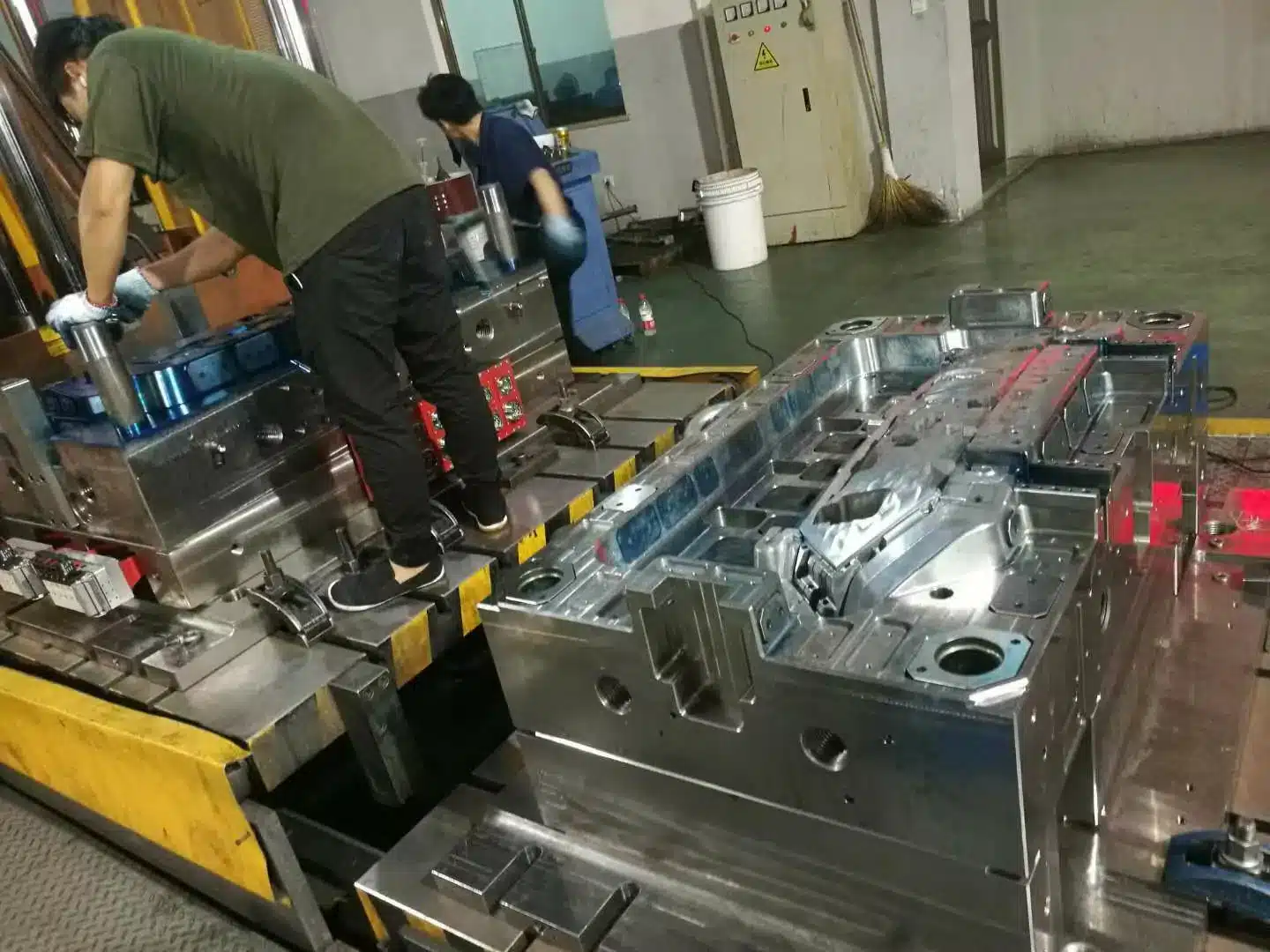

You’ve found a supplier in China, they’ve sent you a quote — and you’re not sure if it’s reasonable. Or maybe you’re budgeting a new plastic part from scratch and want to know what to expect before you even send an RFQ.
This guide breaks down injection molding costs in China from a buyer’s perspective: what drives the price, what real numbers look like, how China compares to the US, and what hidden costs tend to catch first-time buyers off guard.
1. What Drives Injection Molding Cost in China
Whether you’re sourcing from Shenzhen, Dongguan, or Ningbo, the same core cost drivers apply. Understanding these upfront will help you evaluate quotes accurately and negotiate effectively.
Injection Molding Cost Calculator
Estimate mold tooling cost and per-unit price for ABS, PC, PP, Nylon, POM plastic injection molded parts
INJECTION MOLDING COST CALCULATOR
Estimate mold tooling + unit price · Final quotation requires DFM review
1.1 Mold Size and Complexity
The mold is the biggest upfront cost in any injection molding project. Size and complexity are the two biggest variables. Larger parts require more steel and longer machining time. Complex geometry — undercuts, side actions, threaded features, thin walls — requires additional mold components and engineering hours.
A simple single-cavity mold for a flat bracket might take 3–5 weeks and $3,000 in tooling. The same part with a snap-fit feature, a side-action slider, and a textured surface finish could cost 2–3x more, even at the same factory.
1.2 Mold Steel Selection
The grade of steel used in a mold directly affects both its upfront cost and its lifespan. Chinese factories typically offer several tiers:
| Steel Grade | Typical Application | Expected Mold Life | Cost Impact |
|---|---|---|---|
| P20 (718H) | Low-to-medium volume, general plastics | 300,000–500,000 shots | Baseline |
| H13 (SKD61) | High volume, abrasive materials (glass-filled nylon) | 800,000–1,000,000+ shots | +15–30% |
| S136 / 2316 | Corrosive materials (PVC, PC), optical parts | 500,000–1,000,000 shots | +20–40% |
| NAK80 | High-polish cosmetic surfaces | 300,000–500,000 shots | +10–25% |
A common issue: suppliers quoting with lower-grade steel to appear cheaper upfront. Always specify steel grade in your RFQ — not just the mold price.
1.3 Number of Cavities
A single-cavity mold produces one part per cycle. Multi-cavity molds produce multiple identical parts per cycle, which dramatically reduces per-unit cost at volume — but increases upfront tooling cost.
| Mold Type | Typical Tooling Cost | Cycle Output | Per-Unit Cost (at 1M parts) |
|---|---|---|---|
| 1-cavity | $3,000–$8,000 | 1 part/cycle | Higher |
| 4-cavity | $8,000–$18,000 | 4 parts/cycle | ~60% lower vs 1-cavity |
| 8-cavity | $15,000–$35,000 | 8 parts/cycle | ~75% lower vs 1-cavity |
| 16-cavity+ | $30,000–$80,000+ | 16+ parts/cycle | Lowest per-unit cost |
For volumes under 50,000 units/year, single-cavity is often the right call. The break-even point for multi-cavity tooling depends on part price, volume, and how long you plan to run the mold.
1.4 Material Selection
Material cost is billed per kilogram consumed, including runner waste. Here are current (2025) approximate prices in China for common resins:
| Material | Common Use Cases | Price (CNY/kg) | Price (USD/kg) |
|---|---|---|---|
| PP | Packaging, automotive, consumer goods | ¥8–12 | $1.10–$1.65 |
| ABS | Electronics housings, consumer products | ¥14–20 | $1.90–$2.75 |
| PC | Lenses, medical, safety equipment | ¥22–35 | $3.00–$4.80 |
| Nylon PA66 | Mechanical parts, under-hood automotive | ¥20–30 | $2.75–$4.10 |
| POM (Acetal) | Gears, precision parts | ¥18–26 | $2.45–$3.55 |
| TPE / TPU | Overmolding, flexible parts | ¥20–40 | $2.75–$5.50 |
Engineering plastics (PC, nylon, POM) cost significantly more than commodity resins. If your design can be adapted to a lower-cost material without sacrificing performance, this is often the highest-leverage cost reduction available.
1.5 Production Volume
Volume affects cost in two ways. First, tooling cost is fixed — it gets spread across more units as volume grows. Second, higher volumes unlock bulk material discounts and allow factories to optimize cycle times.
| Annual Volume | Tooling Cost Per Unit (est.) | Best Mold Strategy |
|---|---|---|
| < 1,000 units | $3.00–$15.00+ | Soft tooling or prototype mold |
| 1,000–10,000 units | $0.50–$3.00 | Single-cavity, P20 steel |
| 10,000–100,000 units | $0.05–$0.50 | Single or 2-cavity, H13 steel |
| 100,000+ units | < $0.05 | Multi-cavity, hardened steel |
1.6 Surface Finish and Tolerances
Cosmetic surface finishes (mirror polish, texture, SPI standards) add machining time and cost. Similarly, tight dimensional tolerances require more careful machining, longer inspection time, and higher rejection rates — all of which the factory prices into the quote. If your part doesn’t need a cosmetic finish or sub-0.05mm tolerances, specify standard finish and commercial tolerances in your drawings to avoid paying for precision you don’t need.
2. China vs US Injection Molding Cost Comparison
For most buyers, the question isn’t just “how much does injection molding cost” — it’s “how much does it cost compared to sourcing domestically.” Here’s a realistic side-by-side breakdown.
| Cost Category | China | United States | Vietnam / SE Asia |
|---|---|---|---|
| Simple mold (1-cavity) | $1,500–$5,000 | $8,000–$20,000 | $2,000–$7,000 |
| Medium mold (1-cavity) | $5,000–$15,000 | $20,000–$50,000 | $6,000–$18,000 |
| Complex mold (multi-cavity) | $15,000–$50,000 | $50,000–$150,000+ | $18,000–$60,000 |
| Labor rate (molding) | $5–$15/hr | $50–$100/hr | $8–$20/hr |
| Tooling lead time | 4–8 weeks | 8–16 weeks | 6–12 weeks |
| Typical savings vs US | 40–70% lower | Baseline | 20–40% lower vs US |
Why is China so much cheaper? It’s not just labor costs. China’s mold-making industry has built up 30+ years of specialized infrastructure: concentrated supplier clusters in Guangdong and Zhejiang, standardized mold component supply chains, and a deep pool of experienced tooling engineers. Vietnam and Southeast Asia are closing the gap — but still rely heavily on Chinese mold components and Chinese engineers for complex work.
When China Is NOT the Right Choice
Despite the cost advantages, there are scenarios where domestic or near-shore manufacturing makes more financial sense:
- Very low volume (< 500 units) where tooling amortization doesn’t justify freight and minimum order requirements
- Parts requiring extremely tight tolerances (< ±0.02mm) that demand constant on-site quality oversight
- Time-critical projects where a 4–8 week tooling lead time plus 3–6 week shipping adds up to an unacceptable delay
- Regulatory environments requiring domestic manufacturing (defense, some FDA-regulated medical devices)
- Parts with complex IP where tooling ownership and data security are paramount concerns
3. Full Cost Breakdown: What You’re Actually Paying For
When you receive a quote from a Chinese supplier, it typically covers tooling and per-unit part price. But your total landed cost includes several additional categories that buyers often underestimate.
3.1 Tooling Cost
This is the one-time cost to design and build the mold. It covers: mold design and engineering, steel purchase and machining, EDM and surface finishing, mold trials (T0, T1, T2), and any initial adjustments. In China, tooling cost is often quoted separately from part price. Always confirm what’s included — some suppliers quote T1 trial cost separately.
3.2 Per-Unit Part Price
This covers the actual production cost per piece: machine time, material (plastic resin), labor, packaging, and the factory’s margin. For reference:
- Small, simple parts (< 50g, single material): $0.10–$0.50 per unit at 10,000+ volume
- Medium parts (50–200g, standard complexity): $0.50–$2.00 per unit
- Large or complex parts (> 200g, or specialty materials): $2.00–$10.00+ per unit
3.3 Freight and Import Duties
This is frequently underestimated. Typical costs for freight from China to the US:
| Shipment Type | Transit Time | Typical Cost (per kg) |
|---|---|---|
| Sea freight (LCL) | 25–35 days | $1.50–$4.00/kg (incl. local charges) |
| Sea freight (FCL) | 25–35 days | $0.50–$1.50/kg at full container |
| Air freight | 3–7 days | $6–$15/kg |
| Express courier (DHL/FedEx) | 3–5 days | $10–$25/kg |
On top of freight, US import duties on plastic parts typically range from 3.5% to 6.5% of declared customs value. Since 2018, Section 301 tariffs have added an additional 7.5% to 25% on many Chinese plastic goods. Always verify the current HTS code and tariff rate for your specific part before budgeting.
3.4 Mold Trials and Engineering Changes
Most molds require at least two rounds of trials before hitting production specs:
- T0 (initial trial): First shots off the new mold to check basic form and function
- T1 (first tuning): Dimensional corrections, gate adjustments, surface finish tweaks
- T2 and beyond: Additional iterations if T1 results require significant changes
In China, T0 and T1 are typically included in the tooling price. T2+ trials caused by design changes from the buyer’s side are often billed separately at $200–$800 per trial run. Engineering changes to the mold (ECOs) are priced case-by-case — budget $500–$3,000 per significant change.
3.5 Quality Inspection
If you require third-party inspection (recommended for first-time orders or high-value parts), factor in:
- Pre-shipment inspection (PSI): $200–$400 per inspection day, typically 1–2 days per shipment
- In-line or full-time QC presence: $800–$2,000/month for a dedicated QC agent in China
- First Article Inspection Report (FAIR): Often included by reputable suppliers, but always verify
→ The Real Price Tag: Uncovering Hidden Costs in Chinese Injection Moulding — full breakdown of every hidden cost category
4. Hidden Costs Buyers Often Miss
The gap between the initial quote and your actual total landed cost is where most buyers get surprised. Here are the most common hidden cost categories:
Mold Steel Downgrade
A supplier may specify P20 steel in their proposal but use a lower-grade domestic equivalent in production. The mold looks identical — until it starts wearing out at 100,000 shots instead of 500,000. Always specify the steel grade in your purchase order and request a material certificate.
Undisclosed Family Mold Sharing
Some factories use family molds — where your part shares a mold base with another customer’s parts — to reduce their costs. This can compromise your IP and your ability to make changes independently. Ensure your contract specifies a dedicated mold with your ownership clause.
Sample and Packaging Fees
Pre-production samples, color-matched samples, and custom packaging are often quoted separately. A buyer expecting “free samples” can easily face $200–$800 in sample-related charges before mass production begins.
Minimum Order Surcharges
Many Chinese molders require MOQs of 500–5,000 units per order. If your demand is lower, you may pay a small-order surcharge. MOQ requirements are often negotiable for repeat customers or buyers who can commit to annual volume.
Payment Term Risk
Standard payment terms in China are 30–50% deposit before production, balance before shipment. This means you’re funding production before you’ve inspected the goods. A Letter of Credit or escrow arrangement adds 1–3% in banking fees but significantly reduces financial risk on large orders.
→ Full guide: Hidden Costs in Chinese Injection Moulding
5. How to Reduce Injection Molding Costs Without Cutting Corners
5.1 DFM Review Before Tooling
The most powerful cost lever is available before you spend a single dollar on tooling. A thorough Design for Manufacturability (DFM) review with your supplier can identify: wall thickness issues that cause sink marks and extend cycle time, undercuts that could be eliminated with minor geometry changes, gate locations that can be optimized, and insufficient draft angles. Most reputable Chinese suppliers will provide a free DFM report before tooling begins. Insist on receiving one in writing.
5.2 Choose the Right Material
Engineering plastics (PC, nylon, POM) cost 2–3x more than commodity resins (PP, ABS). If a design can tolerate a material change without compromising function, the savings can be substantial. Work with your supplier to evaluate material alternatives early — material changes after tooling is built can require expensive mold modifications.
5.3 Consolidate Parts Where Possible
If your assembly contains multiple plastic components, evaluate whether two or three parts can be combined into one. Each additional part requires its own mold, its own assembly step, and its own quality inspection pass. Part consolidation is one of the highest-ROI design decisions available — especially for buyers who plan to manufacture at volume.
5.4 Right-Size Your Cavitation
A 4-cavity mold costs 2–3x more than a single-cavity mold but only reduces per-unit cost by ~70%. At volumes under 20,000–30,000 units per year, the payback period for the extra tooling investment often exceeds two years. Do the math for your specific volume before committing to multi-cavity.
5.5 Consider Tooling Amortization Programs
Some Chinese suppliers offer a “free tooling” model where the tooling cost is spread into a slightly higher part price over a committed volume. This improves cash flow for startups and small buyers — but read the terms carefully, as the total cost is often higher than paying for the mold outright. It can still be the right trade-off depending on your capital situation.
6. How to Get an Accurate Quote from a China Supplier
An imprecise RFQ produces an imprecise quote. The more information you provide upfront, the more reliable the number you receive.
| RFQ Element | Why It Matters | What to Provide |
|---|---|---|
| 3D CAD file | Required for accurate tooling quote | STEP or IGES format preferred |
| 2D drawing with tolerances | Defines critical dimensions | PDF with GD&T annotations |
| Material specification | Affects material cost and mold requirements | Exact resin grade, or performance requirements |
| Annual volume estimate | Determines cavitation and tooling investment | Realistic 12-month forecast |
| Surface finish | Cosmetic requirements affect machining time | SPI standard reference or texture sample |
| Packaging requirements | Often omitted, adds cost if non-standard | Inner/outer carton specs, labeling |
| Country of destination | Affects tariff and logistics planning | Final delivery destination |
| Target per-unit price | Helps supplier optimize design and cavitation | Optional but useful |
→ How to Get the Most Accurate Injection Molding Quote
→ Key Details Needed for an Accurate China Injection Molding Quote
7. Why Two Chinese Suppliers Quote Such Different Prices
It’s common to send the same drawing to three factories and get quotes ranging from $6,000 to $15,000 for the same mold. This isn’t always a red flag — it reflects genuine differences in assumptions, capabilities, and business models.
Legitimate reasons for price differences:
- Steel grade: P20 vs H13 vs S136 — a 20–40% cost difference for the same mold
- Mold life warranty: Some factories quote for 300,000 shots, others for 1,000,000 shots
- Cavity count assumption: If you didn’t specify, some factories may quote 1-cavity, others 2-cavity
- What’s included: T1 trial, sample parts, dimensional report — handled differently by every supplier
- Factory tier: An ISO-certified tier-1 factory in Dongguan costs more than a tier-3 shop in the same city
Red flags that indicate an underpriced quote:
- No questions asked before quoting — a legitimate factory will always need clarifications
- Delivery time significantly shorter than market norms (< 3 weeks for a medium mold)
- No specification of steel grade or mold life in the quote
- Request for 70%+ deposit before any work or DFM review begins
→ Why Injection Mold Price Is Higher (or Lower) Than Others — full analysis of quote variation
8. Real Cost Examples: What Buyers Actually Pay
Case Study 1: Consumer Electronics Housing (China Sourcing)
| Cost Element | Amount (USD) |
|---|---|
| Mold (1-cavity, ABS, P20 steel, 500K shot life) | $6,500 |
| T1 trial and adjustments | Included |
| Per-unit production cost (10,000 pcs) | $0.85/unit |
| Sea freight to US (10,000 pcs) | $450 total |
| Import duty (3.5% + 7.5% Section 301 tariff) | ~$1,500 total |
| Third-party pre-shipment inspection | $350 |
| Total first order (all-in) | ~$18,300 |
| Per-unit cost (tooling amortized over 50,000 lifetime units) | ~$0.98/unit all-in |
Case Study 2: Automotive Interior Component (China vs US)
| Cost Element | China | United States |
|---|---|---|
| Mold (4-cavity, PP, H13 steel) | $18,000 | $65,000 |
| Per-unit production cost (100,000/year) | $0.22/unit | $0.55/unit |
| Logistics and duties (China only) | $0.04/unit | N/A |
| Total per-unit cost (tooling amortized over 3 years) | $0.32/unit | $0.76/unit |
| Annual savings vs US (100,000 units) | $44,000/year | — |
| Breakeven vs US tooling cost | < 1.5 years | — |
9. Frequently Asked Questions
How much does injection molding cost in China?
A simple single-cavity mold from China typically costs $1,500–$8,000. Medium complexity molds run $8,000–$25,000. Complex or large multi-cavity molds can exceed $50,000. Per-unit production costs range from $0.10 to $2.00+ depending on part size, material, and volume. These figures are generally 40–70% lower than equivalent US tooling.
Why does injection molding have such a high upfront cost?
The upfront cost is almost entirely the mold — a precision-machined steel tool custom-built for your specific part geometry. Once the mold exists, it can produce millions of identical parts, making the per-unit cost very low at volume. The mold is a capital investment, not a consumable. Amortized over a long production run, the upfront cost becomes negligible.
How does production volume affect injection molding cost?
Volume primarily affects how the fixed tooling cost is amortized. At 1,000 units, your $5,000 mold adds $5.00 per part. At 100,000 units, it adds $0.05 per part. Material and labor costs per unit also decrease slightly at higher volumes due to bulk discounts and optimized cycle times.
What is the cheapest plastic material for injection molding?
PP (polypropylene) and HDPE are typically the least expensive commodity resins, running $1.10–$1.65/kg in China. They’re suitable for a wide range of applications where chemical resistance, flexibility, and low cost are prioritized. ABS is a step up in cost and performance. Engineering plastics like PC, nylon, and POM are significantly more expensive but required for demanding applications.
How do I reduce tooling cost without sacrificing quality?
The highest-leverage options: (1) simplify part geometry to reduce mold complexity, (2) eliminate unnecessary undercuts, (3) specify the right steel grade for your volume rather than over-engineering, (4) start with a single-cavity mold and add cavities once the design is proven, and (5) consolidate multiple parts into one where possible. A good DFM review before tooling starts pays for itself many times over.
What are typical payment terms for injection molding in China?
Standard terms are 30–50% deposit before production begins, with the balance due before shipment. First-time orders often require 50% upfront. Established buyer-supplier relationships may negotiate 30% deposit / 70% net 30 after delivery. A Letter of Credit is an option for larger orders where payment security matters to both sides.
How long does injection molding take in China?
Tooling (mold build) typically takes 4–8 weeks for standard molds, 8–14 weeks for large or complex molds. Production runs take 1–4 weeks depending on volume. Add 3–5 weeks for sea freight to the US, or 3–7 days for air. Total timeline from PO to first delivery: 8–16 weeks for a typical first order.
Who owns the mold once it’s built in China?
Legally, the buyer owns the mold if they’ve paid for it in full. However, physically, the mold stays at the factory until you arrange to move it. Most buyers leave molds with their Chinese supplier for production convenience. Your purchase order should include a clause confirming ownership and your right to transfer the mold to another factory at any time.
Related Guides
- → The Real Price Tag: Uncovering Hidden Costs in Chinese Injection Moulding
- → Why Injection Mold Price Is Higher (or Lower) Than Others
- → How to Get the Most Accurate Injection Molding Quote
- → Key Details Needed for an Accurate China Injection Molding Quote
- → Scaling Injection Molding Costs with Production Volume
- → How to Manage Costs When Buying Moulds from China
- → Comparing the Chinese Injection Mold Industry to the US and Japan
- → A Guide to Qualifying China Injection Molding Companies
Send us your 3D file and we’ll provide a detailed cost breakdown — tooling, per-unit price, lead time, and DFM feedback — within 48 hours. No obligation.
Get a Free Quote

