
Sourcing & Procurement Guide
China Injection Mold Manufacturer: How to Avoid Costly Sourcing Mistakes. A US buyer’s guide to vetting, pricing, and QC.
Sourcing tooling overseas can cut your unit cost in half or it can sink a product launch. The difference usually comes down to the choices you make in the first three weeks. You will learn how to tell a real factory from a middleman, how to read a quote without getting trapped by a low number, which engineering details signal real capability, and what quality gates protect your money before a single dollar leaves your account.
What Does a China Injection Mold Manufacturer Actually Do?
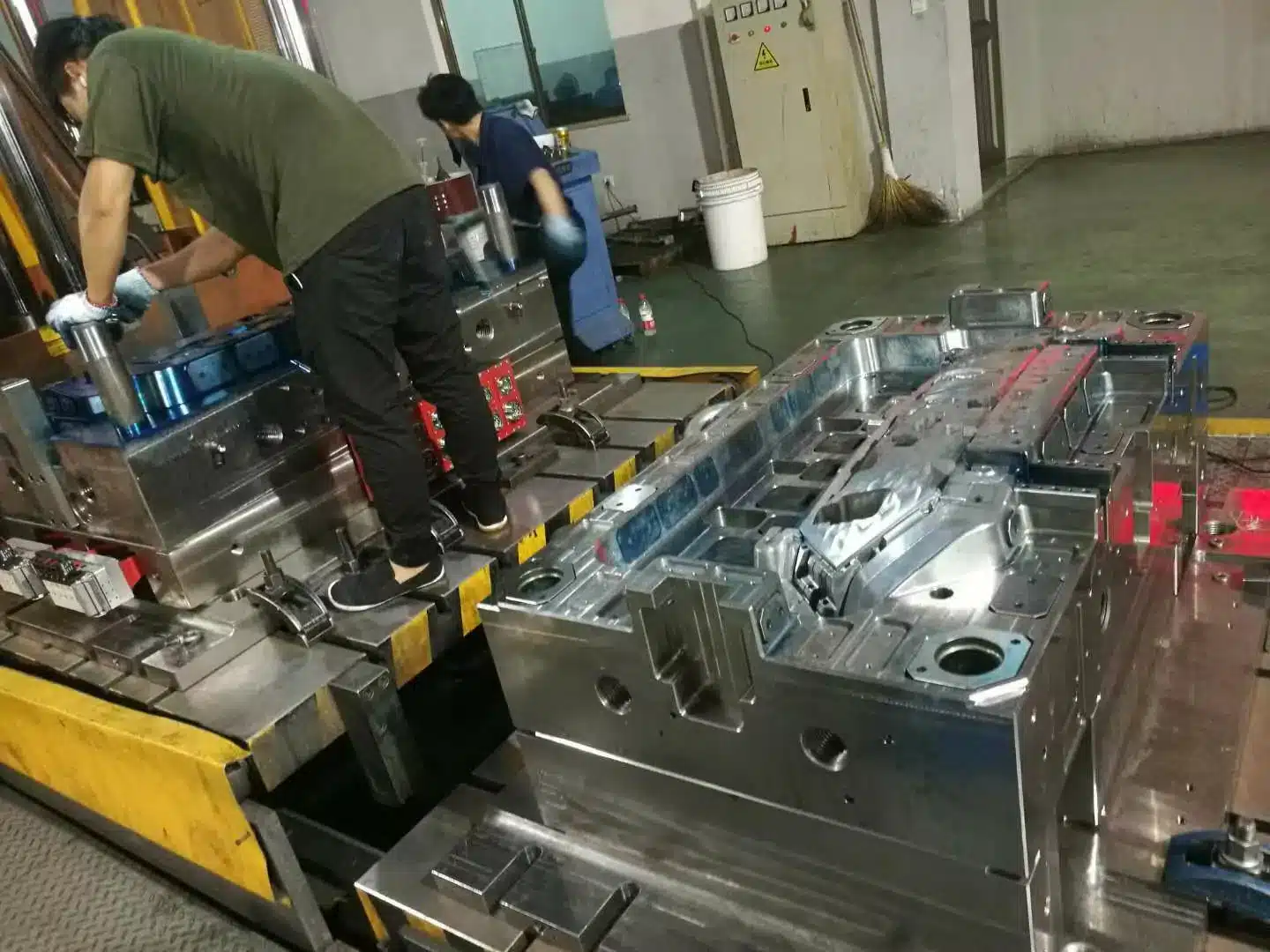
A China injection mold manufacturer builds the steel tool that shapes your plastic parts. The mold is not the part. The mold is the precision die that a molding machine fills with melted plastic, thousands or millions of times, to produce identical parts.
A capable manufacturer covers the full lifecycle. That includes design for manufacturability (DFM) review, mold flow analysis, steel selection, CNC machining, EDM, polishing, assembly, and the first trial shot known as the T1 sample. Strong suppliers also handle texturing, hot runner integration, and revisions after the first samples.
Understand this split clearly:
- Tooling is a one-time capital cost. You pay for the mold.
- Molding is the recurring cost. You pay per part, run after run.
Confusing the two is the first place buyers lose money, because a cheap mold often produces expensive parts.
Ready to Get an Accurate Quote?
Topworks combines deep injection molding expertise with structured project management — so your next project lands on time, on spec, and on budget.
Why Do US Buyers Choose China for Injection Molds?
US buyers choose China for injection molds mainly to lower tooling cost and shorten the path from design to production. A complex mold that costs a high five-figure sum domestically can often be built abroad for a fraction of that price.
Cost is not the only reason. Mature mold clusters in regions like Taizhou and Shenzhen concentrate skilled machinists, steel suppliers, and molding houses in one place. That density improves lead time and gives buyers access to a deep talent pool that is harder to find in smaller domestic markets.
The tradeoff is distance. Distance adds communication friction, shipping time, and the risk of approving something you cannot inspect in person. Most of the costly mistakes in this guide trace back to that single variable, so the rest of the article focuses on closing the distance with process rather than travel.
Trusted by Engineers & Product Teams Worldwide
“I'm glad to inform you that all plastic parts are perfect!!! We are delighted, and therefore there are good chances to continue our relationship for any coming new project.”

“Steven is a very detail-oriented project manager and engineer who can solve problems creatively and also provides excellent service. It was a pleasure working with him.”

China Injection Mold Manufacturer: How to Avoid Costly Sourcing Mistakes
Avoiding costly sourcing mistakes starts with treating the supplier relationship as an engineering process, not a price negotiation. The seven mistakes below cause the majority of failed or delayed tooling projects.
The 7 Sourcing Mistakes — At a Glance
Mistake 1: Chasing the lowest quote. A low quote often hides thin steel, fewer cavities, no hardening, or a hidden per-part cost later. The lowest number rarely produces the lowest total cost of ownership.
Mistake 2: Skipping the DFM review. Skipping DFM causes redesign cycles, scrap, and missed deadlines. A proper DFM review catches wall thickness problems, draft issues, and gate placement before steel is cut.
Mistake 3: Buying through a middleman without knowing it. A trading company adds margin and a communication layer between you and the engineers who actually build your tool. That layer slows down every revision.
Mistake 4: Not specifying mold steel. Leaving steel choice to the supplier invites the cheapest option. Steel grade directly determines mold life, so vague specs cause early tool failure.
Mistake 5: Ignoring mold life and cycle expectations. A mold sized for 50,000 shots will not survive a 1,000,000-shot program. Mismatched expectations cause cracked cavities and stalled production.
Mistake 6: Approving T1 samples without dimensional reports. Visual approval is not measurement. Missing inspection data causes parts that look fine but fail to fit, assemble, or seal.
Mistake 7: No clear ownership of the tool and data. Unclear terms cause disputes over who owns the mold and your CAD files. Written ownership prevents your tooling from being held hostage.
Each fix is process, not luck. The following sections turn these fixes into steps you can apply.
How Do You Tell a Real Factory From a Trading Company?
You tell a real factory from a trading company by asking for evidence that only a real factory can produce. A trading company sells; a factory builds. The distinction protects your margin and your timeline.
Ask for these proofs:
- Live video walkthrough of the CNC, EDM, and assembly floor with your project visible
- The name and direct contact of the project engineer, not only a sales rep
- Machine list with brands, sizes, and quantities
- Photos of in-progress tools dated to your timeline
- A business license that matches the bank account you will pay
Real factories answer technical questions quickly because the engineer is in the building. Middlemen delay, deflect, or route every answer through a third party. Slow technical answers are a reliable warning sign.
Factory-direct sourcing improves three things at once: it lowers cost by removing margin, it speeds revisions by removing a handoff, and it improves accountability because one party owns the result. Learn more about manufacturer vs. trading company tradeoffs before you decide.
What Should You Check Before You Approve a Mold Design?
You should check the DFM report before you approve a mold design, because the DFM report predicts most production problems. A serious supplier delivers a written DFM analysis before quoting steel.
Confirm the DFM covers:
- Wall thickness uniformity, since uneven walls cause sink marks and warpage
- Draft angles on all vertical faces, since insufficient draft prevents clean ejection
- Gate location and type, since gate position controls cosmetic finish and fill balance
- Parting line placement, since a poor parting line causes flash and visible seams
- Ejection strategy, since the wrong ejector layout causes drag marks and stress
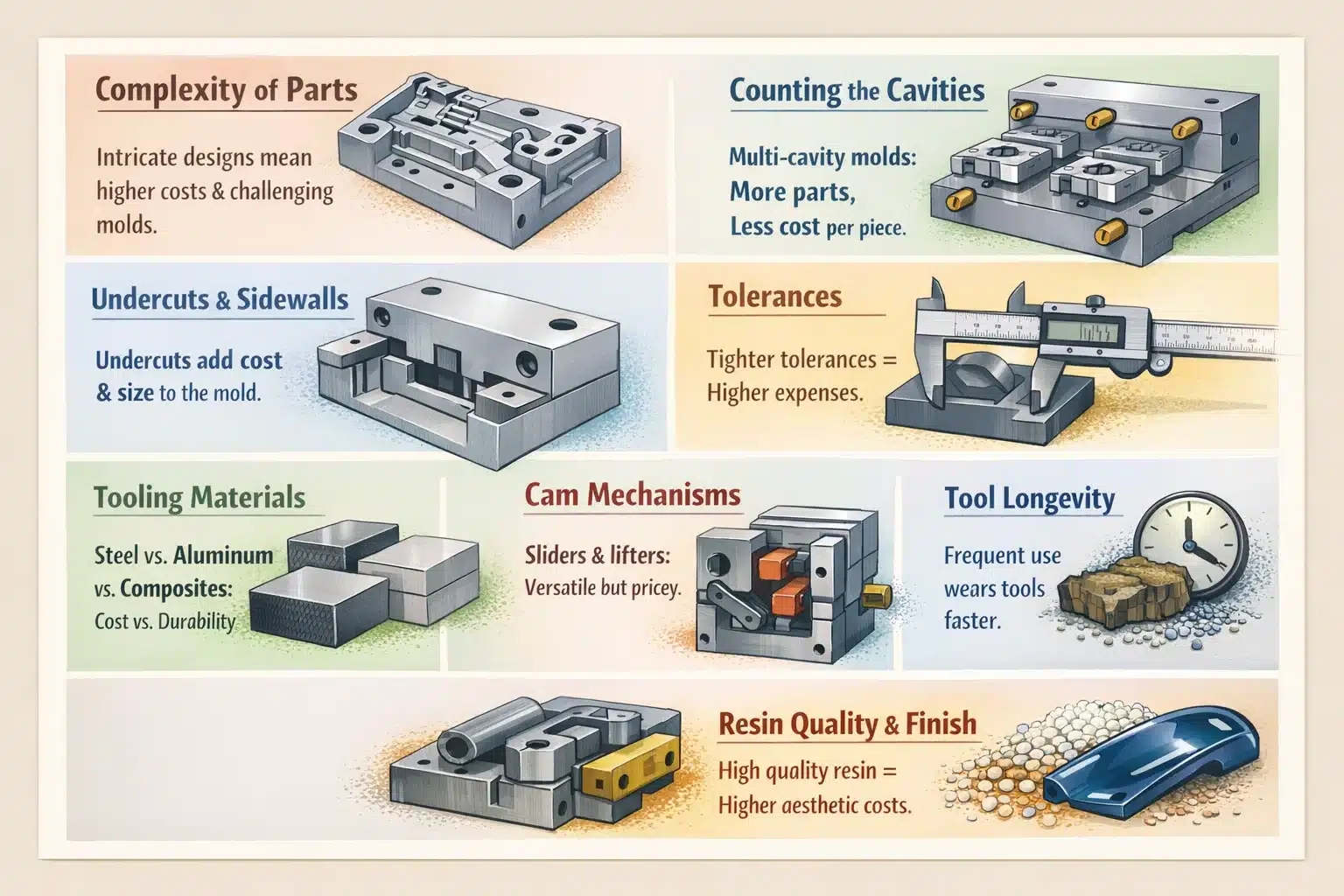
Also confirm the cavity count and the runner system. A hot runner reduces material waste and improves cycle time, but it raises tooling cost. A cold runner is cheaper to build but creates per-shot scrap. Match the choice to your production volume, not to the quote.
Treat DFM as your cheapest insurance. Fixing a problem in CAD costs hours; fixing it in hardened steel costs weeks and money.
How Do You Compare Quotes Without Getting Burned?
You compare quotes without getting burned by normalizing them to the same scope, because two quotes are rarely measuring the same tool. A clean comparison forces every supplier to bid on identical assumptions.
Put every quote into one structure before you decide.
| Quote Factor | Cheap Quote Risk | What to Require |
|---|---|---|
| Cavity count | Fewer cavities, slower output | Match cavities to volume target |
| Mold base steel | Soft pre-hardened only | Specify grade for your shot count |
| Cavity/core steel | Unhardened, short life | Hardened steel for high volume |
| Runner system | Undefined | Hot vs cold stated and priced |
| Mold life guarantee | None | Written shot-count expectation |
| Samples & reports | Visual only | T1 + dimensional report included |
| Revisions | Charged each time | Define free revision rounds |
| Tool ownership | Vague | Written ownership of mold and data |
The cheapest quote often becomes the most expensive program. A tool that fails at 80,000 shots on a 500,000-part program forces a costly rebuild and a production gap. Total cost of ownership, not sticker price, is the number that matters. See our guide to comparing injection molding quotes from China for a deeper walkthrough.
What Mold Steel Should You Specify and Why?
You should specify mold steel that matches your production volume, because steel grade directly determines mold life. Vague specs invite the cheapest steel, which shortens tool life and raises long-term cost.
A simplified guide for buyers:
- Pre-hardened steels (for example, P20-class) suit lower volumes and faster builds. They machine quickly and cost less.
- Hardened tool steels (for example, H13-class or 718H-class) suit high-volume or abrasive materials. They resist wear and extend mold life.
- Stainless tool steels (for example, 420-class) suit corrosive resins and medical or food applications, since they resist rust and pitting.
Match steel to two things: how many parts you need and what resin you mold. Glass-filled and flame-retardant resins are abrasive and wear soft steel quickly. Specifying the right grade up front prevents premature cavity failure and avoids an unplanned rebuild. Note that exact grade equivalents vary by source and should be verified with your supplier’s metallurgist. For a deeper look at steel selection, see our mould steel guide or the AISI tool steel reference.
How Does Mold Deflection Affect Part Quality?
Mold deflection affects part quality by changing the cavity dimensions while plastic is being injected, which causes flash, dimensional drift, and inconsistent parts. Deflection is the small flexing of mold steel under injection and clamping pressure.
Injection happens at very high pressure. If the mold plates or cavity walls are too thin, or if the molding machine applies insufficient clamping tonnage, the mold opens slightly during the shot. That gap lets plastic escape along the parting line, which produces flash. Deflection also shifts cores, which causes uneven wall thickness and out-of-tolerance features.
Three things reduce deflection:
- Adequate steel thickness behind cavities and around the parting line increases stiffness and resists flexing.
- Correct support pillars under the cavity plate carry load and prevent plate bowing.
- Sufficient clamp tonnage on the molding machine keeps the mold closed against injection pressure.
This is why a competent supplier runs a structural and mold flow check, not only a fit check. A tool that ignores deflection looks fine at T1 and then drifts out of tolerance once it runs at production speed and pressure. Designing against deflection prevents flash and protects dimensional stability across a long run.
What Quality Checks Protect Your Order?
Dimensional inspection reports protect your order, because measurement replaces opinion. Visual approval of a sample tells you almost nothing about whether the part will fit and function.
Require these gates before each payment milestone releases:
- T1 sample parts shipped to you for hands-on evaluation
- A dimensional report measuring critical dimensions against your drawing, with tolerances
- Material certification confirming the resin grade used for samples
- A trial summary noting cycle time, fill behavior, and any defects observed
- A revision plan if any dimension fails, with a clear path to T2
Deposit → Machining milestone → T1 sample + Dimensional Report → Balance released
This protects both sides and keeps the supplier focused on a measurable result rather than a fast handoff. ISO 9001 certification signals a documented process, but the inspection report is the proof for your specific tool.
Should You Always Source Tooling in China?
You should not always source tooling in China, because the right choice depends on volume, complexity, IP sensitivity, and speed needs. Overseas sourcing wins on cost and capacity; domestic sourcing wins on proximity and turnaround for some programs.
| Situation | Lean Toward China | Lean Toward Domestic |
|---|---|---|
| High-volume production tooling | Yes | Sometimes |
| Very tight launch timeline (days) | No | Yes |
| Highly sensitive proprietary IP | Cautiously, with NDAs | Often yes |
| Cost-driven, multi-cavity tooling | Yes | Rarely |
| Frequent in-person design iteration | Harder | Easier |
| Low-volume prototype bridge tooling | Sometimes | Often yes |
The smartest buyers do not pick a country; they pick a process. A strong overseas partner with disciplined DFM, clear steel specs, and inspection reports can outperform a weak domestic shop, and the reverse is also true. For more perspective, see our comparison of injection mold manufacturing: China vs US vs Japan.
Source Your Next Mold the Right Way
Topworks Plastic Mold has manufactured precision injection molds in Huangyan, China since 2006. We offer free DFM analysis on every project — no commitment required — so you can verify fit, draft, and gate placement before steel is cut.
Request Free DFM Analysis →FAQs
How long does it take to build an injection mold in China?
A typical mold takes a few weeks to a couple of months from approved design to T1 samples, depending on size, cavity count, and complexity. Simple single-cavity tools move faster than large multi-cavity or hot runner tools. Lead times vary by source and should be confirmed in writing for your specific project.
Who owns the mold after it is built?
You should own the mold and your design data when you pay for the tooling, but only if your agreement says so in writing. Confirm ownership of both the physical mold and the CAD files before any deposit. Clear written terms prevent your tooling from being held during a later dispute.
What is a T1 sample and why does it matter?
A T1 sample is the first set of parts shot from the new mold, used to verify dimensions, appearance, and function. It matters because it is your first real evidence that the tool produces acceptable parts. Always pair T1 samples with a dimensional report rather than approving by eye.
Can I protect my intellectual property when sourcing overseas?
You can reduce IP risk with signed NDAs, clear ownership clauses, and by splitting sensitive sub-assemblies across suppliers when needed. No measure is absolute, so weigh the sensitivity of your design against the cost savings. For highly proprietary products, factor IP exposure into the sourcing decision from the start.
Why is my low-cost mold producing flash?
Flash often comes from mold deflection, an undersized molding machine, or worn parting-line surfaces. Thin steel or missing support pillars let the mold flex open under injection pressure. A structural review and correct clamp tonnage usually resolve recurring flash. See also our flash defect case study for a real-world example.
Do I need a hot runner system?
You need a hot runner when production volume is high and material savings or cycle time justify the added tooling cost. For lower volumes, a cold runner is usually more economical despite the per-shot scrap. Match the runner choice to your annual volume rather than to the initial quote.
Conclusion
A China injection mold manufacturer can deliver excellent tooling at a strong price, but only when you manage the project like an engineer, not a bargain hunter. The costly mistakes in this guide share one root cause: distance handled with hope instead of process.
Close that distance with proof. Verify you are buying from a real factory, demand a DFM review before steel is cut, specify mold steel to your volume, design against deflection, and tie payment to dimensional reports. Do those things and overseas tooling becomes a competitive advantage rather than a gamble. Understanding China Injection Mold Manufacturer: How to Avoid Costly Sourcing Mistakes lets you buy with the same confidence you would expect from any partner, anywhere in the world.

