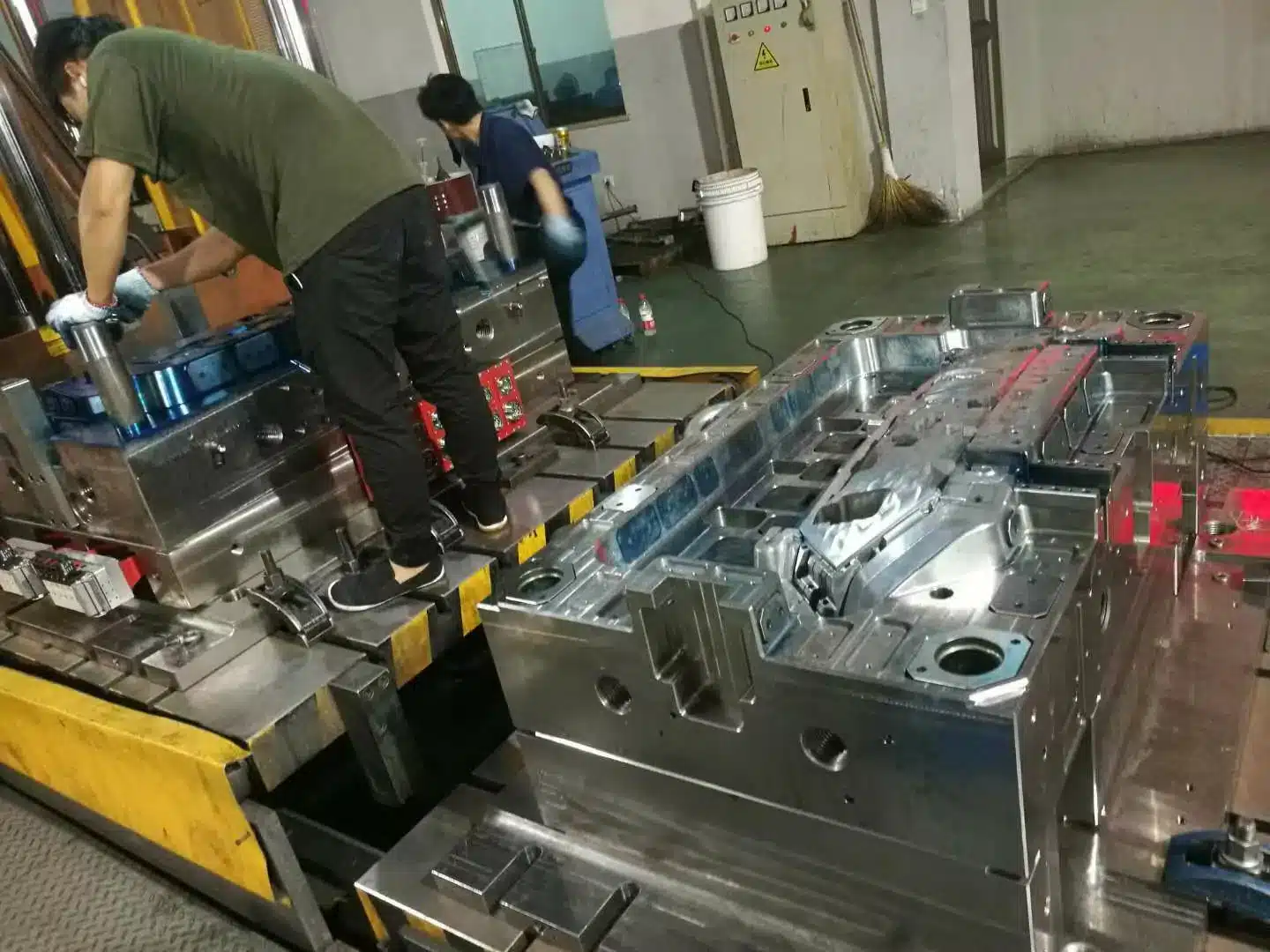

Huangyan’s Hidden Customer-Driven Engine: Custom Molds 3× Faster
Inside the invisible supply chain architecture that lets Huangyan’s mold cluster respond to personalized tooling requests three times faster than any dispersed Western supplier — and what it means for your product launch timeline.
If your product development team has ever waited six to twelve weeks for a single mold revision from a European toolmaker, you have already felt the cost of a slow supply chain. What most US procurement managers still do not fully understand is that Huangyan’s mold cluster operates an invisible customer-driven engine — a structural speed advantage built on geographic density, not just lower wages.
This article unpacks how that engine works, why it allows the cluster to deliver personalized tooling three times faster than comparable Western suppliers, and what it means for OEM buyers managing tight product launch windows. You will learn how supply chain density creates a self-reinforcing speed loop, why a single design change takes hours — not weeks — to reflect in a physical sample, and how to test a Huangyan supplier’s real cluster integration before committing to a project.
How It Actually Works
A Thursday Change Request — Completed by Friday
A supplier outside the cluster must issue a purchase order, wait for material, queue EDM, and book a press trial — a sequence that routinely runs two to four weeks. A Huangyan supplier with genuine cluster access follows a completely different path.
- 01Source material the same morning
Walks to a local electrode or steel supplier within the cluster — no purchase orders, no shipping wait, no national distributor delays. - 02Machine the modification the same afternoon
Executes the cavity change on an in-house or neighboring EDM unit — shared cluster capacity replaces single-shop job queues. - 03Book a same-day or next-morning trial shot
Dedicated mold trial services within the cluster are bookable on short notice — not scheduled weeks in advance like a Western supplier’s press. - 04Ship dimensional reports and a physical sample by end of week
The buyer receives photographic evidence or a part within 24 hours of trial. Air freight sample delivery to the US follows in 3–5 days.
Benchmark Comparison
Huangyan vs. Europe vs. US: Response Time
Typical timelines for a mid-complexity design change on an existing injection mold. These are directional estimates — verify with individual suppliers before committing to a project schedule.
| Activity | Huangyan Cluster | Western Europe | United States |
|---|---|---|---|
| Acknowledge change request | 2–4 hours | 24–48 hours | 24–48 hours |
| Source material for modification | Same day | 3–7 business days | 3–7 business days |
| Execute EDM / machining | 1–2 days | 3–5 days | 2–5 days |
| Schedule and run mold trial | Same or next day | 5–14 days | 3–10 days |
| Air-freight sample to US buyer | 3–5 days | 5–10 days | 1–3 days (domestic) |
| Total feedback cycle | ~5–7 days | ~15–25 days | ~10–20 days |
The Engine Explained
Three Mechanisms Behind the Speed Advantage
The cluster’s speed is not about hustle — it is about architecture. Three interlocking structural mechanisms convert a customer’s design intent into physical tooling faster than any dispersed Western supply chain can replicate.
Proximity Kills Procurement Lag
In Western toolmaking, every sub-component arrives from a different supplier in a different city or country. Steel from one region, electrodes from another, hot runners from a third. Each design change restarts sub-supplier lead times. Inside Huangyan’s dense cluster, those same sub-suppliers are a short walk or drive away.
What takes three to seven days to procure externally takes hours locally. Procurement lag — often the largest hidden delay in a mold revision cycle — effectively disappears. The cluster’s supply web covers every critical input locally: P20 and H13 steel available same-day, graphite electrode suppliers running short-order production as standard, hot runner assemblers delivering in days not weeks, and independent mold trial services bookable on short notice.
Procurement lag is the single largest hidden delay in Western toolmaking. Eliminating it is not an efficiency improvement — it is a structural speed multiplier that compounds across every revision cycle in a project.
Parallel Workflows Replace Sequential Queues
Because cluster members share informal capacity agreements and personal relationships built over years, a Huangyan mold maker can run machining, EDM finishing, and surface treatment concurrently rather than in sequence. Western toolmakers operating as isolated businesses default to sequential workflows — one step cannot begin until the previous one finishes.
The owner-operator dynamic amplifies this further. Most Huangyan shops are run by the person who controls production decisions. When a US buyer calls with a change request, they are frequently speaking directly to that decision-maker — bypassing the internal approval relay that adds days to Western supplier responses. Parallel execution, combined with direct decision authority, compresses the total iteration timeline significantly.
When you call a genuine Huangyan cluster supplier, you typically reach the person who can say “yes” immediately. That single structural difference eliminates the management approval chains that cost Western toolmakers 24–48 hours on every change request.
Customer Feedback Loops Close in Hours, Not Weeks
When a US buyer requests a “minor” adjustment — a gate relocation, a wall thickness change, a draft angle correction — a cluster-embedded Huangyan supplier does not open a formal engineering change order, queue a re-quote, or wait for an approval chain. They walk the revised drawing to the machinist, execute the change, and shoot a sample.
The buyer receives photographic evidence or a physical part the same day or within 24 hours. This is the rapid-response loop that defines Huangyan’s cluster-powered customer-driven engine: geographic density transforms customer intent into validated tooling at a pace no isolated Western supplier can match regardless of their equipment quality or workforce skill. For a product team running quarterly launch cycles, a 3× speed advantage on each iteration round is the difference between shipping three revision loops or one within the same calendar quarter.
Commercial Impact
How Speed Translates to Business Value
The per-mold price is only one cost variable. The hidden costs are engineering hours consumed while waiting, delayed launch revenue, and additional iterations required when a missed deadline forces a market reassessment.
Which Product Categories Benefit Most
The cluster’s rapid-response engine is most valuable for product categories that require multiple iterative revision cycles or carry high commercial risk from delayed launches.
- Consumer goods packaging — complex geometry, frequent cosmetic revisions, short seasonal windows
- Electronic device enclosures — tight dimensional tolerances, multiple insert configurations, rapid generation cycles
- Automotive interior trim — multi-cavity tools with texture and surface finish requirements
- Medical device housings — Class A surface requirements and iterative polish-and-trial cycles
- Retail and promotional products — frequent redesign, short-run quantities, low minimum thresholds
The cluster is less optimized for very large tonnage molds (800+ ton presses) or for highly regulated tooling requiring domestic certification trails traceable to US or EU standards bodies.
How to Qualify a True Huangyan Cluster Partner
Not every supplier who lists Huangyan as their address is genuinely embedded in the cluster’s supply network. Geographic proximity alone does not guarantee access to the speed advantages described here. Use these five tests before committing to a project.
- Test DFM turnaround speed — submit a sample part file and request a full DFM report. A cluster-connected supplier returns a detailed DFM within 24 hours. Longer signals limited bandwidth or external outsourcing.
- Ask about first-shot timeline — once steel is cut, how many days to first-shot samples? Cluster-embedded suppliers answer in days. Suppliers relying on distant trial press services answer in weeks.
- Request the sub-supplier list — genuine cluster members name local vendors in Huangyan or adjacent Taizhou districts. Suppliers naming national distributors in Shanghai or Guangzhou are not truly cluster-connected.
- Confirm who you are speaking to — in initial technical calls, are you reaching the owner or a senior engineer directly? Owner-operated access means faster decisions without an internal approval relay.
- Require English-language DFM documentation — a DFM report must be clear, detailed, and written in English. Translated summaries of Chinese internal reports introduce ambiguity at the most critical project stage.
Ask a prospective supplier to name specific local sub-vendors and specify where mold trials are conducted. That question alone will quickly reveal whether the cluster speed advantage is real or nominal.
FAQ
Common Questions
Answers to the most frequently asked questions from US OEM buyers evaluating Huangyan as a tooling partner.
Speed and quality are not in conflict in the cluster model because short iteration cycles allow defects to be caught and corrected quickly. If a first-shot sample shows warpage or a surface defect, the cluster’s infrastructure enables a corrective revision within days rather than weeks. The net quality outcome across a full development project is often stronger with a fast-cycle partner than with a slow-cycle Western toolmaker, because more correction opportunities fit within the same calendar window.
A simple to mid-complexity single-cavity tool typically reaches first-shot sample stage within 3 to 5 weeks from DFM sign-off. Multi-cavity or high-complexity tools commonly run 5 to 10 weeks. These are directional benchmarks — lead times vary by supplier capacity, part complexity, and steel specification, and should be confirmed with individual suppliers during project scoping.
Many experienced US–Huangyan partnerships treat the time difference as an asset rather than an obstacle. A US engineering team that submits a change request at close of business Friday will find the Huangyan supplier beginning execution Saturday morning local time — effectively putting the weekend to work. Sample results and dimensional data are often available Monday morning US time, with no overtime costs incurred on either side.
Practical mitigation steps include splitting design packages so no single supplier receives a complete assembly view, executing NDA agreements governed by Chinese contract law with specific jurisdiction clauses, and prioritizing suppliers who have existing relationships with audited Western OEMs. Reviewing a supplier qualification checklist before sharing full CAD files is strongly recommended.
Yes. The cluster’s highly competitive structure includes a large number of owner-operated shops willing to accept lower-volume tooling projects that larger European or US toolmakers typically decline as commercially unviable. Minimum order thresholds in Huangyan are generally lower, and the owner-direct communication model means small buyers receive proportionally more decision-maker attention than they would at a large Western tooling firm.
The defining characteristic is access to the cluster’s shared sub-supplier network — local steel, electrode, hot runner, and trial press availability within the same district. A supplier that procures its steel from Shanghai and sends molds to Guangdong for trials is not operating with cluster advantages, regardless of its registered address. Always ask prospective suppliers to name specific local sub-vendors and specify where mold trials are conducted.
Put the Cluster Speed to the Test
Submit your part design and receive a full English-language DFM analysis within 24 hours — at no cost or obligation. The response you receive will tell you everything about whether a given Huangyan supplier has genuine cluster integration.
Get a Free 24-Hour DFM Report
