
Avoid these 10 costly mistakes foreign buyers make when sourcing custom injection molded parts in China. Protect quality, IP, and margins.
Introduction
Every year, thousands of U.S. companies begin buying injection molding from China to power new product lines. Many of them lose money — not because China lacks capable suppliers, but because buyers walk into the process unprepared. The 10 costly mistakes foreign buyers make when sourcing custom injection molded parts in China are preventable, yet they repeat across industries, from consumer electronics to medical devices and automotive accessories.
This article breaks down each mistake, explains why it happens, and gives you a concrete way to avoid it. If you manage a product line, run procurement campaigns, or market physical goods that depend on molded components, this guide will sharpen your sourcing strategy and protect your brand.
Why Does Sourcing Injection Molded Parts in China Go Wrong
The root cause is rarely the factory itself. Sourcing failures stem from unclear communication, misaligned expectations, and gaps in contractual protection. Chinese manufacturers operate within a different legal framework, business culture, and quality infrastructure than U.S. buyers expect. Understanding these dynamics is essential before you commit to injection molding in China.
Common systemic issues include:
- Language barriers that distort technical specifications — learn how to overcome them by bridging the communication gap with Chinese suppliers
- Differences in quality tolerance norms between Chinese GB standards and U.S. ASTM or ISO requirements — for dimensional tolerancing, the ASME Y14.5 standard remains the authoritative reference American engineers rely on
- Relationship-driven business culture where handshake agreements replace enforceable contracts — review these cultural tips for negotiating with Chinese injection moulding suppliers
- Supply chain opacity that hides subcontracting and material substitution
Understanding these dynamics prevents buyers from blaming the supplier for problems the buyer’s own process created. For a broader view of warning signs, read about the red flags when sourcing injection moulding in China.
Mistake 1: Assuming Mold Ownership Is Automatic
Mold ownership does not transfer to the buyer unless a contract explicitly says so. Many U.S. companies pay for tooling and assume they own the mold. In China, the factory often retains physical possession — and in some cases, legal ownership — of the tool. Before investing in tooling, understand how much it actually costs to get a plastic mold and what that payment does — and does not — guarantee.
How to avoid it:
- Include a mold ownership clause in your purchase agreement, governed by Chinese law for enforceability.
- Require the supplier to stamp your company name and mold ID on the tool.
- Stipulate that the mold must be released or shipped upon request.
- Verify the supplier’s business registration through the China National Enterprise Credit Information Publicity System (GSXT) before signing any tooling contract.
Mistake 2: Failing to Define Quality Standards Clearly
Vague specifications produce vague results. If your drawings lack critical-to-quality (CTQ) callouts, tolerance ranges, surface finish requirements, or material certifications, the supplier will fill in the blanks — often with the cheapest acceptable option. Use the ASME Y14.5 Dimensioning and Tolerancing Standard as your reference when defining tolerances on engineering drawings sent to Chinese factories. For deeper context on how tolerances drive part quality, review this guide on injection molding tolerances and their impact on part quality.
What clear quality standards include:
- Dimensional tolerances per ASME Y14.5 or ISO 2768
- Acceptable cosmetic defect levels (AQL tables)
- Material data sheets with approved resin brands and grades
- Color matching standards (Pantone or RAL references)
A solid DFM (Design for Manufacturability) review before tooling begins catches most specification gaps early.
Mistake 3: Allowing Material Substitution Without Approval
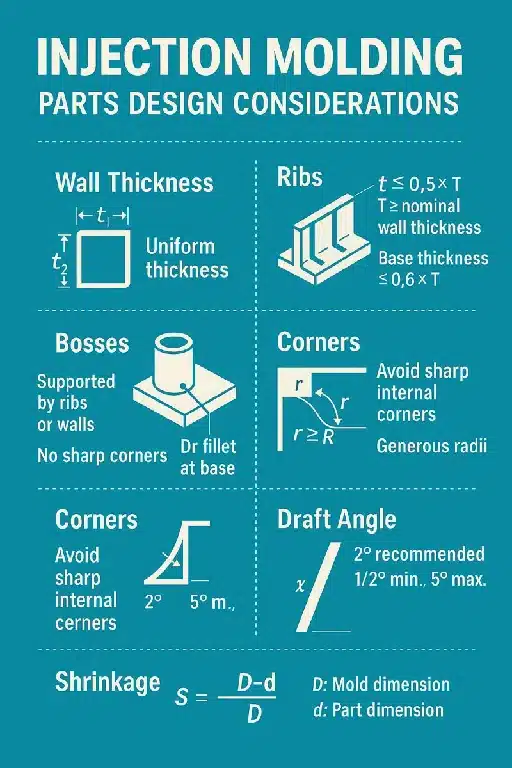
Material substitution causes part failure, regulatory violations, and customer complaints. Some suppliers swap approved resins for cheaper alternatives without notifying the buyer. This is especially dangerous for parts requiring FDA compliance, flame retardancy, or specific mechanical properties. Understanding how plastic material types affect the final size of injection molded parts makes it clear why even a small resin swap can create significant dimensional problems.
Prevention steps:
- Lock material specifications into the contract.
- Require Certificates of Conformance (CoC) per shipment.
- Conduct periodic incoming material inspections using FTIR or DSC testing.
- Learn to identify the plastic material yourself so you can independently verify what arrives.
Mistake 4: Ignoring Regulatory Compliance Requirements
Compliance obligations belong to the importer, not the exporter. U.S. Customs, the CPSC, the FDA, and UL all hold the brand owner — not the Chinese factory — accountable. Ignoring compliance during sourcing creates liability after the product reaches the market. The U.S. Consumer Product Safety Commission (CPSC) provides import guidelines that every American buyer should review before placing a first order. For a structured overview of what standards apply to molded parts, read about regulatory standards in injection molding.
Key regulations to address upfront:
- RoHS / REACH for electronics and consumer goods
- FDA 21 CFR for food-contact or medical components
- UL 94 for flame-retardant classifications
- California Proposition 65 for consumer products sold in the U.S.
Mistake 5: Comparing Suppliers by Unit Price Only
Unit price comparisons mislead buyers. The lowest quote often excludes tooling amortization, quality inspection costs, packaging, freight, duties, and rework expenses. Total landed cost reveals the true picture. This problem is so widespread that an entire article has been written on the real price tag and uncovering hidden costs in Chinese injection moulding.
| Cost Factor | Low-Price Supplier | Mid-Price Supplier |
|---|---|---|
| Unit price | $0.12 | $0.18 |
| Tooling cost | $8,000 | $6,500 |
| Defect rate | 5–8% | <1% |
| Rework/scrap cost | $3,200/year | $400/year |
| Compliance documentation | Not included | Included |
| Estimated annual total | Higher | Lower |
Cheaper per-part pricing often produces higher total project costs. Use a structured approach to compare injection molding quotes from China so you evaluate like for like, and understand why injection mold price is higher or lower than others before drawing conclusions.
Mistake 6: Paying Too Much Upfront Before Proper Vetting
Paying more than 50% upfront to an unvetted supplier puts your capital at risk. Always confirm a factory’s legal business license through the China National Enterprise Credit Information Publicity System (GSXT) before wiring the first payment. Before you send any money, follow a rigorous process like this guide to qualifying injection molding companies. Standard practice involves a structured payment milestone:
- 30% deposit upon order confirmation
- 30% after T1 sample approval
- 40% before shipment, after final inspection
Never pay 100% upfront. Use trade assurance, escrow, or verified payment platforms to protect funds when working with a new supplier.
Mistake 7: Approving Samples but Not Controlling Mass Production
Sample approval does not guarantee production consistency. Factories often produce samples using their best machines, operators, and materials. Mass production runs on different equipment at faster cycle times with less oversight. This is one of the biggest sourcing risk control challenges buyer teams face.
Bridge the gap by:
- Requiring a First Article Inspection Report (FAIR)
- Defining process parameters (cycle time, barrel temperature, hold pressure) in a process control plan
- Scheduling in-line inspections during production, not just pre-shipment — consider using a third-party inspection firm such as SGS to verify quality on the production floor
- Implementing the 4 stages of quality control in plastic injection molding from raw material to finished shipment
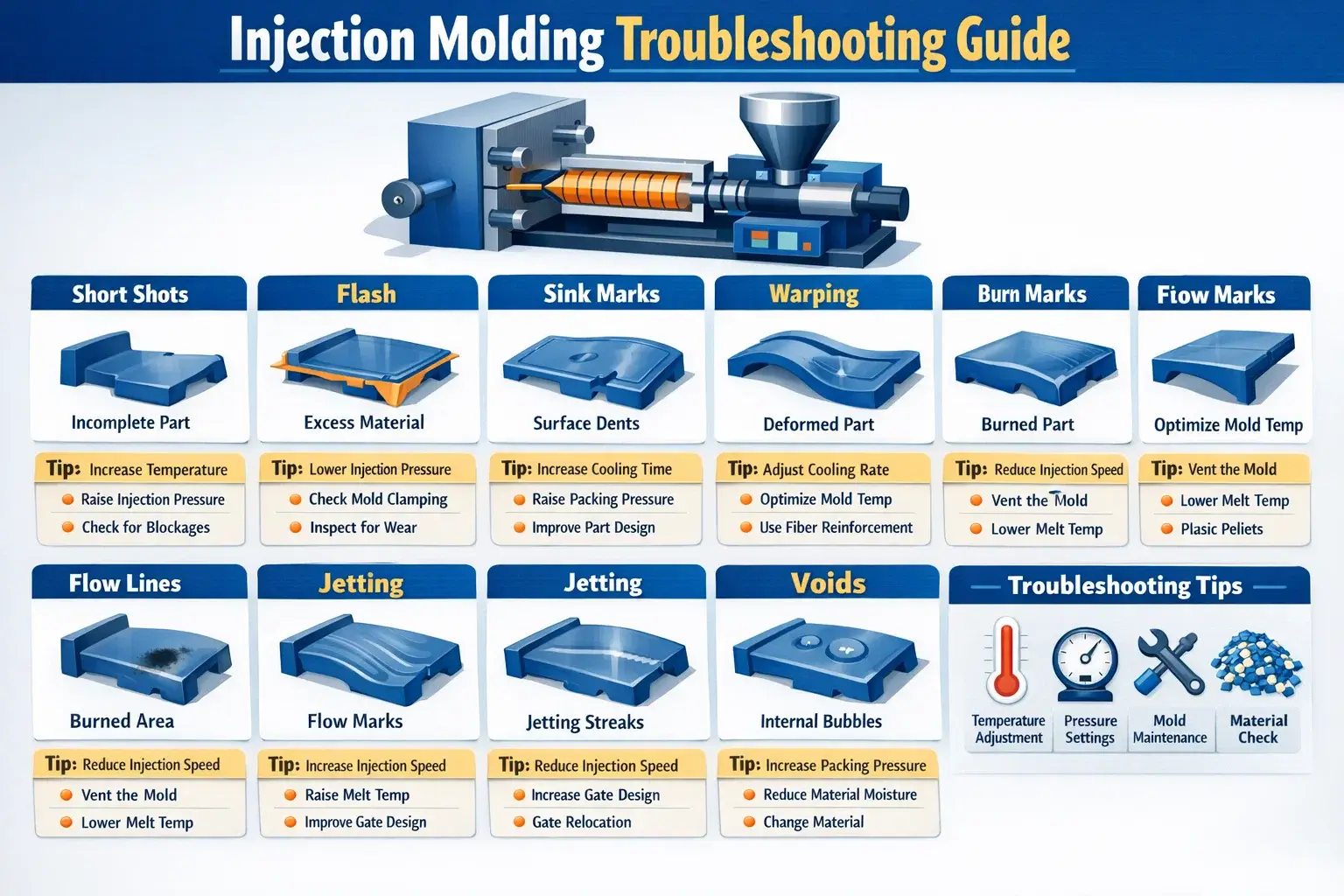
Understanding common injection molding defects and their resolution helps you write tighter inspection criteria and catch problems before containers leave the port.
Mistake 8: Treating Cosmetic Parts and Structural Parts the Same
Cosmetic parts and structural parts require different quality criteria. A housing cover visible to the end user needs tight surface finish control (SPI standards), gate vestige limits, and color consistency. A structural bracket hidden inside an assembly needs load-bearing capability, dimensional accuracy, and fatigue resistance.
Applying the same inspection criteria to both wastes time on one and misses critical defects on the other. Processes like overmolding and insert molding bring additional complexity that requires even more specific quality planning.
Best practice: Create separate quality plans for cosmetic and structural components, each with appropriate AQL levels and inspection methods.
Mistake 9: Letting Drawing Revisions Get Out of Control
Uncontrolled drawing revisions cause the factory to produce parts to an outdated spec. This is one of the most common — and most expensive — mistakes in offshore sourcing. Effective revision management begins during the design for manufacturability (DFM) stage and continues through mass production.
Version control essentials:
- Use a revision block on every drawing (Rev A, Rev B, etc.)
- Distribute revisions through a single point of contact
- Require written confirmation from the supplier when a new revision is received
- Archive superseded drawings to prevent reuse
For practical communication tactics, learn how to work with Chinese injection molding teams so revision handoffs are clear and documented.
Mistake 10: Neglecting IP Protection and Post-Shipment Traceability
Intellectual property theft and counterfeit production are real risks. Without contractual safeguards and physical traceability, a supplier can replicate your part design for competing buyers. Read this detailed guide on how to protect your business in China before sharing any proprietary drawings.
Protective measures include:
- NNN agreements (Non-Disclosure, Non-Use, Non-Circumvention) enforceable under Chinese law
- Mold cavity identification marks unique to your order
- Lot and batch tracking on packaging for post-shipment traceability
- China patent or design registration if the product is novel
How Do You Vet a Chinese Injection Mold Supplier Properly?
Proper vetting prevents most of the mistakes listed above. A structured approach to reducing supplier risks in overseas injection molding partnerships starts well before any money changes hands. Follow this sequence:
- Verify the business license through the China National Enterprise Credit Information Publicity System (GSXT).
- Request a factory audit — either in person or through a third-party firm like SGS or Bureau Veritas.
- Review existing customer references, preferably from U.S. or European brands.
- Evaluate equipment lists for machine tonnage range, brand quality, and auxiliary equipment.
- Assess quality management systems — ISO 9001 certification is a baseline, not a differentiator.
- Run a trial order before committing to high-volume production.
Also consider whether you’re dealing with a manufacturer vs. a trading company — the distinction affects price, quality control access, and communication directness. For a comprehensive walkthrough, read the ultimate guide to choosing China injection molding suppliers.
What Should a Mold Ownership Clause Include?
A mold ownership clause should state that the buyer owns the mold from the moment full tooling payment is made. It should also cover:
- The buyer’s right to transfer the mold to another facility
- Supplier obligations for mold maintenance and shot-count tracking
- Conditions under which the mold must be shipped to the buyer
- Penalties for unauthorized use of the mold to produce parts for third parties
How Can Marketers Use Sourcing Quality as a Brand Differentiator?
Sourcing quality directly impacts brand trust. Marketers who understand the supply chain can position their brand around reliability, safety certifications, and material transparency. Consumers and B2B buyers increasingly value traceability and ethical sourcing.
Use sourcing standards in:
- Product page copy referencing specific certifications (FDA-cleared, UL-listed)
- Case studies showing your quality control process — the CPSC’s import compliance guidelines provide a framework you can reference in consumer-facing materials
- Packaging callouts for material origin or compliance marks
Strong sourcing becomes a marketing asset, not just an operations task. A well-executed 5-step framework to reduce China sourcing costs and increase quality creates a story worth telling your customers.
Frequently Asked Questions
Is it safe to source injection molded parts from China?
Yes, when done with proper vetting, contracts, and quality control processes. Thousands of reputable Chinese manufacturers produce high-quality molded parts for global brands. Risk comes from poor buyer preparation, not from China as a sourcing region. Start with this practical guide to how to buy injection molding from China without losing your mind or your shirt.
How long does it take to manufacture a custom injection mold in China?
Lead times typically range from 3 to 8 weeks depending on mold complexity, cavity count, and steel type. Tight-tolerance molds or multi-cavity tools may take longer. Always confirm timelines in writing before placing an order. Reviewing MOQ and lead times in injection molding from China offers additional planning context.
What is the biggest financial risk when sourcing molded parts overseas?
The biggest financial risk is paying for tooling and production without enforceable quality and ownership agreements. Rework, customs holds, and product liability claims can exceed the original purchase cost. A thorough manufacturing risk assessment before production begins can prevent these outcomes.
Should I hire a sourcing agent or go directly to the factory?
Both approaches work. A sourcing agent adds cost but provides local presence, language support, and supplier management. Going direct gives more control but requires internal expertise. The right choice depends on your team’s experience and order volume. Learn more about how to find a quality overseas manufacturer step by step.
What quality inspections should I require for injection molded parts?
At minimum, require a First Article Inspection, in-process dimensional checks, and a pre-shipment inspection based on AQL sampling. For regulated parts, add material testing (FTIR, tensile, impact) and compliance documentation. Firms like SGS offer packaged inspection programs tailored to injection molded goods. This detailed resource on quality control for Chinese moulded products covers the full process.
Can I bring my mold back from China if I switch suppliers?
You can, if your contract includes a mold ownership and release clause. Without this clause, the factory may refuse to release the tool. Shipping molds internationally also requires proper packaging and customs documentation.
What is an NNN agreement while sourcing custom plastic parts in China?
An NNN agreement stands for Non-Disclosure, Non-Use, and Non-Circumvention. Unlike a standard U.S. NDA, an NNN is specifically structured and governed by Chinese law, making it enforceable in Chinese courts where your supplier operates. For more on protecting your designs, see how to protect your business in China.
How do I verify if a Chinese injection mold factory is legitimate?
Search the factory’s registered company name on the China National Enterprise Credit Information Publicity System (GSXT). This government database confirms business license validity, registered capital, legal representative, and operational status. Combine this step with the vetting process outlined in choosing the right injection molding manufacturer in China.
Conclusion
The 10 costly mistakes foreign buyers make when sourcing custom injection molded parts in China share a common thread: they result from assumptions, not from bad suppliers. Mold ownership, quality definitions, material controls, compliance, pricing analysis, payment terms, production monitoring, part-type differentiation, revision management, and IP protection — each one demands deliberate planning.
For marketers and product managers in the United States, understanding these sourcing risks protects margins, prevents brand damage, and turns supply chain competence into competitive advantage. The companies that source well don’t just save money. They ship better products, faster, with fewer surprises.
Invest the time upfront. The cost of prevention is always lower than the cost of correction.

