EV Battery Enclosure Tooling: Six Paths, Real Cost, Buyer Risk
EV Battery Enclosure Tooling is not one die. It is a locked manufacturing choice. Pick wrong, and the program pays for years.
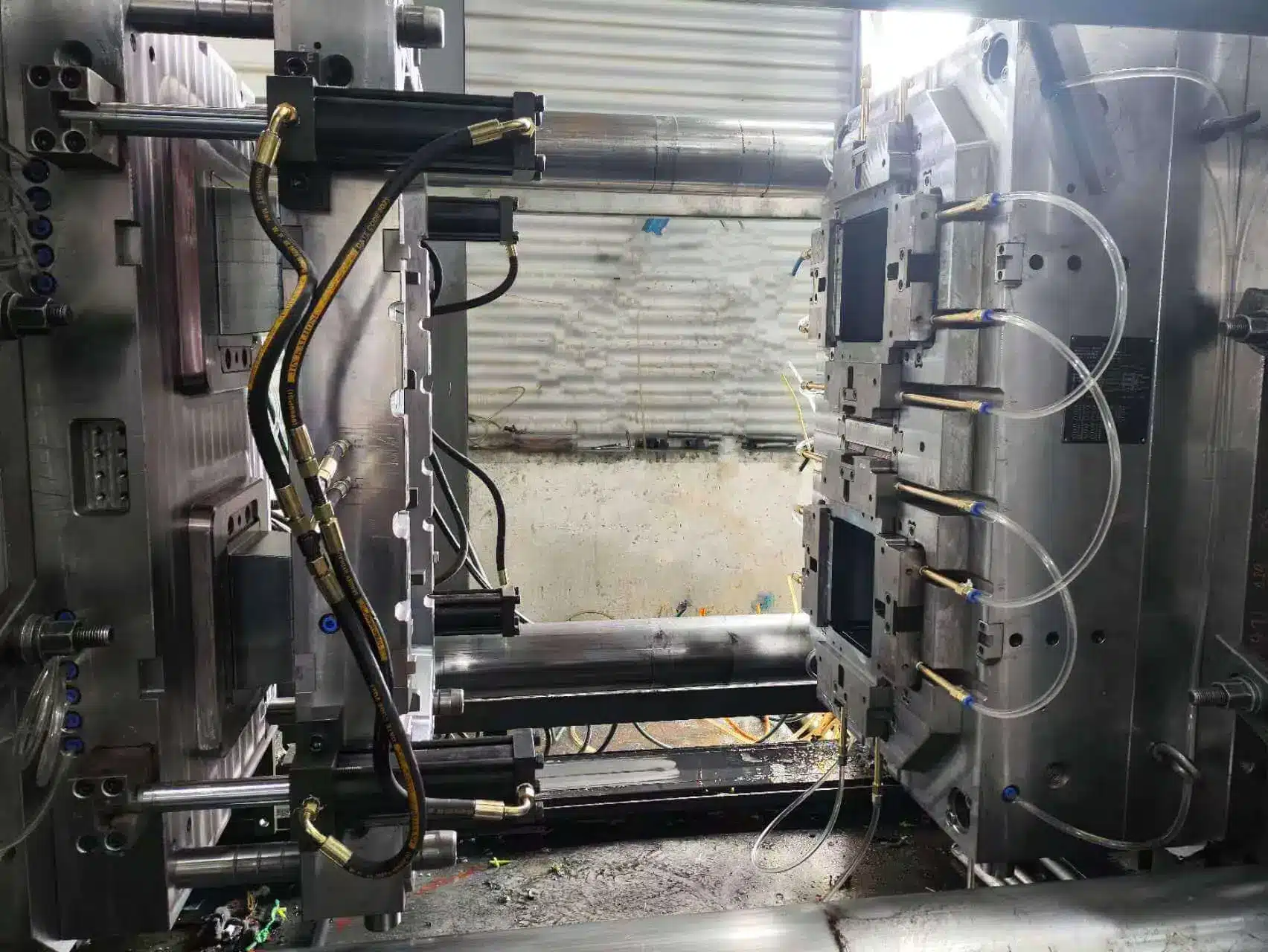
§ 01 / FoundationsWhat EV Battery Enclosure Tooling Really Means
EV Battery Enclosure Tooling is not a single die purchase. It decides the manufacturing route, launch risk, and lifetime cost. I have seen buyers price only the forming die. That mistake hides half the program cost.
The battery pack can take 25% to 40% of a modern EV bill of materials. The enclosure carries the tray, cover, joining hardware, and sealing flange. It is the part most sensitive to process choice.
Pick the wrong process, and the die may never pay back. Pick too little process, and the part will not scale.
“Battery enclosure tooling” means an industrial stack. It is not one die. It usually includes five tool groups.
§ 1.1 — AnatomyThe five layers of enclosure tooling
- Forming tools. Dies, molds, or rolls make the main geometry.
- Joining fixtures. Weld cells, FSW jigs, CMT nests, and adhesive clamps build the sealed structure.
- Machining stations. CNC fixtures mill sealing flanges, drill bosses, and finish threaded inserts.
- Sealing and test rigs. IP67, IP69K, helium-trace, and pressure-decay rigs are separate tools.
- Inspection tooling. CMM nests, flatness checks, NDE rigs, and ultrasonic scans protect launch quality.
The forming tool gets the headline. The other four decide whether production makes money.
§ 1.2 — TimingWhy tooling decisions get made 18 months before start-of-production
Tooling decisions start early because large dies take months to build. The steel dies used to cast a structural battery tray can weigh over 100 tons and take months to build.
Once that die exists, changes get expensive fast. A redesign can reset the launch clock.
That timing is rough for buyers. Cell chemistry, pack layout, and crash targets may still move.
For most EV programs above 50,000 units per year, order production tooling 14 to 18 months before saleable vehicles. That is before PPAP and final crash validation. It may also come before final cell form-factor commitment.
§ 02 / InventoryEV Battery Enclosure Tooling: The Six Production Paths
EV battery enclosure tooling usually falls into six routes. Each route has its own cost curve, cycle time, and volume floor.
Most weak RFQs compare two routes as if they were equal. They are not. The tooling tells you the real program intent.
High-Pressure Die Casting (incl. Gigacasting)
Molten aluminum fills a multi-ton steel die under high pressure. Gigacasting pushes the same process to underbody size.
Aluminum Extrusion + FSW / CMT
Hollow profiles come through an extrusion die. FSW or CMT welding then turns them into trays.
Sheet-Metal Stamping (Hot & Cold)
Steel or aluminum panels are press-formed. Hot stamping brings 1,500-MPa boron steel into crash structures.
SMC / BMC / CFRP Compression Molding
Composite sheets cure inside a heated mold. Below 50,000 units per year, the math can work well.
Thermoplastic Injection & D-LFT
Reinforced PP, PC, PBT, or PET becomes large covers, frames, and trays. Recycling pressure now matters in Europe.
CNC-Machined Billet
Solid aluminum blocks are cut on CNC machines. It fits prototypes, A-samples, and early validation builds.
Closer lookGigacasting — the headline pathway
Gigacasting means HPDC at vehicle-floor scale. Tesla pioneered the approach with Model Y front and rear underbody megacastings, sharply cutting part counts and welds.
The battery enclosure effect is direct. The enclosure stops acting like a bolt-in box. It becomes part of the structural floor.
The economics are harsh. Gigacasting dies often cost several million dollars per set. GM showed why when it acquired Tooling & Equipment International — a Tesla gigacasting supplier — for an estimated $80–100M.
That was not just a shop purchase. It was a purchase of die-building knowledge.
Closer lookComposite molding — the underestimated pathway
Composite battery enclosures sound exotic. They are not. Compression tooling for programs below 50,000 units per year is genuinely less costly than the multi-piece metal-stamping-and-extrusion alternative.
The reason is simple. SMC and BMC tools can make near-final parts in one press cycle. Metal routes need more stampings, brackets, coatings, machining, and assembly.
§ 03 / EconomicsTooling Cost Economics Without the Sales Fog
Most suppliers avoid clear tooling ranges. I get why. Region, die builder, complexity, and contract terms all move the number.
Still, buyers need ranges. No range is worse than a rough range.
| Process | Die / Tool Set | Lead Time | Cycle Time | Min. Viable Vol. | Best Use Case |
|---|---|---|---|---|---|
| Gigacasting (HPDC) | $4M – $8M+ | 9 – 14 months | 80 – 120 sec | 100,000+ /yr | Single-piece structural pack |
| Conventional HPDC | $1M – $3M | 6 – 10 months | 60 – 90 sec | 30,000+ /yr | Mid-volume trays |
| Extrusion + FSW | $400K – $1.5M | 4 – 8 months | Variable | 5,000+ /yr | Platform-shared programs |
| Hot Stamping | $800K – $2M | 6 – 9 months | 15 – 30 sec | 50,000+ /yr | Steel covers, crash rails |
| Compression Mold (SMC) | $300K – $900K | 3 – 6 months | 90 – 180 sec | < 50,000 /yr | Covers, mid-volume trays |
| CNC Machining | ~ $0 (no dedicated) | 2 – 6 weeks | Hours / part | < 1,000 /yr | Prototype / pre-series |
§ 3.1The hidden costs nobody puts in the RFQ
- Secondary machining. Cast enclosures require CNC post-processing on sealing flanges and threaded interfaces.
- Surface treatment. Anodizing, e-coating, and insulation coating need their own cost lines.
- Welding fixtures. A two-meter FSW cooling-plate cell can be a six-figure or seven-figure buy.
- Leak-test fixtures. Inline IP67 or IP69K inspection needs separate purpose-built tooling.
- PPAP documentation. MSA studies, control plans, run-at-rate trials, and engineering hours add up fast.
For a 50,000-unit aluminum-extrusion tray program, forming tools often take 35–50% of total tooling spend. The rest goes to joining, machining, sealing, inspection, and PPAP. Budgeting only the die is a procurement trap.
§ 04 / FrameworkThe Decision Framework Buyers Can Actually Use
A buyer can narrow the tooling path with four inputs. Start with volume, then architecture, weight target, and capital.
Do not start with supplier preference. That is how weak programs get expensive tooling.
§ 05 / ArchitectureHow Cell-to-Pack and Structural Packs Change Tooling
Cell-to-pack changes tooling because the enclosure stops being a box. It becomes a floor, a mount, a thermal path, and a crash part.
Older packs used modules inside a tray. Tooling followed that hierarchy. CTP and CTC collapse those layers.
BYD Blade, CATL Qilin, and Tesla structural packs all push the enclosure harder.
- Bigger dies, tighter tolerances. The enclosure works like a structural body part now.
- More integrated welding fixtures. Cells may bond directly to the enclosure.
- Less platform reuse. CTC tooling is often vehicle-specific and harder to amortize.
§ 06 / ValidationQuality, Validation, and PPAP Sign-Off
A tool is not ready because T1 parts look good. It is ready when the PPAP package holds.
Battery enclosure PPAP is heavy because failure is serious. Ingress, side-impact collapse, and thermal runaway change the risk level.
- Dimensional results. CMM data confirms sealing flange flatness and full tolerance stack-up.
- Process capability studies. Cp and Cpk protect safety-critical dimensions.
- Material certification. Castings need porosity checks. Composites need void-content proof.
- Leak-test validation. IP67 is common. IP69K appears more on structural packs.
- Run-at-rate. The supplier must hit quoted cycle time and yield.
§ 07 / Supply ChainWho Actually Builds These Dies
Tier 01Integrated Tier-1 suppliers
Integrated Tier-1 suppliers design the enclosure, build tooling, and run production. Magna, Constellium, Novelis, and Gestamp dominate this route for North American and European OEMs.
Tier 02Specialist die builders
Specialist die builders make the tools behind many Tier-1 programs. TEI, UBE Machinery, Ryobi, IDRA, and LK Group show up on die plates.
Tier 03Composite & thermoplastic specialists
Composite and thermoplastic specialists matter more below 50,000 units per year. Continental Structural Plastics, CpK Interior Products, Kautex Textron, and Mitsubishi Chemical lead here.
Check five items before signing. Ask for IATF 16949, EV program references, PPAP timing history, local tool service, and financial strength. If your supplier cannot prove these, price the risk.
§ 08 / Injection MoldingInjection Molding Details Buyers Should Not Skip
Injection molding deserves its own check because many EV enclosures still use molded sub-components. Injection-molded battery covers, module housings, and high-voltage connector brackets appear across EV programs.
The tray may be cast or extruded. The molded parts still control assembly, sealing, and service life.
§ 8.1 — Machine & Process WindowsKey process parameters by resin
Shot use should fit the machine, not just fill the mold. General-purpose resins should use 20–80% of shot capacity. Engineering plastics usually run best at 30–50%.
Cushion should be about 5–10% of shot stroke. Too little cushion causes unstable packing.
Cooling usually takes 50–70% of cycle time. It is the main cycle lever. Estimate clamp force as melt pressure times projected area times a 1.1–1.3 safety factor. Watch barrel residence time, especially with PC and PC/ABS.
§ 8.2 — Mold Steel SelectionCavity steel hardness reference
Steel selection for injection mold cavities controls surface quality, tool life, and repair options. Do not let “standard steel” pass in an RFQ.
| Steel Grade | Type | Typical Hardness (HRC) | Application |
|---|---|---|---|
| P20 (1.2311 / 3Cr2Mo) | Pre-hardened | 28–32 HRC | Mid-volume molds, general structural / appearance parts |
| 2738 (P20+Ni) | Pre-hardened, thick section | 30–36 HRC | Large molds, thick cross-section inserts |
| S136 (Stainless) | Martensitic stainless | 48–52 HRC (Q+T) | High-gloss, transparent parts, medical / food / corrosive-environment molds |
| NAK80 | Age-hardened pre-hard | 38–42 HRC | High-polish optical / Class-A surfaces, weld-repair-friendly |
| H13 / 2344 | Hot-work tool steel | 44–50 HRC (Q+T) | Hot-runner seats, valve-pin zones, glass-fiber–reinforced cavities |
§ 8.3 — VentingVent slot geometry
Venting controls burn marks, short shots, and fill pressure. Poor venting is the leading cause of burn marks, short shots, and high filling pressure in injection molds.
Large glass-filled EV parts need vents at weld lines and flow-front endpoints.
- Vent depth: 0.02–0.05 mm, deeper for high-viscosity PC and PA66-GF.
- Vent width: 3–12 mm per vent slot.
- Vent land width: about 1.5 mm before relief.
- Preferred locations: opposite the gate, runner tails, cold-slug wells, and flow endpoints.
§ 09 / DFM ReferencePlastic Part Design Rules for EV Sub-Components
These DFM rules apply to molded EV battery covers, frames, housings, and brackets. They are starting points, not final release values.
Final dimensions still need material data and mold-flow analysis.
§ 9.1 — Wall Thickness & DraftGeometry rules by material
Wall Thickness — Recommended Ranges
- General (all resins): 0.8–3.0 mm
- PP: 1.2–3.0 mm
- ABS: 1.2–3.5 mm
- PC: 1.0–3.0 mm (transparent: ~2.0 mm)
- PC/ABS: 1.5–3.0 mm
- PA66-GF: 1.5–3.0 mm
- Wall variation: stay within ±25% of nominal
Draft Angle — By Surface Type
- General exterior: 0.5–1°
- Deep cores / internal: 1–2°
- High-gloss / mirror: 0.25–0.5°
- Texture / grain: 1–3° (coarser = more draft)
- Rib sidewalls: 0.5–1.5°
- Boss outer: 0.5–1.5°
- Boss bore: ~0.5°
Ribs
- Rib thickness: 0.4–0.6× nominal wall
- Rib height: usually ≤3× wall
- Rib base radius: about 0.25–0.4× wall
- Keep ribs balanced around the centerline
Bosses
- Boss wall: 0.6× nominal wall or less
- Boss outside diameter: about 2–2.5× screw diameter
- Add gussets instead of thick boss walls
- Use radius at the boss root
§ 9.2 — Gate & Runner DesignInjection gate sizing reference
Gate size sets fill behavior, weld-line position, and packing stability. For EV covers, gate decisions also affect flatness and sealing surfaces.
| Gate Type | Typical Size | Best Use | Buyer Note |
|---|---|---|---|
| Edge gate | 0.5–2.5 mm thick | Flat covers, brackets | Easy to tune, but may leave visible vestige |
| Fan gate | Wide, thin entrance | Large flat panels | Reduces shear and helps flatness |
| Pin gate | 0.8–2.0 mm diameter | Small parts, automatic degating | Watch shear and gate blush |
| Valve gate | Supplier-specific | Large covers, hot runner tools | Controls weld lines and cosmetic gate marks |
§ 9.3 — Cooling SystemWater circuit geometry
Cooling drives cycle time and part flatness. For battery covers, flat sealing faces make cooling layout a quality issue.
| Wall Thickness T (mm) | Circuit Dia. d (mm) | Distance to Cavity a (mm) | Circuit Pitch s (mm) |
|---|---|---|---|
| 1 – 2 | 6–8 | 10–15 | 30–40 |
| 2 – 4 | 8–10 | 15–20 | 40–60 |
| 4 – 6 | 10–12 | 18–25 | 50–70 |
| > 6 | 12–14 | 20–30 | 60–80 |
Keep circuit center-to-surface distance at least 1.5× wall thickness. Keep pitch around 2–3× circuit diameter. Maintain at least 5 mm clearance to ejector pins and inserts. Keep 8–10 mm clearance to the mold edge.
Limit coolant temperature rise to 2–4°C per circuit. The maximum should be 5°C. Target turbulent flow (Re ≥ 10,000), with 0.5–2.0 m/s flow speed. Single-circuit flow is usually 10–30 L/min.
§ 9.4 — EjectionEjector system layout
- Ejector pins: place them behind ribs, bosses, and non-appearance surfaces.
- Ejector sleeves: use them for bosses and shaft features.
- Stripper plate: use it for large flat thin-wall parts.
- Air ejection: useful for thin sheets and transparent parts.
- Ejection stroke: clear the part from the core, plus 1–2 mm.
- Clearance: keep 3–5 mm from cooling circuits and fasteners.
Most EV thermoplastic rework starts with sink, warp, short shot, or ejector marks. Keep ribs at 0.4–0.6× wall. Use root radius near 0.25–0.4× wall. Mirror rib layout where possible. Increase gate diameter by 0.2 mm steps when thin areas short shot.
§ 10 / ReferenceFrequently Asked Questions
How much does tooling for an EV battery enclosure cost?
EV battery enclosure tooling can cost $300,000 to $8 million or more. Low-volume SMC cover tooling sits near the bottom. Gigacasting die sets sit at the top.
A mid-volume aluminum extrusion and FSW program often lands between $1.5M and $4M. That number includes forming, joining, machining, leak-test, and inspection tooling.
What’s the difference between gigacasting and conventional die casting for battery enclosures?
Both inject molten aluminum into a steel die. Gigacasting is the same process at much larger scale.
Conventional HPDC dies may be near one cubic meter. Gigacasting dies can span one to two meters and exceed 100 tons. The benefit is fewer welded subassemblies. The cost is higher capital and tighter process control.
How long does it take to build a battery enclosure die?
A conventional HPDC die usually takes 6 to 10 months. A gigacasting die often takes 9 to 14 months.
Compression molds and stamping dies usually need 3 to 9 months. For many programs, lead time hurts more than die price.
Which is better for EV battery enclosures — aluminum or composite?
Aluminum wins when volume is high and amortization works. Composite wins when weight matters and volume stays lower.
Above 50,000 units per year, aluminum usually gets stronger economically. Below that, SMC and D-LFT can beat metal. Many premium packs use an aluminum tray and composite cover.
What’s the minimum production volume that justifies die-cast tooling?
Conventional HPDC starts to make sense near 30,000 units per year. Gigacasting usually needs 100,000 units per year or more.
Below those levels, extrusion with FSW or compression-molded composite may cost less overall.
What wall thickness should I specify for injection-molded battery covers?
Common EV cover materials usually sit between 1.0 and 3.0 mm. PC often uses 1.0–3.0 mm. PC/ABS and PA66-GF often use 1.5–3.0 mm.
Keep wall variation within ±25% of nominal wall. Keep ribs at 40–60% of nearby wall thickness. That helps reduce sink, shrinkage, and warpage.
What mold steel should I specify for a high-volume injection-molded EV component?
For glass-filled structural EV parts, H13 / 2344 at 44–50 HRC is a strong choice. It handles abrasive wear better than P20.
For Class-A covers, NAK80 or S136 can make more sense. P20 fits mid-volume brackets and non-appearance features.
How is a battery enclosure leak-tested?
Most battery enclosures use 100% inline pressure-decay testing to IP67. Structural pack designs may also target IP69K.
Helium-trace testing is used for tougher sealing requirements. The leak-test fixture is separate tooling, not part of the forming die.
Can the same tooling be used for cell-to-pack and module-based designs?
Usually, no. Cell-to-pack removes the module shell and changes internal geometry.
Mounting features, thermal interfaces, and sealing details also change. A modular-pack tool usually needs major rework for CTP.
Who are the top EV battery enclosure tooling suppliers in 2026?
Integrated Tier-1 suppliers include Magna, Constellium, Novelis, and Gestamp. Gigacasting-scale die builders include TEI, UBE Machinery, Ryobi, IDRA, and LK Group.
Composite and thermoplastic suppliers include Continental Structural Plastics, CpK Interior Products, Kautex Textron, and Mitsubishi Chemical. China is growing fast in HPDC and extrusion tooling.
Download the Tooling Decision Checklist — built for procurement teams, not marketing decks.
Get a 14-page checklist for tooling-route selection, PPAP deliverables, supplier interviews, and cost-model review.
Get the PDF →SubscribeSections deleted: None.
Facts not independently verified: No new external facts were added. Existing linked facts were preserved from the source article.
Best credibility upgrades: Add one real supplier quote, one PPAP timeline, and one rejected T1 case study.

