
Published by TopWorks 2026| Plastic Mold, Injection Molding & Tooling Insights
We recently asked a question to an international community of engineers, product developers, and procurement professionals: What worries you most when sourcing plastic molds and injection-molded parts from China?
The responses were candid, detailed, and — if we’re being honest — uncomfortable to read at times. Over a hundred people shared real experiences and advice. This article is to take that feedback seriously and share what we believe separates a trustworthy Chinese tooling supplier from the rest.

The feedback was direct — and fair
The concerns were not stereotypes. They were specific and consistent across respondents. The most frequently cited issues were:
Quality consistency
Sample molds and first-shot production parts are often excellent. But over time, corners get cut — cheaper resin grades are substituted, steel hardness specs are downgraded, cooling channel quality drops, and dimensional tolerances begin to drift. One respondent described it as a pattern so common they “factor it into expenses.” Another said the drop-off in batch quality is so dramatic it makes the final product unsellable. This was the single most mentioned concern.
Intellectual property risk
Product designers protect their CAD files and mold designs. Multiple respondents described handing over designs only to find competing products on Alibaba or eBay weeks later. NDAs with Chinese suppliers are widely seen as difficult to enforce, which creates a fundamental trust barrier — particularly for startups and independent designers whose entire business depends on a single product. Understanding how to spot red flags when sourcing in China is essential before sharing any proprietary files.
Communication gaps
It is not just about English fluency. It is about a “yes, no problem” culture that masks genuine misunderstandings. Several buyers described weeks of back-and-forth caused by unspoken issues, or engineers who appeared to understand DFM requirements but did not ask the questions they should have. The problem is universal, but the consequences feel higher when you cannot walk into a tool room in person. Experienced buyers recommend reviewing proven strategies for working with Chinese injection molding teams before starting a program.
Customer service accessibility
If reaching your supplier requires navigating a chatbot, downloading a new messaging app, or waiting two days for a reply, many buyers will simply move on. Responsiveness — across channels buyers already use, like email — was cited repeatedly as a deciding factor. According to SME (Society of Manufacturing Engineers), clear and timely supplier communication is one of the top factors in successful offshore manufacturing relationships.
Transparency and subcontracting
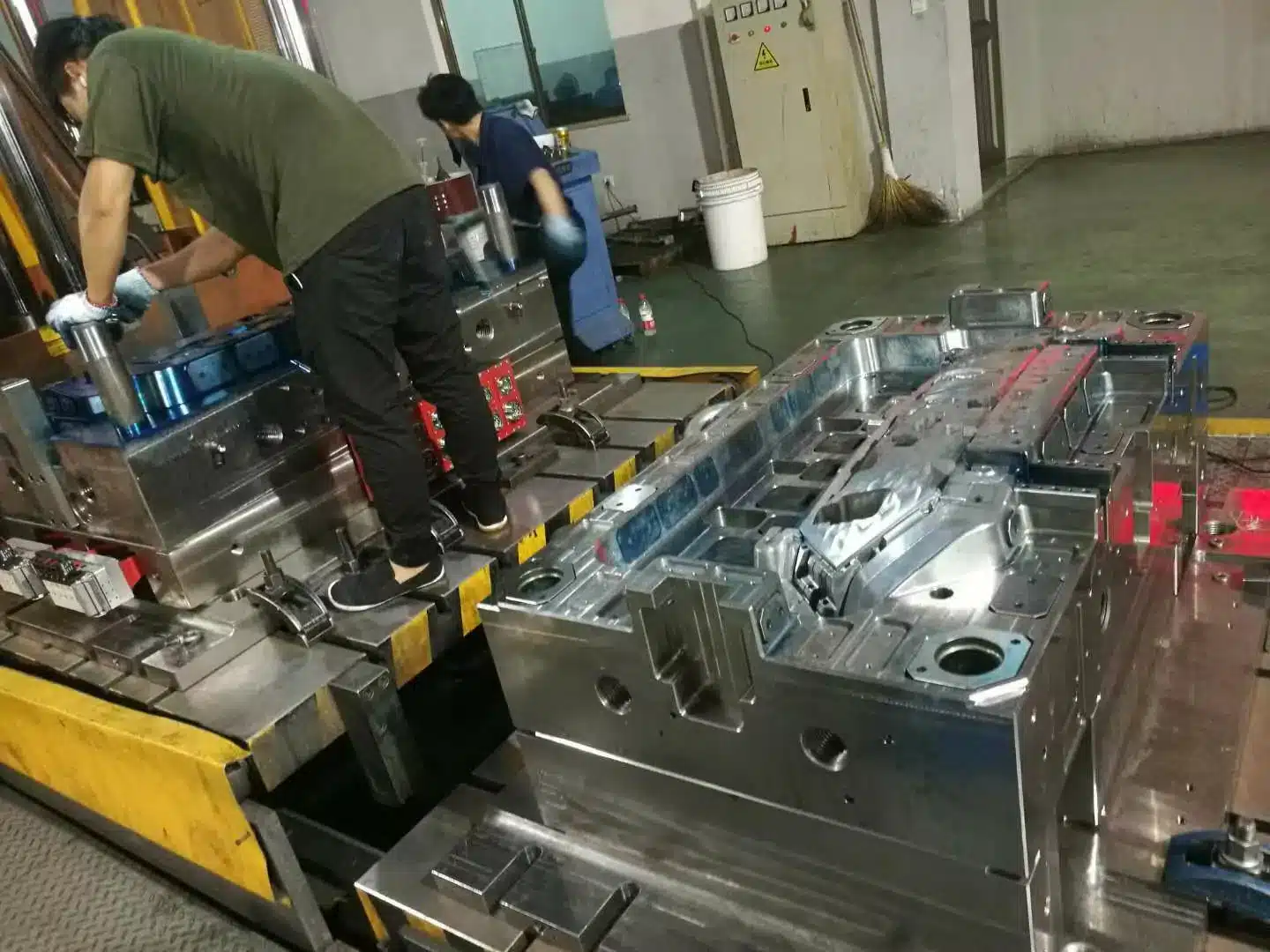
Buyers want to know who is actually building their tools. A polished website and a factory tour video offer some assurance, but experienced procurement managers know that mold work can travel through informal supply chains before reaching them. Hidden subcontracting dissolves accountability and makes consistent quality almost impossible to verify. Our guide on the 10 most common mistakes when sourcing molded parts from China covers this in detail.
What trustworthy suppliers do differently
Several respondents also shared positive experiences — particularly with suppliers they had worked with over extended periods. The pattern that emerged was clear: trust is built through consistency and honesty, not through sales pitches.
Here is what the best suppliers do:
They maintain quality across every shot, not just the first
There is no shortcut here. Every production batch that matches the approved T1 sample is a deposit into a trust account. Every deviation — a slight flash, a sink mark, a tolerance creeping out of spec — is a withdrawal. The mold makers buyers return to year after year are the ones who treat this seriously. The ISO 9001 quality management standard provides the globally recognized framework that distinguishes suppliers who have internalized quality systems from those who merely claim to.
They communicate problems before the buyer discovers them
If a steel grade is on backorder, a lead time is at risk, or a parting line cannot be placed as drawn without trade-offs, the right response is to raise it immediately — not to push ahead and hope it goes unnoticed. Buyers consistently said they can work with problems; what they cannot work with is finding out after the tool is cut.
They have a professional, accurate web presence
A website with spelling errors, stock imagery, vague capability claims, and a generic Gmail address signals carelessness — even if the actual tool room is world-class. Buyers form their first impression here. A well-written site, real factory and mold photographs, and a domain-based email address are not luxuries; they are baseline credibility signals. See how to properly qualify injection molding companies beyond surface appearances.
They make quoting and communication easy
Same-day quotations, clear cost breakdowns (tool cost, part cost, lead time, payment terms), and straightforward English communication reduce friction dramatically. Buyers who can compare injection molding quotes from China quickly and get honest technical answers are far more likely to place an order — and to come back for the next program.
They show their work
Case studies, mold flow analyses, T1 trial videos, and customer-approved project photographs do more to build trust than any certification. Being able to see a finished part — and verify the supplier actually built the tool — adds more credibility than a factory audit ever can. The Plastics Industry Association (PLASTICS) also publishes benchmarks and supplier assessment tools that buyers can use as reference.
A note on IP and the long-term relationship
The intellectual property concern deserves its own acknowledgment. No supplier can promise the Chinese legal system will protect your designs the way US or EU courts would. What we can say is that risk and trust are inversely correlated with the depth of the partnership.
Buyers who shared the most positive experiences typically described a gradual escalation: starting with non-critical components, verifying quality and conduct over several programs, and only then expanding scope to flagship products. One industrial designer described keeping early-stage prototype work with local suppliers until a product is proven, then moving stable, scaled production to a trusted long-term partner in China for cost efficiency. Our detailed breakdown of what to know before buying injection molding from China covers how to structure this kind of phased approach. That is a rational approach — and a model worth considering.
What this means for us
TopWorks is a plastic mold, injection molding, and tooling manufacturer. We read every one of those responses carefully because they apply to us — directly.
Some things we already do well. Others we are still working on. What we are committed to is not treating this feedback as a PR exercise, but as a genuine product brief for how we run our business — from tool design review, through steel selection and machining, to T1 sampling and full production.
If you have sourced tooling from China before and been disappointed, we understand the hesitation. If you are evaluating us for the first time, we would rather earn your trust through results than ask you to take our word for it.
The best thing we can offer is a quote, a DFM review, and a T1 sample — and then consistency after that.
TopWorks provides plastic injection mold making, injection molding production, and precision tooling services for international clients. To request a quote or DFM review, please contact us.

