Category injection molding

Structure of Injection Mold

Structure of Injection MoldA plastic mold is made from various parts, including plates, pins, bushings, pillars, ejectors, and many other pieces of equipment that serve a number of purposes.In Figure 1, the locations of the basic items that comprise the mold…

16 process tips for injection molding

Process Control16 Process Tips for Injection MoldingConsistent parts come from a consistent process. These 16 injection molding tips cover the variables that decide part quality: atmosphere, pressure, temperature, cooling, and troubleshooting discipline.Engineering Summary: Shop-Floor Injection Molding BenchmarksPost-Ejection Shrinkage Timing: Wait…

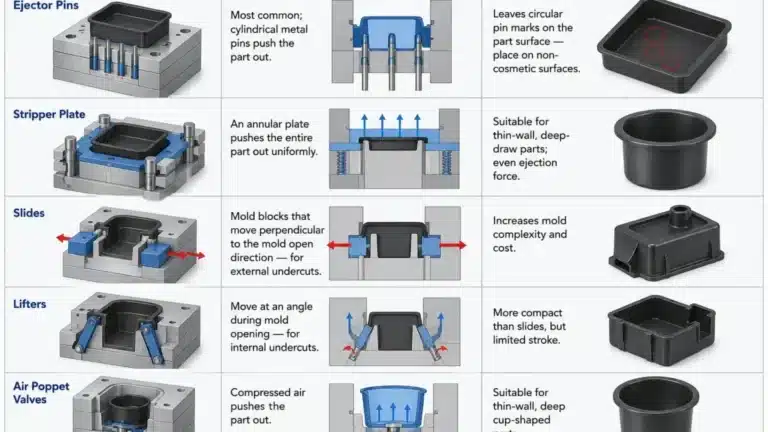
5 Ejection Methods For Plastic Mold

Mold Tooling DesignPlastic Mould EjectionPlastic mould ejection systems push solidified thermoplastic parts off the mold core after cooling shrinkage locks the resin onto the steel. Selecting the right mechanism—pins, sleeves, blades, valve ejectors, stripper plates, or air valves—prevents part distortion,…

mold surface treatment

Tool Steel Metallurgy & FinishingMold Surface Treatment Technology: Nitriding, Carburizing, and PVD CoatingsWhile core steel strength and toughness prevent catastrophic die breakage, the working surface properties of a plastic mold—wear resistance, corrosion resistance, friction coefficient, and thermal fatigue strength—determine cavity…

Undercuts and Draft

DFM & Part GeometryUndercuts and Draft Angles in Injection Molded Part DesignEvery injection molded component must release cleanly from the rigid steel cavity and core once the cooling cycle ends. Designing proper draft angles along vertical walls and minimizing mechanical…