
China Sourcing Guide
Mexico Buyer for China Injection Mold: The 2026 Tariff Playbook
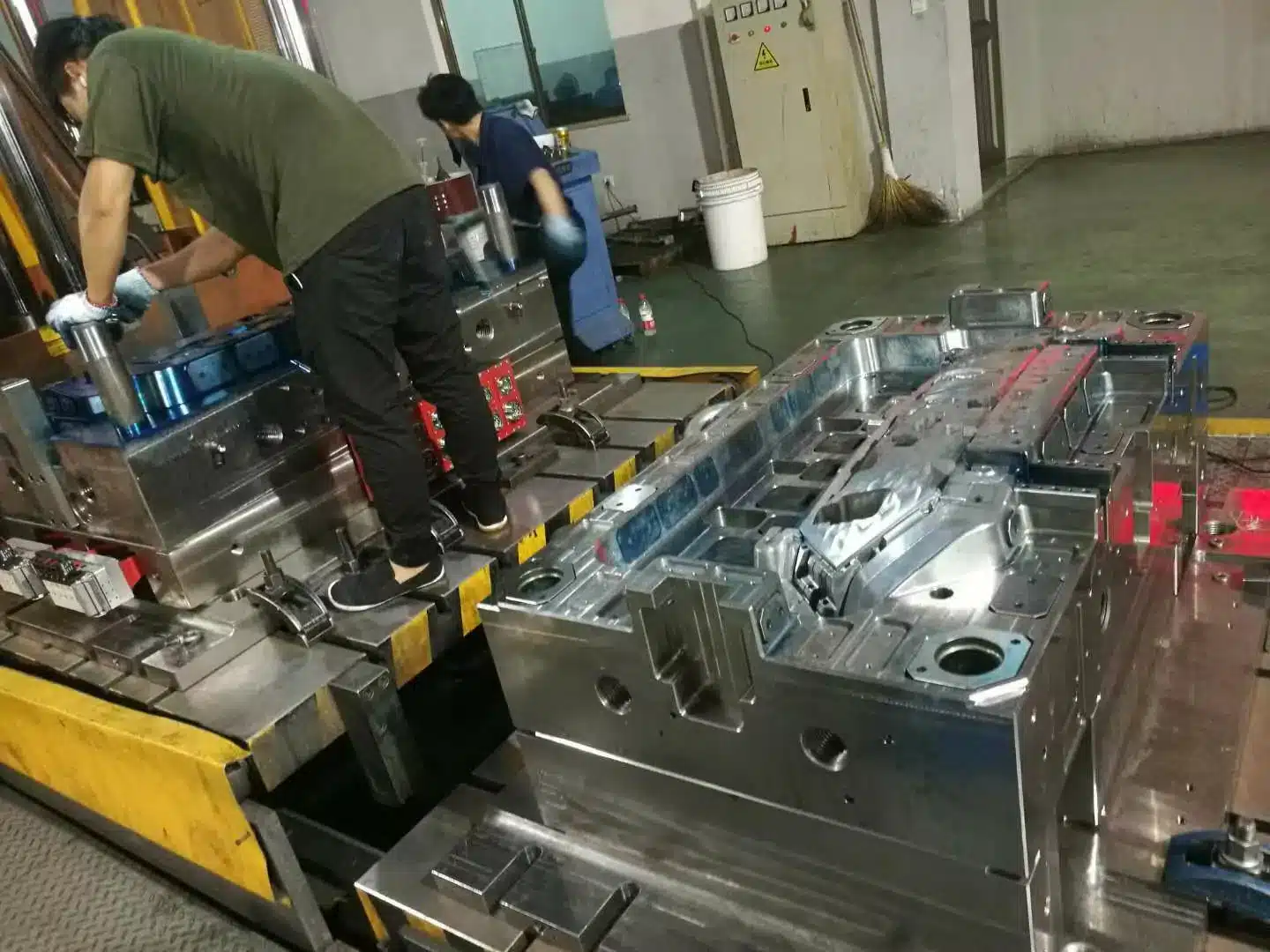
Three of our last ten molds this spring skipped the United States entirely. They landed at Manzanillo. Then trucked up to a plant near Querétaro. The buyer was American. The line workers were Mexican. The tooling was ours, cut in Huangyan.
A Mexico buyer for China injection mold is a manufacturer who skips the US. Usually it’s a maquiladora, or the Mexican plant of a US company. They buy tooling from a Chinese moldmaker. The mold ships straight into Mexico, not through the US first. The reason is money. I’ll show you the number that drives it. Then the paperwork that can quietly eat that number back up.
Mexico buyer for China injection mold: the math behind it
Ship a Chinese mold into the US. It gets hit with a 25% Section 301 tariff. That covers tooling, dies, and molds. Ship the same mold to a Mexican plant instead. The US tariff doesn’t apply. The mold never enters US commerce. On a $40,000 multi-cavity tool, that’s $10,000 you keep.
That 25% isn’t new. It isn’t going away either. The US Trade Representative kept it through the four-year review. The US mold-builder lobby fights hard to keep it. It hits direct imports of Chinese molds. The word “direct” is the whole loophole. A tool sailing from Ningbo to Manzanillo never becomes a US import. Bolt it into a press in Guanajuato. CBP never sees it.
So the math for a buyer with a Mexican footprint is blunt. Keep the tool out of the US. Keep the $10,000. Make the parts in Mexico. Bring the parts north under USMCA. The tool stays south. That’s the play. It’s the same logic driving the broader reshoring and nearshoring shift in injection moulding.
Injection Molding Decision Tools
Estimate your real cost, pick a surface finish, and match the right mold steel. Figures are planning estimates — send a STEP file for an exact quote.
The quote is not the cost. Add duty, freight, and fees to see what a part really lands at.
SPI finish grades, from optical polish to heavy texture. Click a grade to see what it costs you.
Volume, resin, and finish decide the steel. Pick the wrong grade and you pay in rework or a dead tool.
Estimates for planning only. Final cost, finish, and steel depend on part geometry, tolerance, and volume.
What happens after you send us a CAD file?
Every step, how long it takes, and exactly what we need from you.
You send the CAD file
You email us the 3D file with target quantity, resin choice, and timeline. No NDA required to receive a quote — we sign one if you ask.
What we need from you
- 3D file: STEP, IGES, X_T, or STL
- 2D drawing if you have critical tolerances
- Target annual quantity (EAU)
- Preferred resin and color
- Surface finish — SPI A2, B1, texture, etc.
What you get back
- Confirmation we received the file within 24 hours
- Quick check that the file opens correctly
- Questions if anything is unclear
DFM review and quotation
Our engineers open your file, run DFM analysis, and quote the mold plus per-part price. You get a full breakdown — not a one-line number.
What we need from you
- Nothing — this is on us
- Quick reply if we ask a clarifying question
What you get back
- Mold price with steel grade, cavity count, runner type
- Part price at your target quantity
- Lead time estimate for tooling and first samples
- DFM report flagging draft, wall, gate, ejection risks
- Payment terms in writing
You review, we revise
You review the DFM report with your team. We talk through every flagged issue on a call and update the quote if the design changes.
What we need from you
- Decisions on DFM suggestions
- Revised CAD if design changes are needed
- Final cavity count and steel choice
- PO or written approval to proceed
What you get back
- Engineer-to-engineer calls (not sales-to-buyer)
- Updated quote if scope changes
- Signed contract draft for your legal review
Deposit and mold design
After 50% deposit, our mold designers build the full 2D and 3D mold layout. You approve it before any steel is cut.
What we need from you
- 50% deposit by wire transfer
- Written approval of the mold design
- Sign-off on parting line and gate location
What you get back
- Full 3D mold assembly for review
- 2D drawings of all major components
- Cooling and ejection layout
- Parting line and gate location marked clearly
Mold building
Steel is cut. CNC, EDM, polishing, fitting — every stage tracked. You get weekly progress photos so you always know where the project stands.
What we need from you
- Nothing during build
- Quick reply if we hit an unexpected issue
What you get back
- Weekly progress photos with date stamps
- Milestone updates: rough machining, EDM, polish
- Honest early warning if anything slips
- Live video calls anytime you want to see the shop floor
T1 sampling
First shots come off the press. We send samples by DHL or UPS and a full T1 report covering dimensions, cosmetics, and process settings.
What we need from you
- Shipping address for samples
- Inspection of samples within 5–7 days
- Written feedback on any issues
What you get back
- 5–10 T1 samples by express courier
- Dimensional report against your drawing
- Photos and short video of the molding process
- Process parameters: temp, pressure, cycle time
Revisions and approval
Most molds need a T2 — minor steel adjustment, gate tweak, or texture refinement. Revisions inside the original spec are free. We don't quote extra for our own fixes.
What we need from you
- Clear written feedback with photos
- Decisions on any out-of-spec dimensions
- Final part approval before mass production
What you get back
- Honest split between our errors and design changes
- T2, T3 samples until parts meet your spec
- Free revisions for our manufacturing errors
- Final approval document for your records
Mass production and shipping
After balance payment, we run production, pack, and ship by sea or air. The mold stays at our shop for the life of the project — free storage, free routine maintenance.
What we need from you
- Balance payment before shipment
- Shipping forwarder details, or use ours
- Packaging spec if you have one
What you get back
- Production parts to your approved spec
- Quality report with each shipment
- Free mold storage and maintenance
- Mold ownership transfer document on request
Ready to start step 1?
Send us your CAD file. You'll have a quote and a DFM report inside 4 working days.
Send us your CAD file →NDA available on request. No obligation. We reply within 24 hours, Monday to Saturday China time.
“But doesn’t a Chinese mold kill my USMCA?”
No. The tool’s origin has nothing to do with whether your part qualifies. A mold is production equipment. It’s not a material built into the part. USMCA origin depends on where the part is transformed. It also depends on the regional value content of the part’s own inputs — resin, colorant, inserts. Where the steel was machined doesn’t enter that test.
This is the single most common thing buyers get wrong. I’ve talked three of them out of buying US tooling they didn’t need. The logic goes: “China is tariffed, my mold is Chinese, so my parts are tainted.” It doesn’t work that way. Your part molded in Querétaro can be USMCA-originating. The cavity that formed it was cut in Zhejiang. That’s fine.
What can hurt your parts? Chinese-origin resin or components in the bill of materials. Those go into the regional value content test. The mold doesn’t. Keep those two questions apart when you talk to your broker. Brokers blur them together too sometimes.
How the mold actually clears Mexican customs
A mold enters a Mexican plant as temporary-import production equipment. That happens under the plant’s IMMEX program — the old maquiladora regime. IMMEX lets a registered manufacturer bring in machinery, tooling, and inputs. No import duty or IVA up front. The catch: the equipment must serve export production. And the temporary status has to be documented properly.
Two conditions matter. Both have teeth now. First, the plant must hold a live IMMEX authorization. The tooling has to fall within what that authorization covers. Second — this is the 2026 wrinkle — the IVA exemption needs more. The company needs a separate SAT certification: “Certificación en Materia de IVA e IEPS.” Plenty of established plants hold both. A brand-new operation often holds neither. They find out at the worst moment. Picture a $50,000 tool stuck in a bonded warehouse, racking up storage.
A mature maquiladora handles this in its sleep. New line standing up? Ask whether the IMMEX and the SAT certification are both in hand. Ask before the mold ships. A tool in a Mexican port with no IMMEX cover is an expensive paperweight.
The January 2026 paperwork shock
Mexico rewrote its customs law effective January 1, 2026. The duty-deferral shortcuts a lot of people leaned on are gone. SAT tightened origin verification on IMMEX holders hard. The numbers tell it. 2025 saw around 170 IMMEX cancellations [VERIFY]. It also saw more than 600 suspensions [VERIFY]. The new rules expanded the documentation every importer must keep.
So “we’ll figure out the paperwork when it lands” is now dangerous. Every temporary import has to be traceable. What came in. Where it sits. What it produces. When it leaves or gets nationalized. One mold living in one plant for five years? Manageable. But waving things through on a clean reputation is over.
Here’s how I’d put it. The tariff arbitrage is still very real. The cost of sloppiness went up. The buyers who win in 2026 have a broker who treats IMMEX documentation as a discipline. The same documentation discipline shows up across all China injection molding sourcing risk control work — it’s the muscle that separates a tariff-saving project from a customs disaster.
Mexico’s new China tariffs — do they hit your mold?
Mostly no, if the mold enters under IMMEX as temporary equipment. Mexico hit roughly 1,463 tariff lines from non-FTA countries. Duties run as high as 50%. They took effect January 1, 2026, aimed at China. Big targets: autos, auto parts, steel, textiles, plastics. So the worry is obvious. Did they just tariff my mold on the way in?
For an IMMEX plant, no. IMMEX temporary imports for export production keep their duty relief. The new MFN rates don’t change that. The new tariffs bite on definitive imports. Those are goods coming in to stay and sell domestically. A mold imported temporarily, to make exported parts, sits on the sheltered side.
Chinese moldmaker → Pacific Mexican port → IMMEX temporary import → Maquiladora press → Parts exported under USMCA
The trap is the definitive import. That’s a plant keeping the mold permanently, no IMMEX cover, domestic production. That import can face the new China rate. So confirm two things with your buyer. One: the tool comes in under IMMEX as temporary production equipment. Two: your broker checked the specific tariff fraction for HS 8480 tooling against the current decree. Don’t assume. Confirm the fraction.
Manzanillo or Lázaro Cárdenas?
Pick by where your plant sits. Both are Pacific ports. Both take Chinese ocean freight. Manzanillo is busier and better connected. It feeds the Bajío belt cleanly — Guanajuato, Querétaro, Aguascalientes. Lázaro Cárdenas is the backup. Use it when Manzanillo is congested, or when your inland routing favors it.
For plants up in Monterrey and the northeast, the freight math sometimes flips. Landing on the US side and trucking across looks cheaper. But the moment a Chinese mold touches a US port, you’re back in the 25% conversation. That’s the whole reason to land on a Pacific Mexican port. Tell your freight forwarder the tool must clear at a Mexican port. Don’t let a routing tool quietly send it through Long Beach to save a few days.
Transit from a Chinese port to Manzanillo runs four to six weeks. That’s door-to-port, depending on lane and season. A mold is heavy, low-value-density freight. It almost always rides ocean, not air. Build that into your tooling timeline — and into your broader China injection molding supplier selection calendar.
What to ask the moldmaker before you wire the deposit
A moldmaker who has shipped to Mexico is worth more than one who hasn’t. You can tell the difference in about two questions.
Ask if they’ve shipped tooling to a Mexican IMMEX plant. Ask if they can produce the commercial documents a Mexican broker expects — invoice, packing list, HS classification. Ask if they’ll mark the HS code as 8480 tooling correctly. Ask if they understand the mold ships as temporary-import equipment, not a US sale. A shop that’s done this nods. It sends you a sample document set. A shop that hasn’t gets vague.
Then the boring-but-critical ones. Who owns the mold while it sits in Mexico? Is that ownership documented in a way SAT accepts? What’s the spare-parts and warranty path 8,000 miles from the bench that built it? A slide galls in year two. A cavity needs a weld repair. Are they shipping inserts to Querétaro? Or are you flying a part back to China? We keep a spares kit traveling with bigger tools. I’ve watched a line sit idle three weeks. It was waiting on a $200 ejector component. That part should have shipped with the mold. (More on long-haul service expectations in our ultimate mold maintenance guide.)
If a supplier can’t answer ownership and spares cleanly, that’s your answer.
The Spanish problem nobody budgets for
Your Chinese moldmaker writes in English. Your Mexican broker and SAT work in Spanish. The commercial invoice, the HS classification, the IMMEX records — those live in Spanish. Mismatched or sloppy documents across that gap get temporary imports flagged. Budget for someone who can bridge it. Skip that, and expect delays at the port.
Read the quote like you don’t trust it
A good Chinese mold quote for a Mexico job shows the parts that protect you. Silent on shipping terms, HS classification, and the Mexican import side? That silence is information.
Look for the DFM report. A real design-for-manufacturing review covers gate locations, draft angles, wall-thickness flags, an ejection plan. A supplier who sends one is a supplier who answers the phone in month eighteen. A quote that’s just a low number and a lead time is priced to win the order. It’s not priced to deliver the tool. We’ve inherited too many “cheap” molds from other shops. They needed a re-cut on arrival. Nobody flagged a 0.5° draft on a textured wall. The savings evaporated on the first sampling. The deeper signals to watch for are spelled out in how to compare injection molding quotes from China.
| Cost line | US-bound tool | Mexico-bound tool |
|---|---|---|
| Steel + machining (China bench) | Same | Same |
| Ocean freight | To US port | To Manzanillo / Lázaro Cárdenas |
| Section 301 tariff (25% on HS 8480) | Applies | Does not apply |
| Mexican import treatment | N/A | IMMEX temporary import (duty deferred) |
| Net delta on a $40,000 tool | +$10,000 | Baseline |
On price: a Mexico-bound tool costs the same at the bench as a US-bound one. The steel and the cavities cost what they cost. The difference lives entirely on the import side. That’s where the 25% you’re saving sits.
The July 1 wildcard
I’ll be straight about the one thing in motion. The USMCA joint review opens July 1, 2026. A central theme is exactly this. Washington calls Mexico a “back door” for Chinese goods. It’s pushing for tighter scrutiny of Chinese content in Mexican plants.
This doesn’t threaten the tooling play directly. The review targets transshipment and content. That’s Chinese goods getting light processing in Mexico, then claiming North American origin. A mold making genuine, transformed parts isn’t transshipment. It’s manufacturing. But the enforcement climate around anything Chinese-touched is tightening. So the documentation discipline isn’t optional hygiene anymore. It’s how you stay on the right side of a line regulators are actively redrawing.
One more piece for your calendar. A US–China tariff truce is set to lapse in late 2026 unless renewed. That could shift the broader rate picture. None of it changes the structure. China tooling is cheap. US tooling import is taxed. Mexico is the legal path around that tax. But the margins move. Re-check the specific rates the quarter you ship.
FAQ
Do I pay the US 25% tariff on a mold shipped to Mexico instead of the US?
No. The Section 301 tariff hits Chinese molds imported directly into the United States. A tool that sails to a Mexican port and goes straight to a Mexican plant never enters US commerce. So that tariff doesn’t attach.
Can my parts still qualify for USMCA if they’re made in a Chinese mold?
Yes. USMCA origin depends on where the part is transformed and on its own materials’ regional value content. A mold is production equipment, not an input built into the part. Its Chinese origin doesn’t affect qualification. Watch your resin and component origins instead — those count.
Does the Mexican plant need IMMEX to bring in a Chinese mold cheaply?
For practical purposes, yes. IMMEX lets the plant import the mold as temporary production equipment, with duty and IVA deferred. Without IMMEX cover, the mold can be treated as a definitive import. Then it may face Mexico’s regular duties, including the higher 2026 rates on Chinese goods.
Will Mexico’s 2026 China tariffs hit my mold on the way in?
Not if it enters under IMMEX as temporary equipment for export production. That route keeps its duty relief. The new tariffs target definitive imports meant to stay and sell in Mexico. Confirm with your broker that the tool is classified and imported as temporary IMMEX equipment.
Which Mexican port should the mold land at?
Usually Manzanillo for the Bajío region, or Lázaro Cárdenas as the backup. Both are Pacific ports that take Chinese ocean freight. Don’t route the tool through a US port to truck it across. That re-exposes it to the 25% US tariff.
Who owns the mold while it sits in a Mexican plant?
That depends on your purchase agreement. But ownership must be documented in a way SAT accepts, since the tool is on the books as a temporary import. Settle ownership, transfer terms, and end-of-life handling in writing before the tool ships.
What happens to the mold when the part is discontinued?
The temporary-import status has to be closed out properly. The tool gets re-exported, transferred to another IMMEX program, or formally nationalized with duties paid. Leaving a temporary import unaccounted for is exactly what SAT’s tighter 2026 rules catch.
Bottom line
China tooling is cheap. The US import door is taxed. Mexico is the legal path around that tax — but only if the IMMEX paperwork, HS classification, and ownership documents are clean before the mold leaves the bench. Get those right and the $10,000 per tool stays in your pocket. Get them wrong and a customs warehouse eats the savings.
Shipping a Chinese mold into a Mexican IMMEX plant?
We’ve cut tooling that landed at Manzanillo and Lázaro Cárdenas, with HS 8480 documentation, ownership records, and spares kits built for the route. Send us your part and target plant — we’ll quote the tool and the document set together.

