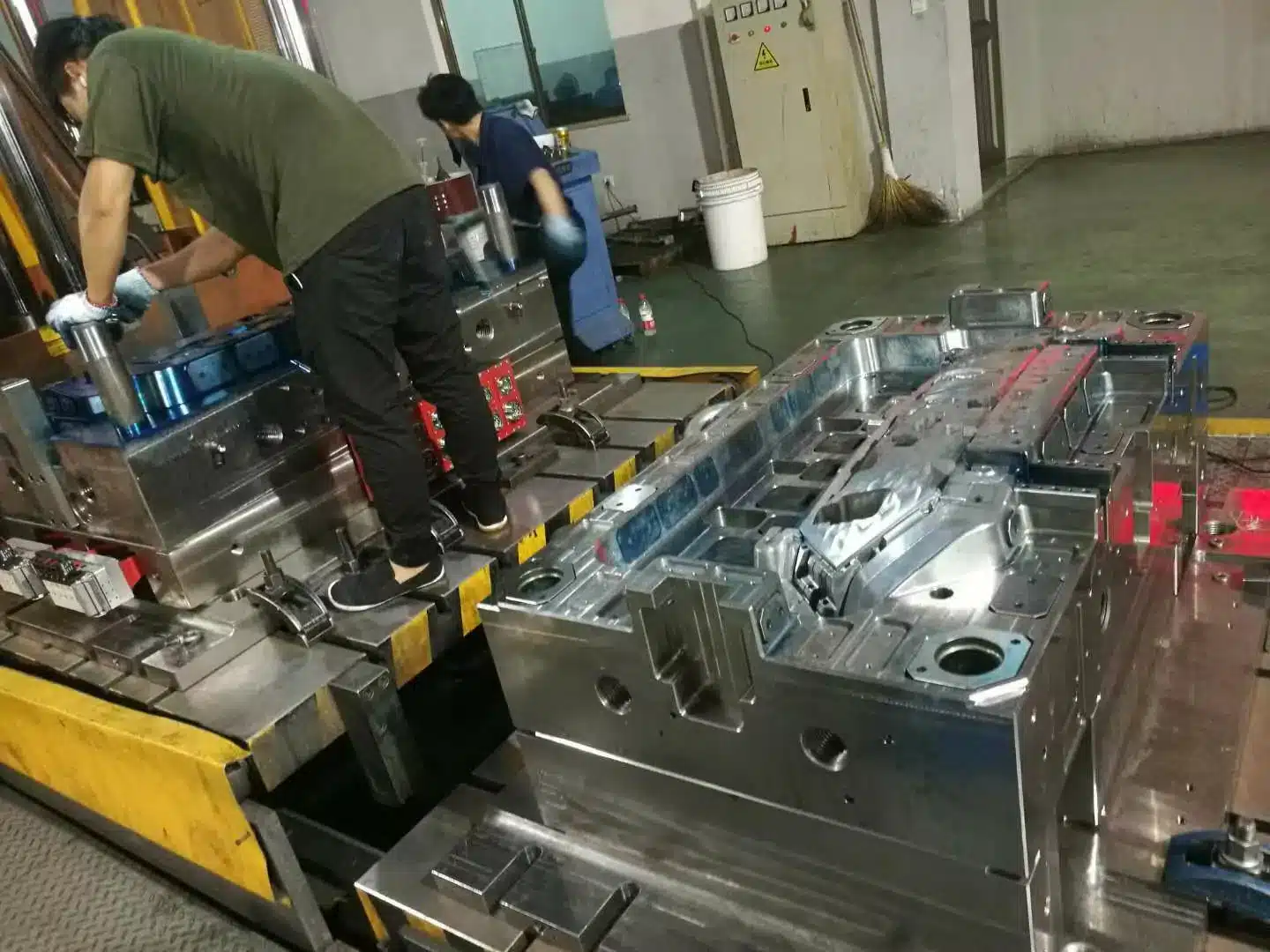

Precision Mold Buyer Guide
Custom Precision Injection Mold: Cost, Tolerance & Sourcing Guide (2026)
Three quotes. $18,000, $31,000, $52,000. Same STEP file, same tolerance callout, same buyer staring at the spread wondering which shop is honest.
One of those tools will run clean for a million parts. One will ship you a headache by T2. This guide tells them apart before your deposit clears.
What “precision” actually means in a mold quote
A custom precision injection mold holds repeatable tolerances of ±0.025mm or tighter. Standard molds live around ±0.1mm. That single number is the whole gap.
Standard molds work fine when small variation doesn’t bite. Precision molds exist for parts that must seat, seal, or pass light cleanly — lenses, medical connectors, fuel components.
“Custom” just means it’s cut to your geometry. Stack custom and precision together and you’re asking the shop for two things at once. They cut steel to your part. Then they hold tight numbers across every shot, not just the first one.
That second part is where the cost lives. A shop quoting precision work cheap is usually quoting standard work. You won’t know until T1 samples come back.
What a custom precision injection mold costs
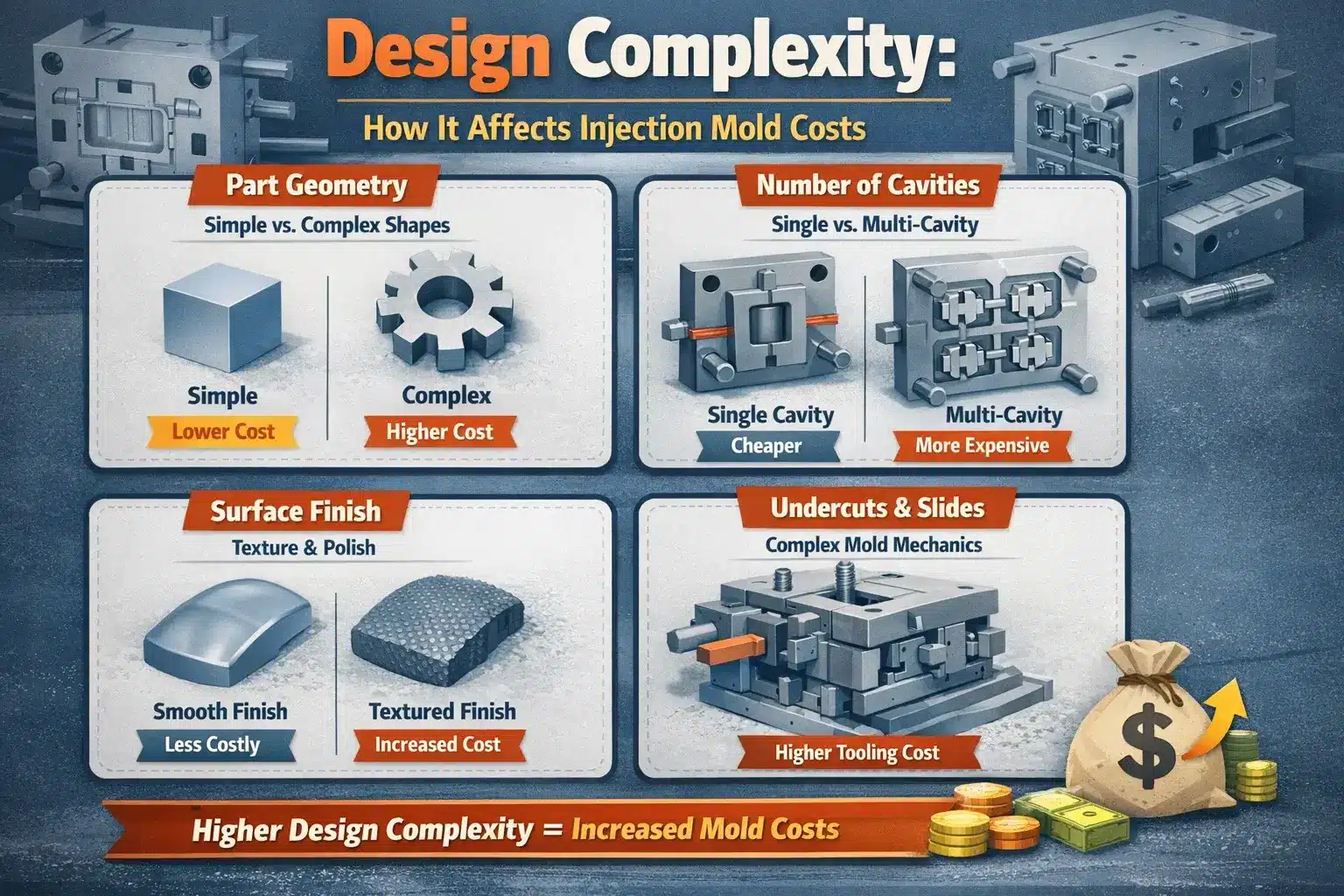
A custom precision injection mold typically runs $20,000 to $60,000 for a multi-cavity hardened-steel tool. Simple single-cavity precision molds start around $5,000. Complex high-cavitation work climbs past $100,000.
Tooling is your one-time cost. Per-part price is the one you pay forever.
Most buyers don’t see this split clearly. Your real spend is tooling, plus per-part price, times volume across the program. Cheap aluminum saves you upfront and bleeds you on every shot. Multi-cavity hardened steel hurts the PO and pays back at scale. The math runs one direction for your volume. A good shop tells you which direction before you ask.
| Mold type | Tooling cost (USD) | Mold life (cycles) | Best for |
|---|---|---|---|
| Single-cavity, simple | $1,500 – $5,000 | 10K – 100K | Prototypes, low volume |
| Single-cavity, precision | $5,000 – $15,000 | 100K – 500K | Tight-tolerance low runs |
| Multi-cavity aluminum | $8,000 – $20,000 | 10K – 100K | Mid-volume, looser specs |
| Multi-cavity precision steel | $20,000 – $60,000 | 1M – 5M | Production tight-tolerance parts |
| High-cavity / complex steel | $60,000 – $100,000+ | 5M – 10M+ | High-volume, micro, optical |
Cost bands are 2026 market estimates. Check them against your own recent quotes. Per-part pricing at volume usually lands between $0.50 and $5.00, depending on resin, cycle time, and cavity count.
Why two quotes for the same part differ 3x
Same part, three quotes, triple the spread. That’s normal. It’s not always one shop ripping you off.
The gap comes from choices the quote never spells out. A softer steel that won’t survive your volume. A single cavity where you needed four. Hand de-molding instead of automatic ejection. A skipped mold-flow that turns into warpage you eat later.
A lower tooling quote usually hides a compromise — steel grade, cooling design, or process validation. The cheap mold stops being cheap after three revision rounds and a delayed launch.
When you compare quotes, you’re not comparing prices. You’re comparing what each shop decided to leave out of the number.
Tolerance capability by material
The resin caps the tolerance you can hold. The spread is wider than most buyers think.
POM and PEEK shrink predictably, so they hit ±0.003 to ±0.004mm. PA66 shrinks more, so it lands at ±0.008 to ±0.03mm. Most precision targets ±0.025mm. Medical and aerospace push to ±0.001 to ±0.005mm, and that’s a different price tier entirely.
ISO 20457:2018 is the governing standard. Name it in your spec. Then everyone is measuring against the same book.
| Material | Achievable tolerance | Shrink behavior | Typical use |
|---|---|---|---|
| POM (acetal) | ±0.003 – 0.004mm | Predictable, gears well | Gears, precision mechanical |
| PEEK | ±0.003 – 0.004mm | Low, stable | Medical, high-temp |
| Polycarbonate (PC) | ±0.005mm | ~0.5 – 0.7% | Optical, lenses, clear parts |
| ABS | ±0.025mm | Moderate | Enclosures, consumer |
| PA66 (nylon) | ±0.008 – 0.03mm | Higher, glass-fill helps | Connectors, structural |
Tightening the spec costs real money. Going from ±0.05 to ±0.01mm on a polycarbonate lens can add 30 to 50% to the tooling. The polishing, the steel choice, and the extra validation all stack up.
So before you write ±0.005mm on a drawing out of habit, ask whether the part needs it. Half the over-spec quotes we review start with a tolerance nobody could justify on the function.
Mold steel — what you’re really paying for
The steel grade decides how long your mold lives and how good your parts look. It’s a bigger cost lever than most buyers realize.
P20 is the workhorse. Pre-hardened, good for a few hundred thousand shots, the default for parts that don’t fight back. Step up to H13 or 718H when you need a million-plus cycles, or when an abrasive glass-filled resin would chew through softer steel.
Reach for S136 stainless when corrosion or mirror finish matters. That’s most medical and optical work.
| Steel | Character | Mold life | Use when |
|---|---|---|---|
| P20 / 718H | Pre-hardened, general | 300K – 500K shots | Standard parts, moderate volume |
| NAK80 | Good polish, mid-grade | 500K – 1M shots | Cosmetic surfaces |
| H13 | Hardened, wear-resistant | 1M+ shots | High volume, abrasive resins |
| S136 (stainless) | Corrosion-resistant, mirror polish | 1M+ shots | Medical, optical, clear PVC |
Good shops buy the same steel everyone buys. P20, H13, and S136 come from the same global suppliers whether the shop sits in Ohio or Shenzhen.
So when a quote is cheaper, the savings aren’t in the steel. They’re in labor and overhead. We’ll get there.
But if a quote is way cheaper and the spec sheet still says S136, ask to see the mill cert. That’s where corners get cut quietly.
Lead time, T1 samples, and the revision loop
Plan on 15 to 25 days for a prototype mold. Production precision tools run 30 to 45 days before shipment. Then add the part nobody budgets for — the revision loop.
After the steel is cut, the shop runs T1 samples. These are the first parts off your actual mold. You measure them against your drawing. You almost always find something to adjust.
T1 is not a formality. It’s where you catch the dimension that drifted half a tenth. The gate vestige sitting on the cosmetic face. The sink mark over a thick boss the cooling didn’t reach.
Build one or two revision rounds into your schedule and your budget. They are coming. A clean program runs T1, you mark up, the shop adjusts, you sign off. A messy program is what happens when a buyer treated T1 as a rubber stamp.
Sourcing from China? Add 10 to 15 days for ocean freight and customs on top of the build time. Air freight pulls door-to-door under a week if you’ll pay for it. Either way, the build clock and the shipping clock are separate. Don’t let any quote blur the two together.
China vs USA for precision tooling
A precision mold from China runs 40 to 65% cheaper than the same tool from a US shop. That gap narrows to 35 to 50% once you stack tariffs, freight, and inspection on top.
Landed cost is the only number that matters. A $22,000 China quote and a $45,000 US quote are not actually $23,000 apart by the time the tool sits in your facility.
The savings are real. They come from labor and overhead, not from cut corners. A US toolmaker bills $50 to $100 an hour. The Chinese equivalent is a fraction. Factory space, utilities, and admin all cost less too.
Top Chinese shops run the same German 5-axis machines, the same Japanese EDMs, the same CMMs. They hit ±0.0005-inch accuracy with ISO 9001 and ISO 13485 certs on the wall. Geography doesn’t set quality. Price point and shop selection do.
| Cost line | China | USA |
|---|---|---|
| Base tooling quote | $22,000 | $45,000 |
| Tariff (varies by HS code) | +$2,000 – $11,000 | $0 |
| Freight + customs | +$1,500 – $3,000 | minimal |
| Inspection / secondary QC | +$1,000 – $2,000 | included |
| Landed total (est.) | ~$27K – $38K | ~$45K |
| Tooling lead time | 30 – 45 days | 45 – 75 days |
Tariff rates on Chinese tooling and parts shift with HS code and policy. Section 301 rates moved hard in 2026. Confirm the current rate on your specific classification before you run this math. Figures above are illustrative.
Here’s the move a lot of smart buyers make. Build the mold in China, ship the tool to the US, then run production domestically. You capture most of the tooling savings. You own the physical tool. You dodge per-part tariffs and ocean delays on every production run.
For volumes between roughly 20,000 and 150,000 parts, that hybrid deserves a hard look.
The break-even is volume. You generally need 10,000-plus parts over the mold’s life for offshore tooling to pay off after management overhead. Below that, or if your design changes every month, or your demand is unpredictable — a domestic shop’s faster revision turn often wins on total cost, even at a higher sticker.
How to tell a real precision toolmaker from a trader
Ask for the machine list with tonnage. Ask who runs your DFM review. A factory answers in thirty seconds. A trader stalls.
This is the question most buyers never think to ask. It’s the one that saves them.
Plenty of “manufacturers” in the China sourcing space are trading companies. They take your file, mark it up, and subcontract the cutting to a shop you’ll never see or audit. Sometimes that works fine. Often it means nobody owns your quality problem when it shows up. Your “factory contact” is three steps removed from the steel.
Ask these. Listen to how fast and how specific the answers come back:
- What machines do you have, by tonnage, and how many of each?
- Steel cutting and EDM — in-house or subbed out?
- Who runs the mold-flow and DFM — name the engineer.
- Send me a recent first-article inspection report and your CMM capability sheet.
- Who owns the tool, and can I pull it if the relationship ends?
A real precision shop has answers ready. They live this every day. The shops that get cagey about their own equipment list are the ones buyers find out about later, the hard way, when a tool needs a repair and suddenly nobody can touch it.
Mold ownership, IP, and post-shipment liability
You should own the mold outright. Your contract should say so in writing before the deposit clears.
This is the term buyers forget until they try to move a program. Then they discover the “factory” is holding the tool hostage. The mold you paid for is your asset. Get the ownership, the right to transfer, and the right to pull it spelled out in the PO. In writing.
Liability is the other gap nobody covers. What happens when a shipment of parts fails inspection? Who pays for the rework, the scrap, the air freight to recover the schedule?
Sort this before production. Not after the bad lot lands at your dock. A serious supplier will agree to a defect threshold, a corrective-action process, and who eats the cost when parts go out of spec. A supplier who waves this off is telling you how the relationship ends.
On IP, the honest read is hard. Protection overseas is weaker and harder to enforce than at home. That’s a real risk for a novel design. It’s the strongest argument for building domestically, or running the hybrid where production stays on your side of the ocean.
Lock the design before you send files. Send only what the shop needs to quote. Keep the ownership terms airtight. None of that makes the risk zero. It makes it manageable.
An RFQ that gets you a real quote
A vague RFQ gets you a vague quote and a surprise at T1. Hand the shop specifics and the number you get back is one you can actually compare.
Copy this. Fill in your part. Send it with your STEP or IGES file:
| Precision Injection Mold RFQ | |
| Part name / function: | |
| 3D file format attached: | STEP / IGES |
| Annual volume / total program volume: | |
| Material (resin + grade): | |
| Critical tolerances (per ISO 20457): | ±____mm on features [list] |
| Surface finish (SPI grade): | A-1 / A-2 / B-1 / etc. |
| Required mold life (shots): | |
| Mold steel preference (or “recommend”): | P20 / H13 / S136 |
| Cavity count (or “recommend”): | |
| Mold class (SPI 101–105): | |
| Tool ownership: | buyer owns outright, transferable |
| Deliverables: | DFM report, T1 samples, first-article inspection, CMM report |
| Target T1 date: | |
| Quote must itemize: | tooling, per-part price, lead time, revision policy |
Spelling out the deliverables and the ownership terms does two jobs. It gets you a comparable quote. And it tells you fast which shops operate like a partner — and which ones quote a low number and figure out the rest later.
FAQ
How much does a custom precision injection mold cost?
A custom precision injection mold typically costs $20,000 to $60,000 for a multi-cavity hardened-steel tool. Simple single-cavity precision molds start around $5,000. Complex high-cavitation or micro tools run past $100,000. Per-part pricing at volume usually lands between $0.50 and $5.00.
What tolerance can precision injection molding hold?
Most precision applications hold ±0.025mm. Medical and aerospace push to ±0.001 to ±0.005mm. The plastic sets the ceiling. POM and PEEK reach ±0.003 to ±0.004mm. Higher-shrink resins like PA66 land around ±0.008 to ±0.03mm. ISO 20457:2018 is the governing standard.
How long does a precision injection mold take to build?
Plan on 15 to 25 days for a prototype mold and 30 to 45 days for a production precision tool before shipment. Add one or two revision rounds after T1 samples. For China sourcing, add 10 to 15 days for freight and customs.
Is a Chinese precision mold as good as a US one?
It can be. Top Chinese shops run the same CNC and EDM equipment, hold ISO 9001 and ISO 13485 certs, and hit ±0.0005-inch accuracy. Quality tracks the shop and the price point, not the country. The real risk is sourcing a trader instead of a real factory.
Who owns the mold after it’s built?
You should — outright, with the right to transfer. Get tool ownership written into the purchase order before you pay the deposit. Buyers who skip this sometimes find a supplier holding the tool hostage when they try to move the program.
What’s the difference between precision and standard injection molding?
Precision molds hold repeatable tolerances of ±0.025mm or tighter. Standard molds run around ±0.1mm. Precision tooling needs harder steel, finer machining, and full process validation. That’s why it costs 30 to 50% more upfront.
How many parts will a precision mold last?
A hardened-steel precision mold lasts 1 to 10 million cycles depending on steel grade and resin. P20 handles 300,000 to 500,000 shots. H13 and S136 run past a million. Aluminum tooling tops out at 10,000 to 100,000 cycles and suits low-volume work only.
Pull your two or three tightest tolerances, your annual volume, and your resin grade. Drop them into the RFQ block above. Send it with your STEP file.
The quotes that come back itemized — tooling, per-part, lead time, ownership — are the shops worth a second conversation. The ones that come back as a single round number are telling you exactly what to expect.
Need a second opinion on a quote before your deposit clears? Request a Free DFM Review

