CHINA AUTOMOTIVE TOOLING
China Bumper Mould Manufacturer
Search “China bumper mould manufacturer” and you hit a wall fast. Most results are trading companies reselling factory capacity. Others are factories that never cut a Class-A automotive tool. Both errors cost real money. Bumper moulds are large tools with tight tolerances. They tie up serious capital. A bad vendor choice costs months, not days.
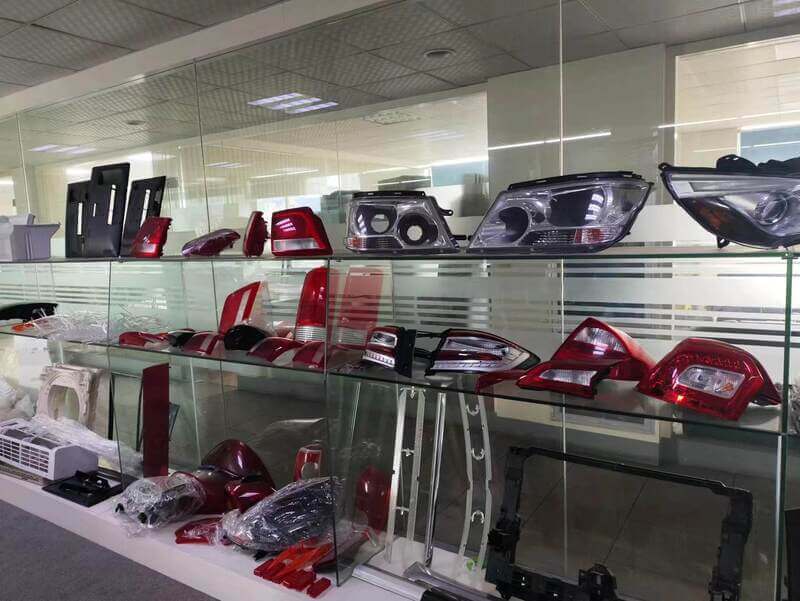
Quick Answer. Topworks is a bumper mould manufacturer in Huangyan, Zhejiang, the region known as China’s Mould City. We build front, rear, and cover bumper moulds for automotive OEMs and Tier 1 suppliers. Steel options are P20, H13, S136, and NAK80. We run cold-runner and hot-runner systems, including sequential valve gate. We are a factory, not a trading company. Every mould is designed, machined, and sampled in-house, start to finish. Mid-complexity tooling runs $15,000–$30,000. Large hot-runner Class-A moulds run $50,000–$80,000, with lead times of 8–14 weeks. We are ISO 9001 certified, with 20+ years in tooling, shipping to 20 countries.
Why Source Bumper Moulds From a China Manufacturer
Zhejiang and Guangdong hold more automotive tooling capacity than almost anywhere else. Machinist experience runs deep here. The steel supply chains are dense too. For a large part like a bumper, tooling can hit six figures. That regional density cuts your per-unit cost. Precision holds, as long as you pick a real manufacturer with automotive-grade equipment and QC.
The tradeoff is distance. You can’t walk the shop floor every week. That is why vendor selection matters more than price haggling. It is the single most important decision in the whole sourcing process.
Topworks: Manufacturer Profile & Capabilities
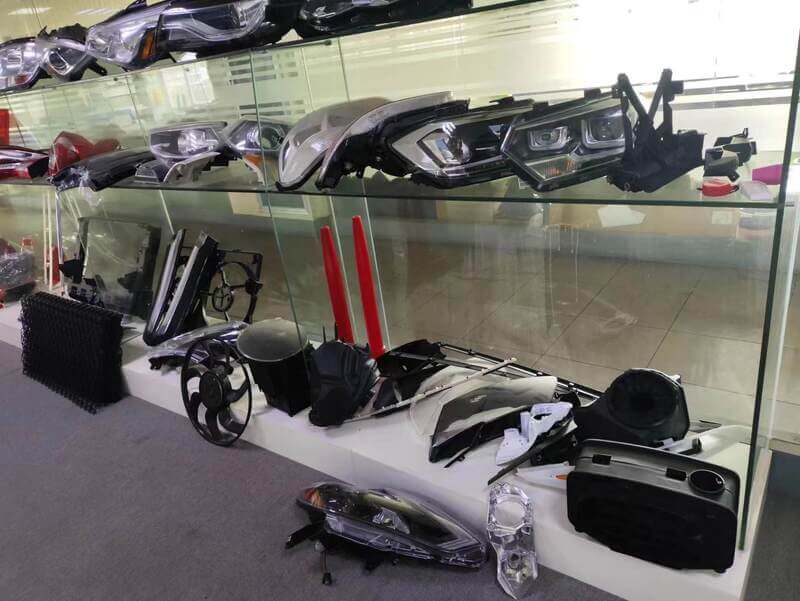
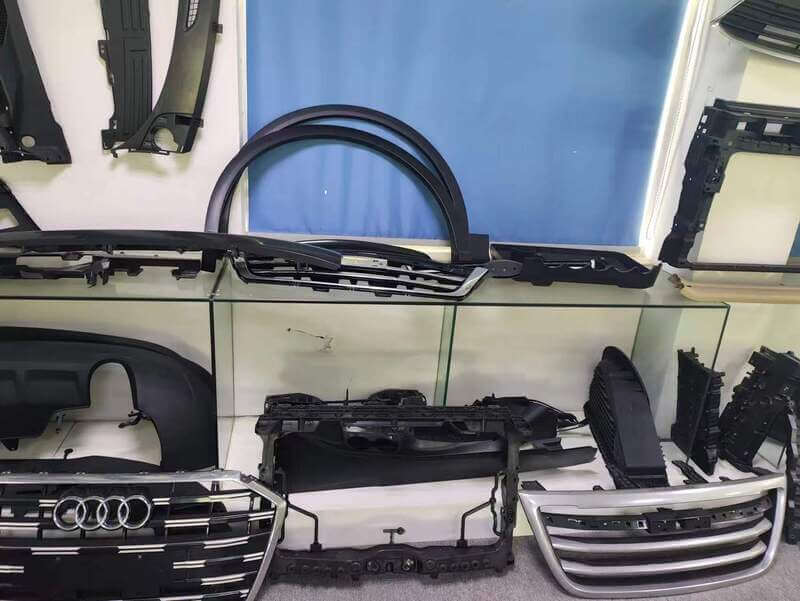
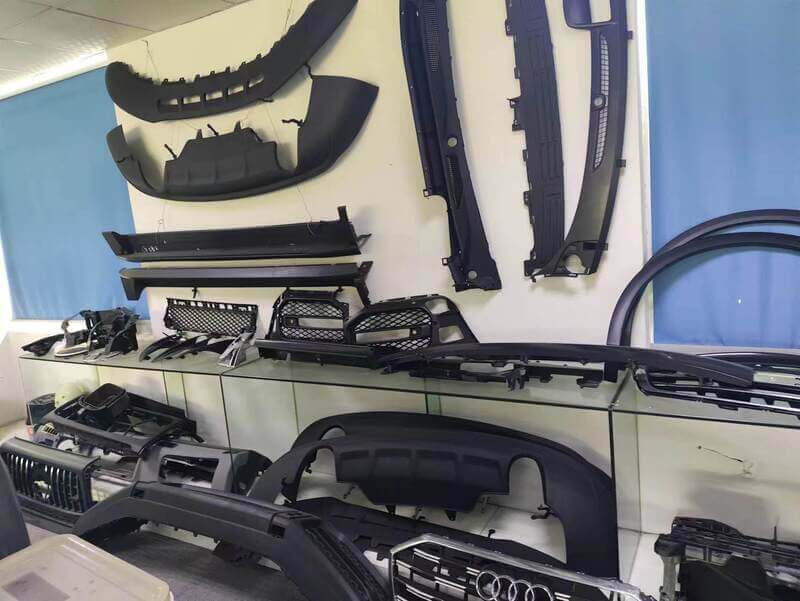
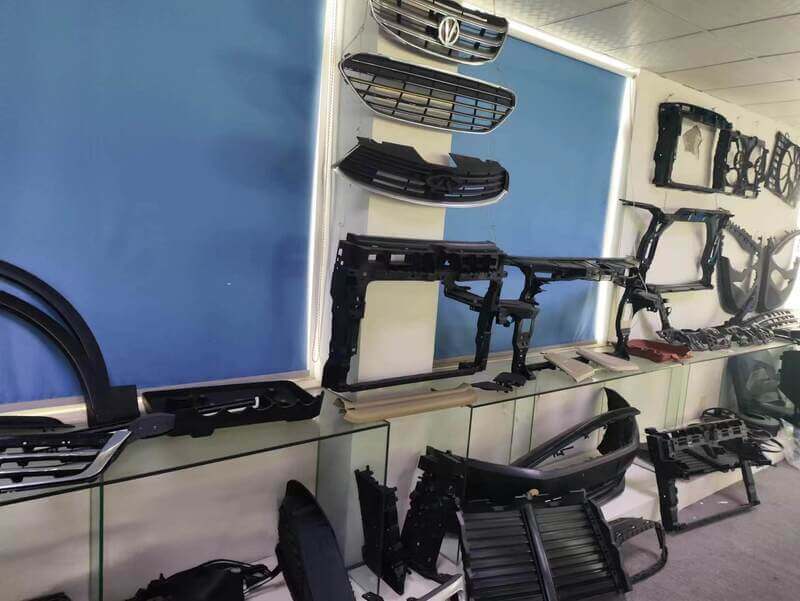
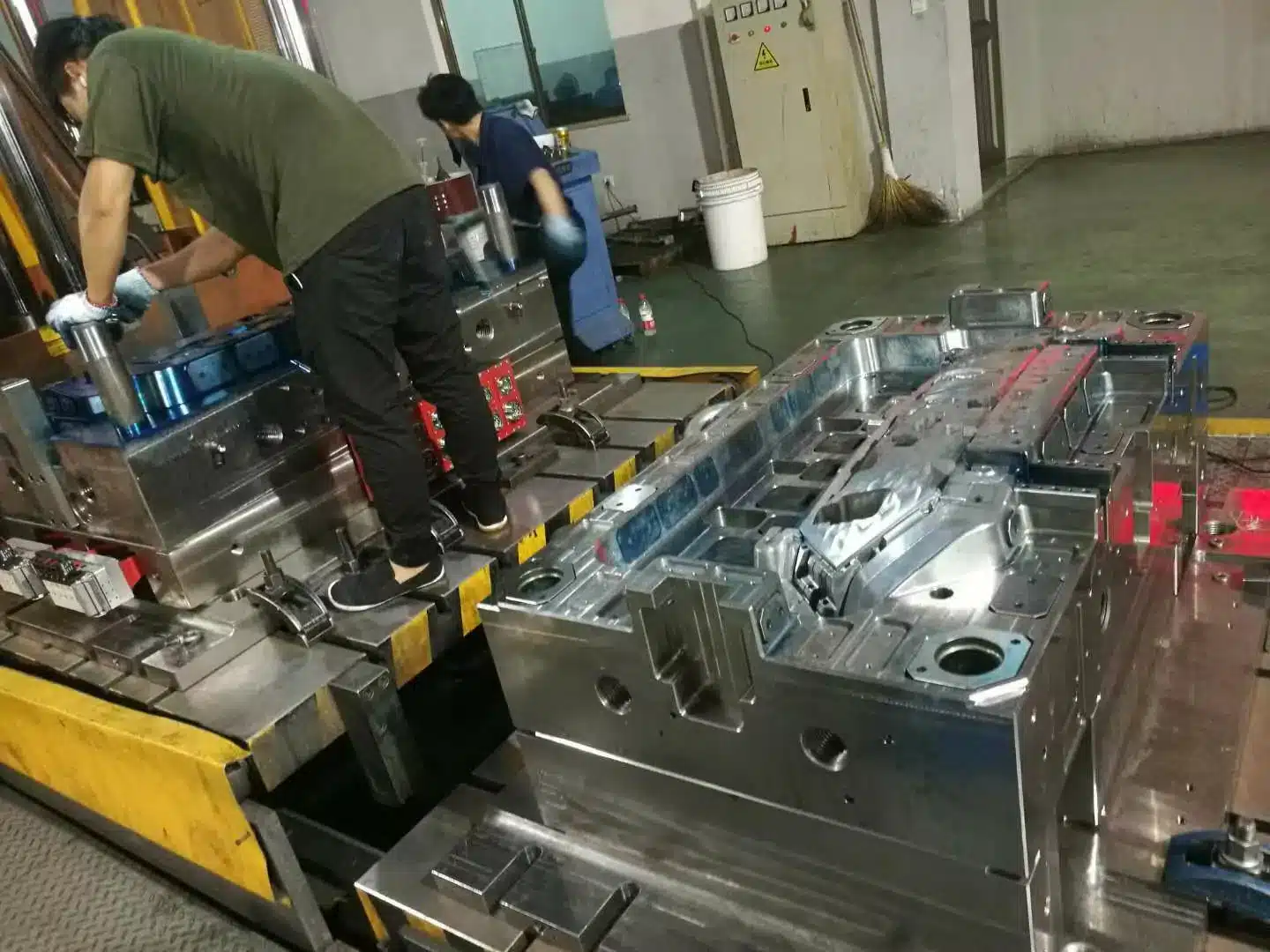
Topworks Plastic Mold runs out of Mould City, Huangyan, Zhejiang. We are a direct factory, not a sales office. You work with the engineers building your tool. No middle layer sits between you and the shop floor.
| Detail | Specification |
|---|---|
| Location | Mould City, Huangyan, Zhejiang, China 318020 |
| Certification | ISO 9001 |
| Experience | 20+ years in tooling and manufacturing |
| Factory footprint | 2000 m² |
| Machining equipment | 6 CNC machines, 4 EDM units, 3 wire-cut machines, capable of large-format automotive mould bases |
| Injection capability | 8 injection molding machines from 80 T to 850 T for T1/T2 sampling and validation runs |
| Export experience | Shipping to 20+ countries with DDP options available |
| Engineering software | UG, SolidWorks, Moldflow |
Every bumper mould goes through DFM review, mould design, machining, assembly, and T0/T1 sampling. No step gets outsourced to a third-party workshop.
Bumper Mould Types We Manufacture
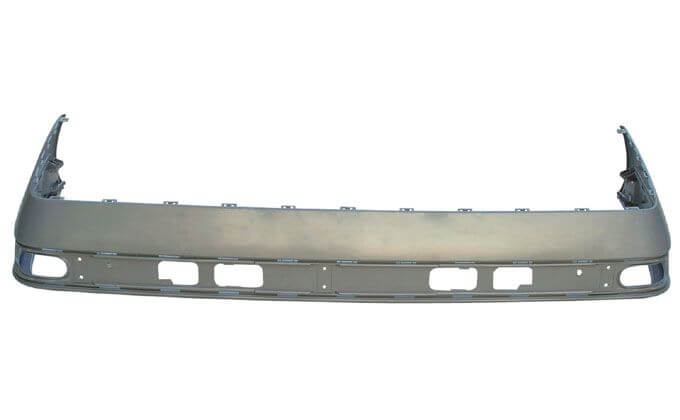
As a China bumper mould manufacturer, we build the full range of bumper tooling. That spans passenger cars, SUVs, and commercial vehicles.
| Mould Type | Typical Application | Parting Strategy |
|---|---|---|
| Front bumper mould | Passenger car / SUV front fascia | Internal or external parting depending on Class-A visibility |
| Rear bumper mould | Passenger car / SUV rear fascia | Typically external parting |
| Bumper cover mould | Trim/cover panels, commercial vehicles | Simplified parting, lower tonnage |
| Family (LH/RH) bumper mould | Left/right symmetric parts where press capacity allows | 1+1 cavity layout |
Most bumper moulds run single-cavity. Part size and clamp tonnage (2,500–3,500 tons) drive that. Family mould concepts work for some left/right pairs, though.
Materials & Steel Grades We Work With
Steel choice depends on volume, resin, and cosmetic needs. P20, 2738, and 718H are the standard pre-hardened steels for mid-volume tooling. H13 adds wear resistance for demanding production runs. NAK80 takes a higher polish for premium Class-A surface finish. S136 handles corrosion resistance where the resin or environment needs it.
On resin, we run PP, modified PP, talc- or glass-fiber-reinforced PP, PC/ABS blends, and TPO. These are the standard bumper fascia families.
China Bumper Mould Manufacturer vs. Trading Company: How to Tell Them Apart
Equipment ownership settles it. The real question is simple. Are they a factory or a trading company? Almost no supplier page answers directly. Most pages ranking for this term are trading companies. Here is how the three vendor types differ.
| Criteria | Real Manufacturer (Factory) | Trading Company | Small Workshop |
|---|---|---|---|
| Owns machining equipment | Yes — CNC, EDM, wire-cut on-site | No — outsources to rotating subcontractors | Limited — often shares equipment |
| Engineering/DFM review done in-house | Yes | Passed through to whichever factory wins the job | Informal, inconsistent |
| Price transparency | Can break down tooling cost by steel/gating/cavity | Marks up factory quote, rarely itemizes | Variable, undocumented |
| Automotive-grade QC (CMM, sampling reports) | Standard | Depends on subcontracted factory | Often absent |
| Accountability if defects appear | Direct — same team designed and built it | Diluted — trading co. mediates between you and factory | High risk — limited recourse |
| Typical lead time reliability | Stable, factory controls its own schedule | Subject to subcontracted factory’s queue | Unpredictable |
One question separates them. Ask if they machine in-house or subcontract. A factory answers with specifics. Equipment list, floor space, machine brands. A trading company stays vague. That is the whole test.
Bumper Mould Cost & Lead Time
Bumper tooling from a Chinese manufacturer falls in these ranges.
| Tooling Type | Typical Cost (USD) | Typical Lead Time |
|---|---|---|
| Mid-complexity automotive mould (cold runner) | $15,000 – $30,000 | 35–55 days from DFM approval |
| Large hot-runner bumper mould (Class-A, SVG) | $50,000 – $80,000 | 55–75 days from DFM approval |
| Full project lead time (design through T1 sample) | — | 8–14 weeks depending on complexity, side actions, validation scope |
These are ballpark figures for typical project scope. Your final quote depends on part geometry, cavity count, steel grade, and gating system. Send your 3D file for project-specific numbers.
Know these cost drivers before you request quotes.
- Sequential valve gate hot runner systems cut visible weld lines on Class-A surfaces. They cost more than cold runner.
- NAK80 (higher polish) and S136 (corrosion resistance) cost more than standard P20 or 2738.
- Sliders and lifters for undercuts and mounting holes add design and machining time.
- Most bumper moulds are single-cavity. Family LH/RH tooling changes press and mould-base requirements.
How to Evaluate a China Bumper Mould Manufacturer
Verify these points before you send a deposit to any vendor, us included.
- Ask for their equipment list. A real factory names specific CNC, EDM, and press models with tonnage ranges.
- Request automotive project references. Bumper tooling differs from consumer-product moulds. Ask about Class-A surface and large-part work.
- Confirm in-house versus subcontracted machining. This is the single biggest quality-risk variable.
- Get a DFM review before quoting. A vendor that quotes off a 3D file without flagging parting line or draft is a red flag.
- Ask what happens if the T1 sample fails dimensional checks. Get the rework and warranty policy in writing first.
- Check certifications. ISO 9001 is table stakes. IATF 16949 is a stronger signal if the vendor holds it.
Our Process: From DFM to Mass Production
DFM review → Mould design → Machining & assembly → T0/T1 sampling → Approval → Mass production
- DFM review checks parting line, draft angle, undercuts, gating, cooling, and venting against your 3D file.
- Mould design covers runner balance, cooling layout, ejection strategy, and slider or lifter design.
- We handle CNC, EDM, heat treatment, polishing, and fitting in-house.
- Sampling (T0/T1) gives trial shots, dimensional inspection, and an improvement list before approval.
- Approval means a golden sample plus documentation for repeatable production.
- Mass production support hands off a defined process window and maintenance plan with the tool.
Frequently Asked Questions
Is Topworks a factory or a trading company?
Topworks is a factory, not a trader. We run mould design, machining, assembly, and sampling in-house. Everything happens at our Huangyan, Zhejiang facility. No third-party workshops touch your bumper mould. You talk to the engineers who build the tool, not a sales middleman.
How much does a China-made bumper mould cost?
Mid-complexity bumper moulds run $15,000 to $30,000. Large hot-runner Class-A moulds run $50,000 to $80,000. Final price depends on steel grade, gating system, and cavity count. Part geometry and side actions move the number too. Send your 3D file for a project-specific quote.
What’s the typical lead time for a bumper mould from China?
Plan on 8 to 14 weeks, from DFM approval to T1 sample. Complexity drives the range. Side actions like sliders and lifters add time. Validation scope matters too. A simple cover mould lands near the low end. A large Class-A tool with SVG sits higher.
What steel grades are used for automotive bumper moulds?
Standard tooling uses P20, 2738, or 718H. H13 adds wear resistance for higher-volume runs. NAK80 takes a fine polish for Class-A cosmetic surfaces. S136 handles corrosion resistance when the resin or environment calls for it. Steel choice tracks volume, resin, and finish needs.
Can a Chinese manufacturer handle Class-A cosmetic surface requirements?
Yes. The combination is NAK80 steel and a sequential valve gate hot runner. That setup helps control weld lines on the visible surface. Ask any vendor for photos of real Class-A automotive work. Generic product shots do not count. Real proof is prior bumper or fascia tooling.
How do I verify a supplier’s automotive tooling experience is real?
Ask for project references and equipment specs. A real factory names machine models and tonnage. Check for IATF 16949, not just baseline ISO 9001. Request photos of past bumper or fascia moulds. Then confirm the machining is in-house, not subcontracted to a rotating pool of workshops.
What’s the difference between a hot runner and cold runner bumper mould?
Hot runner, especially sequential valve gate, cuts weld lines on cosmetic surfaces. It also steadies cycle time. That control costs more up front. Cold runner suits lower-volume or less cosmetic parts. For a visible bumper fascia, hot runner is usually the right call.
Do you ship bumper moulds internationally, and under what terms?
Yes. We ship DDP and other standard terms to 20+ countries. We handle export documentation and destination logistics. Confirm your Incoterms when you request a quote. Tell us the destination port or door address. We build the freight and duty picture into the offer.
Get a Quote From a Real Bumper Mould Manufacturer
Send your 3D file (STEP/IGES), material spec, and A/B/C surface definition. We reply with a DFM review, tooling strategy, and firm lead time. Not a marked-up pass-through quote.
Ready to move? Get real numbers from the team that builds the tool.