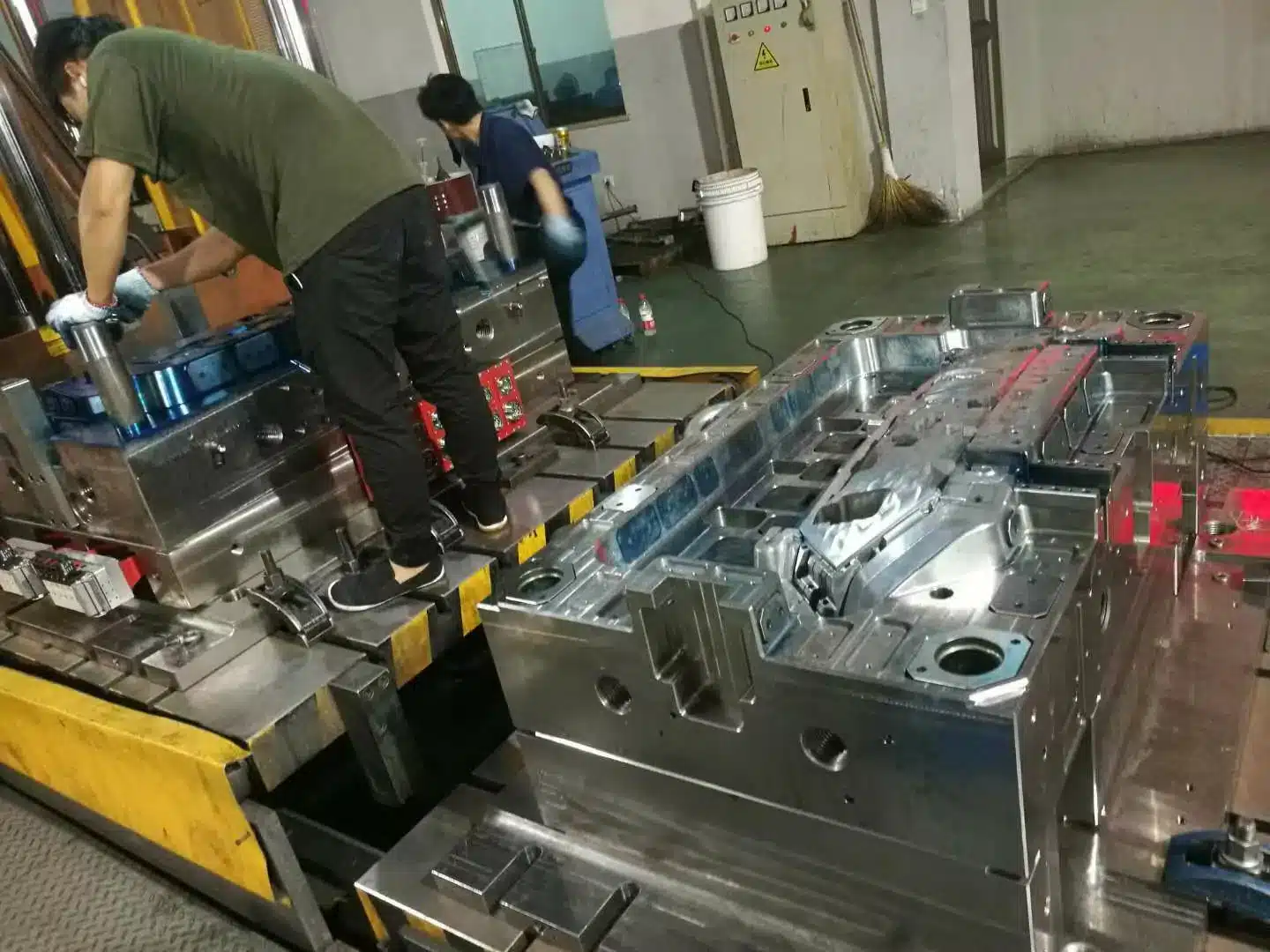

Battery Case Mold Cost Guide
Battery Case Mould Pricing: Why Three China Quotes Can Be $9K, $22K, and $47K
Battery Case Mould Pricing changes fast when steel, cooling, runner choice, and shot life change behind the quote.
Same STEP file. Same “1+1 cavity” in each quote. His question was fair: “Is the cheap quote a deal, or is the high quote a rip-off?”
Neither answer was right. They were three different moulds wearing the same name.
The $9K quote looked like P20 steel, cold runner, short shot life, and basic cooling. The $22K quote looked like the honest middle. It likely meant 718H, hot runner, and normal production life. The $47K quote only made sense with hardened inserts, valve gate, better cooling, and a written warranty.
Battery Case Mould Pricing is not the number on page one. The real mould is in the steel, runner, cooling, fitting, and warranty.
1. What a Battery Case Mould Actually Is
A battery case mould usually means two injection moulds. One mould makes the open case. The other mould makes the cover.
The case is the harder half. It has deep walls, ribs, bosses, and high PP shrinkage. I have seen simple-looking cases twist badly after T1. The drawing looked calm. The mould did not.
The cover looks easier, but it has its own traps. Vent holes, terminal cutouts, inserts, weld lines, and sealing faces all matter.
Chinese suppliers use several names for this work. The words change, but the job often stays the same.
| Supplier Term | What It Usually Means | Buyer Note |
|---|---|---|
| Battery case mould | The open container half | Common for motorcycle, UPS, and auto battery projects |
| Battery box mould | Same product, different sales wording | Often used in lead-acid battery quotes |
| Battery container mould | Same product again | Ignore the wording. Check steel, cavities, and runner type |
| Battery housing mould | May mean lithium pack housing or EV tray | This can push the quote into a higher price tier |
The lithium EV tray sits outside the usual lead-acid range. It has a larger footprint, thinner walls, more ribs, and more slides. Many projects also need flame-retardant material. Lead-acid pricing will understate this tooling cost.
2. Battery Case Mould Pricing: The 3 China Price Tiers
Battery case mould quotes spread because the mould build changes. Steel, shot life, runner type, cooling, and risk all change the price.
Most quotes we review miss one hidden detail. The supplier may keep the same drawing and quietly change the mould standard.
| Tier | Price | Steel | Cavities | Runner | Shot Life | Typical Part |
|---|---|---|---|---|---|---|
| Entry | $5K–$12K | P20, 28–32 HRC | 1 | Cold | 200K shots | Motorcycle case, small UPS, IT500 inverter |
| Mid | $15K–$35K | 718H, 30–36 HRC | 1 or 2 | Hot runner, 3–7 tip | 500K–800K shots | N40, N50, N70, N100 auto batteries; DIN55, DIN66 |
| Premium | $40K–$120K | H13 or S136 inserts, 44–52 HRC | 2 or family | Valve-gate hot runner | 1M+ shots | N120–N200, EV battery tray, lithium pack housing |
Entry tier: cheap can be honest
A $7K mould is not automatically a scam. It can fit a small UPS case. It can also fit 20,000 to 40,000 parts a year.
P20 steel and a cold runner make sense at low volume. They do not make sense for 300,000 shots a year. At that point, the cheap mould becomes a repair schedule.
Mid tier: where most real battery case projects land
For an N50 or N70 case-and-cover pair, 718H with hot runner is the normal build.
A $28K–$32K quote for this spec does not shock me. It usually means the supplier priced the job properly. If another quote says $15K with the same life, ask what changed.
Check steel source, mould base thickness, cooling lines, hot runner brand, and warranty wording.
Premium tier: not always smarter
H13, S136, valve gates, and imported hot runners all have a place. They also cost real money.
Use premium steel where wear is real. Do not buy it for every plate without a reason. A cosmetic ABS cover at 80,000 shots needs different thinking than an EV tray.
Paying more is not the same as buying better.
3. Plastic Material: PP Is Common, but “Strong Plastic” Means Nothing
Most lead-acid battery cases use PP copolymer. It handles acid exposure, vibration, and cost pressure well.
But “strong plastic” is not a spec. Strong against what? Acid? Drop impact? Heat near the terminal? Boss cracking? Cover deformation after heat welding?
For most lead-acid cases, PP is the right call. For a lithium pack housing, flame retardance can change the answer.
| Material | Shrinkage | When It Makes Sense | Cost Index |
|---|---|---|---|
| PP copolymer | 1.5–2.2% | Lead-acid auto, motorcycle, UPS, inverter cases | 1.0 baseline |
| ABS | 0.4–0.7% | Indoor battery covers, cleaner dimensions, lower acid exposure | 1.3× |
| FR-ABS, UL94 V-0 | 0.4–0.7% | Lithium-ion housings, fire-retardant battery packs | 1.8–2.2× |
| PC/ABS blend | 0.5–0.7% | Higher-end EV pack housings with impact and flame rating needs | 2.5×+ |
FR-ABS and PC/ABS change the moulding window. Shrinkage drops, but material cost rises. Venting, gate location, melt/mold temp, and steel choice all need another look.
Switching material after mould design is never a small change. The 3D drawing may look the same. The cavity does not behave the same.
4. Steel Selection: The Quote Looks Cheap Until Flash Starts
Mould steel traps buyers because the line item looks small. P20 or 718H sits quietly in the quote. The first page price gets all the attention.
Six months later, drag marks show up. Flash appears at the parting line. Someone welds the cavity. That is when the cheap steel line becomes clear.
| Steel | Tier | Hardness | Notes |
|---|---|---|---|
| P20 | Entry | 28–32 HRC | Good for moderate PP work and low annual volume. It is not shameful steel. It is not premium steel. Under 200K shots, P20 can be fair. |
| 718H | Mid | 30–36 HRC | The workhorse for serious auto battery case moulds. It gives better polish, wear resistance, and fit stability. For 500K+ shots, start here. |
| H13 | Premium | 44–52 HRC | Useful for hot zones, valve gate seats, and high-wear inserts. It gets expensive when used everywhere. Use it where wear happens. |
| S136 | Acid environments | 48–54 HRC | Corrosion-resistant stainless tool steel. Use it on acid-risk cavity faces or inserts. Do not buy a full S136 base without cause. |
| Steel | Type | Hardness | Good Use Case | Bad Use Case |
|---|---|---|---|---|
| P20 / 1.2311 | Pre-hardened | 28–32 HRC | Low-to-mid volume, cold runner, motorcycle or UPS cases | High-volume N100 case sold with “1M shot life” |
| 718H / 2738-type | Pre-hardened | 30–36 HRC | Standard auto battery case moulds, 500K–800K target | High-wear sliding areas with no inserts |
| H13 / 1.2343 | Through-hardened | 44–52 HRC | High-volume inserts, hot zones, valve gate seats | Low-volume cosmetic cover where 718H is enough |
| S136 / 1.2083 | Corrosion-resistant | 48–54 HRC | Acid-contact cavity faces, corrosive zones, premium inserts | Full mould base upgrade without corrosion risk |
5. Cooling System: Pay Once, or Lose Cycle Time Forever
Cooling is where a cheap mould becomes expensive. Saving $800 at PO stage feels good. Losing 8–12 seconds every cycle hurts for years.
Every supplier says the mould has cooling. That means very little. A drilled hole is not a cooling strategy.
A battery case needs water near the long walls, ribs, deep core, cover inserts, and terminal zones. Uneven cooling creates warpage. Warpage kills assembly.
Cooling channel geometry to put in the RFQ
| Parameter | Value |
|---|---|
| Common channel diameter | 8–12 mm |
| Channel center to cavity surface | 1.5–2× wall thickness |
| Center-to-center channel spacing | 2–3× channel diameter |
| Clearance from ejector holes | ≥5 mm |
| Target inlet-to-outlet ΔT | 2–4°C |
| Target flow regime | Re >10,000 (turbulent) |
| Wall Thickness T | Channel Dia. d | Distance to Cavity Surface | Channel Spacing | Buyer Interpretation |
|---|---|---|---|---|
| 1–2 mm | 6–8 mm | 10–15 mm | 30–40 mm | Thin covers, smaller heat load |
| 2–4 mm | 8–10 mm | 15–20 mm | 40–60 mm | Most battery case walls |
| 4–6 mm | 10–12 mm | 18–25 mm | 50–70 mm | Thicker ribs and heavy walls |
| >6 mm | 12–14 mm | 20–30 mm | 60–80 mm | Needs more than “standard cooling” |
What this means for an N50 case
An N50 case with 3 mm walls needs serious cooling near the long side walls. Expect 8–10 mm channels and 15–20 mm cavity distance.
Some suppliers push channels far from the cavity for “mould strength.” That can make a strong mould that produces slow parts. It can also leave you with warped long walls.
6. Hot Runner vs Cold Runner: Pay $3,000 Now, or Pay Every Shot
A hot runner usually adds several thousand dollars to the mould price. That makes it easy to cut from a quote.
Cold runner cost does not vanish. It moves into runner waste, slower cycle time, handling, and regrind decisions.
14 g of runner per shot × 500,000 shots = 7,000 kg PP
At $1.40/kg → $9,800 gross runner value. Regrind worth about 40% of virgin → about $5,880 real material loss. Cold runner can also add 3–5 seconds per cycle at volume.
At 200K+ parts/year, hot runner often pays back faster than expected.
Rule of thumb: under 50,000 parts/year, cold runner can be reasonable. Above 200,000 parts/year, hot runner needs a real calculation.
Use your actual runner weight, PP price, machine rate, and regrind policy. Do not let a supplier guess this for you.
Hot runner brand is not decoration
The brand changes support, spare parts, and downtime risk. “Hot runner included” is not enough.
A YUDO system, an INCOE system, and an unnamed local system are different ownership stories. T1 may run fine in China. The real test comes two years later, when a hot tip fails.
| Brand | Tier | What the Buyer Is Really Buying |
|---|---|---|
| YUDO | Standard | Common in Chinese moulds, familiar to many shops, easier spare-parts sourcing |
| DME / Mold-Masters / INCOE | Premium | Better documentation and stronger fit for export-grade or EV-related work |
| Local unnamed brand | Budget | Lower upfront price, but replacement tips and documents may cost later |
7. Lead Time: 35 Days Sounds Good Until You Ask About T1
A 2-cavity hot-runner battery case mould needs real shop time. DFM comes first. Then design, steel, CNC, EDM, polishing, cooling drilling, fitting, T1, correction, and T2.
When a supplier says “35 days for T1,” do not argue first. Ask for the process schedule. Deep ribs, long walls, inserts, and hot runner work take time.
How a real 60-day build usually breaks down
| Days | Stage |
|---|---|
| 1–7 | DFM review, parting line, gate position, cooling concept, mould flow if required |
| 7–12 | Customer review and sign-off. Many projects slip before steel cutting starts. |
| 12–18 | Steel sourcing, mould base preparation, rough machining starts |
| 18–35 | CNC roughing and finishing of cavity and core |
| 35–45 | EDM ribs, insert details, polishing, cooling line drilling |
| 45–55 | Hot runner installation, ejector system assembly, fitting, dry run |
| 55–60 | T1 trial, photos, sample parts, dimensional inspection, trial report |
| 60–75 | T1 correction, possible steel modification, T2 sample, final approval |
A 60-day project can become 90 or 120 days. Late DFM approval is a common cause. Imported hot runner delay is another.
Steel procurement, EDM workload, texture after correction, and Chinese New Year also stretch schedules. A supplier who explains this early is managing the job.
8. The 5 Defects That Show Up After Shipping
T1 samples do not need to look perfect. T1 shows where steel, plastic, process, cooling, venting, and part design meet.
A serious supplier does not send ten parts and say “please check.” They send a trial report. It should show material grade, melt temperature, mould temperature, injection pressure, holding time, cycle time, and part weight.
The report should also show visible defects and the correction plan. Without that, T2 becomes guesswork.
| Defect | Likely Cause | Real Fix | Default Liability |
|---|---|---|---|
| Warpage on long wall | Uneven cooling, poor gate position, unbalanced packing | Add baffle cooling, adjust gate/packing, review wall design | Usually factory if cooling or gate design is wrong |
| Short shot at corner ribs | Vent blockage, weak flow, low pack pressure, thin rib design | Improve venting, adjust process, sometimes modify rib/gate | Shared until process versus steel is proven |
| Weld line near cover vent | Flow fronts meeting around holes or inserts | Move gate, use valve gate, sequence injection, redesign vent area | Factory if gate plan ignored obvious risk |
| Flash at parting line after 50K shots | Parting surface wear, poor fitting, mould base flex, soft steel | Re-fit parting surface, harder insert, check clamp balance | Factory under shot-based warranty |
| Ejector pin marks on visible face | Wrong pin location, poor ejection balance, insufficient draft | Relocate pins, add ejector area, improve draft or lifter design | Factory if ejection design caused it |
Lock these three items before shipment
- Warranty in shots, not only months. “12 months” is weak if the mould sits idle. “1,000,000 shots or 24 months, whichever comes first” is clearer.
- Free correction for dimensional, cooling, or gate-design defects. Do not leave this to goodwill after final payment.
- Spare-parts kit included. Ejector pins, hot tips, seals, plugs, and wearing inserts cost little before shipment. They cost much more by air freight later.
9. Trader, Factory, or “Factory-Trader”? The 10-Minute Test
Not every trading company is bad. A good trader with real engineering control can help.
The danger is the trader who prices like a factory and talks like an engineer. Then they lose control once another shop cuts your steel.
- No live video tour of the machining floor. A real factory can usually show CNC, EDM, fitting, and assembly. A trader says “the factory is busy today.”
- Vague address. “Industrial Zone, Huangyan” is not enough. Ask for road, building number, and map location.
- Only the sales rep ever speaks. No mould designer, project engineer, or QC person joins the call. Your questions are being relayed.
- Product range is too broad. Medical moulds, cap moulds, crate moulds, battery moulds, and chair moulds sound like a catalog.
- No DFM before deposit. A real mould factory can mark gate, parting line, draft, rib risks, cooling issues, and T1 risks.
- Photos have different backgrounds and no project consistency. The gallery may be borrowed from several factories or competitors.
10. What a Real RFQ Should Include
A real RFQ makes every supplier quote the same mould. That is the only way to compare prices.
Many buyers send a drawing and ask for “best price.” That gives each supplier room to fill gaps in their favor.
Your RFQ should lock cavity count, steel, runner brand, cooling, warranty, ownership, samples, and payment milestones.
| Part | N50 battery case + cover, STEP file attached |
| Annual volume | 50,000 pairs/year |
| Project life | 5 years target |
| Plastic | PP copolymer, MFI 4–6, shrinkage data attached |
| Cavities | Quote 1+1 and 2+2 separately |
| Steel — cavity | 718H minimum; H13/S136 inserts as optional upgrade |
| Steel — base | 1045 or LKM standard |
| Runner | Hot runner, YUDO or named equivalent; brand must be listed |
| Cooling | 8–10 mm channels for 2–4 mm walls; baffles on long walls; supplier to provide layout drawing |
| Warranty | 1,000,000 shots or 24 months, whichever comes first |
| Mould ownership | Buyer owns mould and may remove it after final payment |
| Samples | T1 trial report + 10 sample parts + dimensional inspection |
| Payment | 40% deposit / 30% after T1 approval / 30% before shipping |
| Delivery | FOB Ningbo, delivery counted from drawing sign-off |
11. FAQ
How much does a battery case mould cost in China?
A standard China auto battery case-and-cover mould often costs $22,000–$34,000. That usually means 718H, hot runner, normal cooling, and realistic tool life.
Entry cold-runner moulds can cost $5,000–$12,000. EV tray or premium tools can reach $40,000–$120,000. Battery Case Mould Pricing only makes sense after you compare steel, runner, cooling, and warranty.
Why are China mould quotes so different for the same battery case?
The same drawing does not mean the same mould. One quote may use P20, cold runner, and short shot life.
Another quote may use 718H, hot runner, stronger cooling, and a shot-based warranty. A premium quote may add hardened inserts or valve gates. Compare the specification before comparing the price.
What plastic is normally used for battery cases?
PP copolymer is the normal choice for most lead-acid battery cases. It handles acid exposure, vibration, and cost pressure well.
ABS, FR-ABS, and PC/ABS fit jobs needing cleaner dimensions, flame retardance, or higher impact performance. Choose material before mould design. Shrinkage changes cavity size, gate plan, cooling, and steel choice.
What lead time should I expect?
A standard 2-cavity hot-runner battery case mould usually needs 55–70 days to T1. Then expect 10–15 days for correction and T2 approval.
A 35-day promise may fit a simple cold-runner tool. It is risky for a deep case with cover details. Ask for the full process schedule before accepting the date.
Should I choose hot runner or cold runner?
Choose cold runner for low annual volume when upfront cost matters most. Choose hot runner when volume makes runner waste and cycle time expensive.
Calculate with runner weight, annual shots, material cost, regrind policy, and machine rate. Put the hot runner brand in the PO.
How do I know if the supplier is a real factory?
Ask for a live video tour of the machining floor. Then ask to speak with the engineer who will do the DFM.
A real factory can usually show CNC, EDM, fitting, assembly, and sample trial areas. A trader may still help. Just know whether they control engineering or forward questions to another shop.
What should I ask before paying the deposit?
Ask for steel grade, hardness, shot-life warranty, hot runner brand, cooling layout, gate location, and DFM red flags. Also ask for the lead-time breakdown, T1 report format, spare-parts list, and mould ownership clause.
The best question is simple: “Which three areas will likely cause T1 rework?” A real mould engineer can answer without a template.
Send Us Your File
Got a STEP file for a battery case or cover? Send it over. We will review likely steel choice, cooling risk, gate position, warpage areas, weld-line risk, and price tier.
Already have three China quotes? Send those too. We will show which quote is a real mould, and which is only a number.

