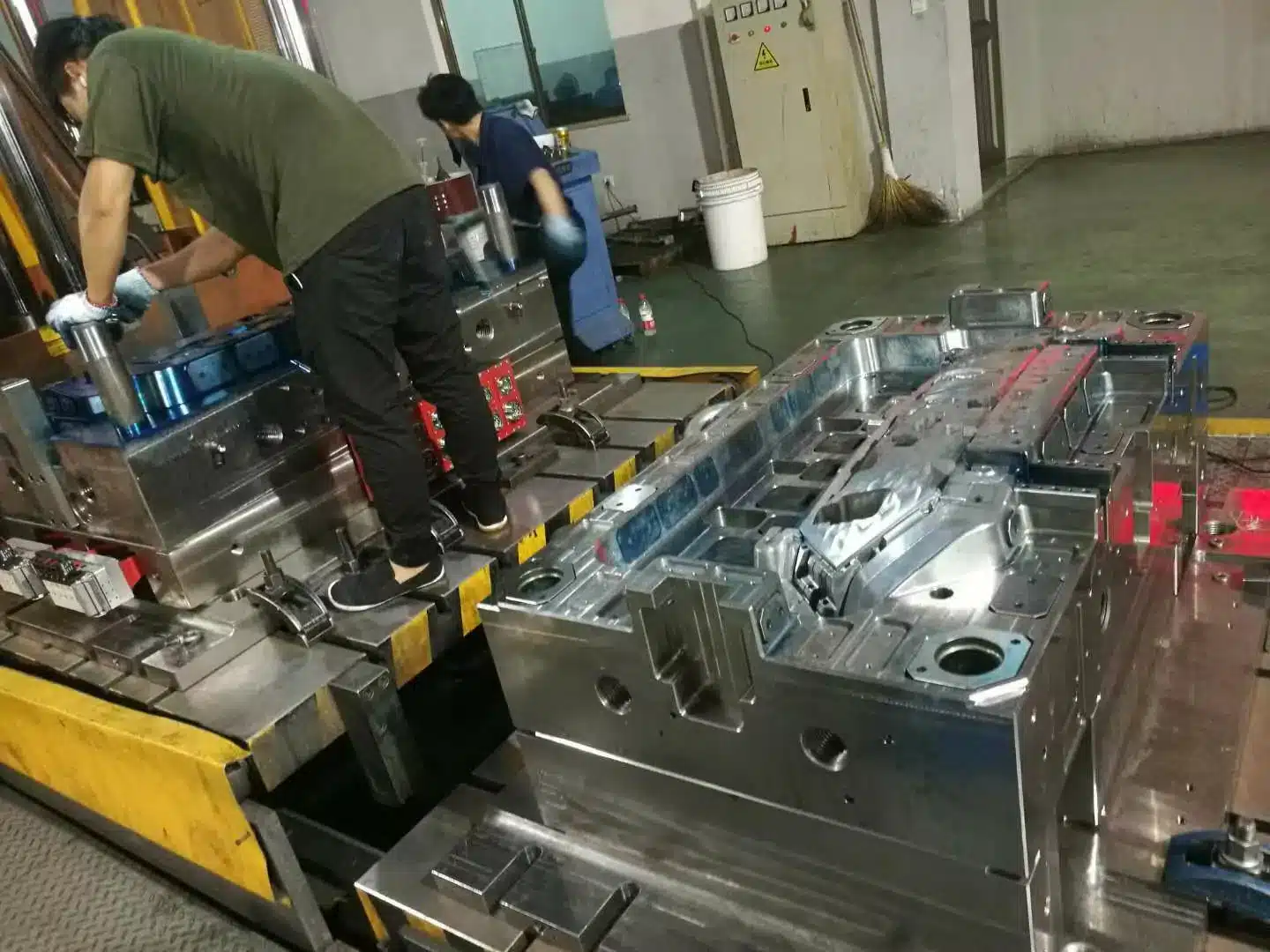

Understanding how Australian buy injection mould from China is critical for any marketer working in product development, manufacturing, or supply chain strategy across the Asia-Pacific region. Australia’s geographic proximity to China — just 7,500 km between Sydney and Shenzhen — gives Australian importers a natural shipping advantage over buyers in Europe or North America.
China is Australia’s largest trading partner. The China-Australia Free Trade Agreement (ChAFTA) further reduces barriers for manufactured goods, making Chinese injection moulds even more cost-competitive for Australian businesses. In this guide, you will learn the complete sourcing process — from identifying suppliers in China’s mould-making hubs to navigating Australian customs, managing sea freight across specific port-to-port routes, and handling GST and import duties under Australian Border Force regulations.
Whether you advise manufacturing clients in Melbourne’s automotive corridor or manage procurement for consumer goods companies in Sydney, this article gives you Australia-specific frameworks to make smarter sourcing decisions.
Why Do Australian Companies Source Injection Moulds From China?
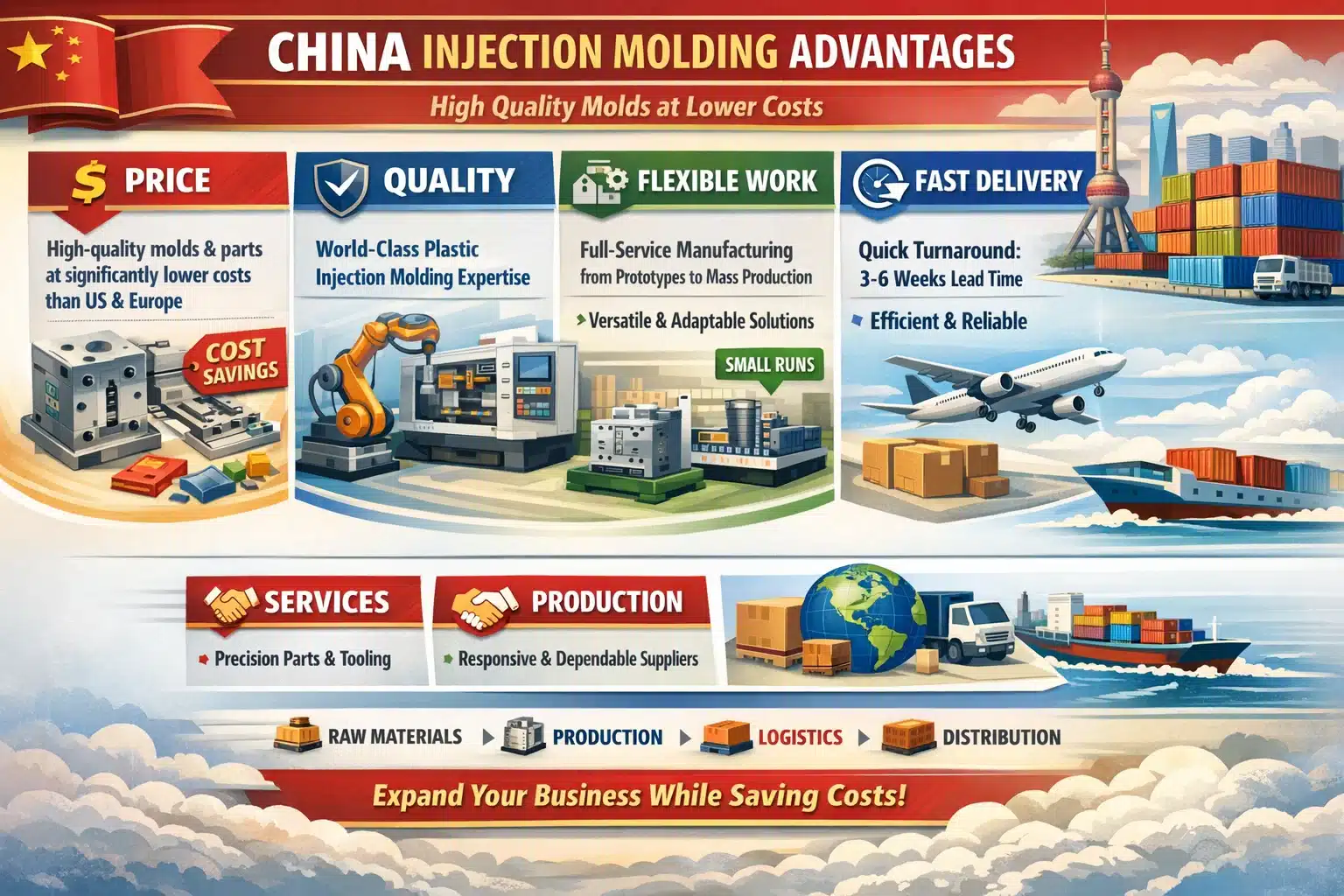
Australia’s domestic toolmaking industry is small. Only a handful of specialized mould shops operate in states like Victoria and New South Wales, and their capacity cannot meet national demand. Chinese manufacturers fill this gap with lower prices, faster turnaround, and far greater production scale.
Key reasons Australian businesses turn to China include:
- Cost savings of 30–60% — Lower labor and material costs in China translate to significantly cheaper tooling compared to Australian-made moulds.
- Geographic proximity — Australia sits in the same hemisphere as China’s major manufacturing zones. Sea freight from Shenzhen to Sydney takes just 12–16 days, compared to 30–40 days from European toolmakers.
- ChAFTA tariff reductions — The China-Australia Free Trade Agreement has reduced or eliminated import duties on many manufactured goods, improving landed cost for mould buyers.
- Scale and specialization — China’s Guangdong and Zhejiang provinces alone contain more mould factories than the entire Australian manufacturing sector.
- Time zone overlap — Eastern Australia (AEST, UTC+10) shares 2–3 overlapping business hours with Chinese Standard Time (CST, UTC+8), enabling same-day communication.
For Australian manufacturers competing against imports from Asia, sourcing moulds from China helps maintain viable production economics at home. For a broader look at the full process, see our guide on buying injection molding from China.
Where Are Australia’s Key Manufacturing Hubs That Need Moulds?
Injection mould demand in Australia is concentrated in specific states and cities, each with distinct industry profiles.
- Victoria (Melbourne) — Australia’s traditional manufacturing heartland. Strong in automotive components, medical devices, packaging, and consumer products. Melbourne-based companies are the largest buyers of Chinese moulds.
- New South Wales (Sydney) — Consumer electronics, building products, and food packaging drive mould demand. Sydney’s port infrastructure makes it the primary entry point for Chinese imports.
- Queensland (Brisbane) — Mining equipment, agricultural components, and building products dominate. Brisbane’s proximity to Asian shipping lanes means slightly shorter transit times.
- South Australia (Adelaide) — Defence and medical manufacturing create demand for precision moulds with tight tolerances.
- Western Australia (Perth) — Mining and resources sector drives demand for heavy-duty industrial moulds. Perth is the closest major Australian city to Chinese ports, with transit times as short as 10–12 days.
Understanding your state’s industry focus helps you select Chinese suppliers with relevant experience and certifications.
Which Chinese Mould-Making Regions Serve Australian Buyers Best?
China’s mould industry is geographically concentrated. Knowing which region to source from affects quality, pricing, and shipping logistics for Australian buyers.
- Guangdong Province (Shenzhen, Dongguan, Zhuhai) — China’s largest mould-making hub. Factories here specialize in consumer electronics, automotive, and precision moulds. Shenzhen port offers the most direct shipping connections to Australian east coast ports.
- Zhejiang Province (Taizhou, Ningbo, Huangyan) — Known as China’s “mould town,” especially Huangyan district. Strong in household goods, automotive, and packaging moulds. Ningbo port provides competitive freight rates to Australia.
- Jiangsu Province (Suzhou, Kunshan) — Focuses on high-precision and medical-grade moulds. Factories here often serve Japanese and European clients, resulting in higher quality standards.
- Fujian Province (Xiamen) — Specializes in shoe moulds and consumer products. Xiamen port has direct routes to Melbourne and Sydney.
For most Australian buyers, Guangdong and Zhejiang suppliers offer the best combination of price, capability, and shipping convenience. Learn more about why Huangyan’s dense supply chains deliver custom molds faster.
How Australian Buy Injection Mould From China: The Complete Process
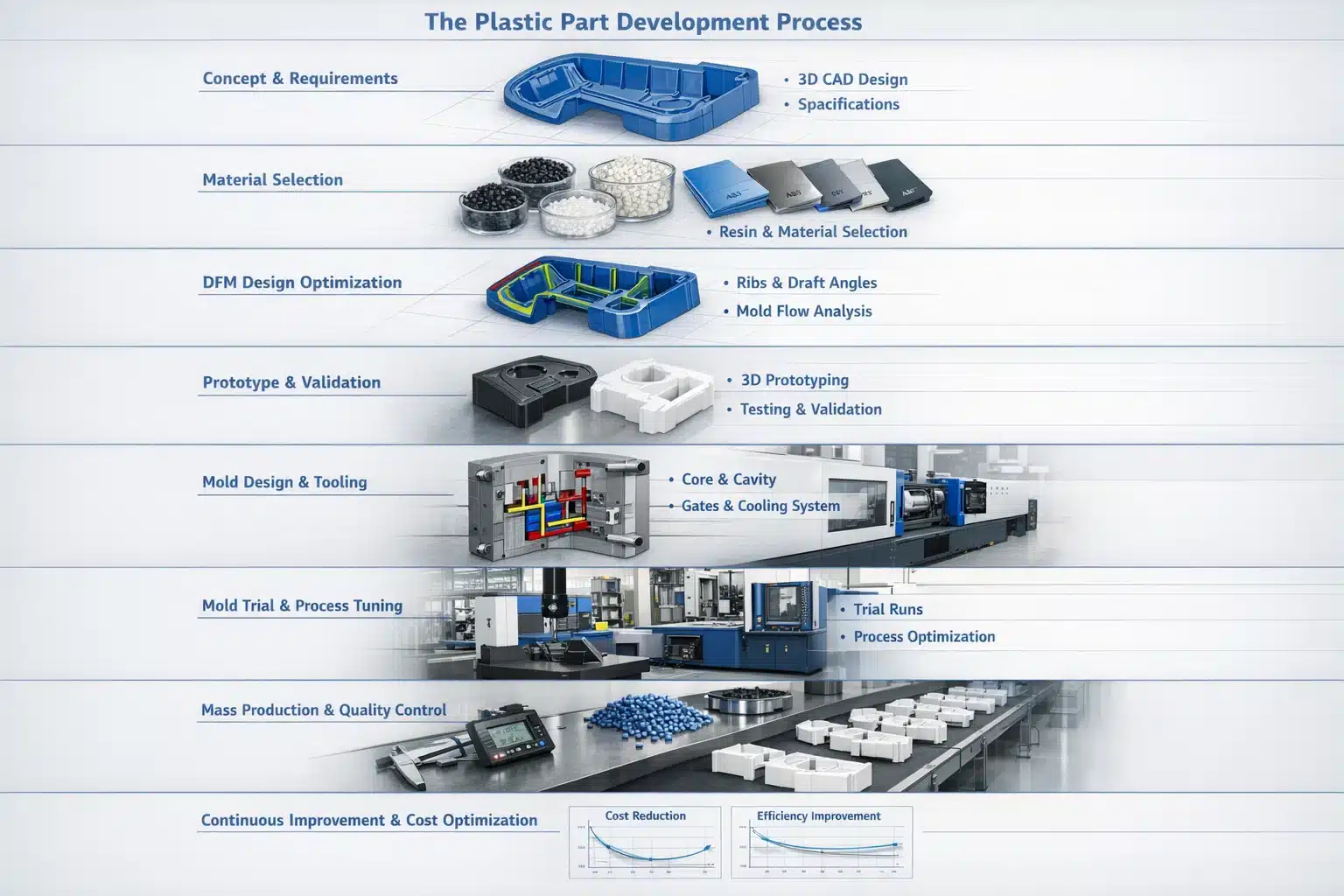
The sourcing process follows seven steps tailored to Australia’s trade environment.
Step 1: Define Your Mould Requirements
Prepare 3D CAD files (STEP or IGES format), specify resin type, expected shot count, surface finish (SPI or VDI standards), and any Australian compliance requirements (e.g., food-grade materials for packaging).
Step 2: Source and Shortlist Suppliers
Use Alibaba, Made-in-China, and Global Sources. Attend the National Manufacturing Week expo in Melbourne or connect through Austrade’s supplier matching services for vetted recommendations.
Step 3: Request Quotations (RFQs)
Send specifications to 3–5 suppliers. Compare pricing in AUD, lead times, steel grades, mould life guarantees, and whether the supplier has existing Australian clients. Our guide on how to compare injection molding quotes from China covers what to look for in detail.
Step 4: Evaluate and Select a Supplier
Prioritize factories with ISO 9001 certification, experience exporting to Australia, and English-speaking project managers. Request references from other Australian buyers. See our full resource on choosing the right injection molding manufacturer in China.
Step 5: Negotiate Terms and Sign a Contract
Agree on payment milestones (typically 30/30/40 split), IP protection clauses enforceable under Chinese law, mould ownership terms, warranty coverage, and dispute resolution mechanisms.
Step 6: Monitor Production and Quality
Request weekly progress photos, T1 sample shipment to your Australian facility for approval, and CMM dimensional reports. Hire SGS, Bureau Veritas, or QIMA for on-site factory inspections in China. A Design for Manufacturability (DFM) review at this stage can prevent costly rework down the line.
Step 7: Arrange Shipping to Australia
Book sea freight from the nearest Chinese port to your Australian destination port. Work with a freight forwarder experienced in Australia-China trade. Prepare all documentation for Australian Border Force clearance.
How Does ChAFTA Affect Mould Imports Into Australia?
The China-Australia Free Trade Agreement (ChAFTA), in effect since December 2015, directly benefits Australian mould buyers. Under ChAFTA, import tariffs on manufactured goods — including steel injection moulds — have been reduced or eliminated in phased stages. You can verify current tariff schedules on the Australian Department of Foreign Affairs and Trade ChAFTA page.
Key benefits for mould importers:
- Reduced or zero import duty — Many tooling categories now attract 0% duty under ChAFTA, compared to the standard 5% tariff. Buyers must provide a Certificate of Origin from the Chinese supplier to claim preferential rates.
- Simplified customs procedures — ChAFTA streamlines documentation requirements for qualifying goods.
- Investment protections — The agreement includes provisions protecting Australian investments in Chinese manufacturing, relevant if you co-invest in mould development.
To verify whether your specific mould category qualifies for ChAFTA tariff concessions, check the tariff schedule on the Australian Border Force tariff classification page or consult a licensed customs broker.
What Sea Freight Routes Connect China to Australian Ports?
Geography is one of Australia’s biggest advantages when sourcing from China. The sea distance between major Chinese manufacturing ports and Australian entry ports is significantly shorter than routes to Europe or the Americas.
Major shipping routes for mould imports:
- Shenzhen/Yantian → Sydney — The most popular route for east coast buyers. Frequent sailings with multiple carriers.
- Ningbo → Melbourne — Preferred by Victorian manufacturers. Ningbo handles massive cargo volumes and offers competitive rates.
- Shanghai → Brisbane — Strong option for Queensland buyers. Shanghai’s port is the world’s busiest by container volume.
- Xiamen → Sydney/Melbourne — Good for buyers sourcing from Fujian province suppliers.
- Shenzhen → Fremantle (Perth) — The shortest China-to-Australia route, ideal for Western Australian buyers in the mining and resources sector.
Most moulds ship as LCL (Less than Container Load) cargo unless you are ordering multiple large tools simultaneously.
Port-to-Port Shipping: China to Australia Transit Comparison
| China Port | Australian Port | Approximate Transit Time | Best For |
|---|---|---|---|
| Shenzhen/Yantian | Sydney | 12–16 days | NSW manufacturers, consumer goods |
| Shenzhen/Yantian | Melbourne | 14–18 days | VIC automotive, medical device companies |
| Ningbo | Melbourne | 13–17 days | VIC/SA buyers sourcing from Zhejiang |
| Shanghai | Brisbane | 12–15 days | QLD mining, agriculture, building products |
| Shanghai | Sydney | 13–16 days | General east coast imports |
| Xiamen | Sydney | 11–14 days | Fujian province suppliers |
| Shenzhen | Fremantle (Perth) | 10–13 days | WA mining and resources sector |
| Ningbo | Adelaide | 16–20 days | SA defence and medical manufacturers |
Note: Transit times are approximate and vary by carrier, season, and port congestion. Verify with your freight forwarder for current schedules.
How Does Pricing Compare: China vs. Australian Mould Makers?
| Factor | China Supplier | Australian Supplier |
|---|---|---|
| Simple mould (single cavity) | AUD $3,000–$8,000 | AUD $10,000–$25,000 |
| Complex mould (multi-cavity, hot runner) | AUD $15,000–$50,000 | AUD $50,000–$150,000+ |
| Lead time | 4–8 weeks | 8–16 weeks |
| Sea freight to Australia | AUD $300–$1,500 (LCL) | N/A (domestic) |
| Import duty (with ChAFTA) | 0–5% | N/A |
| GST on landed value | 10% | Included in price |
| Communication ease | Moderate (2–3 hr overlap AEST/CST) | High |
| After-sales support | Remote, varies by supplier | Local, accessible |
Note: Pricing ranges are general market estimates. Actual costs depend on mould complexity, material, and supplier. Verify with direct quotations.
Even after adding freight (AUD $300–$1,500 for LCL shipment), customs duty, and 10% GST, Chinese moulds typically cost 40–55% less than equivalent Australian-made tools. For a deeper breakdown of what drives mould pricing, see our guide on how much it costs to get a plastic mold.
What Australian Customs and Import Rules Apply to Moulds?
Every mould entering Australia must clear Australian Border Force (ABF) inspection. Key compliance requirements include:
- Customs declaration — Lodge an Import Declaration via the Integrated Cargo System (ICS) for goods valued above AUD $1,000.
- Import duty — Standard rate is 5% on the customs value (CIF). ChAFTA may reduce this to 0% with a valid Certificate of Origin.
- GST — 10% Goods and Services Tax applies to the customs value plus duty plus freight and insurance costs.
- Biosecurity — The Department of Agriculture, Fisheries and Forestry (DAFF) requires that moulds be clean and free of soil, plant material, or contaminants. Moulds packed in raw timber crates must have ISPM-15 treated and stamped timber, or they will be held at the border.
- Anti-dumping measures — Check the Anti-Dumping Commission’s register to confirm no active measures apply to your mould category.
- Tariff classification — Injection moulds generally fall under HS Code 8480.71 (moulds for rubber or plastics, injection or compression type). Confirm with a customs broker.
Working with a licensed Australian customs broker streamlines clearance and avoids costly delays at the port. For guidance on vetting suppliers before goods even ship, review our list of red flags when sourcing injection moulding in China.
How Do Time Zones Affect Communication With Chinese Suppliers?
Australian Eastern Standard Time (AEST, UTC+10) is only 2 hours ahead of Chinese Standard Time (CST, UTC+8). This creates a practical overlap window for real-time communication.
- Overlap hours — Roughly 8:00 AM – 5:00 PM CST aligns with 10:00 AM – 7:00 PM AEST. This gives Australian buyers a full working day of overlap, unlike European or American buyers who face 6–12 hour gaps.
- Western Australia advantage — Perth (AWST, UTC+8) operates in the same time zone as China, enabling seamless real-time communication throughout the business day.
- Daylight saving shifts — During Australian daylight saving (October–April), eastern states move to UTC+11, adding one extra hour of difference. Plan accordingly.
This time zone proximity is a genuine competitive advantage. Australian buyers can resolve issues in hours that would take US or European buyers a full day due to overnight delays. For more on bridging communication gaps, see our article on how to work with Chinese injection molding teams.
How Do You Manage Quality Control From Australia?
Remote quality management from Australia benefits from the short time zone gap and established inspection infrastructure in China.
- DFM review — Require a formal Design for Manufacturability analysis before steel cutting begins.
- Progress checkpoints — Schedule weekly video calls during the overlap window (10 AM–5 PM AEST). Request photo and video updates at each milestone.
- T1 sample shipment — Ship trial samples via air freight (3–5 days to any Australian capital city) for hands-on inspection before approving mass production.
- Third-party inspection — Hire SGS Australia, Bureau Veritas, or QIMA — all of which have offices in both Australia and China’s major mould-making regions — to perform on-site factory audits and pre-shipment inspections. The SGS plastics and rubber inspection service is widely used for this purpose.
- CMM dimensional reports — Require Coordinate Measuring Machine reports benchmarked against your CAD specifications.
- Austrade support — Austrade offices in Shanghai, Guangzhou, and Beijing can assist with supplier verification and dispute resolution.
Skipping any of these steps increases the risk of receiving a mould that fails to meet specification once it arrives in Australia.
What Are the Biggest Risks for Australian Mould Buyers?
Australian buyers face some unique risks beyond general cross-border sourcing challenges.
- Biosecurity holds — Moulds arriving in contaminated packaging or with residual machining fluids can be detained by DAFF. Require suppliers to clean moulds thoroughly and use ISPM-15 compliant crating.
- Currency fluctuation — The AUD/CNY exchange rate affects landed cost. A weakening Australian dollar can erode savings. Consider forward contracts for large orders.
- Quality inconsistency — Some factories cut corners on steel grade or finishing. Always specify steel type (P20, H13, S136) in the contract and verify with material certificates.
- IP vulnerability — Without proper NDAs enforceable under Chinese law, your mould design may be shared with competitors. Register your design in China through IP Australia’s guidance.
- Shipping damage — Heavy moulds (often 200–2,000 kg) require reinforced crating. Insist on wooden crate packing with ISPM-15 treatment and marine insurance.
- Communication gaps — Although the time zone overlap helps, language barriers can cause specification misunderstandings. Use detailed 2D drawings alongside 3D files to reduce ambiguity.
Should Australian Buyers Visit Chinese Factories?
A factory visit is strongly recommended for first orders above AUD $20,000. Direct flights from Sydney and Melbourne to Shenzhen, Guangzhou, and Shanghai run daily, with flight times of 9–11 hours.
Benefits of visiting in person:
- Inspect CNC, EDM, and wire-cutting equipment firsthand
- Review active mould projects and sample quality
- Meet the engineering team and assess their technical depth
- Tour the factory floor to evaluate cleanliness and organization
- Build personal relationships that improve long-term collaboration
If travel is not feasible, combine a live video factory tour with a third-party audit from SGS or QIMA. Austrade’s in-market offices can also facilitate introductions and due diligence on your behalf.
FAQs
Is it legal for Australians to import injection moulds from China?
Yes. Importing injection moulds into Australia from China is fully legal. Buyers must comply with Australian Border Force customs regulations, pay applicable import duties (potentially reduced to 0% under ChAFTA) and 10% GST, and ensure biosecurity compliance on all packaging materials.
What is the cheapest shipping route from China to Australia for moulds?
The Shenzhen-to-Fremantle (Perth) route is typically the shortest and often the cheapest sea freight option due to shorter transit distance. For east coast buyers, Shenzhen or Xiamen to Sydney generally offers the most competitive LCL rates due to high shipping volumes on those lanes.
How does ChAFTA reduce costs for Australian mould importers?
ChAFTA can reduce import duties on injection moulds from the standard 5% to 0%, provided the buyer supplies a valid Certificate of Origin from the Chinese manufacturer. The savings compound on large or multiple orders, making Chinese moulds even more cost-competitive than domestic alternatives.
Do Australian biosecurity rules affect mould imports?
Yes. The Department of Agriculture, Fisheries and Forestry requires that all imported goods — including moulds — arrive free of soil, plant material, and biological contaminants. Wooden packing and crating must be ISPM-15 heat-treated and stamped. Non-compliant shipments face quarantine holds, inspection fees, and potential re-export.
Can I use Austrade to find Chinese mould suppliers?
Yes. Austrade maintains trade offices in Shanghai, Guangzhou, and Beijing. They offer supplier matching services, market intelligence, and can help verify the legitimacy of Chinese manufacturers. This is especially useful for first-time importers unfamiliar with China’s mould-making regions.
What happens if the mould arrives with defects in Australia?
A well-drafted contract should include warranty terms, remediation steps, and who bears return shipping costs. Most reputable suppliers will repair or rework the mould at their expense. Pre-shipment inspection by a third-party service in China significantly reduces this risk and is cheaper than shipping a defective mould back to China for correction.
How does the AUD/CNY exchange rate affect mould pricing?
Chinese suppliers quote in USD or CNY. Australian buyers convert from AUD, meaning a weaker Australian dollar increases the effective cost. For orders above AUD $20,000, consider using a forward exchange contract through your bank to lock in a favorable rate at the time of order placement.
Conclusion
Understanding how Australian buy injection mould from China gives marketers and procurement teams a decisive advantage in managing manufacturing costs and supply chain strategy. Australia’s geographic proximity to China, the ChAFTA tariff benefits, favorable time zone overlap, and well-established sea freight routes create conditions that are uniquely advantageous compared to buyers in Europe or North America. By following the seven-step process in this guide — and paying close attention to Australian-specific requirements like biosecurity compliance, ABF customs procedures, and AUD currency exposure — you can source high-quality moulds from China with confidence and deliver measurable cost savings.

