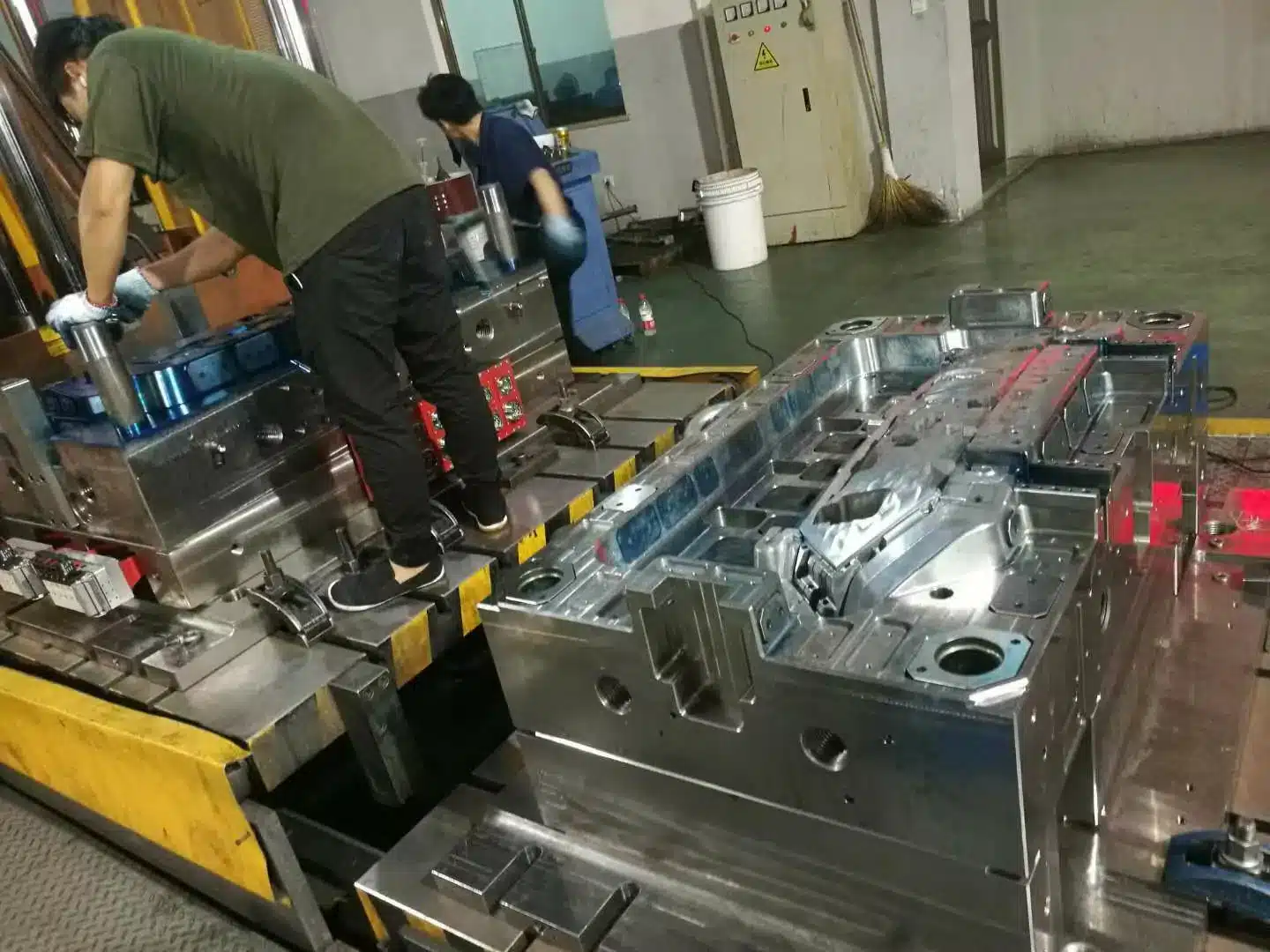

Buyers email us asking for “a price on a paint bucket mould.” Then we send back a quote with four separate line items and the conversation gets a lot more honest.
A paint bucket mould is the steel tooling that injection-molds a plastic paint pail — normally the bucket body, its matching lid, and the features that let a filling line grab, fill, and stack the finished part. It is almost never one tool. Body and lid are two different molds, built to two different tolerances, and if you’re decorating in-mold there’s a whole robot cell attached to the price. Understanding that up front is the difference between a budget that holds and one that blows up at PO stage.
I’ve been quoting pail tooling for about twenty years. Below is what actually drives the number, in the order it usually matters to a sourcing buyer.
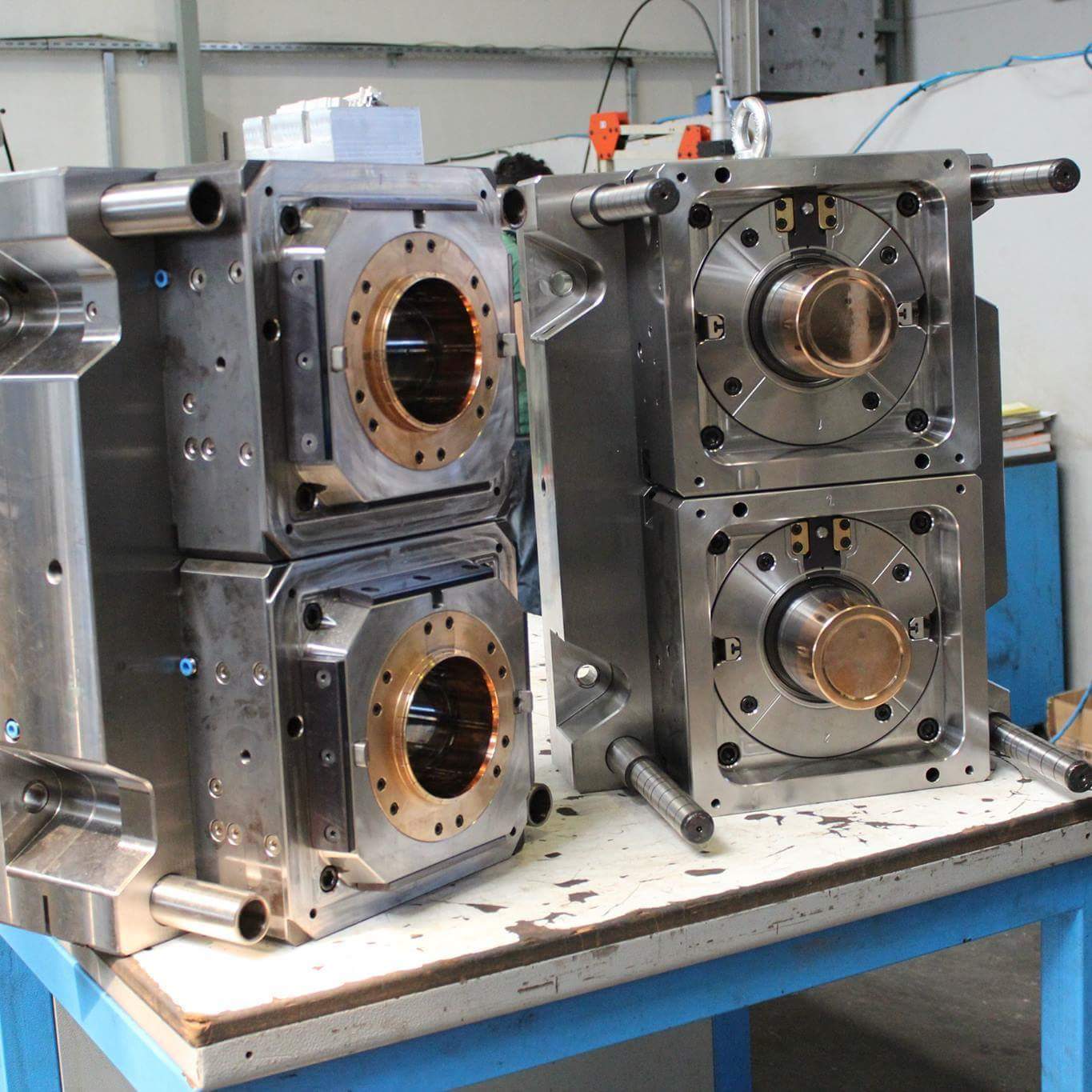
What a paint bucket mould actually includes
At minimum you’re buying two molds: one for the bucket body, one for the lid. Both are usually PP, both usually run on a hot runner, but they have almost nothing else in common. The body is a deep-draw part with a big projected area. The lid is shallow, fussy about seal geometry, and often carries a tamper feature.
Then come the extras that quietly move the price:
- A hot runner system (valve-gated, almost always, on a part this thin and this large)
- An IML-ready cavity finish and label-positioning system, if you’re decorating in-mold
- Cooling built for cycle time, not just built to work
- Ejection that won’t leave marks on a Class-A surface a customer will see on a shelf
When a supplier gives you one round number for “the paint bucket mould,” ask them to itemize body, lid, hot runner, and decoration separately. If they can’t, they haven’t costed it properly.
PP is the answer (here’s when it isn’t)
Polypropylene. For roughly nine out of ten paint pails, the material conversation is that short. PP resists both water-based and most solvent-based paints, it’s stiff enough to hold shape when stacked, it flows well enough for thin walls, and it does a living hinge on the lid if you need one. It’s also cheap, which matters on a commodity part sold by the millions.
HDPE earns its place in two situations: when the pail carries an aggressive solvent that PP doesn’t love, and when the product will sit in a cold warehouse or ship in winter and needs better low-temperature impact. HDPE takes a knock at 20°F better than a stiff homopolymer PP does.
Here’s the trade-off buyers miss. HDPE shrinks more and shrinks less predictably than PP, so warp control on a tall, thin bucket wall is harder — which can mean a fussier tool and a longer sampling loop. My default advice: unless your chemist tells you the paint chemistry demands HDPE, spec PP and move on. And if you’re worried about cold impact, ask about a PP impact copolymer before you jump to HDPE.
The thin-wall problem your quote may be hiding
A paint pail wall is thin — typically 0.8 to 1.5 mm — spread over a tall part. That gives you a flow-length-to-wall-thickness ratio that can push past 250:1. Plastic has to travel a long way through a narrow gap before it freezes, and that single fact drives half your tooling cost.
Thin-wall filling needs speed and pressure. That means high injection rates, a valve-gate hot runner to keep the melt moving, and a lot more clamp tonnage than a beginner expects. Where a normal part might size at 2–3 tons per square inch of projected area, a thin-wall pail can want 5–8. A 20-liter bucket body can land you on a 600- to 1,000-ton press. A 4-liter pail is more like 250–400 tons.
Why does a buyer care about tonnage when you’re not the one running the press? Because the mould has to be built to survive those pressures without flexing, which means more steel, better support, and a stiffer plate stack. A thin-wall paint bucket mould costs more than its size suggests because the tool is fighting injection pressure, not just holding a shape. If a quote for a big pail looks suspiciously cheap, the first thing I’d check is whether they’ve under-built the mould for the pressures it’ll actually see.
IML or print? This is your biggest cost lever
If you want one decision to control your budget and your shelf appeal at the same time, it’s this one.
In-mold labeling (IML) means a robot places a pre-printed PP label film into the open cavity, the melt fuses to it, and the part ejects fully decorated. No secondary printing step, no stickers that peel when someone wipes paint off the side. The finish looks molded-in because it is. For retail paint pails, nothing else looks as good or lasts as long.
The catch is setup cost. IML needs an IML-ready mould (precise label positioning, extra venting, a cavity polish that won’t telegraph through the film), an IML robot cell, and a printed-label supply chain. You’re adding real money to the tooling and a six-figure robot to the molding line.
Your alternatives, roughly cheapest-tooling to best-looking:
| Decoration method | Tooling/setup impact | Look & durability | Best for |
|---|---|---|---|
| Pressure-sensitive labels (stickers) | Lowest — applied after molding | Can peel, curl, wipe off | Low volume, budget lines |
| Heat-transfer label | Moderate | Good, can scuff over time | Mid volume |
| Dry-offset printing | Printer on the line, no mould change | Good on curved walls | High-volume plain graphics |
| In-mold labeling (IML) | Highest — IML-ready mould + robot | Best; molded-in, chemical-resistant | High-volume retail pails |
The verdict most buyers land on: if you’re doing high volumes and the pail sits on a store shelf, IML pays for itself in appearance and durability. If the bucket is a plain contractor pail bought by the pallet, a printed or labeled version keeps your tooling budget lean. Decide this before you finalize the mould, because retrofitting a standard mould for IML afterward is usually a rebuild, not a tweak.
How many cavities — and do you need a stack mould?
Because the body is large, most paint bucket moulds run one or two cavities. Lids are smaller and can go higher — two, four, sometimes more. Your cavity count comes straight from your annual volume divided by realistic cycle time and uptime, not from a wish.
A stack mould (two levels of cavities in one tool, effectively 1+1 or 2+2) roughly doubles output from the same press. It’s a strong move for very high volumes because it spreads press cost across more parts per shot. It also costs meaningfully more to build, weighs a lot, and needs a press with the daylight and tonnage to run it. For a startup line, a single-cavity tool that you scale later is usually the smarter first spend. Stack moulds are for buyers who already know they’re running eight-figure annual quantities.
Steel grade and how long the tool lives
Steel choice is really a question about how many shots you plan to take.
For medium volumes, a pre-hardened steel like 718H (around 33 HRC) is fine and keeps the tool affordable. For high-volume commodity pails and anything with IML, I push people toward a corrosion-resistant, polishable grade — 2316 or S136 stainless on the cavity and core — for two reasons. IML and a good finish need a high polish that holds. And PP with certain additives, plus washdown environments, can pit ordinary tool steel over years of running. Stainless mould steel resists pitting and holds its polish over millions of shots, which protects the finish IML depends on.
Ask your supplier for the steel grade on the cavity and core specifically — not “the mould base,” which is a different, softer part. A quote that says “quality steel” and nothing else is telling you they hope you won’t ask.
The lid is a separate project
People forget the lid until sampling, and then it becomes the thing that holds up the whole launch.
The lid mould has its own tolerances, its own decoration decision, and its own headaches. The snap or press fit between lid and bucket has to seal reliably against paint sloshing in transit, and that seal geometry is where lids get re-cut. If your pail has a pour spout, a plug, or a tamper-evident tear ring, each of those is a moving detail in the tool. Budget the lid as its own line item with its own lead time, and sample body and lid together — a lid that seals on the drawing but not on the real molded bucket is a common, expensive surprise.
Handles, pour spouts, tamper rings
Most paint pails use a metal bail handle — a wire bail with a plastic grip — attached after molding, not formed in the mould. That means the bucket needs molded-in ears or sockets for the bail to clip into, and those small features still have to be in the tool from day one. Add them late and you’re modifying a cavity.
Tamper-evident tear strips, pour spouts, and gasketless seal beads live mostly on the lid. None of them are exotic, but each adds a slide, a lifter, or a fussy bit of steel that lengthens both the build and the debugging. List every one of these in your RFQ. Features discovered during sampling are the most expensive features you’ll ever add.
What a paint bucket mould costs
Ranges vary a lot by size, cavitation, steel, and decoration, so treat these as orientation, not a quote. Real numbers depend on your exact part.
| Scope | Rough range (USD) | Notes |
|---|---|---|
| Small pail body, single cavity, pre-hardened steel, no IML | $20,000–$45,000 | Entry point for a simple 1–4 L bucket |
| Body, IML-ready, stainless cavity, higher volume | $50,000–$120,000 | The IML readiness and steel drive the jump |
| Stack mould, high output, large pail | $120,000–$250,000+ | For eight-figure annual volumes |
| Lid mould (separate) | $10,000–$45,000 | Scales with cavity count and features |
Two things buyers under-budget every time: the hot runner, which on a valve-gated multi-drop system is a real chunk of the total, and the lid, which quietly adds a second mould to a “one mould” mental budget. Price the whole system, not the body alone.
Why you probably shouldn’t ship the buckets
Here’s the sourcing logic that’s specific to pails, and it surprises buyers who are used to sourcing small parts.
You can economically ship a paint bucket mould across the Pacific. You usually cannot economically ship the finished buckets. A pail is mostly air — a container of empty buckets is a container of very little weight and enormous volume, and ocean freight charges you for the space. Because empty paint pails ship as volume, not weight, the common model is to buy the mould in China and mold the parts near where they’re filled.
So the typical US structure is: tooling built and validated in China, then the mould ships to a molder in the US or Mexico that runs it close to your paint filling operation. That keeps the low tooling cost and skips paying to freight air across an ocean. If a supplier is pushing you to mold and ship finished buckets from Asia, run the landed freight math on empty containers before you agree — it rarely pencils out.
Lead time, honestly
A straightforward pail body mould runs about 45–75 days from approved design to first samples. Add IML readiness, a stack configuration, or a lot of lid features and you’re realistically at 75–100 days. Then leave room for sampling and revisions — the T1 sample is the start of the tuning process, not the end of the project. Anyone quoting a complex IML pail tool at 30 days is quoting a fantasy or a mould you don’t want.
Reading the quote: red flags
You don’t need to be a tooling engineer to spot a weak quote. You need to know what a good one contains.
Good quotes name the cavity and core steel by grade, itemize body / lid / hot runner / decoration, state cavitation and estimated cycle time, name the hot runner brand, and specify the expected tool life in shots. They also tell you what press tonnage the tool needs, because that determines who can run it.
The red flags:
- One lump sum with no breakdown between body, lid, and hot runner
- “Quality steel” with no grade named
- No mention of tonnage on a large pail (they haven’t checked the tool will run)
- IML promised with no IML robot or label supplier in the plan
- A lead time that ignores sampling and revision loops
- No spare-parts list for wear items on a tool meant to run millions of shots
Send the same RFQ to three suppliers and compare the quotes side by side. The one that asks you the most questions about volume, decoration, and your filling line is usually the one that has actually built pail tooling before.
FAQ
What plastic is a paint bucket usually made from? Polypropylene (PP) is standard because it resists water- and solvent-based paints, stays stiff when stacked, and molds well in thin walls. HDPE is used when a harsh solvent or cold-weather impact demands it, at the cost of harder warp control. For most paint pails, PP is the right call.
Do I need one mould or two? You need at least two: one for the bucket body and one for the lid. They have different tolerances and often different decoration. Some pails add a third tool for a separate pour spout or plug. Budget the lid as its own line item from the start.
How much does a paint bucket mould cost? A simple single-cavity body mould in pre-hardened steel often runs $20,000–$45,000, while an IML-ready stainless tool for higher volumes can reach $50,000–$120,000. Stack moulds for very high output go higher still. The lid mould is priced separately, typically $10,000–$45,000.
What is IML on a paint pail? In-mold labeling places a pre-printed film into the mould so the melt fuses to it and the part ejects fully decorated. It gives the best appearance and durability because the graphic is molded in and won’t peel off when paint is wiped from the side. It requires an IML-ready mould and a robot cell, so it’s chosen for high-volume retail pails.
How many cavities should my paint bucket mould have? Cavity count comes from your annual volume divided by realistic cycle time and machine uptime. Large bodies usually run one or two cavities; lids can run more. Very high volumes justify a stack mould that doubles output per shot but costs more and needs a bigger press.
How long does it take to build one? A straightforward pail body mould takes roughly 45–75 days to first samples, and an IML or stack configuration pushes that to 75–100 days. Add time for sampling and revisions after T1, since the first sample begins the tuning stage rather than ending the project.
Should I mold the buckets in China or ship the mould here? For paint pails, buying the mould in China and molding near your filling line usually wins. Empty buckets ship as volume rather than weight, so ocean-freighting finished pails across the Pacific rarely makes economic sense. The common structure is Chinese tooling run by a molder in the US or Mexico.
The one rule that matters
Price the system, not the bucket. The number that determines your budget isn’t the body mould — it’s the sum of body, lid, hot runner, and your decoration choice, with IML sitting at the top of that stack. Decide the decoration method before you approve any steel, size the tool for the pressures a thin wall actually generates, and buy the mould where it’s cheap so you can mold the parts where they’re used. Get those three right and the rest is just execution.

