
China Sourcing Guide
Italy Buyer for China Injection Molding and Tooling
By Steven Cheng. Twenty years making molds.
An Italy buyer for China injection molding and tooling pays for two separate things. One is a steel mold. The other is the plastic parts that mold shoots. Most buyers stare at the part price. The mold is where the money actually hides.
I’ve watched Italian SMEs lose three months over a quote they misread. Good design, wrong sourcing move. This guide is the fix.
Designed in Italy, made in China — what this really means
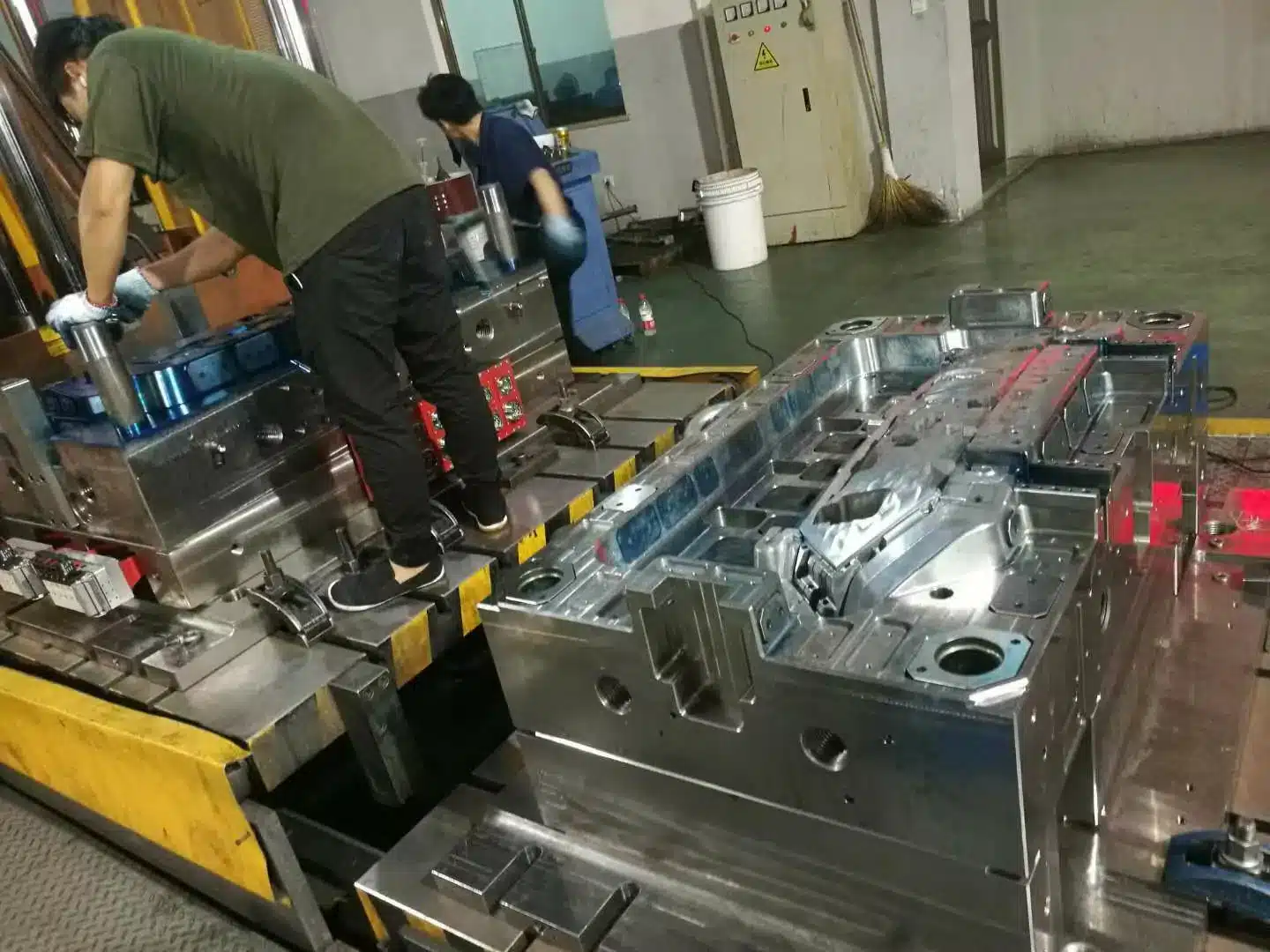
An Italy buyer for China injection molding and tooling designs a plastic part in Italy and has the mold and parts made in China. The shorthand: designed in Italy, manufactured in China. Italy brings the product design. China brings the steel-cutting and the volume.
That split is the whole strategy. Italian studios are strong on form, lighting, eyewear, furniture, small appliances, and auto trim. Chinese mold shops cut tooling faster and cheaper than almost anywhere. You keep the part Italian. You move the metalwork east.
Injection Molding Decision Tools
Estimate your real cost, pick a surface finish, and match the right mold steel. Figures are planning estimates — send a STEP file for an exact quote.
The quote is not the cost. Add duty, freight, and fees to see what a part really lands at.
SPI finish grades, from optical polish to heavy texture. Click a grade to see what it costs you.
Volume, resin, and finish decide the steel. Pick the wrong grade and you pay in rework or a dead tool.
Estimates for planning only. Final cost, finish, and steel depend on part geometry, tolerance, and volume.
What happens after you send us a CAD file?
Every step, how long it takes, and exactly what we need from you.
You send the CAD file
You email us the 3D file with target quantity, resin choice, and timeline. No NDA required to receive a quote — we sign one if you ask.
What we need from you
- 3D file: STEP, IGES, X_T, or STL
- 2D drawing if you have critical tolerances
- Target annual quantity (EAU)
- Preferred resin and color
- Surface finish — SPI A2, B1, texture, etc.
What you get back
- Confirmation we received the file within 24 hours
- Quick check that the file opens correctly
- Questions if anything is unclear
DFM review and quotation
Our engineers open your file, run DFM analysis, and quote the mold plus per-part price. You get a full breakdown — not a one-line number.
What we need from you
- Nothing — this is on us
- Quick reply if we ask a clarifying question
What you get back
- Mold price with steel grade, cavity count, runner type
- Part price at your target quantity
- Lead time estimate for tooling and first samples
- DFM report flagging draft, wall, gate, ejection risks
- Payment terms in writing
You review, we revise
You review the DFM report with your team. We talk through every flagged issue on a call and update the quote if the design changes.
What we need from you
- Decisions on DFM suggestions
- Revised CAD if design changes are needed
- Final cavity count and steel choice
- PO or written approval to proceed
What you get back
- Engineer-to-engineer calls (not sales-to-buyer)
- Updated quote if scope changes
- Signed contract draft for your legal review
Deposit and mold design
After 50% deposit, our mold designers build the full 2D and 3D mold layout. You approve it before any steel is cut.
What we need from you
- 50% deposit by wire transfer
- Written approval of the mold design
- Sign-off on parting line and gate location
What you get back
- Full 3D mold assembly for review
- 2D drawings of all major components
- Cooling and ejection layout
- Parting line and gate location marked clearly
Mold building
Steel is cut. CNC, EDM, polishing, fitting — every stage tracked. You get weekly progress photos so you always know where the project stands.
What we need from you
- Nothing during build
- Quick reply if we hit an unexpected issue
What you get back
- Weekly progress photos with date stamps
- Milestone updates: rough machining, EDM, polish
- Honest early warning if anything slips
- Live video calls anytime you want to see the shop floor
T1 sampling
First shots come off the press. We send samples by DHL or UPS and a full T1 report covering dimensions, cosmetics, and process settings.
What we need from you
- Shipping address for samples
- Inspection of samples within 5–7 days
- Written feedback on any issues
What you get back
- 5–10 T1 samples by express courier
- Dimensional report against your drawing
- Photos and short video of the molding process
- Process parameters: temp, pressure, cycle time
Revisions and approval
Most molds need a T2 — minor steel adjustment, gate tweak, or texture refinement. Revisions inside the original spec are free. We don't quote extra for our own fixes.
What we need from you
- Clear written feedback with photos
- Decisions on any out-of-spec dimensions
- Final part approval before mass production
What you get back
- Honest split between our errors and design changes
- T2, T3 samples until parts meet your spec
- Free revisions for our manufacturing errors
- Final approval document for your records
Mass production and shipping
After balance payment, we run production, pack, and ship by sea or air. The mold stays at our shop for the life of the project — free storage, free routine maintenance.
What we need from you
- Balance payment before shipment
- Shipping forwarder details, or use ours
- Packaging spec if you have one
What you get back
- Production parts to your approved spec
- Quality report with each shipment
- Free mold storage and maintenance
- Mold ownership transfer document on request
Ready to start step 1?
Send us your CAD file. You'll have a quote and a DFM report inside 4 working days.
Send us your CAD file →NDA available on request. No obligation. We reply within 24 hours, Monday to Saturday China time.
Why the split works
The reason is plain. A mold cut in Italy or Germany often runs €35,000 to €50,000. The same mold in China runs €12,000 to €22,000. Those are typical ranges, not a promise.
You are not buying cheaper design. You are buying cheaper steel and labor for the part of the job that is mechanical. Cutting a cavity is engineering, yes. But it is repeatable engineering. China does a lot of it.
Part price drops too. High-volume runs land at a lower piece price than most EU shops quote. The catch is freight, duty, and trust. We’ll get to all three.
What do you need from us today?
Pick the one that fits. We'll ask different questions based on your choice.
What kind of part is it?
Pick the closest one. If nothing fits, choose "Something else".
How big is your part?
Just pick a size close to yours. Exact numbers below (optional).
How should the plastic feel and behave?
Pick all that apply. Don't worry about material names.
What should the surface look like?
Pick more than one if needed.
How many parts do you need?
One of the biggest cost drivers. Rough number is fine.
What design materials do you have?
Tells us how much design work is needed.
Special features?
Optional. Skip if none apply.
Last step — how do we reach you?
We reply within 24 hours.
Your request is ready
Review below. Click Send to submit to us.
Thank you!
Your request # has been received.
Our team will reply to your email within 24 hours (Beijing business hours).
The mold is the asset. Who owns it?
You own the mold if your contract says so. Not before. The single most expensive mistake an Italy buyer makes is paying for a mold and never securing the right to move it.
Get the ownership clause in writing. It should say you own the tool. It should say you can pull it and ship it elsewhere. A good Chinese supplier signs this without drama. A bad one stalls.
Ask for the steel certificate too. You want proof of the grade you paid for. P20 billed, P20 delivered. Cheap shops swap in softer steel and the mold dies early.
Here is the rule. The mold is your asset, even when it sits on a Chinese factory floor. Treat it like a machine you own and store offsite.
Italy buyer for China injection molding and tooling: the real cost math
The total cost is four numbers, not one. Tooling is a one-time cost. Part price is per piece. Then add sea freight and EU duty. Add them before you compare quotes.
Run the break-even. Say a Chinese mold saves you €20,000 against an Italian one. Say the part is €0.10 cheaper each. You break even on the part savings around 200,000 shots. Most of my Italian clients pass that in year one.
But low volume changes the math. If you only need 5,000 parts a year, the tooling gap dominates. China still usually wins, but the margin shrinks. Run your own numbers with a smart mold cost calculator. Don’t trust a sales pitch.
One more line buyers forget. Mold maintenance and spare parts. Lifters wear. A hot runner tip clogs. Budget a little for tooling upkeep over the mold’s life.
Lead time and the ports
Tooling takes four to eight weeks for most parts. Complex tools with lifters, sliders, or a hot runner take longer. A simple single-cavity mold can be faster.
Tooling → T1 samples → Approval → Sea freight → Genoa / La Spezia / Naples
Then comes shipping. By sea, China to Italy runs about 30 to 40 days. Your boxes land at Genoa, La Spezia, or Naples, depending on your forwarder. Genoa and La Spezia handle most northern Italian freight.
Air freight cuts that to days. It costs far more. Use air for samples and first production. Use sea for the bulk. That mix keeps your launch on time and your landed cost sane.
Plan backward from your shelf date. Tooling, plus T1 samples, plus approval, plus sea time. Eight to fourteen weeks is a realistic first-order window. Rush it and quality slips.
Family firms buy from people, not spec sheets
Italian SMEs run on relationships. So do Chinese factories. That is the quiet advantage here.
A datasheet does not build trust. A factory visit does. A WeChat call with the boss does. Many Chinese mold shops are family-run too, second generation now. They understand a family firm in Brescia or Vicenza better than you’d expect. The Society of Plastics Engineers publishes useful background on global mold-making practice if you want to benchmark.
Pick a supplier who answers fast and answers straight. If your contact dodges a technical question, that’s your answer. Build with the shop that treats your mold like its own reputation.
DFM is where Italian design meets Chinese steel
DFM means design for manufacturing. It is the review where your beautiful part meets the rules of the cavity. Skip it and you pay later in defects. Read more on design for manufacturability in injection molding.
Italian design sometimes ignores draft angle. A sharp vertical wall looks clean in CAD. In steel, it sticks in the mold and scuffs on ejection. A good shop sends a DFM report and asks for one to two degrees of draft.
Watch wall thickness. Thick sections cause sink and warpage. Thin sections cause short shot. Even walls fill clean. If your design has a thick boss next to a thin wall, core it out.
Ribs and bosses need care. A rib too thick sinks on the show surface. A boss with no radius cracks. Undercuts force a lifter or a slider, and each one raises mold cost and cycle time.
Read the DFM report like a contract. Every change they flag is a defect you avoid. The shops that send no DFM are the shops that send you bad parts.
Reading the quote before you wire money
A real quote shows its work. A vague quote hides it. Before you pay a deposit, find these lines.
- Steel grade for cavity, core, and inserts. P20, H13, or S136. If it just says “steel,” ask.
- Cavity count. One-up or multi-cavity changes part price and tool cost.
- Cycle time estimate. This drives your piece price more than anything.
- Mold life in shots. A guaranteed number, not a vibe.
- Tool ownership and the right to transfer.
- Tolerances and the inspection plan for T1.
If a supplier won’t itemize the steel and the shot life, walk. The price means nothing without those two lines. A side-by-side quote comparison framework helps keep apples-to-apples.
P20, H13, or S136?
Pick the steel by volume and finish. P20 is the default for medium runs. H13 is hardened for high volume and abrasive resins. S136 is the stainless grade for clear or cosmetic parts.
| Steel | Best for | Typical shot life |
|---|---|---|
| P20 | Medium runs, clean resins | ~300,000 shots |
| H13 | High volume, glass-filled resins | 1,000,000+ shots |
| S136 | Clear, cosmetic, high-gloss parts | 500,000+ shots |
P20 handles maybe a few hundred thousand shots in a clean resin. Glass-filled nylon eats P20 fast, so you move to H13. H13 holds up for a million-plus shots when treated right.
S136 matters for eyewear, lenses, and high-gloss housings. It polishes to a mirror and resists corrosion. It costs more. For a clear part, it earns the premium.
Here is the short version. Cosmetic and clear, ask for S136. High volume or filled resin, ask for H13. Everything else, P20 is fine. Don’t let a shop sell you hardened steel for a 20,000-piece job.
Approving a mold from 9,000 km away
You approve the tool on the T1 sample, not on faith. T1 is the first shot off the new mold. T2 is the corrected round after fixes.
Ask for three things. Photos and video of the T1 parts. A dimensional report against your drawing. And actual sample parts shipped to Italy by air. Hold the real part in your hand before you sign off.
For a serious tool, hire a third-party inspector in China. They check the steel, the cavity count, and the parts on site. It costs a few hundred euros. It has saved my clients far more than that.
Don’t approve on a render. Don’t approve on a promise. Approve on a measured part you can hold.
First-sample defects and what they’re telling you
First samples almost always show something. The defect tells you the cause. Read it, don’t panic. A broader reference on injection molding defects and their resolution covers the rest.
Short shot means the part didn’t fill. Usually a gate, pressure, or venting problem. Often fixable on the press, not the steel.
Flash is plastic squeezing out at the parting line. On a new mold, that points to a fitting or shut-off problem. That’s a steel fix, and it’s the shop’s job.
Sink marks are dimples over thick ribs or bosses. Design or pack-pressure cause. Sometimes you thin the rib. Sometimes you adjust the process.
Warpage is the part bowing after ejection. Cooling and wall thickness drive it. A part that warps on T1 often needs a cooling-channel or design change. Catch it now, before mass production. Industry guides at MoldMaking Technology are a good outside reference for diagnosing tool-side defects.
Payment, Incoterms, and EU customs
Standard terms are 30% deposit, 70% before shipment. Some shops split tooling and parts differently. Negotiate, but expect a deposit. No real factory builds your mold for free.
Use clear Incoterms. FOB means you take over at the Chinese port. CIF means they cover freight to Genoa or La Spezia. CIF is simpler for a first order. FOB gives you control once you trust your forwarder.
Then EU compliance. Your parts may need REACH and RoHS conformity. Food-contact and toy parts carry extra rules. Tell your supplier the end use up front. A good shop already knows the resin grades that pass. ISO standards underpin most of these material and quality requirements.
Don’t skip the import paperwork. Duty and VAT hit at the Italian border. Build them into your landed cost from day one.
When to walk away
Some signals end the conversation. Trust them. See also our list of red flags when sourcing injection moulding in China.
- The supplier won’t name the steel grade or guarantee shot life.
- No DFM report, no questions about your part — they just say yes to everything.
- The price is far below every other quote. Cheap steel, hidden later.
- They dodge the mold-ownership clause.
- Communication is slow and vague before you’ve even paid. It gets worse after.
A shop that says yes to everything is a shop that will surprise you on T1. The good ones push back during DFM. That pushback is the service.
FAQ
Is it legal for an Italian company to own a mold made in China?
Yes. You own the tool if your purchase agreement states it. Keep a signed clause covering ownership and the right to move the mold. Store the steel certificate with it.
How much cheaper is Chinese tooling versus Italian tooling?
Chinese molds often run 40% to 60% less than EU molds for the same part. Part price usually drops too. Freight and duty eat some of that, so compare landed cost, not factory price.
How long until I get production parts in Italy?
Plan eight to fourteen weeks for a first order. That covers tooling, T1 samples, your approval, and sea freight to Genoa or La Spezia. Air freight on samples keeps the timeline moving.
Can I protect my Italian design from being copied in China?
Use an NDA and a clear ownership clause, and split the part across more than one supplier if it’s sensitive. Register your design in the EU. Pick an established shop with a reputation to lose. No paper stops everything, but reputation deters a lot.
What plastic should I specify for a clear or cosmetic part?
For clear parts, polycarbonate or PMMA in an S136 stainless mold. For glossy housings, ABS or PC/ABS, also in polished steel. Tell the shop the finish you want before they cut the cavity.
Do I need to visit the factory before ordering?
Not always, but it helps a lot. A visit or a third-party audit builds the trust Italian and Chinese family firms both run on. If you can’t travel, hire a local inspector for the T1 stage.
What’s the difference between FOB and CIF for my first order?
CIF means the supplier ships to your Italian port and you handle import. FOB means you take over at the Chinese port. For a first deal, CIF is simpler. Switch to FOB once you trust your forwarder.
Who pays to fix a mold defect found on T1?
The supplier fixes steel and fitting defects at their cost. Flash and parting-line problems are theirs. Design-driven issues, like a wall you drew too thin, may be a shared change. Settle this in the contract.
The one rule
If you take one thing from this, take this. Secure the mold ownership and the steel grade in writing before you wire a single euro. Everything else — price, lead time, even a defect on T1 — you can fix. A mold you don’t legally own, built from steel you can’t verify, you cannot.
Design in Italy. Make in China. Just keep the asset in your name.
Get a transparent quote from Topworks
Steel grade, cavity count, shot life, and mold ownership — itemized before you wire a euro.

