
Automotive Lightweighting: Advanced Composite Injection Molding Techniques and Cost Analysis
What do automotive engineers lose their sleep over? Weight. It is all about grams when you have fuel efficiency targets to meet. And the reality is, that as a procurer you are likely to lose sleep over something far more fundamental, which is the cost of all those weight savings.
The thing is that composite injection molding is not another manufacturing buzzword. It is changing our perception towards automotive lightweighting. However, I must tell you like it is— not every composite is made the same and neither is the process that forms them.
Why Weight Loss Plans are More Important than Before
It used to be light when a car weighed 3,000 pounds. Such times are well past. And today, cars are more crammed with safety gadgets, comfort technology, and performance systems than ever before. The result? Weight gain that would send your bathroom scale to tears.
But this is where the interesting part comes in. A 10% decrease in vehicle weight has the potential to raise fuel efficiency by a range of 6-8%. That is not small change; that is the difference between passing emissions standards and losing your competitors in the market as they fly by you.
The heavyweight champion of lightweight solutions has turned out to be glass fiber composites and carbon fiber molding. I think that the irony is obvious. (Yes, I get it.) The materials provide strength-to-weight ratios where standard steel seems to be on a buffet binge.
Demystifying the Injection Molding Process—No PhD Necessary
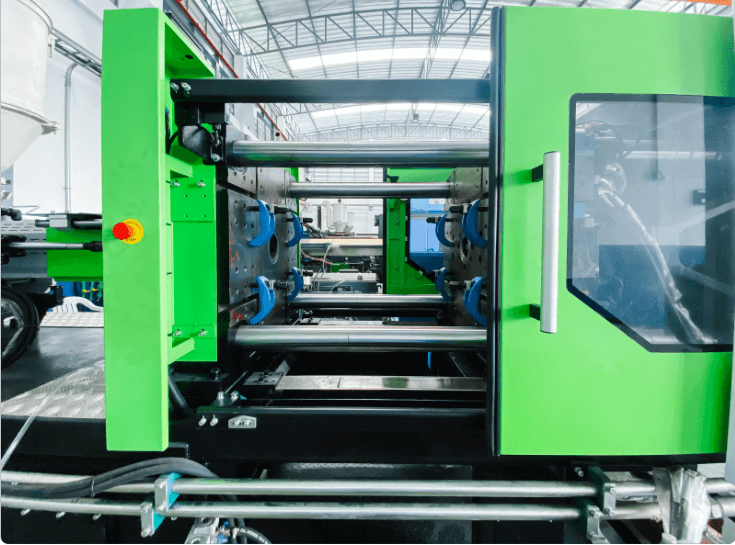
Talk shop, let us. Advanced composite injection molding is not your grandfather’s plastic molding process. We are working with complex material systems which incorporate reinforcing fibers with thermoplastic or thermoset resins.
Embedded HTML block (kept verbatim) — click to expand
<!DOCTYPE html>
<html lang="en">
<head> <meta charset="UTF-8"> <meta name="viewport" content="width=device-width, initial-scale=1.0"> <title>Injection Molding Process Guide - Complete Manufacturing Tutorial</title> <meta name="description" content="Complete injection molding process guide covering design considerations, best practices, and manufacturing steps. Expert tips for optimal plastic injection molding results."> <meta name="keywords" content="injection molding, plastic manufacturing, molding process, design for manufacturing, plastic injection, manufacturing guide"> <!-- Schema.org structured data for SEO --> <script type="application/ld+json"> { "@context": "https://schema.org", "@type": "HowTo", "name": "Injection Molding Process Guide", "description": "Complete guide to injection molding process including steps, design considerations, and best practices for manufacturing plastic parts", "image": "https://example.com/injection-molding-guide.jpg", "totalTime": "PT30M", "estimatedCost": { "@type": "MonetaryAmount", "currency": "USD", "value": "Variable" }, "supply": [ { "@type": "HowToSupply", "name": "Plastic pellets" }, { "@type": "HowToSupply", "name": "Injection molding machine" }, { "@type": "HowToSupply", "name": "Mold tooling" } ], "step": [ { "@type": "HowToStep", "name": "Material Preparation", "text": "Heat plastic pellets to optimal temperature and ensure proper material flow characteristics", "url": "#material-preparation" }, { "@type": "HowToStep", "name": "Injection", "text": "Inject molten plastic into the mold cavity under controlled pressure and speed", "url": "#injection-step" }, { "@type": "HowToStep", "name": "Cooling", "text": "Allow the plastic to solidify while maintaining dimensional stability through controlled cooling", "url": "#cooling-step" }, { "@type": "HowToStep", "name": "Ejection", "text": "Remove the finished part from the mold using ejector pins or other removal mechanisms", "url": "#ejection-step" } ] } </script> <style> /* (styles omitted here only by display; original block preserved as-is in your source) */ </style>
</head>
<body> <article class="wp-block-injection-molding" itemscope itemtype="https://schema.org/HowTo"> <header> <h1 itemprop="name">Injection Molding Process: Complete Manufacturing Guide</h1> <p class="lead-text" itemprop="description">Master the injection molding process with our comprehensive guide covering design considerations, manufacturing steps, and industry best practices for optimal plastic part production.</p> </header> <nav class="wp-molding-nav" aria-label="Guide sections"> <h2>Quick Navigation</h2> <ul> <li><a href="#process-steps">Process Steps</a></li> <li><a href="#design-considerations">Design Considerations</a></li> <li><a href="#best-practices">Best Practices</a></li> <li><a href="#faq">FAQ</a></li> </ul> </nav> <section id="process-steps" aria-labelledby="process-heading"> <h2 id="process-heading">Injection Molding Process Steps</h2> <div class="wp-process-steps"> <div class="wp-process-step" id="material-preparation" itemprop="step" itemscope itemtype="https://schema.org/HowToStep"> <div class="wp-step-number" aria-label="Step 1">1</div> <div class="wp-step-content"> <h3 itemprop="name">Material Preparation</h3> <p itemprop="text">Heat plastic pellets to optimal temperature (typically 200-300°C depending on material) and ensure proper material flow characteristics. Proper drying of hygroscopic materials is essential to prevent defects.</p> </div> </div> <div class="wp-process-step" id="injection-step" itemprop="step" itemscope itemtype="https://schema.org/HowToStep"> <div class="wp-step-number" aria-label="Step 2">2</div> <div class="wp-step-content"> <h3 itemprop="name">Injection Phase</h3> <p itemprop="text">Inject molten plastic into the mold cavity under controlled pressure (500-2000 bar) and speed. The injection time typically ranges from 0.5 to 5 seconds depending on part complexity and size.</p> </div> </div> <div class="wp-process-step" id="cooling-step" itemprop="step" itemscope itemtype="https://schema.org/HowToStep"> <div class="wp-step-number" aria-label="Step 3">3</div> <div class="wp-step-content"> <h3 itemprop="name">Cooling and Solidification</h3> <p itemprop="text">Allow the plastic to solidify while maintaining dimensional stability through controlled cooling. Cooling time accounts for 70-80% of total cycle time and directly impacts part quality.</p> </div> </div> <div class="wp-process-step" id="ejection-step" itemprop="step" itemscope itemtype="https://schema.org/HowToStep"> <div class="wp-step-number" aria-label="Step 4">4</div> <div class="wp-step-content"> <h3 itemprop="name">Part Ejection</h3> <p itemprop="text">Remove the finished part from the mold using ejector pins, stripper plates, or compressed air. Proper ejection prevents part damage and ensures consistent production quality.</p> </div> </div> </div> </section> <section id="design-considerations" aria-labelledby="design-heading"> <h2 id="design-heading">Critical Design Considerations for Injection Molding</h2> <!-- ... --> </section> <section id="best-practices" aria-labelledby="practices-heading"> <!-- ... --> </section> <section id="faq" aria-labelledby="faq-heading"> <!-- ... --> </section> </article>
</body>
</html>
The way it works is roughly as follows: You have your fiber reinforcement, which may be chopped glass or continuous carbon, or something in between. Add it to your resin mix, squeeze it into a hot mold at high pressure and bang! You have a part that is stronger than steel but weighs less than aluminum.
It sounds easy, doesn’t it? Well, here’s where the rubber meets the road. It is all the details of the devil:
- The way the fibers are oriented is important. A lot. Do it wrong, and your role may as well be wrong cardboard that has been wetted.
- The temperature and pressure of injection must be in perfect balance. Too warm and you soften the fibers. Over cool and you have incomplete filling.
- Cycle times will either ruin your business case or save it. Nobody is going to wait 20 minutes and get a single part.
Glass Fiber Composites: The Bread and Butter of Weight Reduction
Glass fiber reinforced plastics (GFRP) are the faithful pickup truck in the composite world. They may never be winners of any beauty contests when compared to carbon fiber, but they do the job at a much cheaper cost.
Why are glass fiber composites so attractive? To start with, they are everywhere. The chain of supply is established, the processing is not a mystery, and the cost-benefit ratio indeed does not seem absurd in terms of high-volume production. It is 30-40 percent weight savings over steel with material costs that will not make your CFO reach for the antacids.
The actual magic comes when you begin to play with fiber content. A 30 percent glass-filled polypropylene may be excellent in your underhood parts. Take that to 50% long glass fiber and all of a sudden you are in structural applications. Door modules, instrument panel carriers, front-end modules—these components are showing that glass fiber is not only used in non-structural applications anymore.
Carbon Fiber Molding: Performance Worth the Price
Now there is carbon fiber—that is the Ferrari of reinforcement materials. It is sexy, it is powerful, and yes, it is costly. However, there are times that you require that Ferrari performance.
Carbon fiber molding was always reserved for low-volume, high-performance applications. On your mind should be supercars and race cars. What is changing here, however, is that new methods of processing are causing lower costs. Not cheap by any means, but approaching the place where it would be justifiable for premium vehicles.
The numbers of strength are astounding. We are talking about parts which are 50-70 percent lighter than steel ones but which have—or even more than—the mechanical properties demanded. In structural parts where every pound is critical, the carbon fiber composite material can perform where glass cannot.
But the truth of the matter is that the challenges are:
- The cost of raw materials remains 5-10 times more expensive than glass fiber.
- There is a need to have tighter control and even slower cycle times in processing.
- Recycling? And that still remains a work in progress.
The Cost-Benefit Analysis that Really Makes Sense
Okay, money. It is not that engineering elegant at the end of the day really matters unless the economics are in line.
This is a pretty pragmatic breakdown of what you are looking at:
Glass Fiber Composites:
- Materials price: 2-5 dollars per lb.
- Processing cost: Uses standard injection molding costs.
- Weight savings: 30-40 percent compared to steel.
- Part consolidation potential: High (minimize assembly costs).
Carbon Fiber Composites:
- Material price: 10-25 dollars per pound (depending on the grade).
- Selling cost: 20-50 percent more than glass.
- Weight: 50-70 percent compared to steel.
- Performance premium: Warranted critical applications.
However, there is something the raw figures fail to indicate. Composites really excel in part consolidation. That steel assembly that has 15 parts, has several welds, and a complicated painting process? Substitute it with one molded composite piece and the equation turns upside down like that.
High-end Processing Methods That Turn the Tables
The injection molding environment is not staying in one place. New methods are expanding the limit of possibilities:
- Long Fiber Injection (LFI) maintains fiber length in a better way as compared to conventional short fiber processes. Result? Improved mechanical strength and impact strength. Ideal in those semi-structural jobs when that performance advantage is needed.
- Direct-LFT (Long Fiber Thermoplastic) is an even bigger step further. You are compounding and shaping in-line so you are using fresher material; properties are better and the costs are often lower. This is producing cost savings of 15-20 percent in some of the tier-one suppliers.
- Hybrid molding is the combination of continuous fibers and injection molding. It is like having your cake and eating it too—structural performance where you want it, complex geometry where you want it.
Real-Life Success Stories (Names have been altered to save the innovative)
I can give you some examples which will make this concrete. One of the largest German car manufacturers has recently changed their battery enclosure, which was made of stamped aluminum, to long glass fiber reinforced polyamide. Weight reduction? 35 percent. Cost saving? 20 percent allowing assembly simplification. The kicker? Improved thermal and acoustic insulation as an added benefit.
A different example: An OEM in Detroit changed a steel cross-car beam with a fiberglass composite version. The part integration saved 12 individual components and 60 percent on assembly time. Of course, the price of the material was increased, yet the cost of the whole system was reduced by almost 30%.
What to Avoid and How to Avoid It
Hear me, I have known enough composite projects go wrong to write a book. The large ones to avoid are these:
- Steel design, composite construction. It is akin to riding a saddle on a cow; it can be done technically, but you are not getting the point. Composites require alternative designs. Integration, consolidation of functions, think outside the stamped-steel box.
- Neglect of the supply chain. The fact that something appears wonderful on paper does not imply that you can acquire it in a dependable manner. Establish connection with material suppliers early enough. Know their strengths, know their weaknesses, know their strategy.
- Minimizing the time of validation. The behavior of composites is not similar to that of metals. Fatigue, creep, environmental effects, all these require special attention. Allot time and funds to rigorous testing.
The Environmental Angle (It Matters)
This may shock you, but here is the environmental story on composites, which is somewhat compelling. Well, the initial carbon footprint may be more than that of steel. However, considering the weight savings of the lifecycle fuel consumption? The math changes drastically.
In an average passenger car, 12 gallons of fuel is conserved when 100 pounds is cut off. That is significant emission reduction over the 150,000-mile life span. Throw in the possibility of part consolidation (fewer manufacturing processes, less energy) and enhanced recyclability of newer thermoplastic composites, and the situation is even rosier.
Where Is Composite Injection Molding Going?
The future is interesting. Really interesting. Bio-resins are shifting out of the laboratory into the manufacturing stage. More applications are seeing recycled carbon fiber. The technology of processing is becoming more and more rapid, dependable, and economical.
And here is my forecast: the true revolution is not going to be in one breakthrough. It will be a result of small steps forward. A little bit improvement in fiber-matrix adhesion here, a little bit quicker cycle time there, a little bit more optimization of design everywhere. All this incremental improvement leads to revolutionary change.
The Business Case to Remember
How do you sell this internally? Since after all, it is not always a small task to get buy-in on new materials and processes.
Begin with pilot projects. Choose applications in which the advantages are evident and the risks are controllable. Write it all down: weight savings, cost implications, manufacturing benefits. Present your case on facts, not on promises.
Take the life cost of ownership into account. The first material costs are only part of the puzzle. Factor in:
- Labor reduction in assembly labor.
- Finishing and painting removal.
- Increase in warranty and durability.
- Brand differentiation value.
And we should not overlook the competitive aspect. Your competitors are experimenting with such technologies. The inquiry is not whether to embrace composite injection molding, but how quickly you can make it work.
The Bottom Line
The advanced composite injection molding is not just another manufacturing trend. It is a paradigm change in automotive lightweighting. It is old enough to bring tangible returns yet young enough that the first people to use it can still achieve a huge competitive advantage.
Team glass fiber or carbon fiber (or clever enough to use each where it is appropriate), the evolutionary trend is obvious. Losing weight goals are not becoming easier. The efficiency requirements of fuel are not becoming easy. However, when proper materials, processes, and strategy are in place, then these difficulties turn into opportunity.
The instruments are available. The resources are prepared. The question here is, are you prepared to make the move? As it is, in the competition for more efficient, lighter vehicles, stagnation is regression. And nobody wants to be the company that is stamping steel while everyone else is shaping the future.

