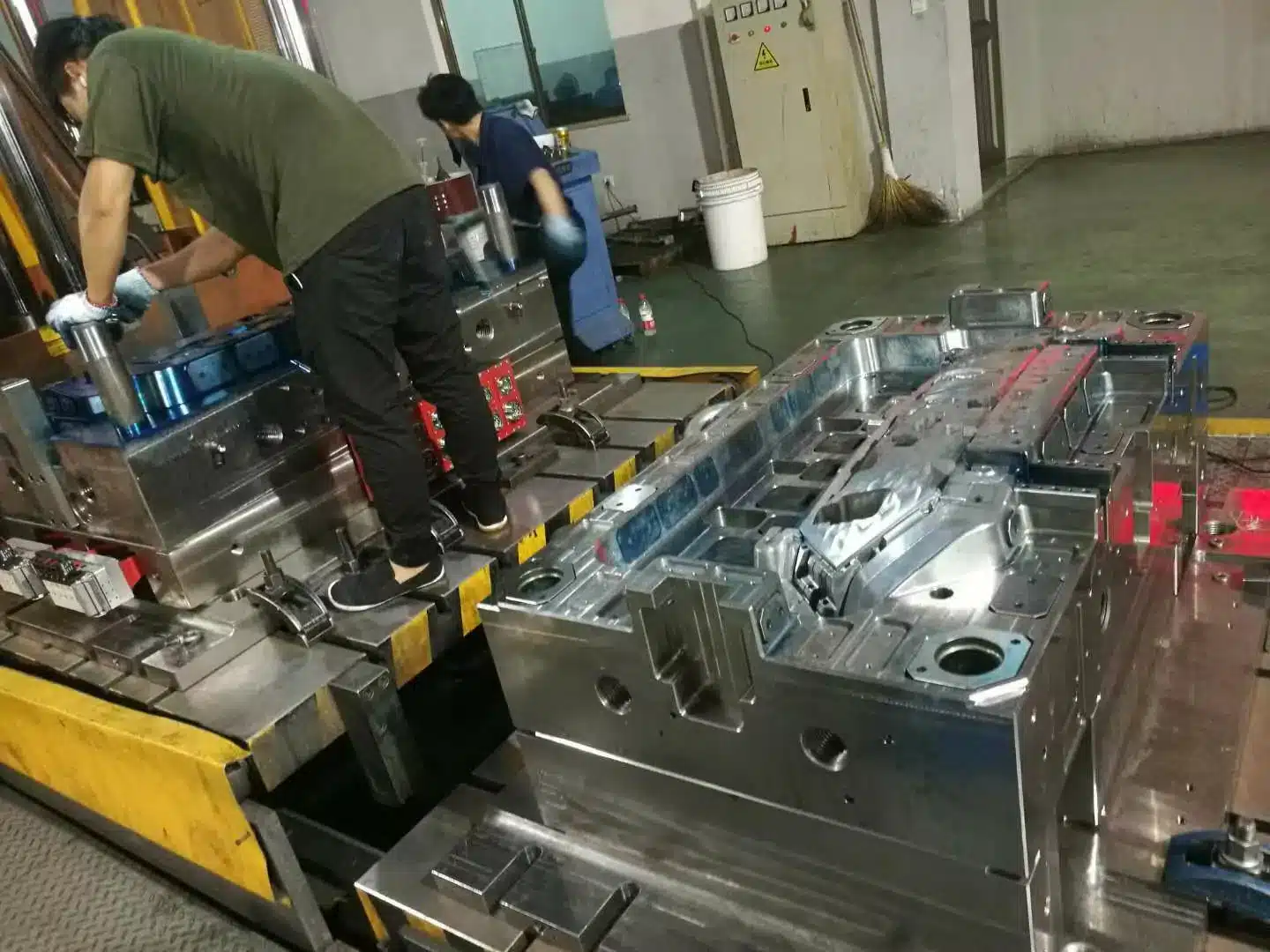

If you are sourcing sustainable plastic parts in China and asking what is PLA injection molding, you are likely weighing the trade-off between environmental claims and production reliability. This guide is built for procurement managers, product developers, and sustainability leads who need a clear, accurate picture before issuing an RFQ. You will learn how the process works, what it costs, where PLA performs well, where it fails, and how to qualify a China-capable supplier. By the end, you will have a defensible buying framework rather than marketing slogans.
What Is PLA Injection Molding? (Direct Answer)
PLA injection molding is the process of producing parts by injecting molten polylactic acid (PLA) — a biodegradable thermoplastic made from fermented plant sugars — into a closed metal mold, where it cools and solidifies into a finished component.
PLA is processed on conventional injection molding equipment with adjusted parameters for moisture sensitivity and temperature. According to Topworks Molding, PLA is derived from renewable feedstocks such as corn starch, sugarcane, or cassava, and breaks down into natural elements under industrial composting. The process is functionally similar to molding ABS or polypropylene but requires stricter drying control and a narrower process window. Baiwe Molding
Key facts about PLA injection molding:
- PLA is a thermoplastic polyester derived from renewable plant sugars (typically corn starch in the US).
- Standard processing temperatures range from 170°C to 230°C, with toughened PLA grades going up to 260°C. Baiwe Molding
- PLA must be dried to below 0.02% (200 ppm) moisture using a desiccant dryer before molding. RTP Company
- It is industrially compostable under ASTM D6400 conditions, not in home compost bins.
- It uses conventional injection molding machines with minor screw and mold modifications.
How PLA Injection Molding Works
PLA injection molding works by drying hygroscopic PLA pellets, melting them under controlled heat and shear, then injecting the melt into a precision mold under high pressure. The polymer cools, solidifies, and is ejected as a finished part.
Because PLA is a polyester, it is vulnerable to hydrolytic degradation — a chemical reaction with moisture that breaks polymer chains and ruins mechanical strength. Even trace humidity from a poorly dried hopper can cause brittleness, discoloration, and failed parts. This is the single most important difference between PLA and commodity plastics like polypropylene.
The 6-Step PLA Molding Process
- Drying — Dry crystallized pellets at 65–80°C for 2 to 4 hours using a desiccant dryer with a –40°F (–40°C) dew point until moisture is below 200 ppm. Note: amorphous PLA pellets (including regrind) become sticky above their glass transition temperature of approximately 55°C, so amorphous material must be dried at lower temperatures (below 55°C) or crystallized first before drying at higher temperatures.
- Plasticizing — Feed dried pellets into the heated barrel, where a screw with a 20:1–24:1 L/D ratio and a compression ratio of 2.5:1–3:1 shears and melts them at 170–230°C. Back pressure is typically maintained at 50–100 bar (0.5–2.0 MPa) to ensure melt homogeneity and minimize hydrolysis.
- Injection — Inject the molten PLA into a closed mold cavity at controlled speed (typically 150–300 mm/s) and pressure (55–140 MPa) to fill thin and thick sections evenly.
- Holding and packing — Apply hold pressure at 60–80% of injection pressure to compensate for shrinkage (typically 0.3–0.5%, very low for thermoplastics).
- Cooling — Cool the mold to 20–40°C for amorphous parts or 90–110°C for crystalline, heat-resistant parts. Cooling time is typically 15–45 seconds depending on part thickness and is the dominant portion of cycle time.
- Ejection — Open the mold and eject the finished part for trimming, inspection, or secondary operations. Ensure ejection occurs after sufficient solidification to prevent warpage — PLA parts can be flexible and prone to deformation when ejected warm.
PLA Process Parameters at a Glance
| Parameter | Value / Range |
|---|---|
| Melt temperature | 170–230°C (standard); up to 260°C (toughened) |
| Mold temperature (amorphous) | 20–40°C |
| Mold temperature (crystalline) | 90–110°C |
| Drying temperature (crystallized pellets) | 65–80°C |
| Drying temperature (amorphous pellets) | Below 55°C |
| Drying time | 2–4 hours (crystallized); longer at lower temperature for amorphous |
| Target moisture | ≤ 200 ppm (0.02%) |
| Dew point of drying air | –40°C (–40°F) |
| Screw L/D ratio | 20:1–24:1 |
| Compression ratio | 2.5:1–3:1 |
| Injection pressure | 55–140 MPa |
| Hold pressure | 60–80% of injection pressure |
| Back pressure | 0.5–2.0 MPa (50–100 bar) |
| Injection speed | 150–300 mm/s |
| Shrinkage | 0.3–0.5% |
| Shot utilization | 30–50% of machine maximum shot capacity (engineering plastic guideline) |
| Cushion | Approximately 5–10% of shot stroke |
Why US Buyers Are Choosing PLA in 2026
US buyers are choosing PLA because it offers a compostable, bio-based alternative that aligns with sustainability commitments, ESG reporting, and tightening state-level packaging legislation. States including California, Washington, and New York have passed extended producer responsibility (EPR) laws affecting plastic packaging, pushing brands toward certified compostable substrates.
PLA also resonates with end consumers. Coffee cup linings, food deli containers, and cutlery in cafés and cafeterias are increasingly PLA-based, supporting “plant-based” marketing claims that petroleum plastics cannot match.
PLA vs Conventional Plastics: A Buyer’s Comparison
Choosing PLA over ABS, PP, or PET is a trade-off between sustainability and mechanical performance. The table below summarizes how PLA stacks up against the most common alternatives for injection-molded consumer parts.
| Property | PLA | ABS | Polypropylene (PP) | PET |
|---|---|---|---|---|
| Origin | Plant-based (corn, sugarcane) | Petroleum | Petroleum | Petroleum |
| Industrial compostable | Yes (ASTM D6400) | No | No | No |
| Heat deflection (HDT) | ~50–60°C (amorphous); up to 120°C (crystalline with nucleation) | ~95°C | ~100°C | ~70°C |
| Tensile strength | 50–70 MPa | 40–50 MPa | 30–40 MPa | 55–75 MPa |
| Shrinkage | 0.3–0.5% | 0.5–0.7% | 1.5–2.5% | 0.2–0.8% |
| Clarity | High (transparent grades) | Low | Low | High |
| Cost (US, 2026) | $1.80–$3.50/lb | $1.20–$2.00/lb | $0.80–$1.40/lb | $1.00–$1.60/lb |
| Recommended wall thickness | 1.0–3.0 mm | 1.2–3.5 mm | 1.2–3.0 mm | 1.0–3.0 mm |
| Best for | Single-use packaging, medical, consumer goods | Structural parts, electronics | Living hinges, containers | Bottles, films |
According to processing data from LZ Tooling, PLA’s heat deflection temperature of 50–60°C at 0.45 MPa rules out automotive under-hood applications, dishwasher-safe goods, or anything exceeding 50°C in service unless crystalline grades with nucleating agents and heated molds (90–110°C) are specified, which can push HDT up to approximately 120°C.
Best Applications for PLA Injection Molded Parts
PLA injection molding is best for parts with short service lives, where compostability is a feature rather than a flaw. Industries adopting PLA most aggressively include packaging, foodservice, medical devices, and consumer goods.
Common US applications include:
- Foodservice disposables — cutlery, lids, cup rims, deli container bases
- Cosmetic packaging — jars, caps, single-use applicators
- Medical devices — bioresorbable sutures, tissue engineering scaffolds, drug delivery components
- Consumer goods — gift card carriers, point-of-sale displays, promotional items
- Agricultural products — plant pots, mulch clips, seedling trays
PLA is not suitable for hot-fill packaging, automotive parts, dishwasher-safe items, or any product requiring long-term outdoor exposure.
Design for Manufacturing (DFM) Guidelines for PLA Parts
PLA shares many DFM principles with other thermoplastics, but its relatively low heat deflection temperature, brittleness, and sensitivity to hydrolysis require specific attention. The following parameters are adapted from injection molding industry experience values and should be used as starting points — fine-tune during DFM review and T1 trials.
Wall Thickness
PLA parts should target a wall thickness range of 1.0–3.0 mm, similar to PC. Within a single part, wall thickness variation should be held within ±25% of the nominal thickness to minimize differential cooling, warpage, and internal stresses.
Thicker walls increase cooling time significantly — cooling time is roughly proportional to the square of the wall thickness. For example, if a 2 mm wall cools in about 10 seconds, a 4 mm wall may need approximately 40 seconds.
Draft Angles
| Surface Type | Recommended Draft (°) |
|---|---|
| General exterior surfaces | 0.5–1° |
| Deep cavities (interior surfaces) | 1–2° |
| High-gloss / mirror-finish surfaces | 0.25–0.5° (with careful ejection) |
| Textured / etched surfaces | 1–3° (coarser texture requires more draft) |
| Rib side walls | 0.5–1.5° |
| Boss exteriors | 0.5–1.5° |
| Boss internal holes | ~0.5° |
PLA’s tendency toward brittle ejection behavior means draft angles on textured surfaces should not be reduced below 1.5°, and ejector pin diameter should be increased to distribute ejection force more evenly.
Ribs
- Rib thickness: 0.4–0.6 × base wall thickness (commonly 50–60% of wall thickness)
- Rib height: ≤ 2.5–3 × base wall thickness
- Rib spacing: ≥ 2 × wall thickness
- Rib base fillet radius: R ≈ 0.25–0.4 × wall thickness
- Rib draft: 0.5–1.5°
Bosses
- Boss outer wall thickness: 0.4–0.6 × surrounding wall thickness
- Boss base wall thickness: 0.7–0.9 × nominal wall thickness
- Boss base fillet radius: R ≈ 0.25 × wall thickness
- Hole depth: recommended ≤ 2.5–3 × hole diameter (deeper holes need reinforcement or design modification)
- Draft: exterior 0.5–1.5°, internal hole ~0.5°
Fillets and Radii (Stress Control)
- Internal fillets: R ≥ 0.25–0.5 × wall thickness
- For snap-fit features and transparent PLA parts: use slightly thicker walls and larger radii to prevent cracking
Common PLA DFM Defects and Fixes
| Defect | Root Cause | Design Fix |
|---|---|---|
| Sink marks at ribs/bosses | Rib or boss wall too thick | Reduce rib/boss wall to 0.4–0.6 × base wall thickness; add fillet R ≈ 0.25–0.4 × wall thickness |
| Short shots | Gate too small or flow length too long | Increase gate diameter in 0.2 mm increments; move gate closer to short-shot area; add flow leaders |
| Warpage | Uneven wall thickness or asymmetric rib layout | Hold wall thickness variation ≤ ±25%; distribute ribs symmetrically |
| Ejection whitening/cracking | Concentrated ejection force on brittle PLA | Use more smaller pins; eject against ribs/reinforced areas; consider stripper plates for large flat parts |
| Brittleness / reduced properties | Hydrolytic degradation from moisture | Verify drying to ≤ 200 ppm; check barrel residence time is within material limits |
Gate Design for PLA Molds
PLA flows similarly to PET but with a narrower thermal window. Gate design controls fill balance, cosmetic quality, and the ability to pack out shrinkage.
General Gate Design Principles
- Gate cross-section area: typically 3–9% of the runner cross-section area
- Gate length (land): 0.5–2.0 mm — as short as practical for clean shear and fast freeze-off
- Gate height/thickness: start at 0.5–0.75 × local part wall thickness
Gate Type Selection for PLA
| Gate Type | Typical Dimensions | Best PLA Applications |
|---|---|---|
| Side gate (edge gate) | Height h: 0.5–2.0 mm; Width b: 1.5–5.0 mm; Land L: 0.5–2.0 mm | General purpose; simple molds |
| Pin-point gate (cold runner) | Diameter d: 0.8–1.5 mm (small parts), 1.5–2.5 mm (larger parts); Taper: 15–30° | Multi-cavity molds; auto-degating |
| Submarine (tunnel) gate | Diameter: 0.8–2.2 mm; Angle: 30–60° (commonly 35–45°) | Auto-cut; cosmetic surface requirements |
| Fan gate | Thickness: 0.5–1.5 mm; Width: 4–30 mm | Thin-wall flat parts; improved flow front uniformity |
| Diaphragm / ring gate | Thickness: 0.2–0.8 mm | Round lids, transparent PLA cups; minimizes weld lines |
| Direct (sprue) gate | Diameter: 3–6 mm; Fillet R: 0.5–1.5 mm | Thick single-cavity parts |
Side Gate Sizing by Wall Thickness
| Part Wall Thickness T (mm) | Gate Depth h (mm) | Gate Width b (mm) | Pin Gate Diameter d (mm) | Gate Land L (mm) |
|---|---|---|---|---|
| < 0.8 | ≈ 0.5 | ≈ 1.0 | 0.6–0.8 | 0.8–1.5 |
| 0.8–1.3 | 1.0 | 0.8–1.5 | 1.0–1.2 | 0.8–1.2 |
| 1.5–2.5 | 1.0–1.5 | 1.5–2.5 | 1.0–1.8 | 1.0–1.5 |
| 2.5–4.0 | 1.2–2.0 | 2.5–4.0 | 1.5–2.2 | 1.2–1.8 |
| > 4.0 | 2.0+ | 4.0+ | 2.0–2.8 | 1.5–2.0 |
PLA-Specific Gate Considerations
- PLA has relatively low melt viscosity, so gate sizes can be at or slightly below the experience-table lower limits compared to PC or PMMA.
- For transparent PLA parts (cups, lids, deli containers), prefer fan gates, diaphragm gates, or ring gates to minimize shear marks and weld lines at the gate area.
- According to Trumax process engineering recommendations, externally heated hot runner systems help maintain consistent melt temperature and prevent drooling, which is common with low-viscosity PLA. If using hot runners, pin gate diameters of 0.6–2.8 mm and gate land of 0.7–1.5 mm are typical. Trumax Tools
Runner System Design
- Main runner (sprue) diameter: 4–8 mm for small to medium parts; 6–10 mm for large parts
- Sub-runner diameter: 4–7 mm (slightly smaller than main runner)
- Cold slug wells: volume at least 1–2× the connected runner cross-section volume; place at sprue base, runner turns, and ahead of gates
- Multi-cavity balance: match runner lengths to each cavity; fine-tune by slightly enlarging runner diameter to far cavities and slightly reducing it to near cavities
- Flow length ratio: keep L/T ≤ 150 (for a 1.5 mm wall, maximum flow length ≈ 225 mm)
Cooling System Design for PLA Molds
Cooling time is the largest portion of the PLA molding cycle (typically 50–70% of total cycle). Proper cooling design directly impacts part quality, cycle time, and dimensional stability.
Cooling Channel Geometry
| Part Wall Thickness T (mm) | Channel Diameter d (mm) | Distance to Cavity Surface a (mm) | Channel Spacing s (mm) |
|---|---|---|---|
| 1–2 | 6–8 | 10–15 | 30–40 |
| 2–4 | 8–10 | 15–20 | 40–60 |
| 4–6 | 10–12 | 18–25 | 50–70 |
| > 6 | 12–14 | 20–30 | 60–80 |
Quick-reference rules:
- Channel center-to-cavity distance: 1.5–2 × wall thickness (typically 15–20 mm)
- Channel center-to-center spacing: 2–3 × channel diameter (typically 40–60 mm)
- Channel to ejector pin / insert clearance: ≥ 5 mm
- Channel to mold edge: ≥ 8–10 mm steel remaining
- Water fitting face to mold edge: ≥ 26 mm (for standard fittings)
Flow and Temperature Control
- Target flow rate per circuit: 15–30 L/min
- Water velocity: 0.5–2.0 m/s (≥ 0.8 m/s recommended to maintain turbulent flow, Re ≥ 10,000)
- Inlet-to-outlet temperature difference (ΔT): 2–4°C, maximum 5°C — larger ΔT causes uneven cooling and warpage
- Coolant temperature: typically 3–10°C below target mold temperature
PLA-Specific Cooling Notes
- Amorphous PLA parts (mold at 20–40°C): standard cooling water is sufficient; cycle times are comparable to PET
- Crystalline PLA parts (mold at 90–110°C): use oil or pressurized water temperature control units; cycle times are longer (30–60+ seconds depending on wall thickness and nucleating agent)
- Deep core areas: use baffles or bubblers with independent circuits
- Cooling time scales approximately with the square of wall thickness: if a 2 mm wall cools in ~10 seconds, a 4 mm wall requires ~40 seconds
Cooling Time Reference (3 mm wall thickness)
| Material | Typical Mold Temp (°C) | Single-Circuit Flow Rate (L/min) | Approximate Cooling Time (s) |
|---|---|---|---|
| PP | 40–60 | 15–25 | 15–20 |
| ABS | 50–70 | 20–30 | 18–25 |
| PC | 80–110 | 20–30 | 25–35 |
| PLA (amorphous) | 20–40 | 15–25 | 15–20 |
| PLA (crystalline) | 90–110 | 20–30 | 30–60 |
Mold Steel Selection for PLA
PLA produces mildly acidic degradation byproducts (primarily lactic acid) during processing. Over time, these can corrode unprotected mold surfaces, especially in gate areas and venting zones. Corrosion-resistant mold steels and surface treatments are strongly recommended for PLA production tooling.
Recommended Mold Steels
| Steel | Type | Typical Hardness (HRC) | PLA Suitability |
|---|---|---|---|
| P20 (1.2311) | Pre-hardened | ≈ 28–32 | Budget option for short-run/prototype PLA molds only; requires nickel plating or coating for longer runs |
| 2738 (P20 + Ni) | Pre-hardened (thick section) | ≈ 30–36 | Acceptable for large PLA molds with surface coating; better uniformity than standard P20 |
| S136 (Stavax) | Martensitic stainless steel | 48–54 (quenched + tempered); commonly 48–52 | Preferred for PLA production molds. Excellent corrosion resistance, high polish, suitable for transparent PLA and food-contact applications |
| NAK80 | Age-hardened pre-hard steel | 37–43 (commonly 38–42) | Good for high-gloss PLA parts; excellent polishability and weld repairability; apply anti-corrosion coating for PLA |
| H13 (1.2344) | Hot-work tool steel | 44–50 (tempered) | Used for hot runner components, valve pin areas, and glass-fiber reinforced PLA zones |
Surface Treatments for PLA Molds
If using non-stainless steels (P20, 2738, NAK80), apply one of the following to protect against PLA’s acidic byproducts:
- Electroless nickel plating (most common; thin, uniform coverage)
- Hard chrome plating (requires compatible steel substrate)
- Nitriding (adds hardness and corrosion resistance; good for P20, H13)
- PVD coating (for high-wear gate and ejector areas)
Venting
PLA is relatively low viscosity and rarely causes major venting issues, but proper vents are still essential to prevent burns and short shots at flow ends:
- Vent depth (at parting line): 0.02–0.05 mm (PLA can tolerate toward the deeper end of this range due to relatively low melt viscosity)
- Vent width: 3–12 mm
- Vent land length: approximately 1.5 mm (at the cavity edge), then relief to 0.125–0.25 inches (3.2–6.4 mm) further from the cavity
- Vent locations: opposite gate, flow ends, weld line areas, runner terminations, cold slug well ends
Ejection System Design for PLA
PLA’s brittleness compared to ABS or PP demands a carefully designed ejection system to prevent whitening, cracking, or distortion during part removal.
Ejection Guidelines
- Ejection stroke: part must fully clear the core, plus 1–2 mm additional travel
- Ejector pins: prefer many smaller pins over a few large ones; distribute force across ribs and reinforced areas rather than flat unsupported surfaces
- Pin-to-waterline clearance: ≥ 3–5 mm
- Pin-to-screw-hole clearance: ≥ 3–5 mm
- Large flat thin-wall PLA parts: use stripper plates (ejector plates) rather than pin ejection to distribute force evenly and eliminate pin marks
- Transparent or cosmetic PLA parts: consider air ejection (air poppets) to avoid any surface marks
- Allow adequate cooling before ejection — PLA parts ejected above Tg (~55°C) will be flexible and prone to deformation
What PLA Injection Molding Costs in the United States
PLA injection molding costs more per pound than commodity plastics, but tooling and cycle costs are similar, so the total per-part premium is often smaller than buyers expect. Resin pricing is the main delta.
Cost components a US buyer should price out:
- Resin — $1.80–$3.50/lb for standard grades; toughened or medical grades higher.
- Tooling — Comparable to conventional injection tooling; expect $5,000–$50,000+ for production aluminum or steel molds. For PLA, specify S136 or nickel-plated P20/2738 to protect against acidic byproduct corrosion — this may add 10–20% to steel cost but extends tool life significantly.
- Cycle time — Amorphous PLA parts cycle similarly to PET; crystalline PLA parts with heated molds (90–110°C) may have cycle times 2–3× longer due to in-mold crystallization.
- Drying overhead — Mandatory desiccant drying adds energy cost and equipment requirements. Budget for a dryer capable of –40°C dew point.
- Mold maintenance — PLA’s acidic degradation byproducts shorten tool life without proper hardened, anti-corrosive surfaces. Factor in periodic inspection and re-coating for non-stainless molds.
Step-by-Step: How to Source PLA Injection Molding in the US
- Define part requirements — Service temperature, mechanical loads, shelf life, food-contact status, and required certifications (FDA, BPI, ASTM D6400).
- Select PLA grade — Standard amorphous, crystalline (heat-resistant), or toughened blends. NatureWorks Ingeo and TotalEnergies Corbion Luminy are the two dominant suppliers serving North America.
- Run a Design for Manufacturing (DFM) review — Ensure uniform wall thickness (1.0–3.0 mm for PLA, variation ≤ ±25%), proper draft angles (≥ 0.5° minimum, ≥ 1.5° on textured surfaces), gate locations suited to PLA’s flow characteristics (L/T ≤ 150), and rib/boss proportions per the guidelines in this article.
- Specify mold steel — Require S136 stainless or nickel-plated tool steel for PLA’s acidic processing environment. Confirm venting depth at 0.02–0.05 mm.
- Request quotes from 3+ suppliers — Mix domestic US molders and international suppliers; compare landed cost, lead time, and certification documentation.
- Validate with samples (T1 trials) — Test parts for dimensional accuracy (expect 0.3–0.5% shrinkage), drop performance, and any required compostability claims. Run short-shot balance tests on multi-cavity molds.
- Audit drying and process control — Ask for moisture analyzer readings (must show ≤ 200 ppm), drying logs with temperature and dew point records, and process parameter sheets before approving production.
- Negotiate supply terms — Lock resin pricing where possible; PLA pricing fluctuates with corn and sugarcane markets.
Common Mistakes US Buyers Make with PLA Injection Molding
The most common PLA buying mistakes come from treating PLA like a drop-in replacement for ABS or PP. It is not. The chemistry, processing window, and end-of-life pathway are all different.
Avoid these pitfalls:
- Assuming “biodegradable” means home compostable — PLA needs industrial composting facilities operating above 55°C. According to Infinita Lab, PLA biodegrades efficiently only under controlled industrial composting, not in typical natural environments or home compost systems. Infinita Lab
- Ignoring moisture control — Skipping or under-drying causes hydrolysis, brittleness, and field failures. Ensure ≤ 200 ppm moisture with desiccant drying at –40°C dew point.
- Confusing amorphous and crystallized pellet drying — Amorphous PLA pellets become sticky above ~55°C (Tg) and must be dried below that temperature or crystallized first. Crystallized pellets can be dried at 65–80°C. Mixing up drying protocols causes hopper clogging or undried material.
- Specifying high service temperatures — PLA loses dimensional stability above ~50°C unless crystalline grades are used with heated molds (90–110°C) and nucleating agents, which push HDT up to ~120°C but increase cycle time significantly.
- Buying on resin price alone — Cheaper PLA grades often have inconsistent D-lactide content, causing variable crystallization and shrinkage.
- Skipping certification documentation — If you market a product as compostable, ASTM D6400 or BPI certification on the finished part (not just the resin) is what regulators and retailers expect.
- Using uncoated mold steels — PLA’s acidic degradation byproducts shorten tool life without proper hardened, anti-corrosive surfaces. Use S136 stainless steel, or at minimum nickel-plated P20/2738, for production PLA molds.
- Forgetting end-of-life infrastructure — A compostable cup in a region without industrial composting ends up in landfill, undermining the sustainability claim.
- Applying wrong shrinkage compensation — PLA shrinks only 0.3–0.5%, far less than PP (1.5–2.5%). Using PP-grade compensation on a PLA mold produces oversized parts with assembly fit issues.
- Neglecting ejection design for brittleness — PLA is significantly more brittle than ABS or PP. Under-designed ejection (too few pins, concentrated force, insufficient cooling before ejection) causes whitening, cracking, and scrap.
Compliance and Certifications US Buyers Should Verify
US buyers should verify three categories of compliance: food contact (FDA), compostability (ASTM/BPI), and any state-level packaging laws applicable to the end market.
- FDA 21 CFR — for food-contact PLA grades.
- ASTM D6400 — the standard specification for plastics designed to be aerobically composted in municipal or industrial facilities. According to Nature-Pack, certified products must physically disintegrate, biodegrade at the rate of natural materials, and produce compost free of heavy metals that supports plant life. Nature-pack
- BPI Certification — the Biodegradable Products Institute mark, the most widely recognized US compostability label.
- EN 13432 — European equivalent, useful if exporting.
- State packaging laws — California SB 54, Washington’s plastic packaging act, and similar EPR frameworks.
Key Takeaways
- PLA injection molding is a manufacturing process that turns plant-based polylactic acid pellets into finished plastic parts using conventional injection molding equipment.
- PLA is industrially compostable under ASTM D6400 conditions but does not biodegrade reliably in home compost or natural environments.
- Standard PLA processes between 170°C and 230°C and must be dried to below 200 ppm moisture to prevent hydrolytic degradation. Amorphous PLA pellets must be dried below 55°C; crystallized pellets can be dried at 65–80°C.
- PLA shrinkage of 0.3–0.5% is among the lowest of all thermoplastics, supporting tight dimensional tolerances.
- Heat deflection of 50–60°C (amorphous) disqualifies standard PLA from automotive, hot-fill, and dishwasher-safe applications, though crystalline grades with nucleation can achieve HDT up to ~120°C.
- US resin pricing for PLA typically runs $1.80–$3.50 per pound, with NatureWorks Ingeo and TotalEnergies Corbion Luminy as dominant supply sources.
- Mold steel selection matters: S136 stainless steel is preferred for PLA production tooling due to lactic acid byproduct corrosion; alternatively use nickel-plated P20 or 2738.
- DFM for PLA follows standard injection molding guidelines (wall thickness 1.0–3.0 mm, draft ≥ 0.5°, rib thickness 0.4–0.6 × wall thickness) with extra attention to ejection design due to PLA’s brittleness.
- Successful PLA sourcing depends on grade selection, certified suppliers, proper mold material specification, and end-of-life infrastructure in the target market.
FAQs
Is PLA injection molding the same as 3D printing with PLA?
No, PLA injection molding and PLA 3D printing are different processes that use the same base material. Injection molding melts pellets and forces them into a closed metal mold for high-volume production, while 3D printing extrudes a filament layer by layer for prototypes or low-volume parts. Injection molding offers far better surface finish, tighter tolerances, and lower per-part cost at scale.
Can PLA injection molded parts be used for food contact?
Yes, food-grade PLA injection molded parts can be used for food contact when produced from FDA-compliant resin grades and processed in a qualified facility. NatureWorks Ingeo and TotalEnergies Corbion Luminy both offer FDA-compliant grades. Always request a Letter of Compliance from your supplier covering both the resin and any colorants or additives. Use food-grade mold steels such as S136 (stainless) to avoid contamination risk.
How long does it take a PLA part to biodegrade?
A PLA part typically biodegrades within 3 to 6 months in an industrial composting facility operating above 55°C with controlled moisture. In home compost, landfills, or natural soil, PLA can persist for years. The ASTM D6400 standard requires complete disintegration within 180 days under industrial conditions.
Does PLA injection molding cost more than ABS or polypropylene?
Yes, PLA injection molding generally costs more than ABS or polypropylene, primarily due to higher resin prices and stricter drying requirements. Resin can run two to three times the cost of polypropylene. Tooling costs are comparable (slightly higher if specifying S136 stainless steel), so for short-run packaging projects the total premium may be modest.
Can PLA be molded with conventional injection molding machines?
Yes, PLA can be processed on conventional injection molding equipment used for PET, PP, or polystyrene with minor adjustments. Required modifications include a desiccant dryer (–40°C dew point), a screw with a 20:1–24:1 L/D ratio and 2.5:1–3:1 compression ratio, and corrosion-resistant mold surfaces. Most US contract molders with PET or PETG experience can run PLA after parameter tuning.
What is the shelf life of an injection molded PLA part?
The functional shelf life of a PLA injection molded part is typically 1 to 3 years when stored in cool, dry conditions away from sunlight and humidity. Heat, UV, and moisture accelerate hydrolysis. For products with longer shelf-life requirements, consider modified PLA blends or alternate bioplastics such as PHA.
Is PLA injection molding suitable for medical devices?
Yes, PLA is widely used in medical injection molding for bioresorbable applications such as sutures, screws, and tissue scaffolds. Medical-grade PLA degrades into lactic acid, which the body metabolizes naturally. These applications require ISO 13485 certified suppliers, USP Class VI or ISO 10993 biocompatibility documentation, and validated cleanroom processing.
Where can I find a PLA injection molding manufacturer in the United States?
US PLA injection molding capacity is available through specialty bioplastic molders and large contract manufacturers with PET experience. Searching trade directories such as ThomasNet, MFG.com, or the Society of Plastics Engineers member directory will surface qualified suppliers. Always confirm desiccant drying capability, corrosion-resistant tooling (S136 or coated steel), and any required compostability certifications before requesting samples.
What gate type should I use for PLA injection molding?
Gate selection depends on part geometry and cosmetic requirements. For general-purpose PLA parts, side gates (0.5–2.0 mm depth) or pin-point gates (0.8–2.5 mm diameter) work well. For transparent PLA cups, lids, or flat packaging, fan gates or diaphragm gates reduce visible shear marks and weld lines. For multi-cavity molds requiring auto-degating, submarine (tunnel) gates at 35–45° are common. Gate land length should be kept short (0.5–1.5 mm) to minimize pressure loss.
How do I design cooling for a PLA mold?
Use standard drilling with 8–10 mm channels for small to medium parts, spaced at 2–3× channel diameter apart, positioned 1.5–2× wall thickness from the cavity surface. Maintain coolant flow velocity above 0.8 m/s for turbulent heat transfer and keep inlet-to-outlet temperature difference below 4°C. For crystalline PLA at 90–110°C mold temperature, use pressurized water or oil temperature control units and allow longer cooling times (30–60+ seconds for 3 mm walls).
Conclusion
PLA injection molding is the process of melting bio-based polylactic acid pellets and injecting them into a mold to produce industrially compostable plastic parts on conventional equipment. For US buyers in 2026, it offers a credible, certifiable alternative to petroleum plastics — but only when the application matches PLA’s mechanical and thermal limits and when the end-of-life infrastructure exists to fulfill the sustainability claim. Specify the right grade, qualify suppliers on drying and certification, select corrosion-resistant mold steels such as S136, design parts following PLA-specific DFM guidelines, and validate with sample testing before scaling production.

