
China Sourcing Guide
Mold Transfer to China: Ownership, Costs, and How to Move a Tool Without Losing the Program
The first mold I watched get transferred showed up at the new shop with a cracked slide and no ejector plate. The old supplier had stripped parts off it before crating, out of spite over a disputed final invoice. That tool never ran again — we recut it from scratch, and the “savings” from moving it turned into a five-figure lesson.
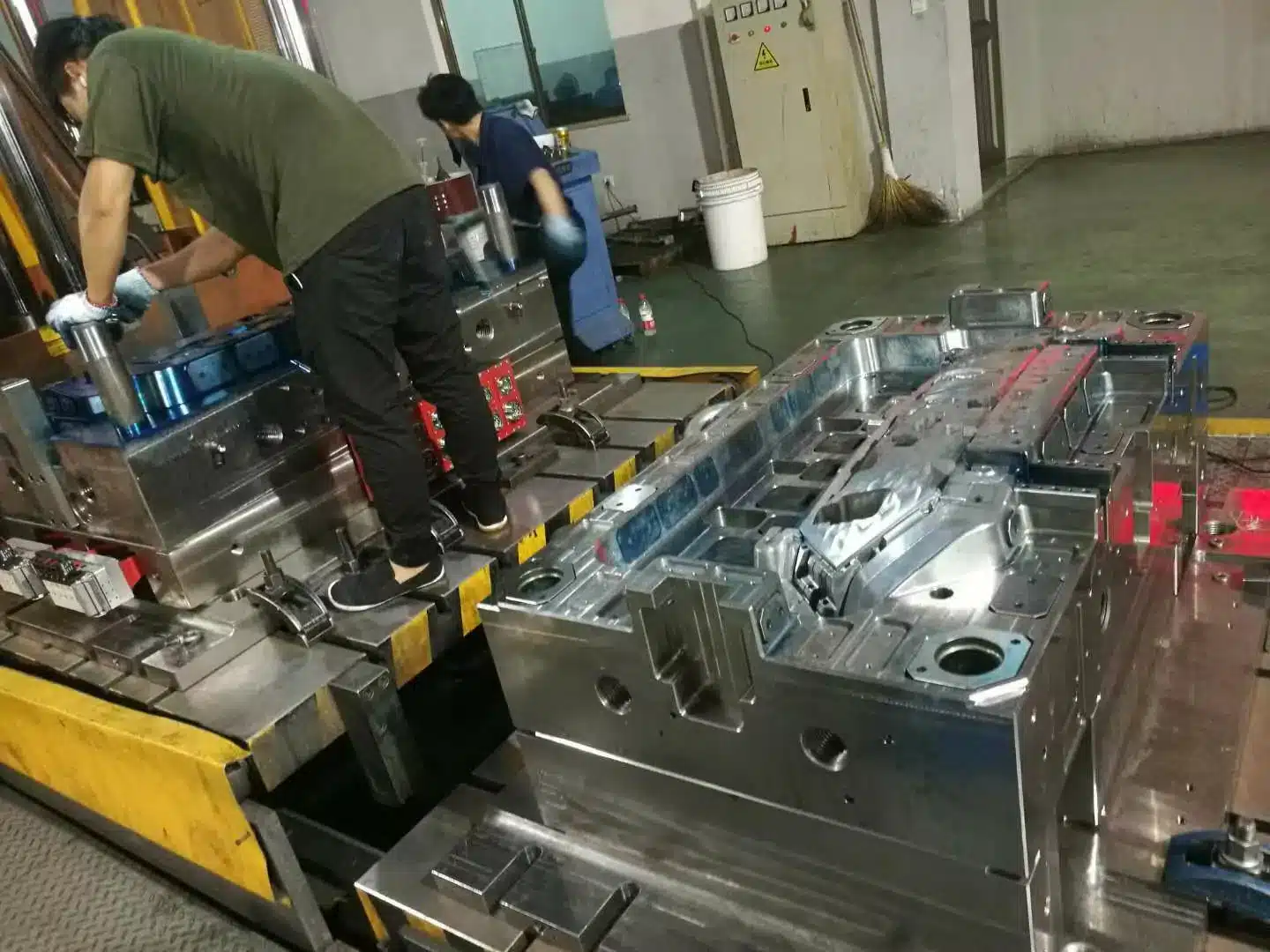
A mold transfer is the process of moving an existing production tool from one molder to another and getting it to make good parts in the new shop. On paper it reads like moving furniture. In practice it’s closer to an organ transplant: the tool has to survive the trip, then work inside a different body — a different press, different water fittings, a different process engineer who has never seen your part. Most buyers underestimate the second half entirely.
Mold transfer is a re-qualification, not a move
If you take one idea from this article, take this: you are not relocating a mold, you are re-launching a program. The freight is the easy part. The hard part is proving the tool still makes in-spec parts on machinery it was never built for, run by people who have none of your history.
Every transfer I’ve been part of that went badly went badly for the same reason — someone treated it as logistics when it was really engineering. Budget it that way. Plan for sampling, measuring, and a dial-in period, not just a truck.
Do you actually own the mold?
Not always. In most China tooling deals you paid for the tool but never received a signed document transferring title, and the mold sits physically at the supplier. Without a tooling ownership agreement and the CAD/CAM data in your hands, the supplier can refuse to release it — legally or just practically.
A paid invoice is proof of payment, not proof of ownership. I’ve watched a founder discover this the week she tried to leave: her PO said “tooling — 1 set,” the money had cleared two years earlier, and the supplier still wouldn’t load the mold on a truck until an unrelated parts balance was settled. She had no contract that assigned title, so she had no leverage.
Before you plan anything else, confirm three things. First, a written tooling ownership clause or agreement naming you as the owner — not just a line item on an invoice. Second, that you can obtain the mold design files (the 3D of the tool itself), not only the part drawing. Third, whether any balance is outstanding that the current shop could use as a reason to sit on your tool. If your supplier gets vague on any of these, that vagueness is your answer, and you should assume a fight.
Mold transfer starts with the paperwork, not the freight
The single biggest predictor of a smooth transfer is the completeness of the data package you hand the new molder. Collect it before the tool moves, because once it’s on a boat you’ve lost your leverage to ask for anything.
Here’s what the receiving shop actually needs:
- Current part drawings with GD&T and the correct revision level, plus 3D CAD (STEP is fine, native is better)
- Mold design files — the 2D and 3D of the tool, not just the part. This is the one suppliers “forget.”
- Mold bill of materials: steel grades (P20, H13, 718H, or S136 for clear/corrosive resins), cavity count, and the hot runner make and model
- Process sheet from the last good run: barrel and mold temperatures, injection profile, cycle time
- A golden sample plus its dimensional report, so the new shop has a target
- Maintenance and shot-count history, and any electrodes or spare wear parts (ejector pins, springs, hot tips)
If the current supplier can only give you the part file and not the mold design, understand what that means: the new shop will be reverse-engineering your tool the first time it needs a repair. Price that risk in now.
Will your tool even fit their press?
A mold built for one factory will not automatically run in another. Machine tonnage, shut height, tie-bar spacing, locating ring diameter, ejector pattern, and water-line fittings all have to match the new press — or get adapted. Confirm the receiving molder can physically mount, clamp, and eject the tool before you ship a single pound.
This is where “no problem, we’ll just drop it in” quotes fall apart on the floor. Chinese mold bases often use a 100 mm locating ring against a US press expecting DME’s 3.750″; the ejector knockout pattern rarely lines up between shops; and I once lost a full day because the incoming tool was plumbed BSP while the new machine ran NPT, so we sat there cutting adapter fittings instead of shooting parts.
Tonnage, shut height, and ejector pattern decide whether a transferred mold runs on day one or sits in a corner. Have the new shop check the projected area against machine clamp force (a rough rule is 2–5 tons per square inch of projected area depending on resin), confirm the mold width clears the tie bars, and verify the shut height fits between minimum and maximum daylight.
Hot runner tools add a landmine. The manifold’s controller has to match — a Mold-Masters or Yudo system won’t plug into whatever the new shop stocks without the right connector and zone count. Sort this before shipping, or budget for rewiring or a controller swap.
Getting the mold out of the old shop
Before the tool leaves, run a final approved lot and pull last-off samples with a dimensional report — that’s your baseline for what the mold produced when it was still under the original process. Photograph the tool open and closed. Collect the spares, electrodes, and maintenance log at the same time; chasing them after the fact almost never works.
Settle any genuine outstanding balance first. A hostage situation over a legitimate unpaid invoice is the most common way transfers stall, and it’s avoidable. If both suppliers are in China, extraction is a domestic truck and the tool can be at the new shop in days. If you’re pulling a tool out of the US or Europe to send to China, you’ve now got an export shipment and everything in the next section applies.
Crating, freight, and the customs bill
Molds rust. An ocean crossing in a steel box is a humid, salty environment, and a tool that leaves clean can arrive with surface corrosion on the cavity if it wasn’t protected. Insist on rust-preventive coating, VCI paper, desiccant, and a sealed, braced crate rated for the tool’s weight. Small tools run 200–800 lb, mid-size tools 1–3 tons, and large multi-cavity or big-part tools 5–15 tons and up — the crate and the forklift both need to know that number.
For a China-to-China move, there’s no customs at all: it’s domestic trucking, cheap and fast. Crossing a border is where it gets involved. An injection mold classifies under HTS 8480.71, and moving it internationally can trigger import duty and VAT on the tool itself depending on direction and any processing-trade arrangement.
The bigger tariff question usually isn’t the mold — it’s the finished parts. Molded plastic parts from China typically fall under HTS Chapter 39, and current Section 301 treatment has added a substantial surcharge on top of the base duty; steel tooling has also been pulled into Section 232 scope. These rates and exclusions are changing quickly in 2026, so don’t budget from a blog post — confirm current classification and rates with a licensed customs broker and the USITC HTS database before you commit. The point for planning is simple: the tariff math on your annual part volume, not the one-time mold move, is what decides whether China still pencils out.
The T1 after transfer is not a formality
Treat the first samples off the transferred tool as a brand-new T1. The mold has moved, the press is different, and the process engineer is new. Re-sample, run a full dimensional report against your golden sample, and re-validate before you approve production. Skipping this step is how brands quietly ship out-of-spec parts for a month before a customer catches it.
A transferred mold must be re-measured before production because the new press reproduces the part, not the old process. Machines vary in injection response, clamp, and cooling; the same tool can shift a few thousandths in a critical dimension just from a different fill profile. Plan on 2–4 weeks for sampling, first-article inspection, and dial-in — and if you’re in a regulated space, a fresh PPAP.
What it actually costs to transfer
A transfer is not free, and the quotes that pretend it is are the ones that hurt later. Here’s the shape of the real spend:
| Line item | Typical range (USD) | Notes |
|---|---|---|
| Crating + freight | $200–$2,500+ | Domestic China trucking at the low end; cross-border ocean far higher |
| Cleaning + refurbishment | $300–$5,000 | Depends on wear, corrosion, and worn ejection or slides |
| Engineering review + machine fit | $200–$1,500 | Adapting locating ring, water fittings, ejector interface |
| Re-sampling / T1 | $500–$3,000 | Full dimensional report and dial-in |
| Spares / controller compatibility | Varies | Hot runner controllers can add real money |
In our experience, a clean China-to-China transfer of a healthy mid-size tool often lands somewhere around $1,500–$5,000 all-in. A cross-border move of a worn multi-cavity tool that needs refurbishment and a controller swap can climb past $8,000–$20,000 once everything’s tallied. Get the receiving shop to inspect the tool and quote those lines separately — a single lump-sum “transfer fee” hides exactly the surprises you’re trying to avoid.
When you should just cut a new tool instead
Sometimes the right move is not to move. If the tool is near the end of its life, was a soft aluminum prototype mold, is single-cavity when your volume now wants four, or comes with no mold design data, a new tool is often the smarter buy.
| Situation | Better call |
|---|---|
| Healthy steel tool, you own it, full data package | Transfer |
| P20 tool near its shot-life ceiling (roughly 500k–1M shots) | Recut |
| Prototype / aluminum / single-cavity, but you need production volume | Recut |
| Supplier won’t release mold design files | Recut — you’d inherit a tool nobody can repair |
| Multi-cavity hardened tool in good shape | Transfer, almost always |
Here’s my blunt take: a new mid-size steel tool in China commonly runs $3,000–$15,000. If a transfer is going to cost half that and leave you with a worn tool and no drawings, recut and start clean. You get a fresh tool, current data, and a supplier who owns the outcome instead of inheriting someone else’s mystery.
Red flags in a transfer quote
The quote tells you whether the new shop actually plans to do this right. Walk away — or at least push hard — if the quote has no re-sampling line (they’re not planning to validate), doesn’t ask for the mold design files (they’ll wing the first repair), or skips any mention of checking machine compatibility. Be most suspicious of the shop that says “drop it in, no problem” before they’ve laid eyes on the tool.
The good sign is the opposite: a molder who wants to inspect the incoming mold before quoting a firm number, asks for your process sheet and golden sample, and lists T1 as its own step. That shop understands a transfer is a re-launch.
FAQ
How long does a mold transfer to China take?
A China-to-China transfer usually runs 2–6 weeks including re-sampling. Pulling a tool from the US or Europe adds roughly 3–6 weeks for export crating, ocean freight, and customs clearance. Rush air freight is possible for small tools but rarely worth the cost.
Who owns the mold if my old supplier built it?
It depends entirely on your contract, not your invoice. A paid invoice proves payment, not legal title. If you don’t have a tooling ownership agreement naming you as owner, the supplier may have grounds to keep the physical tool — settle this in writing before any transfer.
Will my parts look identical after the tool is moved?
Usually yes, since it’s the same tool making the same geometry. But gate vestige, surface finish, and color can shift slightly under a new machine’s process. Re-approve a golden sample from the new shop before you assume nothing changed.
Do I really need the original moldmaker’s drawings?
Yes — strongly. Without the mold design files, the receiving shop repairs the tool blind, guessing at steel grades, cooling layout, and ejection. Getting those files is often harder than moving the mold itself, so secure them before you pay any final balance.
Is it cheaper to transfer a mold or rebuild it?
Transfer usually wins when the tool is healthy and you own the complete data package. Rebuilding wins when the tool is worn out, was soft-tooled for prototyping, or comes with no drawings. If the transfer cost approaches half the price of a new tool, recutting is often the better value.
What steel should the new shop confirm before running?
For most parts, P20 pre-hardened steel is standard. High-volume programs justify hardened H13, and clear or corrosive resins call for S136 stainless. Confirm the actual steel in your cavities before transfer, since it drives both expected tool life and how the new shop should maintain it.
What about hot runner tools specifically?
Confirm the controller make, model, and zone count match what the receiving shop has. A mismatched controller means rewiring the manifold connector or buying a new controller outright, which can add meaningful cost. Sort this out before the tool ships, not after it lands.
The one thing to settle first
Before you move anything, get two things in hand: legal ownership of the tool and the complete mold data package. With both, a transfer is usually the cheaper, faster path to a working program. Without either, stop planning a transfer and budget for a new tool — you’ll spend less building fresh than fighting for a mold you don’t control and can’t repair.

