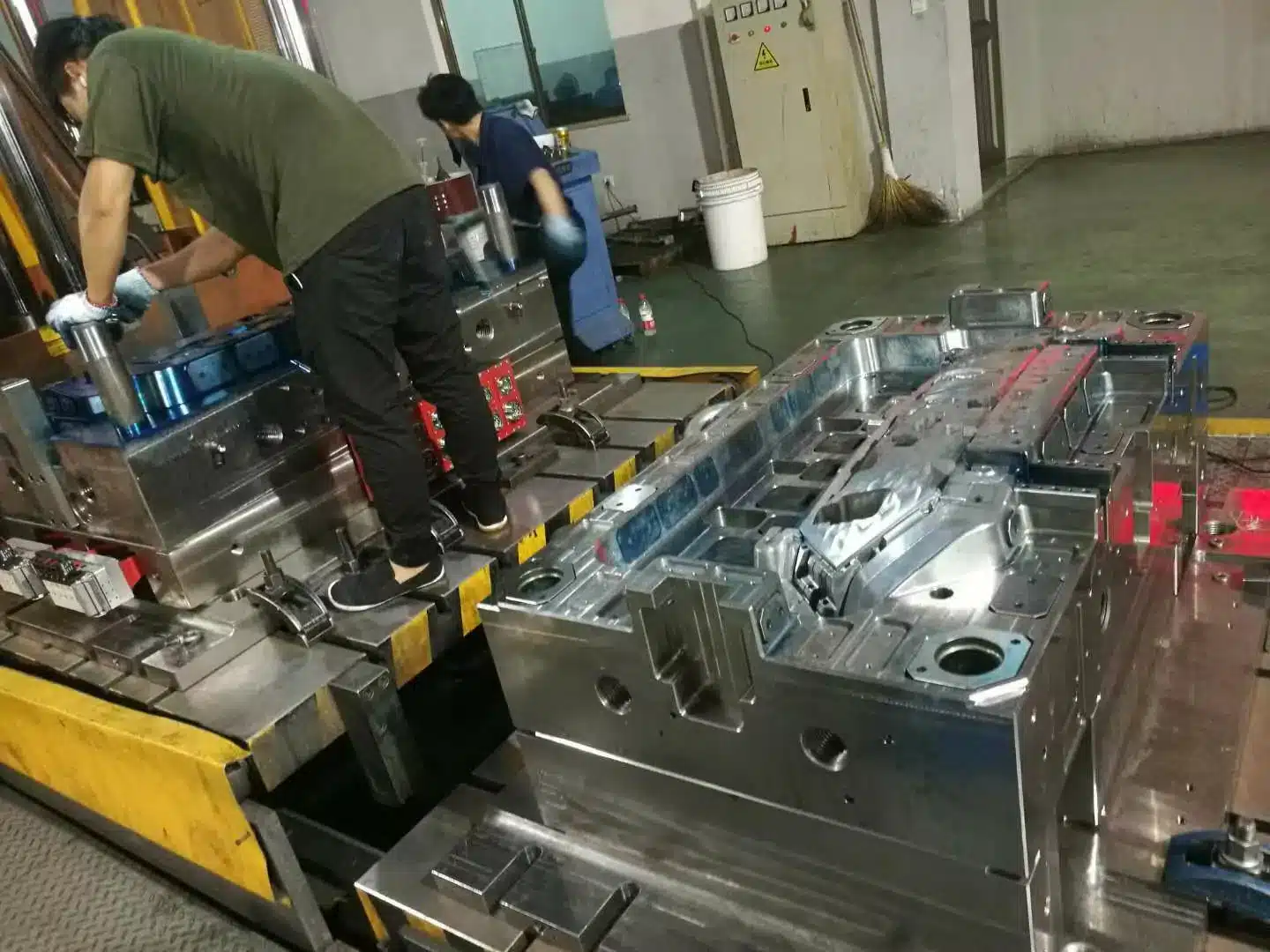

HS Code 8480.71 vs 3926.90: 6 costly classification mistakes U.S. plastic part buyers must avoid—duty risks, CBP rulings, and engineer-ready fixes.
HS Code 8480.71 covers injection or compression molds for rubber or plastics, while HS Code 3926.90 covers finished “other articles of plastics”; misclassifying tooling as a finished part (or vice versa) routinely triggers duty underpayments, Section 301 exposure, and CBP penalties for U.S. importers.
Introduction
If you procure injection-molded components or the tooling for them, the distinction between HS Code 8480.71 and HS Code 3926.90 is one of the most misunderstood classification decisions on your purchase order. The two codes are in different HTSUS chapters, have different duty rates, and trigger different Section 301 China tariff treatments. This article helps U.S. engineers, sourcing managers, and customs compliance teams avoid six expensive mistakes on entry summaries. We’ll give you a clear framework for making decisions, based on CBP rulings, the World Customs Organization (WCO) Explanatory Notes, and the General Rules of Interpretation (GRI).
What Is the HS Code 8480.71 vs 3926.90 Classification Issue?
HS Code 8480.71 vs 3926.90 is the customs classification choice between an injection or compression mold (8480.71) and a plastic article (3926.90) under the Harmonized Tariff Schedule. Subheading 8480.71 falls in Chapter 84 (machinery) and specifically covers molding boxes for metal foundry, mold bases, molding patterns, and molds for metal, metal carbides, glass, mineral materials, rubber, or plastics—with 8480.71 narrowed to injection or compression types. Subheading 3926.90 is a residual basket in Chapter 39 (plastics) covering “other articles of plastics and articles of other materials of headings 3901 to 3914.”
Key facts to lock in before you classify:
- 8480.71 is for the tool; 3926.90 is for the part the tool produces (when no more specific plastics heading applies).
- The MFN (Column 1 General) duty rate for 8480.71.80 is 3.1%, while 3926.90.99 is 5.3% (HTSUS 2025 Revision).
- Both subheadings have faced Section 301 List 1–4A tariffs on China-origin goods, with rates layered on top of the base duty.
- Classification follows GRI 1—the terms of the heading and section/chapter notes govern first, not commercial naming.
- Misclassification is the single most cited issue in CBP “Informed Compliance” publications on plastics and tooling.
Why This Classification Matters for U.S. Engineers and Buyers
This classification matters because the wrong subheading directly changes landed cost, tariff exposure, and audit risk on every shipment. Engineers who specify parts in CAD often hand off paperwork without realizing that a “plastic widget” and “the mold that produces the widget” are taxed under different logic. A single mid-volume tooling import valued at $60,000 can swing duty obligations by thousands of dollars when Section 301 layers are applied incorrectly, and CBP can issue retroactive bills for up to five years under 19 U.S.C. § 1592. For a broader view of how injection molding costs are structured, including tooling and per-part pricing, that context helps frame why classification errors compound so quickly.
The 6 Costly Classification Mistakes (And How to Fix Each)
Mistake 1: Treating a Mold Insert as a Finished Plastic Article
Mold inserts, cavities, and cores almost always classify under 8480.71, not 3926.90, even when shipped loose. Buyers frequently see a small steel-and-plastic component on a packing list and default it to “plastic parts.” If the insert’s essential character is to form plastic during injection or compression molding, GRI 1 directs you to heading 8480. CBP Ruling NY N310456 affirmed that mold components retain their identity as parts of molds when imported separately, provided they are dedicated to mold function.
Fix: Document the insert’s function on the commercial invoice (“injection mold cavity insert for ABS housing, P/N 1234”) and reference the parent mold assembly.
Mistake 2: Classifying a Production-Ready Plastic Part Under 8480.71
This is the inverse error and equally common. A finished injection-molded plastic part—an enclosure, clip, gear, or bracket—never classifies under 8480.71, because 8480.71 is reserved for the molding tool itself. Finished plastic articles flow through Chapter 39, and only land in 3926.90 if no more specific heading (3917 tubes, 3923 packaging, 3925 builders’ ware, etc.) applies. Engineers sometimes assume “molded = mold heading,” which the HTSUS explicitly rejects.
Fix: Run the part through Chapter 39 first. Only use 3926.90 as a residual.
Mistake 3: Ignoring “Parts of Machines” Under Section XVI Note 2
A molded plastic component that is solely or principally used with a specific machine of Chapters 84 or 85 should usually classify as a part of that machine—not under 3926.90. Section XVI Note 2 governs parts, and CBP rulings such as HQ H291661 repeatedly redirect plastic parts to headings like 8431, 8466, 8473, or 8538 based on principal use. Buyers who default everything plastic to 3926.90 routinely overpay (or underpay) because Section XVI subheadings carry different rates and different Section 301 exclusions.
Fix: Ask, “Is this part dedicated to a machine?” If yes, classify under the machine’s parts heading first.
Mistake 4: Missing the Country-of-Origin and Section 301 Layer
Section 301 China tariffs apply on top of the base HTSUS rate and differ between 8480.71 and 3926.90, so the wrong code can multiply duty exposure. As of the USTR’s most recent statutory four-year review (published May 2024 and partially updated in 2025), molds under 8480.71 and plastic articles under 3926.90 each carry Section 301 surcharges when of Chinese origin, but exclusion histories differ. Buyers also confuse country of origin (where substantial transformation occurred) with country of shipment. Understanding the full picture of buying injection molding from China—including how tariffs interact with supplier pricing—is essential before placing tooling orders.
Fix: Verify the HTSUS Chapter 99 subheading (e.g., 9903.88.xx) that applies, and check the USTR’s exclusion portal for active exclusions per code.
Mistake 5: Using Commercial Names Instead of GRI-Based Reasoning
The General Rules of Interpretation, not supplier invoices, govern classification. Suppliers often label items “mold parts,” “plastic accessories,” or “tooling components” in ways that don’t map cleanly to the HTSUS. Per the WCO Harmonized System Explanatory Notes, classification proceeds GRI 1 → 2 → 3 → 4 → 5 → 6, and the legal text of the heading always wins over commercial shorthand.
Fix: Build a one-page classification rationale per SKU that walks through each applicable GRI step.
Mistake 6: Failing to Request a Binding Ruling for High-Value or Recurring Imports
For high-volume or high-value plastic part programs, a CBP binding ruling under 19 CFR Part 177 eliminates classification ambiguity and is free to request. Many buyers operate for years under “best-guess” codes, only to face a CBP Form 28 (Request for Information) or Form 29 (Notice of Action) during audit. Binding rulings are typically issued within 30 days via the eRulings portal and remain valid until revoked.
Fix: Submit a CROSS eRulings request for any program above ~$100,000 annual entered value.
HS Code 8480.71 vs 3926.90: Side-by-Side Comparison Table
| Attribute | HS 8480.71 | HS 3926.90 |
|---|---|---|
| Chapter | 84 (Machinery) | 39 (Plastics) |
| What it covers | Injection or compression molds for rubber/plastics | Other articles of plastics (residual) |
| Typical examples | Mold bases, cavities, cores, ejector plates | Misc. plastic guards, brackets, fittings not elsewhere specified |
| MFN duty rate (HTSUS 2025) | ~3.1% | ~5.3% |
| Section 301 exposure (China origin) | Yes—verify Chapter 99 | Yes—verify Chapter 99 |
| Governing rule | GRI 1; Section XVI; Chapter 84 notes | GRI 1; Chapter 39 Note 2; residual |
| Common error | Reclassified to Chapter 39 by mistake | Should have been a machine part under Sec. XVI |
How to Classify a Plastic Item in 7 Steps
- Define the item’s function, not its material alone—what does it do at point of use?
- Check if it is a mold or mold component. If yes, go to heading 8480 and select 8480.71 for injection/compression.
- If it is a finished plastic article, check Section XVI Note 2 for dedicated machine use.
- Walk Chapter 39 from 3901 forward to find a specific heading before defaulting to 3926.
- Apply GRI 3(a) (most specific description) and GRI 3(b) (essential character) for composite goods.
- Layer Chapter 99 for Section 301, AD/CVD, or Section 232 exposure.
- Document the rationale and, when in doubt, file a CROSS eRulings request.
Common Pitfalls Engineers Overlook
- Treating drawings labeled “plastic part” as automatic Chapter 39 candidates.
- Forgetting that mold bases without cavities still fall in 8480 per the WCO Explanatory Notes.
- Assuming a free-trade agreement (USMCA, GSP where applicable) preempts Section 301—it does not for China-origin goods.
- Letting freight forwarders classify on the importer’s behalf without review; the importer of record carries legal liability under 19 U.S.C. § 1484.
- Reusing a classification from a sister SKU without verifying material composition or function.
These pitfalls are especially common among teams sourcing from overseas for the first time. Reviewing the most frequent mistakes when sourcing molded parts from China can help teams build a more rigorous pre-shipment checklist.
Sources for This Section
- U.S. International Trade Commission, Harmonized Tariff Schedule of the United States (2025 Revision), hts.usitc.gov
- U.S. Customs and Border Protection, CROSS Ruling Database, rulings.cbp.gov
- World Customs Organization, Harmonized System Explanatory Notes, wcoomd.org
- Office of the U.S. Trade Representative, Section 301 Four-Year Review Final Determination (May 2024), ustr.gov
Evidence varies by source and should be verified against the current HTSUS revision before each filing.
Key Takeaways
- HS Code 8480.71 covers injection and compression molds for plastics, while HS Code 3926.90 is a residual basket for other plastic articles—the two are not interchangeable.
- The MFN duty rate gap between 8480.71 (~3.1%) and 3926.90 (~5.3%) creates a measurable cost difference on every entry summary.
- Section 301 China tariffs layer on top of base HTSUS rates and differ in exclusion history between the two subheadings.
- Section XVI Note 2 frequently redirects molded plastic parts away from Chapter 39 to a more specific machine-parts heading.
- The General Rules of Interpretation, not supplier commercial names, govern HTSUS classification decisions.
- A CBP binding ruling under 19 CFR Part 177 is free and resolves ambiguity for high-value or recurring imports.
- The importer of record—not the freight forwarder—holds legal liability for accurate classification.
FAQs
What is the difference between HS Code 8480.71 and HS Code 3926.90? HS Code 8480.71 covers injection or compression molds used to make rubber or plastic products, while HS Code 3926.90 is a residual basket heading for other articles of plastics. The distinction matters because 8480.71 sits in Chapter 84 (machinery) and 3926.90 sits in Chapter 39 (plastics), each with different duty rates and Section 301 implications.
Can a single shipment contain items classified under both 8480.71 and 3926.90? Yes, and this is common when importers receive both tooling and sample parts in the same container. Each line on the commercial invoice and entry summary must be classified separately based on its own essential character, with no blending of codes across line items.
Are mold inserts and ejector pins classified under 8480.71? Mold inserts, cavities, cores, and ejector pins are generally classified under heading 8480 when they are dedicated to use in an injection or compression mold. CBP rulings such as NY N310456 confirm that mold components keep their identity even when imported separately from the parent mold.
What duty rate applies to HS Code 3926.90.99 in 2026? The MFN (Column 1 General) duty rate for HTSUS 3926.90.99 was 5.3% in the HTSUS 2025 Revision and remains the published reference rate going into 2026 absent legislative change. Importers must also check Chapter 99 subheadings for Section 301 layers when goods are of Chinese origin.
How do I file a binding ruling request with CBP? You file electronically through CBP’s eRulings portal at rulings.cbp.gov, including a product description, intended use, material composition, and proposed classification with rationale. CBP typically issues a ruling within 30 days, and the ruling binds CBP nationwide until revoked or modified.
Does USMCA eliminate Section 301 tariffs on plastic parts? No. USMCA preference applies only to goods originating in the U.S., Canada, or Mexico, while Section 301 tariffs target goods of Chinese origin and are determined by substantial transformation rules, not by country of shipment. A plastic part molded in Mexico from a Chinese-origin mold is still evaluated on its own origin.
Who is legally responsible if my plastic parts are misclassified? The importer of record is legally responsible under 19 U.S.C. § 1484 for the accuracy of the entry, regardless of who prepared the documents. Brokers and forwarders may be held jointly liable, but penalties under 19 U.S.C. § 1592 flow primarily to the importer.
How far back can CBP audit classification errors? CBP can issue penalty claims and demand additional duties for up to five years from the date of entry under 19 U.S.C. § 1621, and longer in cases involving fraud. Voluntary prior disclosures can substantially reduce penalties when errors are self-reported.
Conclusion
The HS Code 8480.71 vs 3926.90 decision is not a paperwork formality—it is a tariff engineering decision that engineers, sourcing teams, and customs brokers must make together using the General Rules of Interpretation, the WCO Explanatory Notes, and current CBP rulings. By avoiding the six mistakes above—mislabeling inserts, defaulting finished parts to mold headings, ignoring Section XVI Note 2, missing Section 301 layers, leaning on commercial names, and skipping binding rulings—U.S. plastic part buyers can cut duty exposure, pass audits, and build a defensible classification record that scales with their import program. Teams that source tooling from China will also benefit from reviewing how injection mold manufacturing in China compares to the U.S. and Japan before committing to a supplier.

