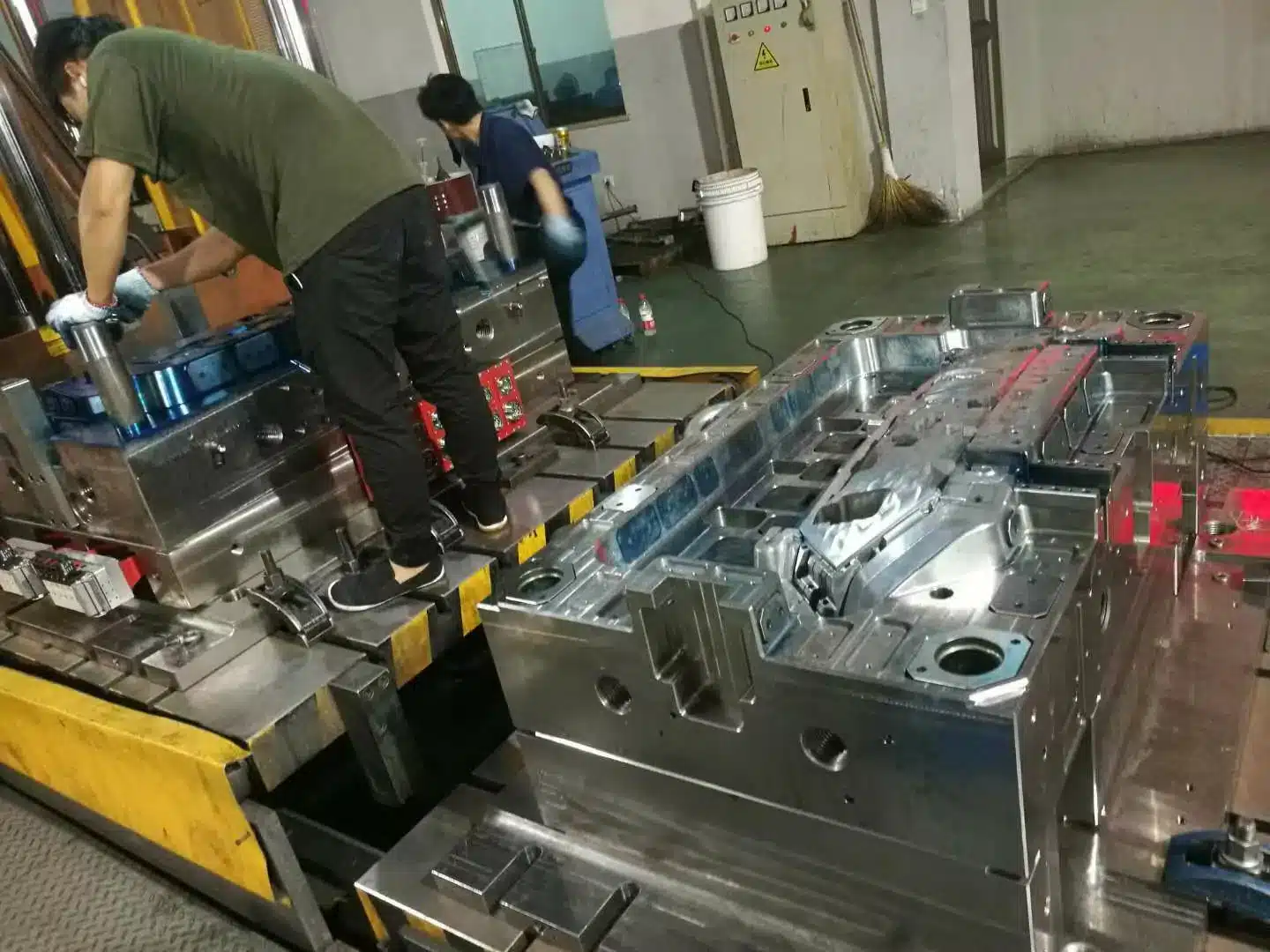

High-Volume Molding Analysis
57,600 Parts an Hour: How an Integrated Engel Cell Targets Low-Cost Competition in High-Volume Molding
At Fakuma 2026, an all-electric Engel production cell is molding 57,600 automotive connectors per hour on an 8-second cycle. The setup runs a 128-cavity mold built for a 10 by 6 mm connector that is already in active series production. For buyers sourcing high-volume standard parts, this cell shows how automated process control changes the unit-cost math against low-wage regions.
Cell Configuration Fact Sheet: Engel WINTEC e-win 1800 all-electric press (1800 kN clamping force, injection unit 640) paired with the new viper 6 linear robot, a 128-cavity mold by CWB Technology, Piovan Group drying and feeding equipment, and Engel temperature control units.
Inside the 128-Cavity Engel Production Cell
Running 57,600 miniature parts an hour requires every machine movement to lock into an 8-second window. Engel built this Fakuma 2026 showcase around its all-electric WINTEC e-win 1800 injection molding machine. The press delivers 1800 kN of clamping force and uses an injection unit 640 sized for fast, repeatable small-shot metering.
Part handling relies on the new viper 6 linear robot, which makes its trade-show debut at Fakuma as the smallest model in the viper series. Compact robot geometry matters here because a 128-cavity drop zone leaves zero margin for slow arm entry or frame vibration. German toolmaker CWB Technology manufactured the 128-cavity connector mold, while Italy’s Piovan Group supplied the resin drying and conveying hardware alongside Engel temperature control units.
Unlike typical trade-show demonstrations that mold giveaway trinkets, this 10 by 6 mm automotive connector is a live production part. In my 15 years on the shop floor, **128-cavity tools rarely fail from clamp tonnage shortages**; they fail when runner balance or thermal uniformity drifts across the platen.
| System Component | Specification / Supplier | Shop-Floor Function |
|---|---|---|
| Injection Molding Machine | Engel WINTEC e-win 1800 (1800 kN, unit 640) | All-electric precision metering and fast clamp movement |
| Automation / Part Removal | Engel viper 6 linear robot (Fakuma debut) | High-speed demolding within the 8-second cycle |
| Injection Mold | 128-cavity tool by CWB Technology (Germany) | Series production of 10 × 6 mm automotive connectors |
| Auxiliary Equipment | Piovan Group drying/feeding + Engel temp control | Moisture control and mold thermal stability |
| Digital Process Control | Engel iQ weight control plus | Shot-to-shot compensation and single-cavity failure response |
Why Cycle Time Alone Misleads High-Volume Buyers
Procurement teams sourcing connectors, cable ties, or wall plugs usually rank supplier quotes by cycle time and piece price. That spreadsheet habit ignores the three variables that actually determine landed cost on high-cavitation commodity tooling.
First, raw cycle speed means nothing if the press runs a high scrap rate during unattended night shifts. At 57,600 parts per hour, a 15-minute delay in spotting a short shot mixes thousands of defective connectors into good bins. Second, multi-vendor cell integration eats up weeks of engineering labor before production even starts. Third, uncompensated resin batch shifts or ambient shop temperature swings force operators to slow the cycle down just to keep dimensions in spec.
European molders cannot beat low-cost manufacturing regions on hourly operator wages. Instead, they use high-cavitation cells that lock cycle time, scrap rate, and commissioning overhead into one predictable number. You can compare how cavitation and cycle assumptions change total project math using our interactive injection molding tooling calculator before issuing your next RFQ.
How iQ Weight Control Plus Protects Cavity Yield
A 128-cavity connector mold runs tiny gates and thin walls around 0.6 to 1.0 mm `[VERIFY]`. When shop floor temperatures drop overnight or a fresh resin lot changes melt viscosity, those tiny gates freeze at slightly different rates. Without closed-loop adjustment, the press either flashes the easiest cavities or underfills the farthest ones.
Engel addresses this on the WINTEC e-win 1800 with its iQ weight control plus digital assistance system. During every 8-second shot, the software analyzes the injection pressure curve and adjusts the switchover point and holding pressure in real time. It compensates automatically for external fluctuations, including ambient temperature shifts, without waiting for a technician to check parts at the scale.
More importantly for 128-cavity operations, **iQ weight control plus detects and responds when a single cavity fails**. In a traditional press setup, if one hot runner nozzle clogs or a cold slug blocks one gate, the remaining 127 cavities suddenly receive extra melt volume and flash. When the digital control system spots that pressure spike immediately, it adjusts the shot profile to prevent a cascade of flash or tool damage across the rest of the mold.
Single-Package CE Compliance Cuts Commissioning Cost
Buyers who purchase a press from one vendor, a robot from a second, and conveyors from a third become their own system integrator. Under European machinery rules, connecting those machines on your floor requires a full risk assessment and safety validation before you can legally run production.
Engel delivers the WINTEC e-win 1800, the viper 6 robot, the safety fencing, and the conveyor belt as a complete, pre-tested unit with a single CE conformity mark. The buyer skips separate whole-line compliance assessments entirely.
Single-source cell delivery → Pre-validated CE safety loop → Plug-and-produce floor installation → Faster T1 to SOP ramp-up
For engineering managers, that single CE package cuts two to four weeks `[VERIFY]` of electrical interlock debugging and safety documentation on the plant floor. The cell arrives ready to connect to power, air, and chilled water.
Mold Design Demands for 128-Cavity Connector Tools
Building a 128-cavity mold for a 10 by 6 mm automotive connector pushes toolmaking tolerances to the limit. Automotive connectors feature delicate terminal pin holes and thin locking lances that require core pins ground to ±0.005 mm `[VERIFY]`.
When we build high-cavitation connector molds, modular insert design is mandatory. You cannot machine 128 cavities into a single solid block of steel. Every cavity needs interchangeable, precision-ground inserts made from hardened stainless grades like S136 or Stavax, paired with individual venting channels that follow Society of Plastics Engineers mold design practices.
- Shear-balanced runner layouts keep melt residence time identical from the center sprue out to the corner cavities.
- Independent cooling circuits under each insert bank prevent thermal gradients that warp miniature connector housings.
- Precision shut-off angles on tiny core pins prevent steel galling during millions of dry-cycle clamping strokes.
- Quick-change insert pockets let maintenance swap a damaged core pin in the press without pulling the entire mold base.
If a mold maker quotes a 64-cavity or 128-cavity connector tool without specifying insert interchangeability tolerances, your maintenance team will pay for that omission every time a pin wears out.
RFQ Checklist for High-Cavitation Standard Parts
High-volume standard parts—connectors, cable ties, fasteners, and wall plugs—leave zero room for sloppy quoting. Whether you source from a European automated cell or an Asian contract molder following Plastics Industry Association guidelines, your RFQ must look past the headline cycle time.
Ask every shortlisted supplier to answer four specific questions in writing before you compare their piece prices:
- Does the quoted press use closed-loop viscosity and shot-weight compensation, or does it rely on fixed time/position switchover?
- What happens to the shot volume and part sorting gate when one cavity out of 64 or 128 blocks during a production run?
- What exact scrap rate percentage is built into your resin consumption calculation?
- Are spare cavity inserts ground to true interchangeable tolerances so they drop in without hand-fitting?
If your current supplier quotes an 8-second cycle on a multi-cavity tool but cannot tell you how their press handles single-cavity failure, how much hidden scrap is already baked into your part price?
Frequently Asked Questions
How does the Engel cell achieve 57,600 automotive connectors per hour?
The production cell combines an all-electric Engel WINTEC e-win 1800 press with a 128-cavity mold built by CWB Technology and a high-speed viper 6 linear robot. Running an 8-second total cycle time yields 450 shots per hour. Multiplying 450 shots by 128 cavities produces 57,600 finished 10 by 6 mm connectors every hour.
What does iQ weight control plus do when a mold cavity fails?
The iQ weight control plus system monitors the injection pressure curve during every shot and adjusts switchover points and holding pressure automatically. It compensates for ambient temperature shifts and batch viscosity changes. If a single cavity blocks, the software detects the pressure anomaly and adapts the injection profile to reduce scrap without manual intervention.
Why is single-package CE certification important for injection molding cells?
Buying a press, robot, safety fence, and conveyor separately requires the molder to conduct a full-line CE conformity and risk assessment on the factory floor. Receiving the entire Engel cell with a unified, pre-tested CE mark removes that separate certification step, which speeds up installation and lowers commissioning costs.

