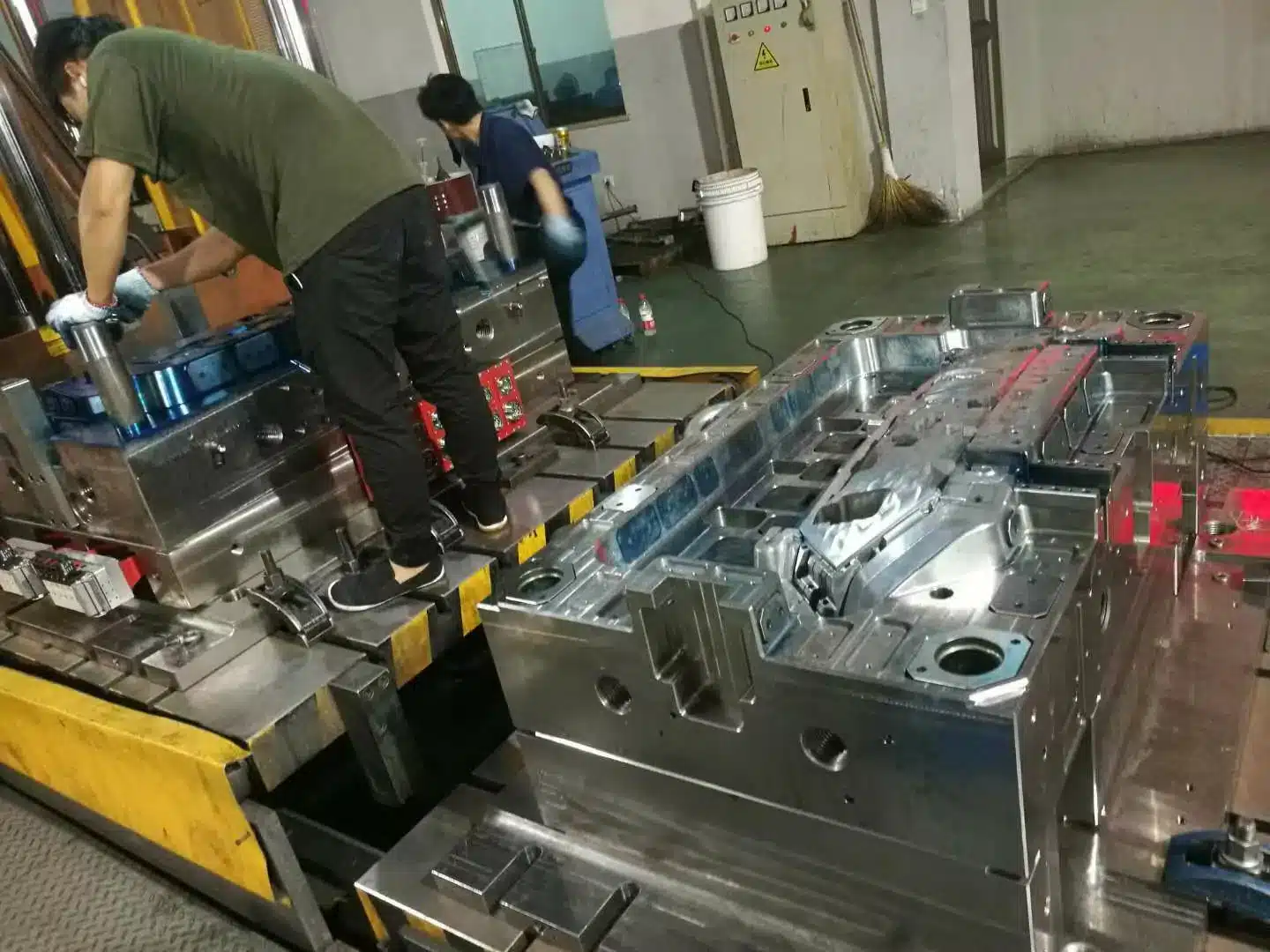

Data Center Plastic Parts: Chassis, Cooling & Cable Management
AI demand is pulling plastic into the server rack. A molded part carries airflow geometry, mounting features, and clips in one piece — an assembly of sheet metal cannot.
This guide maps the molded parts inside a modern rack, the resins they use, and why molding beats fabrication for high-volume hardware. It expands the robotics & AI hardware overview.
Data center molded parts in brief:
- Chassis: card guides, baffles, blank panels.
- Cooling: fan shrouds, air ducts, airflow baffles.
- Cable management: retainers, strain-relief bodies, guide clips.
- Resins: UL-rated flame-retardant grades — nylon, ABS, PC — plus conductive grades for shielding.
Why plastic is moving into the rack
Two forces drive it. AI hardware ships in huge volume, and molding is the low-cost way to make repeatable parts at that scale. And a molded part integrates functions that sheet metal needs several pieces and fasteners to achieve.
Chassis parts
The chassis holds the boards and organizes the box. Molded chassis parts hold tolerance for repeatable assembly.
- Card guides. Guide and locate boards; tolerance keeps alignment consistent every build.
- Baffles. Direct airflow and separate zones inside the chassis.
- Blank panels. Fill empty bays, maintain airflow pressure, and finish the look.
Cooling & airflow parts
Thermal management is the defining problem of AI hardware. Molded airflow parts do a lot of the work.
- Fan shrouds. Channel fan output to where the heat is; complex shapes mold in one shot.
- Air ducts. Route cooling through the box with geometry sheet metal cannot form cheaply.
- Airflow baffles. Manage pressure and direction to hold component temperatures down.
These parts sit in continuous warm airflow, so the resin must stay dimensionally stable under heat. Heat-stable nylon and PP grades suit the job at lower weight than metal.
Cable management parts
A rack is a dense field of cabling. Molded management parts keep it organized and serviceable, produced in the high volumes a build-out needs.
- Retainers. Hold cable bundles in place with durable, repeated-use features.
- Strain-relief bodies. Protect connections from pull and flex.
- Guide clips. Route cable along defined paths; snap features mold straight in.
Resins for data center hardware
The environment sets the rules: flame safety, heat stability, and often electrical management. Start from UL-rated grades.
| Resin | Why it fits | Typical parts |
|---|---|---|
| Flame-retardant nylon (PA) | Strength, heat stability, UL rating | Chassis parts, cable hardware, shrouds |
| ABS / PC-ABS (FR grades) | Tough, easy to mold, good finish | Panels, covers, enclosures |
| PC (FR) | Impact strength, dimensional stability | Structural panels, brackets |
| Conductive / filled grades | EMI shielding, static dissipation | Shielded enclosures, ESD-sensitive zones |
Structural & connector parts
Two more families round out the rack. Structural parts — rack-mount brackets, DIN-rail adapters, panel assemblies — carry and locate hardware. And high-speed connector bodies, molded to micron tolerance, move the data itself.
High-precision connector molding →
EMI/RFI shielding & ESD plastics →
Sourcing molded parts for server or rack hardware?
Send your part drawings. We will advise UL-rated resins, flag flame and shielding needs, and quote the tools and parts together.
Upload your drawings for a quoteRelated guides
High-precision connector molding →
EMI/RFI shielding & ESD plastics →
Robotics & AI hardware overview →
Frequently asked questions
What plastic parts are used in a data center?
Chassis parts (card guides, baffles, blank panels), cooling parts (fan shrouds, ducts, baffles), cable management (retainers, strain relief, clips), structural brackets, and high-speed connector bodies.
What resin is used for data center parts?
UL-rated flame-retardant grades are the baseline — flame-retardant nylon, ABS, PC-ABS, and PC. Conductive or filled grades are used where EMI shielding or static dissipation is needed.
Why mold data center parts instead of using sheet metal?
Molding integrates complex airflow geometry, mounting features, and snap-fit clips into one part. That cuts part count, assembly, and cost, and scales to the high volumes AI hardware needs.
Do cooling parts need special material?
Yes. Fan shrouds, ducts, and baffles sit in continuous warm airflow, so they need heat-stable resin that holds dimension. Heat-stable nylon and PP grades are common choices.
Are data center plastics flame-rated?
They should be. UL-rated flame-retardant resin is the baseline for data center hardware. Flame rating, and any shielding requirement, should be planned into the material choice from the start.
Bottom line. The AI build-out is a volume story, and volume is where molding wins. Chassis, cooling, and cable parts all mold cleaner and cheaper than fabricated equivalents, with airflow geometry and clips built in. Start from UL-rated flame-retardant resin, add shielding grades where needed. Send your rack part drawings and we will spec the resin and quote the tools.

