
Sourcing Guide
How to Vet a Custom Plastic Injection Molding Manufacturer Before You Send Drawings
Most “manufacturers” who answer your RFQ own no molding machines. Telling real factories from resellers is the first skill worth having. It saves more than any negotiation. Learn it first.
A custom plastic injection molding manufacturer designs and cuts a steel mold for your specific part. Then it runs that mold on injection machines to make your parts in volume. The word that matters is custom. The tooling is built around your geometry, not pulled off a shelf. This guide judges whether the shop you’re talking to can actually do that. It’s drawn from twenty years of quoting these projects.
Most of your RFQ replies are from resellers, not factories
Search for a custom plastic injection molding manufacturer and blast out an RFQ. A good share of replies come from trading companies. Nice website, no machines. They subcontract your tooling to whichever shop is cheapest that month. They mark it up and stand between you and the people cutting steel.
That layer isn’t automatically bad. Some brokers manage quality well. But you pay for it twice. Once in margin. Once in the game of telephone. Every time something breaks on the floor, the answer travels through someone who wasn’t there.
I’ve reviewed a project where a warped part took three weeks to diagnose. Why? The “manufacturer” relayed every question to a shop it wouldn’t name. A real factory walks to the press and checks cooling that afternoon.
Can’t your supplier name the tonnage your part will run on? Then you’re not talking to the factory.
Custom plastic injection molding manufacturer vs. trading company: how to tell in one call
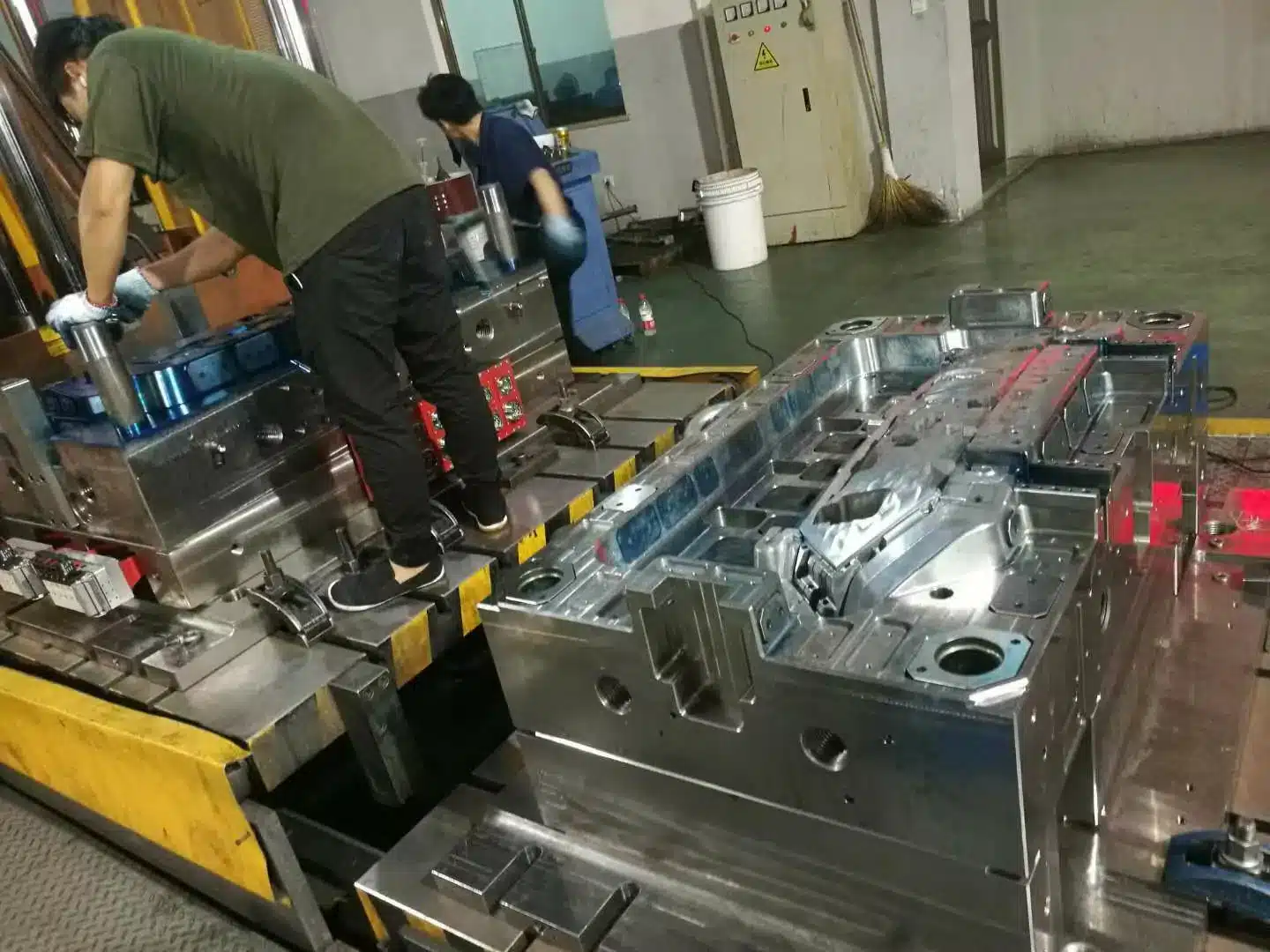
You can spot a real factory from a reseller in one video call. Ask to see the shop floor live, right now. Ask which machine runs your part, and at what tonnage. Ask to see the mold-making area. A factory answers instantly. A broker stalls, reschedules, or sends stock photos.
Here’s what a real factory does without hesitating:
- Gives a live video walk through the molding hall and tool room. Not a polished PDF.
- Names its machine tonnages. Points to the press that fits your part’s projected area.
- Shows a business license with an industrial-park address, not a downtown office tower.
- Asks you about volume, tolerances, cosmetic surfaces. Doesn’t just fire back a number.
None of this needs you to be an engineer. Just watch whether the answers are specific. Specific means they’ve done it. Vague means someone’s buying time to ask the real shop.
What does the mold actually cost — and why the quotes are so far apart?
A custom injection mold runs from about $2,000 to $50,000 or more. The low end is a simple single-cavity tool. The high end is a large multi-cavity or family mold. The spread comes from cavity count, part size, steel grade, and finish. Nobody’s being generous or greedy. A quote far below the pack means cheaper steel or fewer cavities than you think.
| Tool type | Typical tooling cost (USD) | What drives it |
|---|---|---|
| Simple single-cavity, small part | $2,000–5,000 | Basic P20/718 steel, no side actions |
| Moderate part, some complexity | $5,000–15,000 | Side actions, better finish, 1–2 cavities |
| Multi-cavity or family mold | $15,000–50,000+ | 4–16 cavities, hardened steel, hot runner |
Practice ranges, not a quote — verify against your own part geometry.
The number that moves your unit cost is cavitation. A single-cavity tool is cheap to build and slow to run. An eight-cavity tool costs several times more up front. It earns that back on volume. Making tens of thousands of parts a year? The multi-cavity tool almost always wins on total cost. Even if the quote looks scarier.
So ask for the per-part price at your real annual volume. Not just the tooling number. A cheap mold that shoots one part per cycle adds up. Over two years it can cost more than a pricier tool that shoots four.
That cost gap is exactly why steel matters next. The steel decides whether the tool survives long enough to pay itself off.
Mold steel is a volume decision, not a price line
Pick the steel by how many parts you’ll make and what plastic you’ll run. Not by whichever grade shaves a few hundred dollars off the quote. Get it wrong and the tool wears out early. Or it floods with flash long before you’ve amortized it.
| Volume / material | Typical steel | Why |
|---|---|---|
| Prototype, under ~10k shots | Aluminum, NAK80 | Fast to cut, cheap, fine for low runs |
| 100k–500k shots, standard resins | P20 / 718H | The workhorse; good all-round balance |
| High volume or glass-filled resins | H13, hardened | Survives abrasion and cycle count |
| Clear or medical parts | S136 / 420 stainless | Polishable, corrosion-resistant |
The priciest mistake I see: running glass-filled nylon through a soft P20 tool to save money. Glass fiber is basically sandpaper. I’ve watched a gate wear open by 50,000 shots. Flash on every part after that. The re-cut cost more than the right steel would have.
Glass-filled resins wear soft steel fast. Any tool running them should be hardened H13 or better. A quote that doesn’t state the steel grade isn’t an oversight to shrug off. Ask.

Read the DFM report like it’s the contract
Before any steel gets cut, a real manufacturer sends you a DFM report. DFM means design for manufacturability. It flags problems in your part. This is the most useful document in the whole process. It shows whether your supplier understands molding or just wants your deposit.
You don’t need to read it like an engineer. Just check it addresses these, in plain terms:
- Draft angles. Vertical walls need a slight taper to release from the steel. One to two degrees is typical. Textured surfaces need more. Zero draft on a tall wall means the part scuffs or sticks.
- Wall thickness. Uniform walls fill and cool evenly. A thick boss beside a thin wall gives you sink marks. That’s a visible dimple on the show surface.
- Gate location. The gate leaves a mark and sets the flow pattern. If it lands on a cosmetic face, ask why.
- Ejection. Pins push the part out and leave small witness marks. Keep them on hidden surfaces.
Fix a sink-prone boss by coring out the thick section. A good DFM catches that before it becomes a rejected lot.
Here’s the red flag. A DFM says “no problems, ready to cut.” But your part has a thick section and a mirror finish. Real parts almost always carry one trade-off worth a sentence. Silence means nobody looked.
Should you tool in China or stay domestic?
For most parts at real volume, tooling in China comes out cheaper. Often substantially, on both tooling and per-part price. You trade that saving against longer lead times and a time-zone lag. And the work of verifying you’ve got a real factory. For low-volume, secret, or fast-iteration jobs, domestic can win.
Drawings → DFM review → Tooling (4–8 weeks) → T1 samples → Dimensional report → Mass production
Tooling from a competent Chinese shop usually takes four to eight weeks. Add ocean freight if you’re not flying samples. Domestic tooling iterates faster because you can drive to the shop. But you’ll often pay two to three times the tooling cost for it.
The China risk that bites buyers isn’t quality. Good factories there hold tight tolerances all day. The danger is shops that feel like they’re guessing. Tie payment to results. That risk shrinks fast.
Don’t pay 100% before you approve T1 samples. Those are the first shots off the new tool. A normal structure: deposit to start. A payment at sample approval, tied to a dimensional report. Balance before mass production ships. If a supplier wants everything up front, walk.
The one line that tells you the most
Ask any custom plastic injection molding manufacturer one thing. What happens if the first samples come back out of tolerance? A good one describes its process. Measure, find the cause, adjust the tool or parameters, re-shoot, re-measure. And it’s already built into the price. A weak one gets vague or asks for more money. That single answer is your whole due-diligence in miniature.
Send us your part drawings. We’ll return a free DFM review with steel grade, cavitation, and a firm quote. No trading-company markup. Straight from the floor.
Get a Free DFM Review & QuoteCommon questions about custom injection molding
How long does it take to get parts from a custom injection molding manufacturer?
Plan on eight to twelve weeks for a straightforward part built overseas. Tooling takes four to eight weeks. Then first samples, then production. Complex multi-cavity tools take longer. Anyone promising two weeks for a real steel mold is using aluminum. Or leaving out part of the timeline.
What’s the minimum order for custom injection molding?
There’s no fixed minimum. But tooling cost is what makes small runs expensive per part. You pay for the mold once, so low volumes carry a high per-part cost. Most buyers need at least a few thousand parts before molding beats 3D printing or CNC machining.
Do I own the mold after it’s built?
If you pay for the tooling, you should own it. The contract should say so in writing. Ownership means you can move the tool to another shop if the relationship sours. Confirm this before you pay a deposit. A vague answer here is a reason to slow down.
What plastic should I use for my part?
For most consumer parts, ABS or polypropylene covers it. Overthinking the resin is a common way to waste time. ABS is rigid and takes a clean finish. PP is cheaper and flexes without cracking. Tell your supplier how the part is used: heat, chemicals, load. Let them recommend, then check the resin maker’s data sheet.
How do I know the factory is real and not a trading company?
Ask for a live video walk of the molding floor and tool room. Ask the machine tonnages. Ask for a business license showing an industrial address. A factory answers on the spot. A broker stalls or sends stock images. You don’t need technical knowledge, just whether the answers are specific.
Why are two quotes for the same part so different?
Usually it’s steel grade, cavity count, or surface finish hidden inside the number. A quote far below the others often means softer steel that won’t last. Or fewer cavities than you assumed. Ask each supplier to state steel, cavitation, and finish. Then you’re comparing the same thing.
What is a DFM report and do I need one?
A DFM report is the supplier’s review of your part before any steel is cut. It checks draft, wall thickness, gates, and ejection. You want one every time. It’s where costly mistakes get caught cheaply. A supplier who skips it, or rubber-stamps a tricky part, hasn’t really looked.

