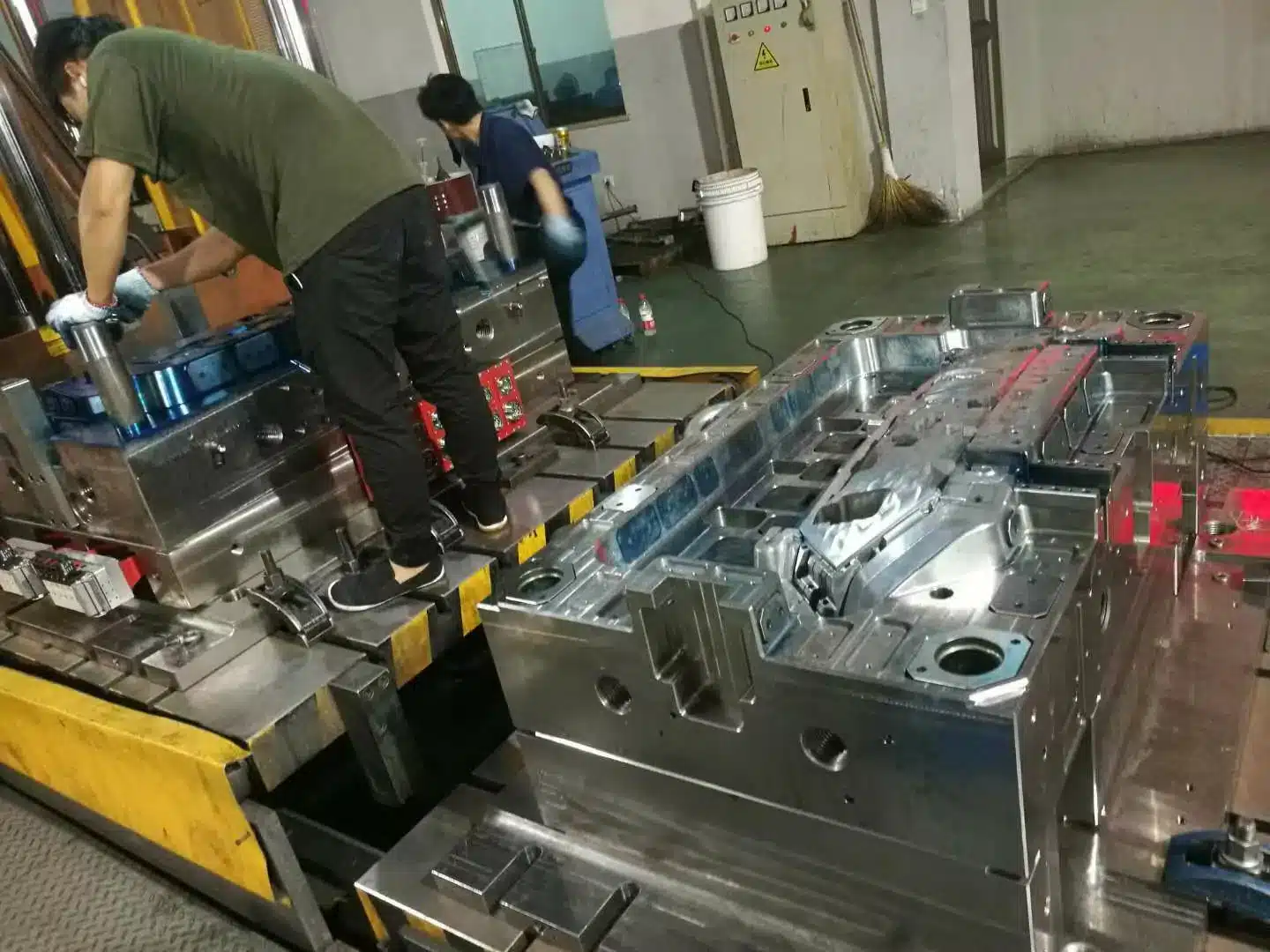

7 Incredible Ways AI-Driven Mold Flow Analysis: Beyond Simulation to Prediction Boosts Manufacturing ROI
Discover how AI-Driven Mold Flow Analysis: Beyond Simulation to Prediction optimizes manufacturing ROI and accelerates speed-to-market in 2026.
[ct_content_block id=”side-bar-free-dfm-checker-2″]
Manufacturing is no longer just about making things; it is about predicting the future. For marketers and business leaders in the United States, understanding AI-Driven Mold Flow Analysis: Beyond Simulation to Prediction is the key to selling high-efficiency, zero-defect production capabilities. In this article, you will learn how machine learning has transformed traditional trial-and-error simulation into a predictive powerhouse that eliminates waste before a single ounce of resin is melted. We will explore the shift from reactive modeling to autonomous decision-making and how this technology serves as a massive competitive advantage in a crowded industrial marketplace.
Strategic Content Outline
What is AI-Driven Mold Flow Analysis: Beyond Simulation to Prediction?
AI-Driven Mold Flow Analysis: Beyond Simulation to Prediction is a methodology that uses neural networks to forecast manufacturing outcomes based on historical and real-time data. Unlike traditional simulation, which requires manual inputs and “what-if” scenarios, this predictive approach autonomously identifies the optimal parameters for pressure, temperature, and cooling. It moves beyond simply showing a visual representation of plastic filling a cavity; it predicts the structural integrity and long-term viability of the tool itself.
For marketers in the United States, this represents a shift from selling “capacity” to selling “certainty.” When you can tell a client that their part will succeed on the first shot with 99.9% accuracy, you remove the primary risk factor in plastic manufacturing. AI analyzes thousands of variables—from resin moisture levels to ambient factory humidity—to ensure the final product matches the digital intent perfectly. This level of Design for Manufacturability (DFM) is now the industry’s table stakes.
Why is 2026 the turning point for predictive molding?
The year 2026 marks a tipping point because computational power and sensor integration have finally converged. US-based manufacturers are facing increased pressure to reshore production, necessitating extreme efficiency to remain price-competitive with overseas markets. Predictive AI provides the edge needed to justify domestic production costs through the total elimination of trial-and-error cycles.
Evidence suggests that the integration of autonomous molding cells has moved from experimental labs to the main factory floor in leading industrial hubs like Michigan and Ohio. Marketers are now using “Predictive Readiness” as a primary USP (Unique Selling Proposition) when bidding for high-stakes contracts in the medical and aerospace sectors. They are moving away from traditional moldflow analysis that only tells you “if” it works, moving instead toward systems that tell you “how long” it will work perfectly.
AI-Driven Mold Flow Analysis: Beyond Simulation to Prediction: The New Standard
AI-Driven Mold Flow Analysis: Beyond Simulation to Prediction creates a feedback loop that traditional Computer-Aided Engineering (CAE) lacks. While traditional simulation is a static event, AI-driven prediction is a continuous process. It learns from every cycle of the injection molding machine, refining its internal models to account for the “ghost in the machine”—those tiny, inexplicable variances that cause defects. This evolution ensures that the structure of the injection mold is optimized for millions of cycles, not just the first thousand.
- Predictive Warpage Control: Identifying where a part will bend before the mold is even cut.
- Dynamic Gate Optimization: Using AI to place injection points where they will minimize stress.
- Real-time Cycle Correction: Adjusting machine settings on the fly to prevent a predicted defect.
How does machine learning predict tool wear before the first shot?
Machine learning models now analyze the “DNA” of a mold design to identify high-stress areas that will likely fail after a certain number of cycles. By comparing a new design against a database of millions of previous molding cycles, the AI identifies friction points and thermal fatigue patterns. This allows engineers to reinforce specific areas of the tool or select superior alloys before manufacturing begins.
The Hook: How machine learning in 2026 is predicting tool wear before the first shot is even fired. This capability prevents the catastrophic “mid-production failure” that haunts marketers and project managers. In the high-speed world of US consumer goods, a tool breaking during a peak production run can result in millions of dollars in lost revenue. AI mitigates this by scheduling predictive maintenance for injection molds based on actual predicted fatigue rather than arbitrary time intervals.
Simulation vs. AI Prediction: What are the core differences?
Understanding the distinction between these two concepts is vital for clear communication with clients. Marketers must be able to explain why prediction is worth the premium over standard modeling.
| Section | Heading | Purpose |
|---|---|---|
| 1 | What is AI-Driven Mold Flow Analysis: Beyond Simulation to Prediction? | Define core concept for US marketers. |
| Feature | Traditional Simulation (CAE) | AI-Driven Prediction |
|---|---|---|
| Data Source | Manual mathematical models | Historical data + Real-time sensors |
| Execution | Reactive (User-driven) | Proactive (Autonomous) |
| Speed | Hours or days to render | Seconds to milliseconds |
| Accuracy | High, but ignores “Real-World” drift | Extremely high; accounts for variances |
| Outcome | Visual map of flow | Prescriptive machine settings |
How do autonomous molding cells drive marketing claims?
Autonomous molding cells utilize AI to self-correct, meaning the machine “thinks” and adjusts its own pressure or temperature to maintain quality. For a marketer, this allows for the claim of “Continuous Quality Assurance.” You are no longer checking every 100th part for defects; the system ensures every part is perfect by design.
This capability transforms the brand narrative from “we have good quality control” to “our process is incapable of producing a defect.” In the United States, where liability and precision are paramount—especially in the medical device field—this is an incredibly powerful marketing angle. It positions a manufacturer as a technology leader rather than a commodity provider.
Can AI mold design software reduce speed-to-market?
AI mold design software accelerates the development phase by automating the most tedious parts of the engineering process. Instead of a human engineer spending forty hours iterating a cooling system, the AI generates thousands of permutations in minutes and selects the one that optimizes cycle time. This is a far cry from the manual mold maintenance routines of the past; the design itself is now robust enough to minimize future service needs.
Reducing speed-to-market is the “Holy Grail” for US marketers. Whether it is a new automotive component or a trendy consumer tech accessory, being first to market provides a massive advantage. AI-driven tools typically shave 30-50% off the traditional design-to-production timeline. By integrating these systems, firms can offer “Rapid Response” manufacturing that competitors using legacy systems cannot match.
Why should marketers prioritize “Zero-Defect” narratives?
The “Zero-Defect” narrative resonates with the psychological need for reliability in B2B transactions. When a marketer highlights AI-Driven Mold Flow Analysis: Beyond Simulation to Prediction, they are signaling that they have eliminated the “Human Error” variable. In 2026, buyers are looking for partners who use predictive maintenance for injection molds to guarantee their supply chain is never interrupted. Highlighting these technical capabilities converts cold leads into long-term partners by selling trust over price.
How does predictive modeling impact sustainability goals?
Predictive modeling reduces scrap, which is the most direct way to improve the sustainability profile of a manufacturing plant. When you eliminate “trial shots” and prevent defective parts from being produced, you lower the carbon footprint of every part. Marketers can leverage this by providing “Eco-Efficiency” reports generated directly from the AI, showing exactly how much energy and material was saved through predictive optimization.
What is the ROI of switching from traditional CAE to AI?
The ROI of AI integration is measured in both hard dollars and soft market gains. Hard ROI includes a 20% reduction in cycle times and a 95% reduction in mold trial costs. Soft ROI includes improved brand perception and the ability to win “Impossible” projects that competitors refuse to touch. By investing in AI mold design software, companies secure their position at the top of the value chain. Evidence varies by source and should be verified, but initial 2026 benchmarks suggest that AI-driven shops enjoy profit margins 15% higher than their legacy counterparts.
Frequently Asked Questions
How much does it cost to implement AI-Driven Mold Flow Analysis?
The initial investment varies significantly based on the scale of the operation and the level of integration required. However, most US manufacturers find that the software pays for itself within 12 to 18 months through reduced scrap rates and faster cycle times. Initial setup costs are often offset by the elimination of expensive physical mold trials.
Is this technology only for large-scale manufacturers?
While large automotive and medical companies were the early adopters, the democratization of AI in 2026 has made these tools accessible to mid-sized molding shops. Cloud-based AI platforms now offer “pay-per-use” models that allow smaller players to compete with industry giants. This allows smaller firms to market themselves as “technologically elite” and win higher-margin business.
Does AI replace the need for experienced mold designers?
AI does not replace designers; it augments their capability by handling the complex math and iterative testing. Experienced engineers are still required to oversee the AI’s logic and make high-level strategic decisions about mold architecture. The combination of human intuition and AI precision is the current gold standard in the US manufacturing industry.
How does AI predict tool wear so accurately?
The AI uses “Physics-Informed Neural Networks” (PINNs) which combine traditional laws of thermodynamics and fluid dynamics with vast amounts of sensor data. By analyzing heat patterns and pressure spikes, the AI can pinpoint exactly when a metal component will begin to fatigue. This allows for maintenance to be performed just in time, rather than after a failure occurs.
What is an autonomous molding cell?
An autonomous molding cell is a self-contained production unit where the injection molding machine, the robot, and the AI software work in a closed-loop system. If the AI detects a slight drift in part weight, it automatically adjusts the machine’s hold pressure for the next cycle without human intervention. This ensures a consistent output regardless of environmental changes like humidity or material batch variations.
How can I explain the value of AI prediction to a non-technical client?
The best way is to use the “Insurance Analogy.” Explain that traditional simulation is like a weather forecast that says it might rain, while AI prediction is like an umbrella that opens automatically the moment a single drop touches the ground. It is about moving from “knowing a problem might happen” to “preventing the problem before it exists.”
Conclusion
The shift toward AI-Driven Mold Flow Analysis: Beyond Simulation to Prediction represents the most significant advancement in injection molding since the invention of the reciprocating screw. For marketers in the United States, this technology is not just an engineering tool; it is a powerful narrative of reliability, speed, and sustainability. By focusing on predictive maintenance for injection molds and the use of autonomous molding cells, companies can differentiate themselves in a competitive global market. The future of manufacturing is no longer about reacting to the present—it is about mastering the predicted future to deliver unmatched value to the customer.
Inbound Links
- Moldflow Analysis: When It’s Mandatory vs. When to Skip
- The Critical Importance of Predictive Maintenance in Molding
- Mastering DFM Principles for Injection Molding Success
- Understanding the Basic Structure of an Injection Mold
- The Ultimate Guide to Professional Mold Maintenance
Outbound Links

