





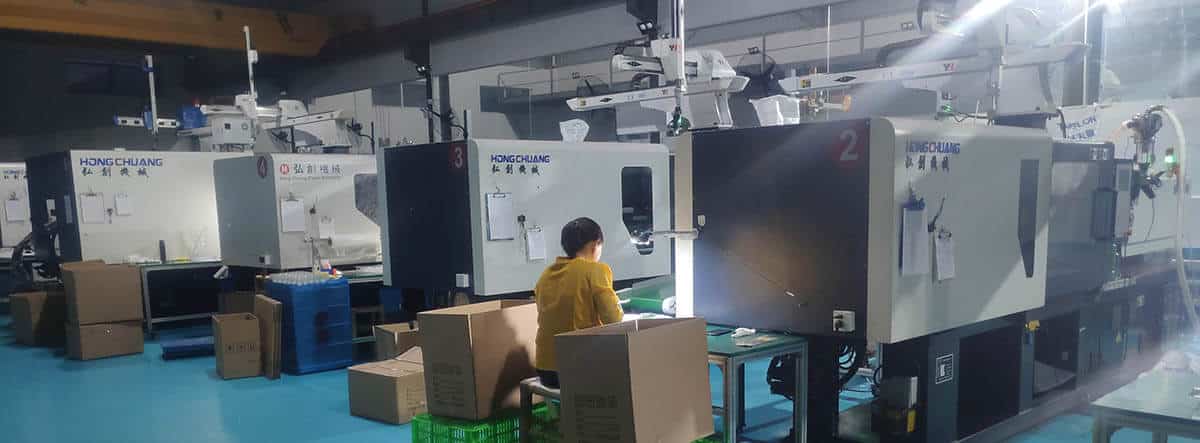
PMMA (Acrylic) Injection Molding in China — Optical Clarity, LED Covers, Display Parts

Key material & process specs
| Property | Value |
|---|---|
| Tensile strength | 65–75 MPa — stiffer than PC but more brittle |
| Heat resistance | Service range up to 80–90°C (HDT ~95°C) |
| Shrinkage rate | 0.2–0.8% — lower than PC, excellent dimensional stability |
| UV / weather resistance | Excellent — no yellowing outdoors (unlike PS) |
| Drying required | 80°C for 3–4 hrs, moisture below 0.1% |
| Mold temperature | 60–90°C — higher improves clarity and reduces stress |
| Typical wall thickness | 2–4 mm, variation kept under 15% |
PMMA vs PC vs glass — when to choose acrylic
Common PMMA defects Topworks controls
Start your PMMA / acrylic project with Topworks
Send STEP/IGES + clarity requirement + wall thickness + annual volume for a quote-ready DFM reviewTopworks Plastic Mold is a specialist PMMA acrylic injection molding company in China with 10+ years of experience in optical-grade and commercial acrylic parts. Whether you need optically clear lenses, UV-stable LED covers, or high-cosmetic display components, our team covers every stage from DFM to mass production under one accountable workflow.
One-Stop PMMA Injection Molding in China — Clarity-Controlled, Defect-Free, Cost-Stable
PMMA (polymethyl methacrylate) is the preferred material when optical clarity, UV stability, and surface quality must be maintained over the product’s lifetime. Unlike standard engineering plastics, acrylic demands strict moisture control, polished tooling, and a validated process window — or defects like haziness, bubbles, stress cracking, and yellowing appear in production.
Topworks provides a one-stop acrylic injection molding service covering DFM, precision tooling, sampling, and mass production under one team. We specialise in parts where clarity and cosmetic quality are non-negotiable: optical lenses, automotive lighting covers, LED diffusers, display panels, and medical device housings.
Request Quote / DFM ReviewMold Cost CalculatorMirror-polish tooling + process discipline
SPI-grade polish to Ra<0.01μm for clear parts. Mold temperature, fill speed, and pack profile tuned per grade and wall thickness — not just copied from a datasheet.
DFM before steel — not after sampling
Wall uniformity, gate location, draft, and venting reviewed before tooling starts. Most bubble, sink, and stress issues are designed out, not fixed with process patches.
Validated process window for long runs
PMMA is sensitive to moisture, shear, and thermal history. We document and lock the process window after sampling so production output matches golden samples — batch after batch.
What Topworks Molds in PMMA Acrylic
PMMA is selected for applications where optical performance, long-term weather resistance, and surface aesthetics matter. Topworks molds acrylic parts across the following categories:
Optical lenses
Collimating, diffusing, and Fresnel lenses. Requires optical-grade PMMA, Ra<0.01μm polish, strict moisture control, and validated fill/pack/cool profile.
LED lighting covers
Diffusers, reflectors, and light guides for automotive and commercial LED. Wall uniformity and gate position control light distribution consistency.
Automotive lighting
Tail light lenses, indicator covers, interior light panels. UV-stable grades, high-gloss surfaces, dimensional accuracy for housing assembly.
Display & signage panels
Retail display panels, instrument covers, backlit signage. Flat, stress-free surfaces; controlled birefringence for backlit applications.
Medical device covers
Non-implantable diagnostic and equipment housings. Clear grades with documented process for validation requirements.
Cosmetic packaging
High-gloss, clear, or tinted caps, covers, and containers. Surface quality and dimensional consistency critical for brand perception.
Industrial & safety covers
Machine guards, instrument windows, protective shields. Impact-modified PMMA grades available for applications needing toughness alongside clarity.
Consumer electronics
Camera lens covers, device windows, decorative panels. Tight tolerances for device assembly; scratch-resistant coatings available post-mold.
What “One-Stop” Means at Topworks for PMMA Projects
PMMA projects fail at the transition points — when the DFM team hands off to tooling, or when the tooling supplier is separate from the production supplier. Topworks eliminates those gaps.
1) DFM-first review
Wall thickness uniformity, gate location relative to A-surfaces, draft for scratch-free ejection, venting strategy, cosmetic zone definition. Completed before any steel is cut.
2) Optical-grade tooling
Mirror polish (SPI A1/A2) for clear surfaces. Balanced cooling for stress and warp control. Chrome or electroless nickel plating available for scratch-resistance on cavity surfaces.
3) Sampling + process validation
First article dimensions + clarity/haze inspection. Process window documented (fill, pack, hold, cool). Golden sample approved before production release.
4) Mass production
Resin batch consistency check, process parameter monitoring, cosmetic audit per shift, dimensional verification, scratch-protected packaging for clear parts.
PMMA Grades Topworks Molds
Not all acrylic is the same. Grade selection directly affects clarity, impact performance, processing behaviour, and total cost. Topworks molds the following PMMA grades:
| Grade | Key characteristics | Typical applications | Processing note |
|---|---|---|---|
| Standard PMMA | 92–93% transmittance, high surface gloss, UV stable | Displays, signage, cosmetic covers | Dry 80°C / 3–4 hrs; mold temp 60–80°C |
| Optical-grade PMMA | 93%+ transmittance, ultra-low haze, tight birefringence | Optical lenses, light guides, instrument windows | Requires mirror polish + strict moisture control |
| Impact-modified PMMA | Higher toughness, slight reduction in clarity | Safety covers, machine guards, automotive trim | Wider process window; less sensitive to fast fill |
| Heat-resistant PMMA | HDT up to 110°C vs standard 95°C | Automotive lighting near heat sources, LED covers | Higher barrel temp required; longer drying |
| Colored / tinted PMMA | Translucent or opaque in full RAL / Pantone range | Cosmetic packaging, retail displays, signage | Batch-to-batch color consistency confirmed at sampling |
PMMA Defect Controls — Topworks Approach
Acrylic is unforgiving. Defects that are minor in opaque engineering plastics become immediately visible in transparent PMMA. Every risk below is addressed at the tooling and process design stage — not discovered at mass production.
| Defect | Buyer impact | Root cause | Topworks control |
|---|---|---|---|
| Bubbles / internal voids | Optical rejection, scrap spikes | Insufficient drying, trapped moisture, thick walls | Drying protocol enforced per batch; wall thickness reviewed in DFM; packing profile validated |
| Haziness / cloudiness | Cosmetic rejection, customer returns | Moisture degradation, shear overheat, cold mold | Moisture below 0.1%; barrel temp and speed controlled; mold temp 70–90°C |
| Flow marks / weld lines | Visible surface defects on clear parts | Low mold temp, slow fill, poor gate location | Gate placement optimised in DFM; mold temp elevated; fill speed profiled |
| Stress cracking | Field failure, warranty claims | High residual stress from fast fill or cold ejection | Slow-to-medium injection speed; mold temp 80–90°C; post-mold annealing 70–80°C / 2–4 hrs |
| Sink marks | Cosmetic rejection on gloss surfaces | Non-uniform wall, insufficient hold pressure | Wall uniformity enforced in DFM; hold pressure and time validated in process window |
| Yellowing | Optical and cosmetic rejection | Thermal degradation — overheating or long residence time | Barrel temp controlled to lower end of range; purging protocol on startup/shutdown |
| Surface scratches | Cosmetic rejection at incoming QC | Ejection drag, handling, packaging damage | Draft angle 1.5–3°; mirror polish; scratch-protected packaging designed at sampling stage |
PMMA Case Studies (Before / After)
Case 1: LED Diffuser Panel — Haziness
- Inconsistent haze across panel surface
- Moisture bubbles visible under backlight
- Varying clarity batch to batch
- Drying SOP enforced per resin batch
- Mold temperature raised to 85°C
- Fill speed profiled to reduce shear heating
Case 2: Automotive Tail Light Lens — Stress Cracking
- Cracking at gate area within 3 months
- High residual stress from fast injection
- No post-mold annealing in original process
- Gate relocated away from high-stress zone
- Injection speed reduced; hold profile re-tuned
- Annealing step added: 75°C / 3 hours
Case 3: Optical Instrument Window — Flow Marks
- Visible weld line across centre of part
- Surface flow marks under polarised inspection
- 100% manual rework to assess clarity
- Gate relocated to edge; single-flow fill path
- Mold temp increased to 90°C
- Cavity polished to Ra<0.01μm (SPI A1)
PMMA Part Design Guidelines
PMMA is less forgiving of design shortcuts than opaque engineering plastics. The rules below protect clarity, prevent stress, and reduce tooling rework.
Wall thickness
Target 2–4 mm. Variation across the part must stay under 15% to prevent differential shrinkage, sink marks, and residual stress. Avoid abrupt transitions — use tapers of 3:1 or gentler.
Draft angles
Minimum 1.5° per side for polished cavity surfaces; 2–3° recommended for textured or painted surfaces. Insufficient draft causes ejection drag and surface scratching — both critical defects in transparent parts.
Corner radii
Inside corners minimum 1 mm radius; outside corners minimum 2 mm. Sharp corners concentrate stress in an already stress-sensitive material and create visible notch effects in clear parts.
Ribs and bosses
Rib thickness 50–60% of wall thickness. Boss wall thickness 50% of nominal wall. Both are visible as sink marks on the opposite (cosmetic) surface in clear PMMA — minimise wherever possible.
Gate placement
Gate away from A-surfaces and optical zones. Avoid placing gates where weld lines will fall in the clear viewing area. Tab gates or film gates preferred for flat optical parts over pin gates.
Tolerances
±0.08–0.15 mm achievable for dimensions under 50 mm with correct tooling and a validated process window. Optical flatness and birefringence requirements must be specified before tooling starts.
How to Choose a Reliable PMMA Injection Molding Supplier in China
Acrylic molding is not the same as standard engineering plastic molding. A supplier who molds ABS housings competently may not have the process discipline or tooling capability for optical-grade PMMA. Ask these questions before awarding a PMMA project:
Drying and moisture control
Ask: what drying temperature and time do they use for PMMA? Do they track moisture content per batch? Suppliers without a documented drying SOP will produce hazy or bubbly parts.
Tooling polish capability
Ask: what SPI polish grade do they achieve on optical surfaces? Can they show Ra measurements? Mirror polish to SPI A1 (Ra <0.01μm) is required for optical-grade clarity — not all toolrooms can achieve this.
Cosmetic standard definition
Ask: do they confirm A/B/C surface boundaries and defect acceptance limits before cutting steel? “Clear” is not an acceptance criterion — haze level, scratch length, and bubble size must be quantified upfront.
Process window documentation
Ask: do they document the validated fill/pack/hold/cool settings after sampling? Suppliers who rely on operator feel produce inconsistent clarity batch to batch.
Annealing capability
Ask: do they offer post-mold annealing for stress-sensitive parts? Without annealing, PMMA parts under assembly load or chemical exposure are at risk of stress cracking in the field.
Sampling + FAI process
Ask: do they provide first-article inspection reports, haze measurements, and golden sample definition before production release? Suppliers who skip FAI ship production quality surprises.
PMMA Injection Molding Cost — What Buyers Need to Know
PMMA mold and part costs follow the same general structure as other injection molding projects, but with additional cost drivers specific to optical and clear plastic tooling.
Tooling cost factors
- Polish level: SPI A1 mirror polish adds 15–25% to cavity cost vs standard finish — but is required for optical clarity.
- Part complexity: Flat panels are simpler; complex lens geometries or undercuts increase tooling cost significantly.
- Cavity count: Single-cavity for prototypes and low volume ($3,000–$10,000); multi-cavity for higher volumes ($15,000–$40,000+).
- Steel grade: S136 or H13 stainless preferred for PMMA due to corrosion resistance and polishability.
Per-part cost factors
- Material cost: Optical-grade PMMA resin $2.50–$5.00/kg depending on grade and clarity specification.
- Cycle time: PMMA typically requires longer hold and cooling times than ABS for the same wall thickness — adds to cycle cost.
- Scrap rate: Optical and cosmetic rejection rates directly impact unit cost — controlled by process discipline, not luck.
- Volume: Parts from $0.30–$8.00 each depending on size, complexity, and volume. Significant cost reduction at 10,000+ units.
The lowest tooling quote rarely delivers the lowest total cost for PMMA. Suppliers who cut corners on polish, drying, or process documentation create high scrap rates and rework costs in production that exceed the tooling saving many times over.
RFQ Checklist — What to Send for an Accurate PMMA Quote
Sending complete information upfront eliminates re-quoting rounds and protects your project timeline. For clear and optical PMMA, these items are especially critical:
1) 3D + 2D files
STEP/IGES + PDF with tolerances and GD&T. Mark A-surface zones clearly.
2) PMMA grade
Standard, optical, impact-modified, heat-resistant, or colored. Transparency level and any UV / flame requirements.
3) Cosmetic standard
Haze limit, scratch acceptance, bubble size, and inspection method. Define A/B/C surfaces explicitly.
4) Volume + lead time
Prototype / pilot / annual forecast. Target delivery date for first article samples.
5) Wall thickness
Call out maximum and minimum wall and any thick sections that may require special gating or packing strategy.
6) Assembly context
How the part assembles — clips, adhesive, solvent, screws. Solvent contact is critical for stress cracking risk.
7) Packaging needs
Scratch protection requirements for clear parts. Individual bagging, foam, or anti-scratch film needs.
8) Tooling ownership
Who owns the mold. Maintenance expectations and expected tool life (shots).
Who This Service Is For
- OEM manufacturers sourcing optical or clear plastic parts
- Lighting designers needing LED diffusers or optical lenses
- Automotive tier suppliers needing UV-stable exterior lens parts
- Medical device companies needing clear housings with documentation
- Consumer product brands requiring high-cosmetic acrylic covers
- Engineering teams who have been burned by haze and stress cracking before
Who This Is NOT For
- Buyers selecting suppliers purely on lowest tooling price
- Projects without a defined cosmetic standard or acceptance criteria
- One-off prototypes with no production intent
- Applications where opaque ABS or PP would perform equally well
Topworks focuses engineering effort on serious production programs where optical quality, stability, and accountability matter. Filtering price-only inquiries protects schedule and quality for the right projects.
Helpful Resources
Evaluate cost, material selection, process, defects, and China sourcing risk before starting your project.
- Injection molding cost — complete buyer guide
- Injection mold cost calculator
- What we need for an accurate quote
- Injection molding process guide
- Injection molding defects guide
- PC injection molding — compare PMMA vs PC
- ABS injection molding
- Optical injection molding services
- China sourcing & risk control hub
Ready to Start Your PMMA Acrylic Project?
Send your CAD files and requirements to Topworks for a quote-ready DFM review. We will identify clarity risks, recommend the right PMMA grade, and provide a production-focused tooling and process plan.
Best results with: STEP/IGES + PMMA grade + transparency requirement + wall thickness + cosmetic standard + annual volume.
Request Quote / DFM Review
“I’m glad to inform you that all plastic parts are perfect!!! We are delighted, and therefore there are good chances to continue our relationship for any coming new project.”

CRISTIANO
ITALY
“Steven is a very detail-oriented project manager and engineer who can solve problems creatively and also provides excellent service. It was a pleasure working with him.”

DAVID
USA


Frequently Asked Questions — PMMA Acrylic Injection Molding
What is PMMA injection molding and what makes it different from standard plastic molding?
PMMA (polymethyl methacrylate, or acrylic) injection molding heats acrylic pellets to 220–270°C and injects them at 60–120 MPa into a precision steel mold. The result is rigid, optically clear parts with up to 92–93% light transmittance — near glass quality.
What makes PMMA different is how unforgiving it is. Defects that are invisible in opaque plastics — haziness, bubbles, flow marks, stress cracking — are immediately visible in transparent acrylic. Successful PMMA molding requires strict moisture control, mirror-polished tooling, a controlled fill/pack/cool process, and in many cases post-mold annealing.
What are the key material properties of PMMA acrylic?
Light transmittance: 92–93% — near glass optical clarity
Tensile strength: 65–75 MPa — stiffer than PC but more brittle
Heat resistance: Service range up to 80–90°C; HDT approximately 95°C (heat-resistant grades up to 110°C)
Shrinkage: 0.2–0.8% — lower than PC, excellent dimensional stability
UV / weather resistance: Excellent — no yellowing outdoors over time (unlike PS or standard PC)
Surface hardness: Better scratch resistance than PC; mirror finish achievable to Ra<0.01μm
What are the optimal processing parameters for PMMA injection molding?
Drying: 80°C for 3–4 hours minimum — this is the single most important step. Moisture above 0.1% causes bubbles and haziness that cannot be fixed in the process.
Barrel temperature: 220–270°C depending on grade and wall thickness
Mold temperature: 60–90°C — higher mold temperature improves surface clarity, reduces flow marks, and lowers residual stress
Injection pressure: 60–120 MPa
Injection speed: Slow to medium — fast fill increases shear heating and causes yellowing and degradation
Post-mold annealing: 70–80°C for 2–4 hours recommended for stress-sensitive parts
How do you achieve optical clarity in PMMA injection molded parts?
Optical clarity in acrylic injection molding requires discipline across four areas simultaneously:
1. Material preparation: Dry resin for minimum 4 hours at 80°C to below 0.1% moisture. Even small amounts of absorbed moisture cause hydrolytic degradation at barrel temperatures, producing bubbles and haze.
2. Tooling: Mirror polish cavity to SPI A1 grade (Ra<0.01μm). Any surface roughness in the tool transfers directly to the part surface and scatters light.
3. Process: Mold temperature 70–90°C; slow-to-medium injection speed; balanced packing to avoid residual stress.
4. Post-processing: Anneal at 70–80°C for 2–4 hours to relieve residual stress — critical for parts that will be exposed to solvents, UV, or assembly load in service.
What are the most common defects in PMMA molding and how are they prevented?
Bubbles / internal voids: Caused by moisture in the resin. Prevention: enforce drying SOP per batch; validate packing profile for thick-wall sections.
Haziness / cloudiness: Caused by moisture degradation or shear overheating. Prevention: moisture control + controlled barrel temperature + mold temperature 70–90°C.
Flow marks / weld lines: Caused by low mold temperature or poor gate location. Prevention: elevate mold temperature; relocate gate away from visible optical zone.
Stress cracking: Caused by high residual stress from fast injection or cold ejection, combined with solvent or mechanical load in service. Prevention: slow injection; anneal post-mold; avoid gate in high-stress zones.
Yellowing: Caused by thermal degradation — overheating or long residence time in barrel. Prevention: control barrel temperature to lower end of range; purge barrel on startup and shutdown.
Surface scratches: Caused by insufficient draft angle or ejection drag on polished surfaces. Prevention: draft 1.5–3°; scratch-protected packaging designed at sampling stage.
What PMMA grades are available and how do I choose the right one?
Standard PMMA: 92–93% transmittance, UV stable, good surface gloss. Best for displays, signage, cosmetic covers, and general optical covers.
Optical-grade PMMA: 93%+ transmittance, ultra-low haze, controlled birefringence. Required for precision lenses, light guides, and instrument windows.
Impact-modified PMMA: Improved toughness at slight cost to clarity. Best for safety covers, machine guards, and parts that may be struck or dropped.
Heat-resistant PMMA: HDT up to 110°C vs standard 95°C. Required for automotive lighting near heat sources, LED covers with high-power LEDs.
Colored / tinted PMMA: Full color range; translucent or opaque. Used in retail displays, cosmetic packaging, and signage. Color consistency must be specified and confirmed at sampling.
How does PMMA compare to PC, PS, and glass?
PMMA vs Polycarbonate (PC): PMMA offers better optical clarity (92–93% vs PC’s ~88%), better scratch resistance, and superior UV stability with no yellowing. PC has 30x higher impact strength and can withstand temperatures to 120°C vs PMMA’s 90°C. Choose PMMA when clarity and UV stability are primary requirements; choose PC when impact strength or higher heat resistance is needed.
PMMA vs Polystyrene (PS): PMMA is significantly superior in weather resistance and long-term clarity. PS yellows outdoors and degrades under UV exposure. PS is cheaper for short-term indoor applications but unsuitable for any outdoor or long-term display use.
PMMA vs Glass: PMMA is 50% lighter than glass, shatter-resistant, and can be injection molded into complex 3D shapes impossible in flat glass. PMMA is less scratch-resistant than glass and has lower heat resistance, but is the preferred material for molded optical and display components where weight, shape complexity, and safety matter.
What are the important design rules for PMMA injection molded parts?
Wall thickness: 2–4 mm recommended; variation across the part must stay under 15% to prevent differential shrinkage and stress. Avoid abrupt transitions.
Draft angles: Minimum 1.5° per side on polished surfaces; 2–3° for textured or painted areas. Insufficient draft causes ejection scratches — a critical defect in clear parts.
Corner radii: Inside corners minimum 1 mm; outside corners minimum 2 mm. Sharp corners concentrate stress in a stress-sensitive material.
Ribs and bosses: Both are visible as sink marks on the opposite cosmetic surface in clear PMMA — minimise or avoid where possible.
Gate placement: Away from optical zones and A-surfaces. Film gates or tab gates preferred over pin gates for flat optical parts.
Tolerances: ±0.08–0.15 mm achievable for dimensions under 50 mm with validated tooling and process.
What information does Topworks need to provide an accurate PMMA injection molding quote?
To provide a quote-ready response without back-and-forth re-quoting, please send:
Files: STEP or IGES 3D file + 2D PDF drawing with tolerances and GD&T. Mark A-surface (cosmetic) zones.
Material: PMMA grade (standard, optical, impact-modified, heat-resistant), transparency requirement, color, UV or flame rating if needed.
Quality: Cosmetic standard — haze limit, scratch acceptance criteria, inspection method. Define A/B/C surfaces explicitly.
Volume: Prototype quantity + annual production forecast + target lead time for first samples.
Assembly: How the part assembles, solvent contact risk, outdoor UV exposure, any coating or secondary operation needed.
Packaging: Scratch protection requirements — individual bags, anti-scratch film, foam inserts for clear parts.
What is the typical lead time and cost for PMMA injection molding at Topworks?
Tooling lead time: 20–35 days for standard PMMA tools; 30–45 days for optical-grade tools requiring SPI A1 mirror polish and validation. Complexity, cavity count, and polish level all affect lead time.
Tooling cost: Single-cavity standard tool $3,000–$10,000; optical-grade or complex tools $12,000–$40,000+. Mirror polish and stainless steel (S136/H13) add to tooling cost but protect part quality over long runs.
Per-part cost: From $0.30 for simple high-volume parts to $8.00+ for complex optical components at low volume. Significant cost reduction at 10,000+ units annually.
Share your target volume and delivery requirements when contacting Topworks — we will recommend the right tooling strategy and production plan for your program.