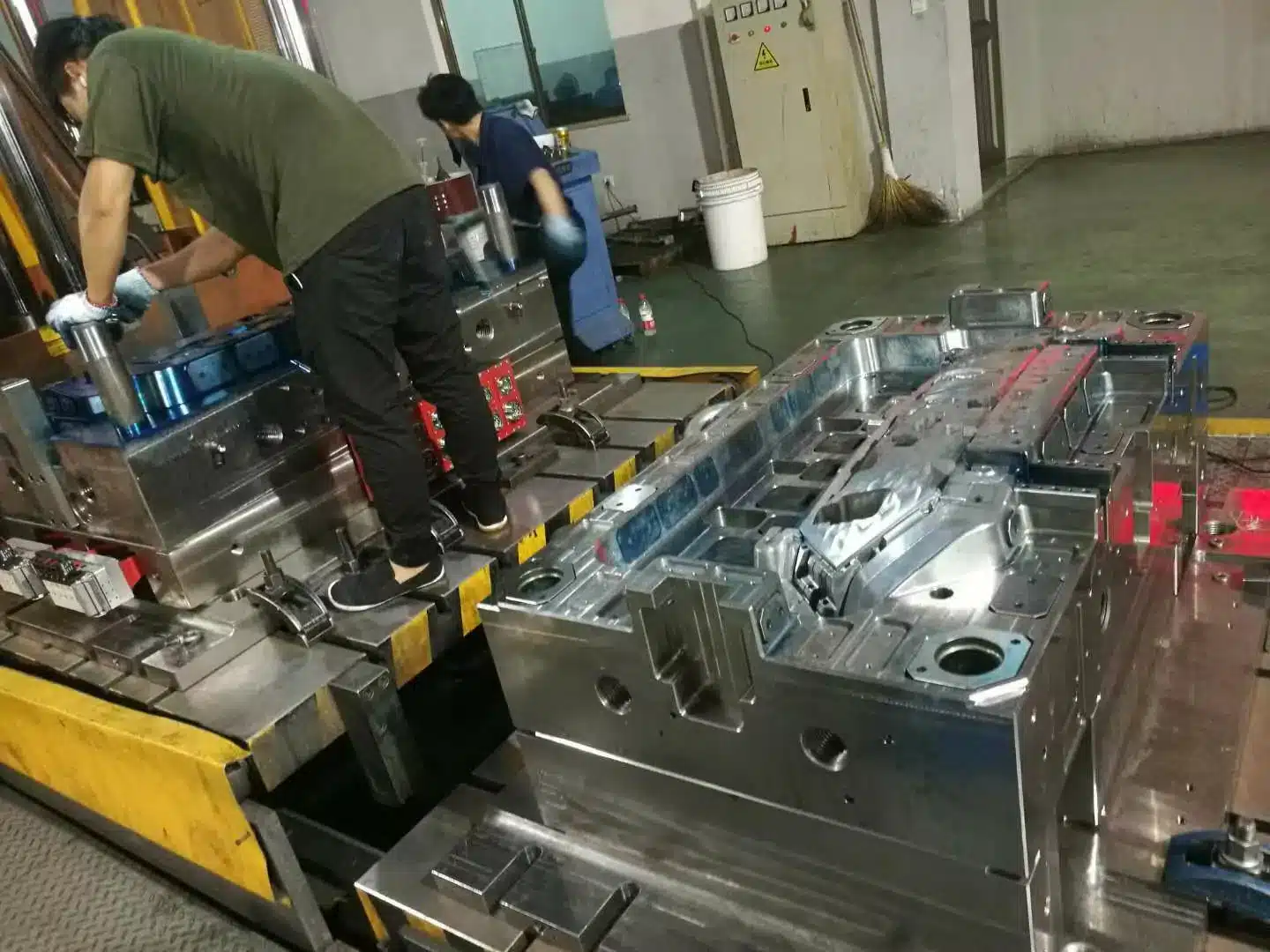


PET chemical name is polyethylene terephthalate, also known as polyester. At present, GF-PET is the most used among customers, mainly for preform injection.
The rheology of PET in molten state is better, and the effect of pressure on viscosity is greater than temperature. Therefore, the fluidity of the melt is mainly affected by pressure.
- Dry PET aggressively (target very low moisture) or you will get haze, brittleness, and yellowing.
- PET flow is pressure-sensitive—stable packing/holding is often more important than chasing barrel temperature.
- Use fast-but-controlled fill (typ. ~4 s for many preforms) to avoid freeze-off without excessive shear whitening.
- Keep back pressure low (often ≤100 bar) to reduce wear and overheating; rely on proper screw design and drying instead.
- If you stop >15 minutes, purge properly and reduce temperatures—PET degrades quickly with long residence at high heat.
Why PET Preform Molding Fails (and What to Watch First)
PET preform injection molding is usually stable—until it isn’t. When defects appear, the root cause is often one of three things: moisture (hydrolysis), thermal history (degradation from heat + residence time), or pressure management (fill/pack imbalance in a hot-runner multi-cavity mold). PET is unforgiving because moisture at melt temperature breaks polymer chains. That lowers molecular weight, which shows up as brittleness, yellowing, haze, and weaker drop impact.
Unlike some commodity resins, PET “looks fine” until you run it at high temperature with even slightly elevated moisture. That’s why the quickest troubleshooting order is usually: (1) dryer performance → (2) residence time & melt temp → (3) hot runner balance & venting → (4) packing/holding stability.
How PET Flows: Pressure Matters More Than Temperature
The rheology of PET in molten state is better, and the effect of pressure on viscosity is greater than temperature. Therefore, the fluidity of the melt is mainly affected by pressure.
In practical terms, this means you can often “solve” short shots or inconsistent weights not by increasing barrel temperature (which risks degradation), but by improving injection pressure capability, fill speed control, and holding pressure repeatability. PET preforms also demand consistent cooling and ejection because the part is thick (often ~12 mm wall in sections) and retains heat.
Example: If cavity weights drift across an 8-cavity hot runner, first confirm dryer dew point and moisture, then check valve gate timing (if used), manifold temperature uniformity, and finally holding pressure/time. Raising melt temperature may temporarily mask the issue while increasing acetaldehyde risk and long-term brittleness.
Key Processing Parameters (Drying, Melt, Speed, Pressure)
- Plastic Processing
Due to the presence of lipid based PET molecules, and it has a certain hydrophilicity, the pellet is sensitive to water at a high temperature. When the moisture content exceeds the limit, the molecular weight of the PET decreases during processing, and the product is colored and brittle.
In this case, the material must be dried before processing, and the drying temperature is 150 ° C, more than 4 hours, generally 170 ° C, 3-4 hours.
The proportion of recycled materials should not exceed 25%, and the recycled materials should be thoroughly dried.
- Injection Molding Machine
Since PET has a stable time after melting point and a high melting point, it is necessary to use an injection system with more temperature control sections and less friction heat during plasticization, and the actual weight of the product cannot be less than the 2/3 of the one shot amount machine injection.
Based on these requirements, Ramada has developed a small and medium series of PET plasticizing systems in recent years. The clamping force is selected to be greater than 6300t/m2.
| Parameter | Typical Range (PET Preforms) | Why it matters / Notes |
|---|---|---|
| Drying temperature | 150 °C >4 h (common) / 170 °C 3–4 h (common) | Prevents hydrolysis (brittle, yellow, hazy parts). Confirm dryer performance, not only setpoint. |
| Regrind ratio | ≤25% (often lower for high-clarity) | Higher regrind increases moisture risk and can amplify “bridging” and plasticizing instability. |
| Melt temperature (shot-to-air) | 270–295 °C | Too high increases degradation/AA; too low risks short shot or poor surface replication. |
| GF-PET / enhanced grade melt temp | 290–315 °C | Glass-fiber grades often need higher melt, but watch shear and residence time. |
| Injection fill time | ~4 s (many preforms) | Fast fill reduces freeze-off; too fast raises shear → whitening/brittleness. |
| Back pressure | Low; often ≤100 bar | Lower is better to reduce wear and overheating; rely on correct screw & drying. |
| Residence time | Keep as short as practical; avoid >300 °C for long periods | Long hot residence causes molecular breakdown and discoloration. |
| Shot size vs machine capacity | Part/shot weight ≥ 2/3 of one-shot capacity | Improves process stability and temperature control during plasticization. |
| Clamping force (guideline) | >6300 t/m² (as noted) | Helps resist flash in high-pressure preform molding, especially with thin vent limits. |
Mold & Gate Design Parameters (Hot Runner, Vents, Insulation)
- Mold and Gate Design
The PET preform is generally manufactured by a hot runner PET preform mould. It is preferable to have a heat insulator between the mold and the injection molding machine. The thickness of the preform is about 12 mm, and the insulator must withstand high pressure. VENTING must be sufficient to avoid local overheating or air trap, but the depth of the venting slot should not exceed 0.03mm, otherwise it will easily produce flash.
Practical notes: In multi-cavity preform molds, “balanced” is not just runner layout—balance also depends on manifold temperature uniformity, nozzle tip condition, gate wear, and (if equipped) valve pin timing. If one cavity consistently hazes, shorts, or flashes, compare that cavity’s gate temperature, nozzle heater output, and cooling flow first, then inspect the gate land and vent condition.
Troubleshooting Guide (Symptom → Likely Cause → Fix)
| Symptom | Likely cause | What to do (fast checks) |
|---|---|---|
| Brittle preforms / easy cracking | Moisture hydrolysis; long hot residence | Verify dryer dew point & actual pellet moisture; reduce residence time; avoid long holds above 300 °C. |
| Yellowing / burnt smell | Overheating; dead spots in barrel/manifold | Lower melt temp; purge; check hot runner temp sensors; reduce cycle interruptions. |
| Haze / “white fog” / opacity | Moisture; shear heating; mold temp instability | Improve drying; soften speed profile (fast early, controlled end); stabilize mold cooling and temperature control. |
| Short shot / incomplete fill | Freeze-off; insufficient pressure; cold gate/nozzle | Increase fill speed within safe shear; confirm hot runner temps; confirm injection pressure/holding transition. |
| Flash (especially at vents) | Excess pack; vent depth too deep; clamp force insufficient | Reduce holding pressure/time; confirm vent depth ≤0.03 mm; verify clamp tonnage and mold fit. |
| Weight variation across cavities | Hot runner imbalance; valve timing; inconsistent pack | Check manifold/nozzle temps; inspect gates; tune hold pressure & switchover; confirm valve timing (if used). |
| “Bridging” / feed throat issues with regrind | Too much regrind; poor drying; inconsistent granule size | Reduce regrind ratio; re-dry regrind thoroughly; improve conveying and hopper throat temperature control. |
Operating Checklist (Setup, Running, Shutdown)
- Before start: Confirm dryer temperature/time, airflow, and dew point; verify hopper seals; confirm material lot and regrind ratio.
- During setup: Use shot-to-air to confirm melt temperature (not just barrel settings); establish stable fill time and consistent switchover point.
- During production: Keep back pressure low; monitor cavity weight trend (min/max) and scrap reason codes (haze, short, flash, black specks).
- Hot runner: Verify manifold/nozzle temperatures are stable; inspect gate area for drool/carbonization; ensure vents are clean and within depth limit.
- Short stop (<15 min): Air-blast only (as noted) and resume with controlled warm-up.
- Stop (>15 min): Clean/purge with viscosity PE, reduce barrel temperature to PE temperature, then reheat and stabilize before restarting.
FAQ
Why does PET need strict drying?
PET breaks down (hydrolyzes) when moisture is present at melt temperature. This reduces molecular weight, causing brittleness, haze, and color change—often without obvious warning during startup.
Can I just increase barrel temperature to fix short shots?
Sometimes it helps temporarily, but it can increase degradation risk. For PET, it’s often safer to improve pressure/flow delivery (fill profile, injection pressure, hot runner temperature stability) and confirm drying first.
What regrind ratio is “safe” for preforms?
A common guideline is ≤25% (as noted), but high-clarity or high-performance requirements may need less. Whatever the ratio, regrind must be thoroughly dried and consistently sized to avoid feeding instability.
Why do I get “white fog” or opaque preforms?
Common causes include moisture, unstable mold temperature control, or excessive shear during filling. Address drying first, then smooth the injection speed profile and stabilize cooling.
- the Melting Temperature
It can be measured by shot-to-air method,the temperature could be set between 270 and 295 ° C.
The enhanced grade GF-PET can be set to 290-315 ° C
- Injection Speed
Generally, the injection speed is fast, which prevents early coagulation during injection. But too fast, the high shear rate makes the material brittle. The shot is usually completed in 4 seconds.
- Back Pressure
The lower the back pressure is, the better the injection is , so as not to wear. Generally no more than 100bar.
- Residence times
Do not use excessive residence times to prevent molecular degradation. Try to avoid temperatures above 300 °C. If the shutdown is less than 15 minutes. Only need to be air-blasted; if it is more than 15 minutes, clean it with viscosity PE and reduce the temperature of the barrel to PE temperature until it is turned on again.
- Others
(1) The recycled material should not be too much, otherwise it will easily cause “bridge”and affect plasticization.
(2) If the mold temperature is not well controlled or the material temperature is not properly controlled, it is easy to produce “white fog” and opaque.

