





Moulage par injection & Fabrication de moules
Tout ce dont votre mouleur a besoin pour établir un devis précis. Préparez vos détails à l'avance et agissez plus rapidement.

Section 01
Informations essentielles requises
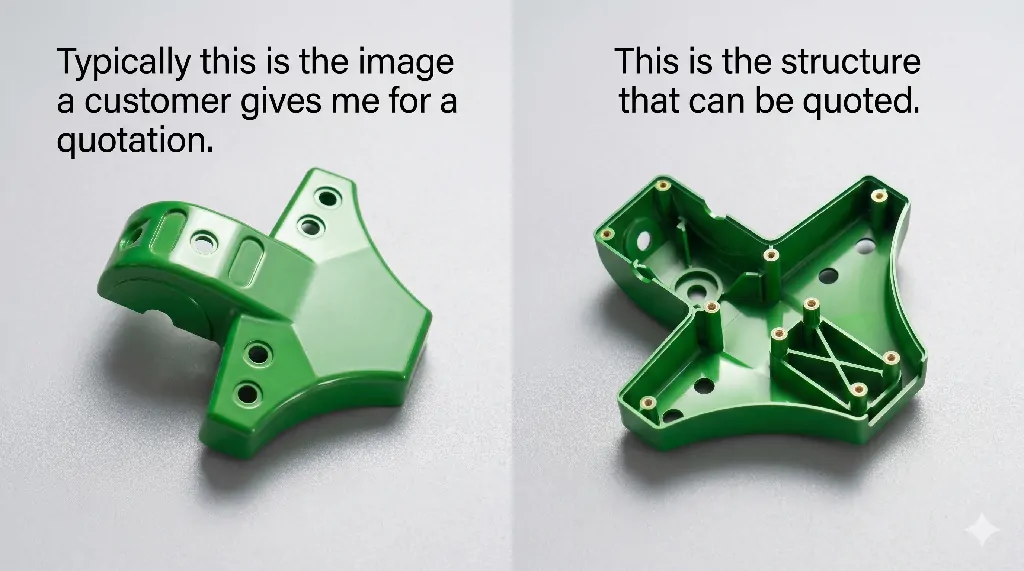
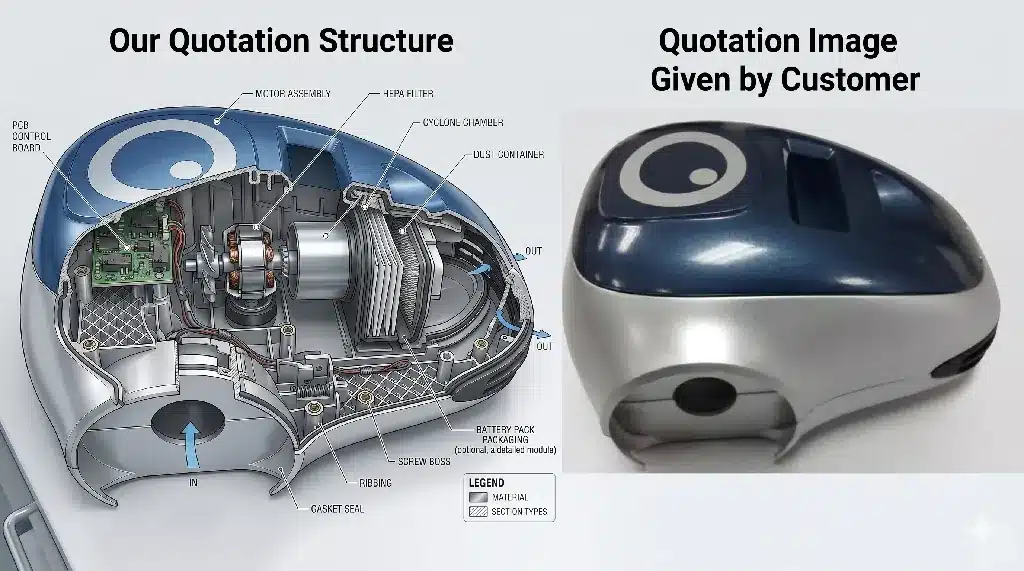
Fichiers CAO 3D
- Fichiers STEP de préférence
- Format du modèle solide
- Géométrie complète
Spécifications des matériaux
- Type de résine (ABS, PP, PC, etc.)
- Grade spécifique s'il est connu
- Additifs et colorants
Dimensions et tolérances
- Dimensions globales de la pièce
- Tolérances critiques
- Dessins 2D avec GD&T
Volume de production
- Estimation de l'utilisation annuelle
- Quantité initiale de la commande
- Volume projeté pour la durée de vie
Détails de l'application
- Application finale
- Exigences de performance
- Conditions environnementales
Exigences en matière d'esthétique
- Spécifications de l'état de surface
- Préférences en matière d'emplacement de la porte
- Exigences esthétiques
Section 02
Mold-Only vs Full Service
| # | Exigence | Construction de moules uniquement | Construction de moules et moulage par injection |
|---|---|---|---|
| 1 | Nombre de cavités | ✦ Obligatoire | |
| 2 | Résine plastique | ✦ Obligatoire | Résine + poids (sauf si le modèle 3D est fourni) |
| 3 | Acier et dureté du moule | ✦ Obligatoire | |
| 4 | Quantité de moulage | ✦ Obligatoire | ✦ Obligatoire |
| 5 | Exigences en matière de surfaces et de portes | Finition du moule + emplacement du portail | Couleur, finition, portail et autres |
| 6 | Les gouttes d'eau du coureur chaud | ✦ Obligatoire | |
| 7 | Dimensions critiques et assemblage | ✦ Obligatoire | ✦ Obligatoire |
| 8 | Emballage | ✦ Obligatoire | |
| 9 | Opérations secondaires | Peinture, impression, assemblage, etc. |
Section 03
Formats de fichiers acceptés
La plus préférée
Géométrie solide fiable
Également acceptable
CAO native et Parasolid
Référence uniquement
Dessins en 2D pour référence uniquement
Options du système de roulement
Section 04
Spécifications de la machine nécessaire
Force de serrage
- Exigences en matière de tonnage
- Tenue des moules
Taille du tir
- Capacité d'injection
- Volume du système de pièces et de coulisses
Espace moule
- Distance entre les barres d'accouplement
- Limites de hauteur des moules
- Ouverture maximale de la lumière du jour
Section 05
Services complémentaires
Analyse DFM
Optimisation de la conception en vue de la fabrication et de la réduction des coûts avant le début de l'outillage.
Conception des pièces
Création complète de modèles CAO 3D à partir de concepts, d'esquisses ou d'échantillons physiques.
Impression 3D
Prototypage SLA, SLS et FDM pour une validation rapide de la conception avant de s'engager dans l'outillage.
Prototypes CNC
Prototypes de matériaux destinés à la production pour des tests fonctionnels et d'ajustement robustes.
Outillage souple
Moules en aluminium ou en acier P20 pour la production de faibles volumes et l'outillage de pont.
Coulée sous vide
Moulage de moules en silicone pour les petites séries de préproduction avec une bonne qualité de surface.
Section 06
Calendrier du projet
De la conception initiale à la production en série - étapes et durées typiques d'un projet.
- 01Conception des composants ~7 joursOptimiser la conception en vue de réduire les coûts et de faciliter la fabrication.
- 02Prototypage de pièces 2-3 joursPrototypes usinés CNC ou impression 3D pour la validation de la conception.
- 03Conception d'outils 3-7 joursFiche d'information sur l'outillage utilisée pour concevoir l'outil de moulage avec précision.
- 04Contrôle de la conception des outils 2-3 joursValidation de la précision de la conception de l'outil avant le début de la fabrication.
- 05Fabrication d'outils 3-8 semainesFabrication précise à l'aide de la CNC et de l'usinage par électroérosion.
- 06Premiers tirs au client (T1) 2-5 joursLes premiers essais sont envoyés par courrier après l'achèvement des moules.
- 07Modifications d'outils et textures 3-7 joursModifications pour la mise en conformité et le texturage - étape finale avant la production en série.
- 08Production de masse / Exportation d'outils PrêtPrêt pour la production en série ou l'exportation d'outils.
Total approximatif pour des projets typiques
Y compris les modifications et les cycles d'approbation
De la conception à la production de masse
Section 07
Calendrier des citations
Le délai d'obtention d'un devis dépend de la complexité de la pièce et des informations fournies.
- 01Pièces simples - Informations complètes 24-72 heuresLorsque tous les détails nécessaires sont fournis à l'avance, y compris les fichiers 3D, les matériaux, les quantités et les tolérances.
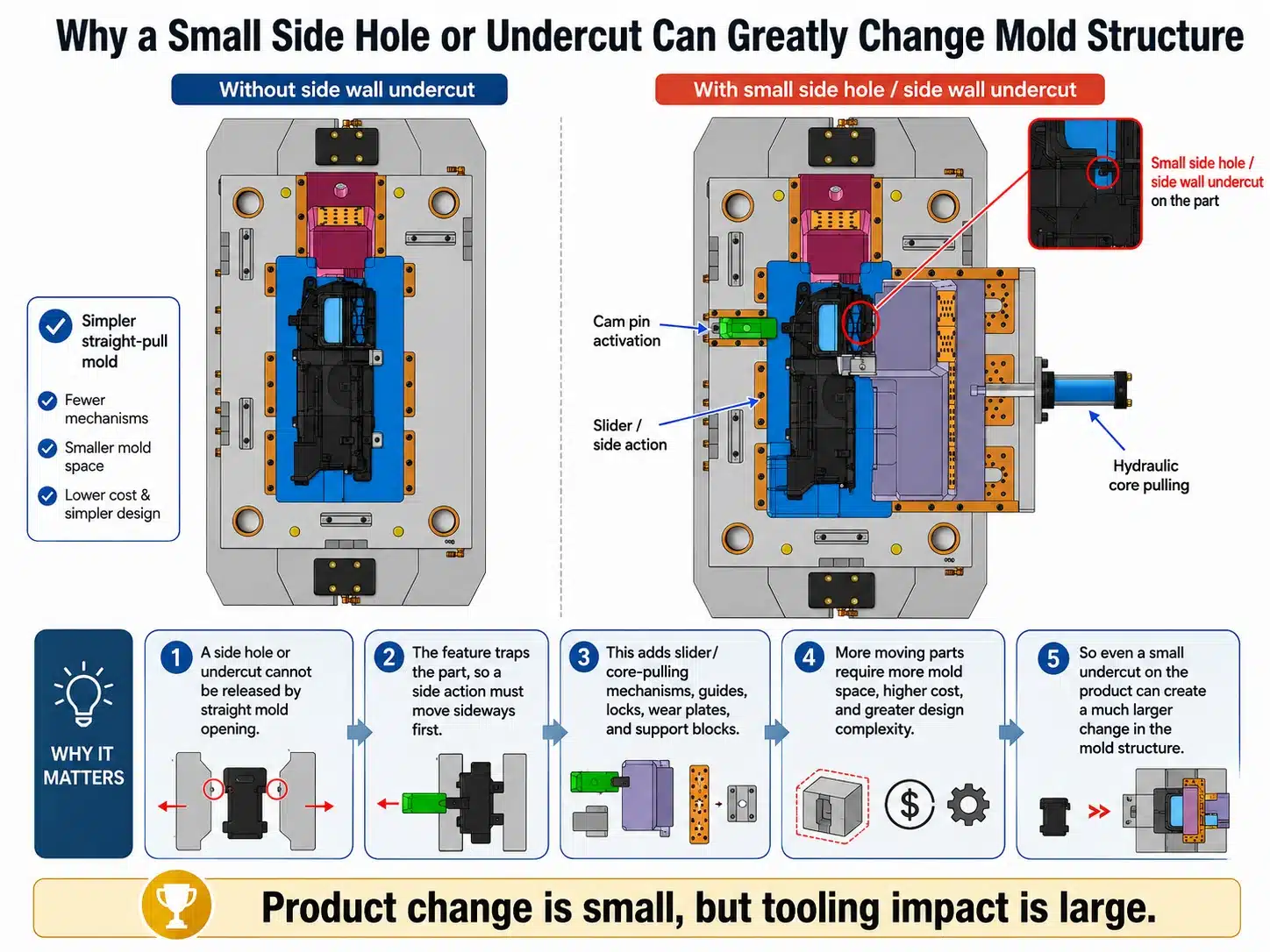
- 02Pièces complexes - Analyse nécessaire 3-10 joursPour les pièces présentant des contre-dépouilles, une géométrie complexe, des tolérances serrées ou des exigences en matière d'empreintes multiples.
Section 08
Conseils pour simplifier le processus d'achat de moules
Appels d'offres détaillés Obtenir des devis précis
Soumettez un appel d'offres qui ne laisse aucune place à l'improvisation. Indiquez le type de moule, le nombre de cavités, la préférence en matière d'acier, la durée de vie prévue du moule et les attentes en matière de garantie.
Soyez transparent dans votre demande
Expliquez clairement la raison pour laquelle vous demandez un devis. Ne demandez pas une analyse technique complète pour un projet prévu dans plusieurs années.
Respecter la propriété intellectuelle
Soyez discret lorsque vous demandez des devis. Ne partagez pas les idées de fabricants de moules concurrents.
S'associer très tôt avec votre mouliste
Discutez des coûts et des délais avant de vous engager dans une conception. Une collaboration efficace dès le départ permet d'éviter des révisions coûteuses.
Maintenir la communication
Demandez des mises à jour régulières. De nombreux fabricants de moules utilisent des diagrammes de Gantt ou des portails de projet pour tenir leurs clients informés.
Accord sur les conditions de paiement
Prévoir des acomptes et des paiements échelonnés, le paiement final étant effectué après approbation des échantillons et expédition des moules.
Minimiser les changements de conception
Les modifications apportées à la conception des pièces après le démarrage de l'outillage retardent les délais et augmentent les coûts de manière significative.
Définir les critères d'achèvement
Un moule est complet lorsqu'il produit des pièces conformes aux spécifications d'impression. Toutes les modifications apportées après l'approbation doivent faire l'objet d'un ECO.
Méfiez-vous des offres irréalistes
Si une offre semble trop belle pour être vraie, c'est généralement le cas. La qualité des moules a une incidence directe sur la qualité des pièces pendant des millions de cycles.
Prêt à démarrer votre projet ?
Contactez-nous avec vos besoins pour un devis détaillé.
Obtenir un devis →