





Spritzgießen & Formenbau
Alles, was Ihr Gießer braucht, um ein genaues Angebot zu erstellen. Bereiten Sie Ihre Details im Voraus vor und kommen Sie schneller voran.

Abschnitt 01
Erforderliche Informationen
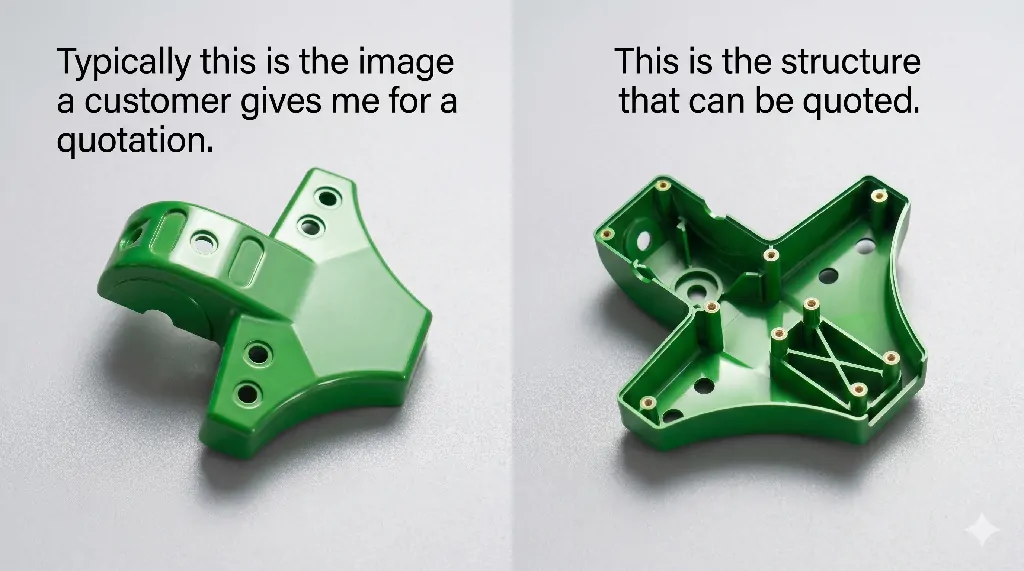
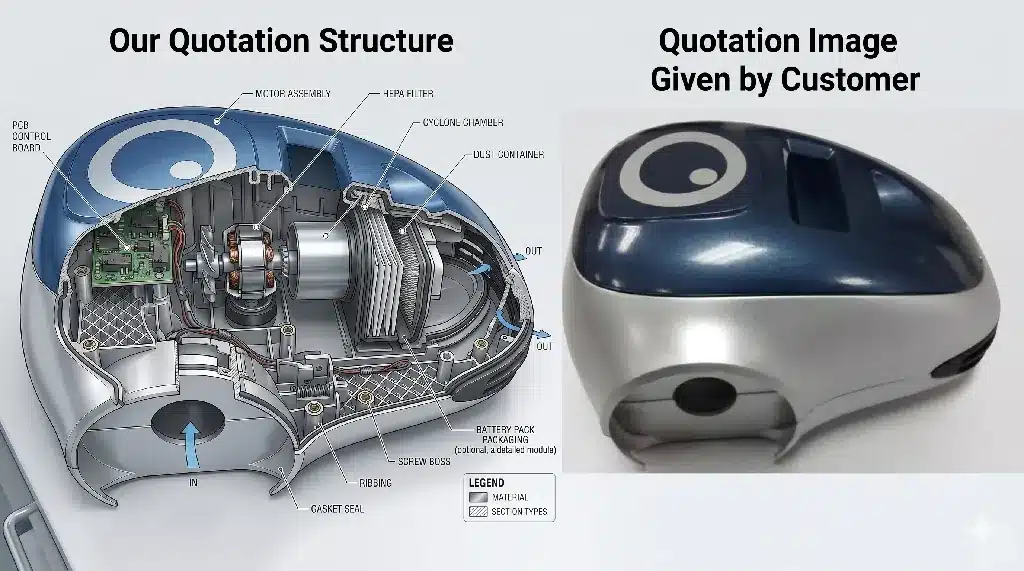
3D-CAD-Dateien
- STEP-Dateien bevorzugt
- Solid-Modell-Format
- Vollständige Geometrie
Material-Spezifikationen
- Art des Harzes (ABS, PP, PC, usw.)
- Spezifische Besoldungsgruppe, falls bekannt
- Zusatzstoffe und Farbstoffe
Abmessungen und Toleranzen
- Gesamtabmessungen des Teils
- Kritische Toleranzen
- 2D-Zeichnungen mit GD&T
Produktionsvolumen
- Geschätzter Jahresverbrauch
- Erstbestellmenge
- Prognostiziertes Lebenszeitvolumen
Details zur Anwendung
- Endanwendung
- Leistungsanforderungen
- Umweltbedingungen
Kosmetische Anforderungen
- Spezifikationen der Oberflächenbehandlung
- Präferenzen für den Torstandort
- Ästhetische Anforderungen
Abschnitt 02
Mold-Only vs. Full Service
| # | Anforderung | Nur Formenbau | Formenbau & Spritzgießen |
|---|---|---|---|
| 1 | Anzahl der Hohlräume | ✦ Erforderlich | |
| 2 | Kunstharz | ✦ Erforderlich | Harz + Gewicht (sofern kein 3D-Modell vorliegt) |
| 3 | Formstahl & Härte | ✦ Erforderlich | |
| 4 | Menge der Gussstücke | ✦ Erforderlich | ✦ Erforderlich |
| 5 | Anforderungen an Oberflächen und Tore | Oberfläche der Form + Lage des Anschnitts | Farbe, Oberfläche, Tor & mehr |
| 6 | Heißkanaltropfen | ✦ Erforderlich | |
| 7 | Kritische Größen & Montage | ✦ Erforderlich | ✦ Erforderlich |
| 8 | Verpackung | ✦ Erforderlich | |
| 9 | Sekundäre Operationen | Farbe, Druck, Montage usw. |
Abschnitt 03
Akzeptierte Dateiformate
Meist bevorzugt
Zuverlässige solide Geometrie
Auch akzeptabel
Natives CAD und Parasolid
Nur Referenz
2D-Zeichnungen nur als Referenz
Optionen für das Läufersystem
Abschnitt 04
Erforderliche Maschinenspezifikationen
Spannkraft
- Anforderungen an die Tonnage
- Haltekraft der Form
Schussgröße
- Kapazität des Einspritzvolumens
- Volumen des Teils und des Kanalsystems
Form Raum
- Holmabstand
- Höhenbegrenzungen für Formen
- Maximale Tageslichtöffnung
Abschnitt 05
Zusätzliche Dienstleistungen
DFM-Analyse
Konstruktionsoptimierung im Hinblick auf Herstellbarkeit und Kostenreduzierung vor Beginn der Werkzeugherstellung.
Teil Design
Vollständige Erstellung von 3D-CAD-Modellen anhand von Konzepten, Skizzen oder physischen Mustern.
3D-Druck
SLA-, SLS- und FDM-Prototyping für eine schnelle Designvalidierung, bevor die Werkzeugherstellung in Angriff genommen wird.
CNC-Prototypen
Serienreife Materialprototypen für robuste Funktions- und Passformtests.
Soft-Tooling
Formen aus Aluminium oder P20-Stahl für die Kleinserienproduktion und die Herstellung von Brückenwerkzeugen.
Vakuumgießen
Silikonformguss für kleine Vorserien mit guter Oberflächenqualität.
Abschnitt 06
Zeitplan des Projekts
Vom ersten Entwurf bis zur Massenproduktion - typische Projektphasen und -laufzeiten.
- 01Gestaltung der Komponenten ~7 TageOptimieren Sie das Design im Hinblick auf Kosteneinsparungen und Herstellbarkeit.
- 02Teile Prototyping 2-3 TageCNC-gefertigte Prototypen oder 3D-Druck zur Designvalidierung.
- 03Werkzeug-Design 3-7 TageArbeitsblatt für Werkzeuginformationen, das für die genaue Konstruktion des Formwerkzeugs verwendet wird.
- 04Überprüfung der Werkzeugkonstruktion 2-3 TageValidierung der Genauigkeit der Werkzeugkonstruktion vor Beginn der Fertigung.
- 05Herstellung von Werkzeugen 3-8 WochenPräzise Fertigung durch CNC- und EDM-Bearbeitung.
- 06Erste Schüsse an den Kunden (T1) 2-5 TageErste Testaufnahmen werden nach Fertigstellung der Formen per Kurier verschickt.
- 07Werkzeugmodifikationen & Texturierung 3-7 TageÄnderungen zur Einhaltung der Vorschriften und zur Texturierung - letzter Schritt vor der Massenproduktion.
- 08Massenproduktion / Werkzeugexport BereitBereit für die Großserienproduktion oder den Werkzeugexport.
Ungefährer Gesamtbetrag für typische Projekte
Einschließlich Änderungen und Genehmigungszyklen
Vom Entwurf zur Massenproduktion
Abschnitt 07
Zeitleisten zitieren
Wie lange Sie mit einem Kostenvoranschlag rechnen können, hängt von der Komplexität der Teile und den bereitgestellten Informationen ab.
- 01Einfache Teile - vollständige Informationen 24-72 StundenWenn alle erforderlichen Details im Voraus bereitgestellt werden, einschließlich 3D-Dateien, Material, Menge und Toleranzen.
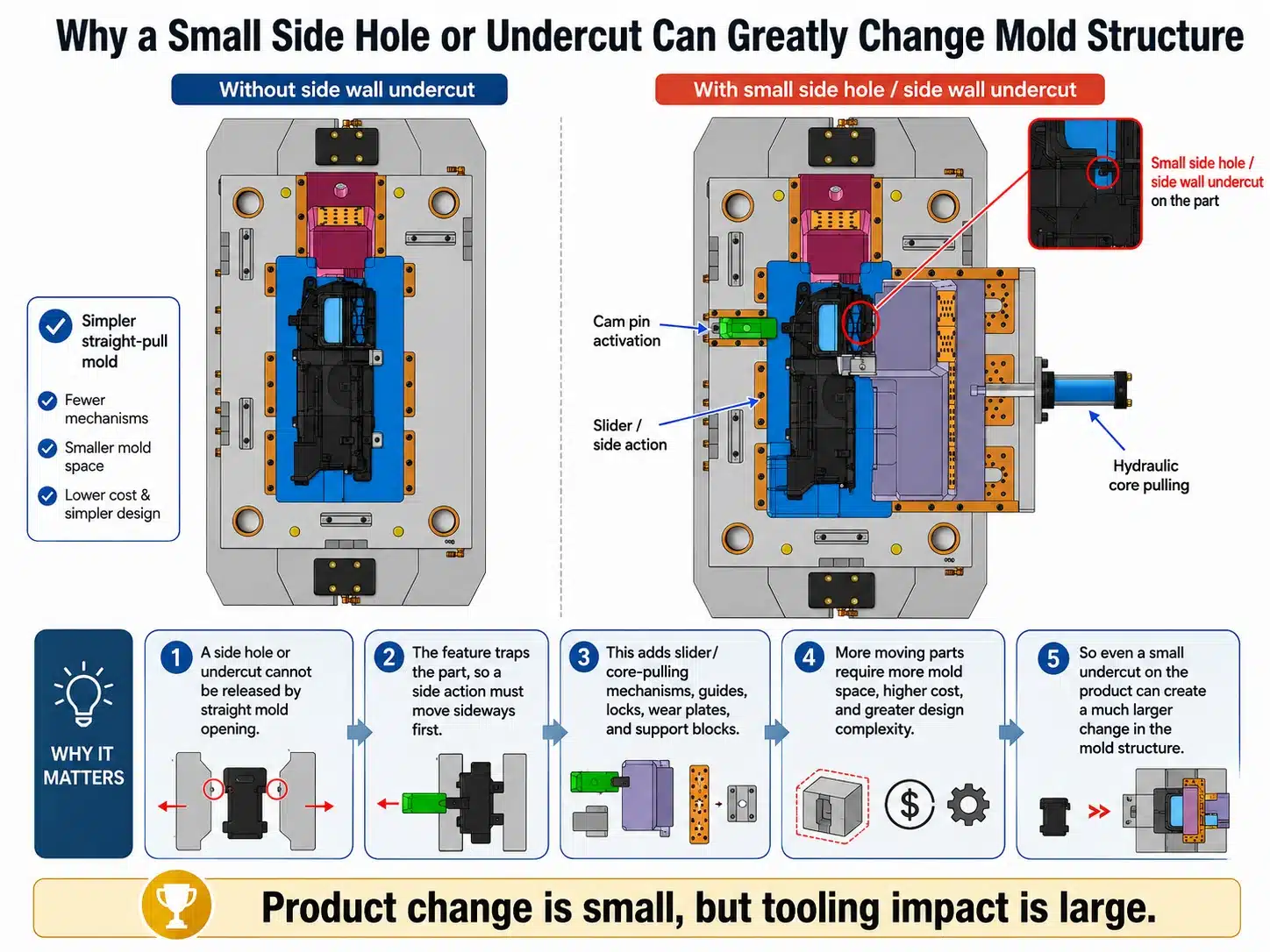
- 02Komplexe Teile - Analyse erforderlich 3-10 TageFür Teile mit Hinterschneidungen, komplexer Geometrie, engen Toleranzen oder Anforderungen an mehrere Kavitäten.
Abschnitt 08
Tipps zur Vereinfachung des Kaufprozesses von Schimmelpilzen
Detaillierte RFQs Genaue Angebote erhalten
Stellen Sie eine Anfrage, die keinen Raum für Vermutungen lässt. Geben Sie den Formentyp, die Anzahl der Kavitäten, den bevorzugten Stahl, die erwartete Lebensdauer der Form und die Erwartungen an die Garantie an.
Seien Sie transparent in Ihrem Antrag
Seien Sie sich über den Grund für die Angebotsabgabe im Klaren. Bitten Sie nicht um eine vollständige technische Analyse für ein Projekt, das erst in Jahren ansteht.
Geistiges Eigentum respektieren
Seien Sie diskret, wenn Sie Angebote einholen. Teilen Sie keine Ideen von konkurrierenden Formenbauern.
Frühzeitige Zusammenarbeit mit Ihrem Formenbauer
Besprechen Sie Kosten und Zeitplan, bevor Sie sich auf einen Entwurf festlegen. Eine effektive, frühzeitige Zusammenarbeit vermeidet kostspielige Überarbeitungen.
Kontinuierliche Kommunikation
Bitten Sie um regelmäßige Aktualisierungen. Viele Formenbauer verwenden Gantt-Diagramme oder Projektportale, um ihre Kunden zu informieren.
Vereinbaren Sie die Zahlungsbedingungen
Planen Sie Anzahlungen und Zahlungen in Form von Meilensteinen ein, wobei die endgültige Zahlung erst nach Genehmigung der Muster und des Versands der Formen erfolgt.
Designänderungen minimieren
Änderungen der Teilekonstruktion nach Beginn der Werkzeugherstellung verzögern die Durchlaufzeiten und erhöhen die Kosten erheblich.
Fertigstellungskriterien definieren
Ein Werkzeug ist fertig, wenn es Teile produziert, die den Druckspezifikationen entsprechen. Für alle Änderungen nach der Freigabe sind ECOs erforderlich.
Vorsicht vor unrealistischen Geschäften
Wenn ein Angebot zu gut erscheint, um wahr zu sein, ist es das meistens auch. Die Qualität der Formen wirkt sich direkt auf die Qualität der Teile aus, die Millionen von Zyklen durchlaufen.
Sind Sie bereit, Ihr Projekt zu starten?
Kontaktieren Sie uns mit Ihren Anforderungen für ein detailliertes Angebot.
Angebot einholen →