





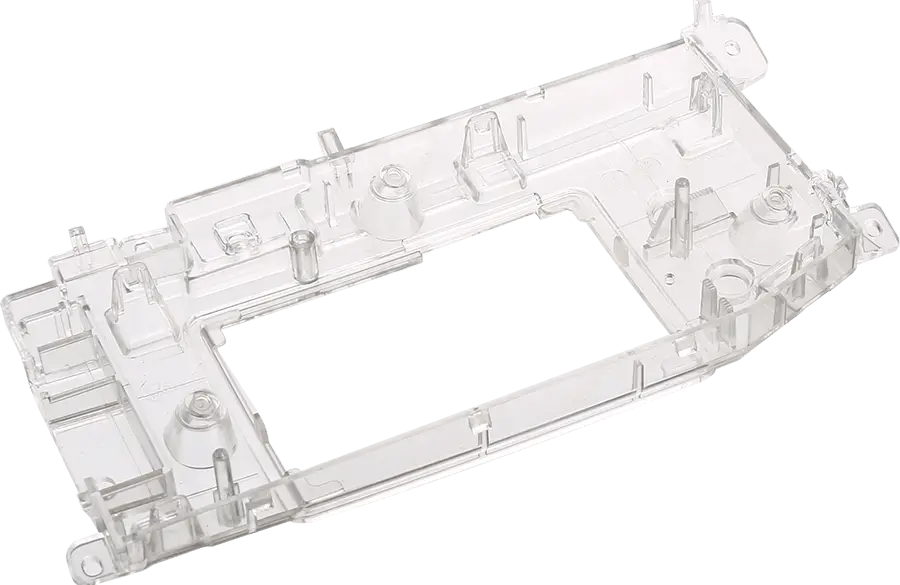
Polycarbonat-Spritzguss in China (optische Linsen, LED-Abdeckungen, dickwandiger PC)
Inhaltsübersicht
Wichtige Material- und Prozessspezifikationen
| Eigentum | Wert |
|---|---|
| Zugfestigkeit | 55-75 MPa - stärker als ABS |
| Stoßfestigkeit | 600–900 J/m Izod-Kerbschlagzähigkeit |
| Lichtdurchlässigkeit | Bis zu 90% auf optischem Material, wenn man es richtig einsetzt |
| Schrumpfungsrate | 0,5–0,71 TP3T – eng und vorhersehbar |
| Trocknung erforderlich | 110–120 °C für 4–6 Stunden. Feuchtigkeitsgehalt unter 0,021 TP3T |
| Temperatur der Form | 80–120 °C. Hier entscheidet sich, ob die Klarheit erhalten bleibt oder verloren geht |
PC-Güteklassen Topworks-Formen
Häufige PC-Fehler Topworks kontrolliert
Nasses PC hinterlässt bei jedem Schuss silberne Streifen. Das ist der Punkt, an dem die meisten Projekte mit transparenten Teilen scheitern. Das Spritzgießen von Polycarbonat sieht auf dem Papier einfach aus – erhitzen, pressen, abkühlen –, aber PC bestraft jede Abkürzung bei Trocknen, Entlüften, Einspritzen oder Kühlen. Wenn man diese vier Faktoren richtig hinbekommt, bietet PC Robustheit, Hitzebeständigkeit und echte optische Klarheit.
Topworks-Griffe DFM → Werkzeugbau → Bemusterung → Produktion für PC-Komponenten. Unser Kerngeschäft: optische Linsen, LED-Beleuchtungsabdeckungenund dickwandige PC-Gehäuse wo die meisten Geschäfte keinen Kostenvoranschlag machen.


Möchten Sie schneller ein Angebot erhalten? Senden Sie uns die Zeichnung, die PC-Sorte und die Anforderungen an das Erscheinungsbild. Wir melden uns dann – in der Regel innerhalb eines Tages – mit einem Vorschlag für den Werkzeugbau und Hinweisen zur Machbarkeit bei Ihnen. Kontakt zu Topworks
Wir fertigen seit über 10 Jahren PC-Formteile. Dickwandige Teile sind ein Auftrag, den sonst niemand übernehmen will – Blasen und Einfallstellen ruinieren die ersten Muster in den meisten Betrieben. Unser Verfahren ist dokumentiert in unser Polycarbonat-Verarbeitungs-SOP. Lesen Sie es, bevor Sie einen Lieferanten einweisen.
Sind Sie bereit, ein genaues Angebot zu erhalten?
Topworks kombiniert fundiertes Spritzguss-Know-how mit strukturiertem Projektmanagement - damit Ihr nächstes Projekt pünktlich, spezifikations- und budgetgerecht fertig wird.
Unser Leistungsspektrum umfasst optisches Design, den Bau von Präzisionsformen für die Optik, Optisches Spritzgießen, sowie die projektbezogene Oberflächenbearbeitung.
Von Ingenieuren und Produktteams weltweit geschätzt
“Ich freue mich, Ihnen mitteilen zu können, dass alle Kunststoffteile einwandfrei sind!!! Wir sind begeistert, und daher stehen die Chancen gut, dass wir unsere Zusammenarbeit bei allen künftigen Projekten fortsetzen werden.”

"Steven ist ein sehr detailorientierter Projektmanager und Ingenieur, der Probleme kreativ lösen kann und zudem einen hervorragenden Service bietet. Es war ein Vergnügen, mit ihm zu arbeiten."

Was wir in PC formen
Fünf Kategorien machen den Großteil unserer Arbeit an PCs aus. Linsen und LED-Abdeckungen sind die schwierigsten der fünf.
- Kfz-Bauteile – Rückleuchten-Innenelemente, Halterungen für den Innenraum, Steckergehäuse.
- Gehäuse für medizinische Geräte
- Teile für die Luft- und Raumfahrt sowie für die Industrie, die Stößen standhalten und dabei ihre Form behalten müssen
- Elektronik-Gehäuse
- Optische Linsen und LED-Beleuchtungsabdeckungen
Anmerkung zu den Fähigkeiten: unser maximale Wandstärke auf einem PC-Bauteil erreicht 3 cm bei projektbezogenen Aufträgen. Das ist dreimal so viel, wie die meisten Betriebe in Angriff nehmen würden. Wir halten Oberflächen- und innere Blasen im Zaum, indem wir die Position des Angusses, den Nachdruck und die Kühlung aufeinander abstimmen – und nicht, indem wir einfach darauf hoffen, dass das Teil gut wird.
Dickwandiges PC-Gehäuse (keine Blasen, keine Senke)
Hier ist ein 18-mm-Wand-PC-Bauteil, das wir hergestellt haben. Die Vorgabe war einfach. Die Umsetzung war es nicht. Drei Ziele: glatte kosmetische Oberfläche, keine inneren Blasen, kein Waschbecken. Wir haben alle drei bei T2 getroffen.


Wie wählt man einen zuverlässigen Lieferanten für PC-Formteile in China aus?
Der richtige Lieferant für PC-Formteile aus China sagt das Ergebnis voraus, noch bevor der Stahl zugeschnitten wird. Der falsche bietet niedrige Preise an und improvisiert. Fragen Sie ihn, wie es bei T1 um Klarheit, Spannung, Schrumpfung und optische Akzeptanz stehen wird. Wenn er keine Zahlen nennen kann, haben Sie Ihre Antwort.
Checkliste zur Lieferantenbewertung (PC-spezifisch)
Fünf Fragen. Stellen Sie alle fünf, bevor Sie eine Bestellung aufgeben.
- Trocknung und Feuchtigkeitskontrolle: Der PC „trinkt“ Wasser aus der Luft. Fragen Sie nach der Trocknertemperatur, der Verweildauer und danach, wie geöffnete Beutel zwischen den Schichten gelagert werden. Eine vage Antwort hier bedeutet später silberne Streifen.
- Entlüftung und Anguss: Wo wird das Tor angebracht, und wie wird der Bereich der letzten Befüllung entlüftet? Eingeschlossenes Gas führt zu Brandspuren.
- Kosmetische Definition: Die Oberflächen A/B/C wurden vor dem Schneiden des Stahls schriftlich bestätigt.
- Stichproben: Maßbericht zum Erstmuster sowie Fotos oder Videos unter kontrollierten Lichtbedingungen. Keine einzigen Aufnahmen mit dem Handy unter den Leuchtstoffröhren in der Werkstatt.
- Eigentumsverhältnisse und Instandhaltung der Werkzeuge: Wer ist für die Wartung der Form zuständig, wer kommt für die Verschleißeinsätze auf, und ab welcher Schusszahl ist eine Überholung erforderlich?
Wenn Ihr Lieferant diese Fragen nicht eindeutig beantworten kann, haben Sie Ihre Antwort.
Warum diese für die Kosten des Spritzgießens wichtig sind
- Teilgröße- Größere Teile bedeuten eine größere Form, was wiederum bedeutet, dass größerer Stahl die Stahlkosten für die Spritzgussform erhöht.
- Teil Design- Je komplexer ein Teil ist, desto detaillierter muss die Form sein. Bei einigen komplizierten Teilen müssen besondere Merkmale hinzugefügt werden, z. B. Heber oder Schieber. Daher sollten Sie sich von Ihrem Formenbauer beraten lassen und prüfen, ob Sie das Design des Teils ändern können, um Kosten für die Spritzgussform zu sparen.
- Materialien: Je nach dem Material, aus dem das Teil besteht, muss die Spritzgussform aus einem bestimmten Material hergestellt werden. Wenn beispielsweise ein korrosiver Kunststoff wie PVC verwendet werden soll, muss die Form aus rostfreiem Stahl bestehen, um Schäden zu vermeiden, die letztlich den Preis in die Höhe treiben.
- Anforderungen an die Oberflächenbeschaffenheit der Teile- Bei Teilen, die eine hochglänzende Oberfläche erfordern, sind teurerer Stahl und präzises technisches Polieren unerlässlich, was den Preis erhöht.
- Produktionsvolumen. Formen mit größerem Volumen benötigen mehr Kavitäten, so dass die Form größer ist. Sie erfordern auch eine höhere Stahlqualität, um länger zu halten, was sich auf die Spritzgussformkosten.
- Land der Herstellung- Verschiedene Länder haben unterschiedliche Lohnsätze. Wenn Ihre Form in einem Land hergestellt wird, in dem die Lohnkosten niedrig sind, dann werden Sie natürlich Geld sparen. In China sind die durchschnittlichen Kosten für eine Spritzgussform etwa 40% niedriger als in westlichen Ländern.
RFQ-Checkliste für eine genaue Angebotsabgabe
In den meisten PC-Angeboten, die wir erhalten, fehlt die Hälfte davon. Schicken Sie uns alle acht gleich zu Beginn, dann ersparen wir uns das Hin und Her.
FAQ für Polycarbonat-Spritzgießer
1) Was ist Polycarbonat-Spritzguss und worin unterscheidet er sich von ABS oder PP?
Polycarbonat-Spritzgießen drückt geschmolzenes PC-Harz bei 280–320 °C und 80–130 MPa in eine Stahlform. Das Bauteil ist zäh, hitzebeständig und – falls gewünscht – transparent. Was PC von ABS oder PP unterscheidet: Es verträgt weder feuchtes Granulat noch schlechte Entlüftung oder Spannungskonzentrationen. Wer hier Fehler macht, riskiert, dass das Bauteil versagt.
2) Was sind die tatsächlichen Vorteile von Polycarbonat?
Drei Dinge, die PC gut kann: Es ist schlagfest – 600–900 J/m bei der Izod-Schlagzähigkeit mit Kerbe. Es behält seine Form bis zu einer Wärmeformbeständigkeit von 120 °C. Optische Typen erreichen eine Lichtdurchlässigkeit von 90%. Einige Typen erfüllen zudem die Brandschutzklasse UL94. Der Nachteil: PC ist teurer als ABS und erfordert eine strengere Prozesskontrolle.
3) In welchen Branchen werden PC-Spritzgussteile tatsächlich eingesetzt?
Kfz-Beleuchtung (Rückleuchten, Nebelscheinwerferabdeckungen). Gehäuse für medizinische Geräte, die sterilisiert werden. Unterhaltungselektronik. Industriegehäuse, die auch rauen Einsatzbedingungen standhalten müssen. Wenn ein Bauteil einen Falltest überstehen oder transparent bleiben muss, steht PC ganz oben auf der Liste.
4) Welche PC-Ausführung sollte ich wählen?
Standard-PC für Gehäuse. Optische Qualität für Linsen und Lichtabdeckungen. Glasfaserverstärktes PC (10–30%), wenn Steifigkeit wichtiger ist als Schlagfestigkeit. PC/ABS-Mischung, wenn Sie einen besseren Fließverhalten und geringere Kosten wünschen. Nennen Sie uns den Anwendungsfall, und wir empfehlen Ihnen die passende Materialsorte.
5) Wie erreicht man echte optische Klarheit bei einem durchsichtigen PC-Bauteil?
Vier Faktoren müssen zusammenkommen: SPI A1- oder A2-Poliermittel auf der Formkammer. Das Harz muss auf einen Feuchtigkeitsgehalt von unter 0,021 TP3T getrocknet sein. Entlüftungskanäle müssen geschnitten sein, um eingeschlossenes Gas abzulassen. Die Formtemperatur muss bei 80–120 °C gehalten werden, um innere Spannungen abzubauen. Legen Sie die A-Oberfläche und die Prüfbeleuchtung fest, bevor der Stahl geschnitten wird. Andernfalls bedeutet “klar” für Sie und den Spritzgießer unterschiedliche Dinge.
6) Welche Qualitätskontrollen sind bei einem PC-Auftrag am wichtigsten?
Trocknerprotokolle. Dokumentierte Prozessfenster. Schriftlich festgelegte optische Toleranzgrenzen – A/B/C-Oberflächen, die vor T1 vereinbart wurden. Überprüfung der kritischen Abmessungen bei der Probenahme und erneut während der Produktion. Für die Automobil- oder Medizinbranche sollten Sie die benötigten Unterlagen in der Angebotsanfrage genau aufführen. PPAP, IQ/OQ/PQ – je nachdem, was zutrifft.
7) Wie lang ist die Lieferzeit und wie hoch ist die Mindestbestellmenge?
Die Werkzeugbauzeit beträgt 25–40 Tage. Optische Formen mit hohem Polieraufwand liegen am oberen Ende dieser Spanne. Die Mindestbestellmenge für die Produktion hängt von der Teilegröße, der Anzahl der Kavitäten und der Maschinenrüstung ab – es gibt keine feste Zahl. Teilen Sie uns das Volumen und den Liefertermin mit, und wir unterbreiten Ihnen einen Werkzeugbau- und Produktionsplan.
