





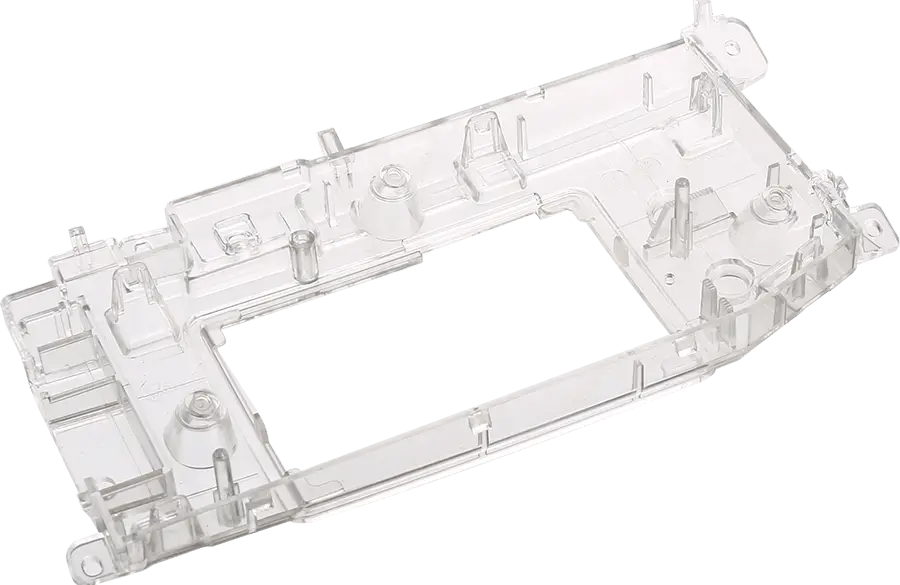
Stampaggio ad iniezione di policarbonato in Cina (lenti ottiche, coperture LED, PC a parete spessa)
Indice dei contenuti
Specifiche chiave di materiali e processi
| Proprietà | Valore |
|---|---|
| Resistenza alla trazione | 55-75 MPa - più resistente dell'ABS |
| Resistenza agli urti | 600–900 J/m (prova di Izod con intaglio) |
| Trasmittanza luminosa | Fino a 90% su materiale di grado ottico, se lo si utilizza correttamente |
| Tasso di restringimento | 0,5–0,71 TP3T — stabile e prevedibile |
| Asciugatura necessaria | 110–120 °C per 4–6 ore. Umidità inferiore a 0,021 TP3T |
| Temperatura dello stampo | 80–120 °C. È qui che si decide se il liquido risulterà limpido o meno |
Gradi PC Stampi Topworks
Difetti comuni del PC Controlli Topworks
Il PC bagnato lascia striature argentate su ogni pezzo. È proprio qui che falliscono la maggior parte dei lavori su parti trasparenti. Lo stampaggio a iniezione del policarbonato sembra semplice sulla carta — riscaldamento, pressatura, raffreddamento — ma il PC non perdona alcuna scorciatoia su essiccazione, sfiato, iniezione o raffreddamento. Se si rispettano questi quattro requisiti, il PC garantisce resistenza, tolleranza al calore e una vera trasparenza ottica.
Maniglie Topworks DFM → attrezzaggio → campionamento → produzione per componenti per PC. Il nostro pane quotidiano: lenti ottiche, Coperture per illuminazione a LED, e alloggiamenti per PC a parete spessa laddove la maggior parte dei negozi non fornisce preventivi.


Vuoi un preventivo più veloce? Inviaci il disegno, il tipo di PC e i requisiti estetici. Ti risponderemo con una proposta di stampaggio e alcune note sulla fattibilità, di solito entro un giorno. Contatto Topworks
Da oltre 10 anni realizziamo stampi per PC. Gli stampi a pareti spesse sono un lavoro che nessun altro vuole affrontare: bolle e affossamenti rovinano i primi campioni prodotti dalla maggior parte delle aziende. Il nostro processo è documentato in la nostra SOP per la lavorazione del policarbonato. Leggilo prima di fornire istruzioni a qualsiasi fornitore.
Siete pronti a ricevere un preventivo accurato?
Topworks combina una profonda esperienza nello stampaggio a iniezione con una gestione strutturata dei progetti, in modo che il vostro prossimo progetto arrivi in tempo, secondo le specifiche e nel rispetto del budget.
I nostri servizi comprendono la progettazione ottica, la realizzazione di stampi ottici di precisione, Stampaggio a iniezione ottico, oltre alla finitura superficiale specifica per ogni progetto.
Scelto da ingegneri e team di prodotto in tutto il mondo
“Sono lieto di comunicarvi che tutti i componenti in plastica sono perfetti!!! Ne siamo entusiasti e, di conseguenza, ci sono ottime possibilità di proseguire la nostra collaborazione per eventuali nuovi progetti futuri.”

"Steven è un project manager e un ingegnere molto attento ai dettagli, in grado di risolvere i problemi in modo creativo e di fornire un servizio eccellente. È stato un piacere lavorare con lui".

Cosa stampiamo nel PC
Il nostro lavoro sui PC si articola principalmente in cinque categorie. Tra queste, le lenti e le coperture dei LED sono le più complesse.
- Componenti automobilistici — parti interne dei fanali posteriori, staffe per interni, alloggiamenti per connettori.
- Alloggiamenti per dispositivi medici
- Componenti aerospaziali e industriali che devono resistere agli urti e mantenere la propria forma
- Custodie per elettronica
- Lenti ottiche e Coperture per illuminazione a LED
Nota sulle capacità: il nostro spessore massimo della parete su un componente del PC raggiunge i 3 cm per lavori a progetto. È il triplo di quanto la maggior parte delle aziende sia disposta ad accettare. Teniamo sotto controllo le bolle nel pozzetto e quelle interne bilanciando la posizione del punto di iniezione, la pressione di mantenimento e il raffreddamento — non sperando semplicemente che il pezzo venga bene.
Custodia in PC a parete spessa (senza bolle, senza lavandino)
Ecco un componente per PC da 18 mm che abbiamo realizzato. Le indicazioni erano semplici. La realizzazione, invece, non lo è stata. Tre obiettivi: superficie cosmetica liscia, assenza di bolle interne, senza lavandino. Li abbiamo superati tutti e tre al T2.


Come scegliere un fornitore affidabile di stampaggio PC in Cina
Il fornitore cinese di stampaggio a iniezione giusto prevede il risultato prima ancora che l’acciaio venga tagliato. Quello sbagliato offre un preventivo basso e improvvisa. Chiedete loro quali saranno i valori relativi a trasparenza, sollecitazioni, ritiro e accettabilità estetica al T1. Se non sono in grado di rispondere con dati numerici, la risposta è già lì.
Lista di controllo per la valutazione dei fornitori (specifica per PC)
Cinque domande. Ponile tutte e cinque prima di effettuare un ordine di acquisto.
- Asciugatura e controllo dell'umidità: Il PC "beve" l'acqua presente nell'aria. Chiedi quali sono la temperatura dell'essiccatore, il tempo di permanenza e come vengono conservate le confezioni aperte tra un turno e l'altro. Una risposta vaga su questo punto comporterà la comparsa di striature argentate in seguito.
- Sfiato e canalizzazione: Dove verrà posizionato il cancello e come verrà ventilata l'area di riempimento finale? Il gas intrappolato provoca segni di bruciatura.
- Definizione di cosmetico: Le superfici A/B/C devono essere confermate per iscritto prima del taglio dell'acciaio.
- Campionamento: rapporto dimensionale del primo articolo, corredato da foto o video realizzati in condizioni di illuminazione controllata. Nessuna foto scattata con il cellulare sotto le luci fluorescenti dell'officina.
- Proprietà e manutenzione degli strumenti: Chi si occupa della manutenzione dello stampo, chi paga gli inserti di usura e a partire da quale numero di colate si procede alla revisione?
Se il tuo fornitore non è in grado di rispondere in modo chiaro a questa serie di domande, ecco la tua risposta.
Perché sono importanti per il costo dello stampaggio a iniezione
- Dimensioni del pezzo. Pezzi più grandi significano uno stampo più grande, il che significa che l'acciaio più grande aumenterà il costo dell'acciaio per lo stampo a iniezione.
- Design della parte. Più un pezzo è complesso, più lo stampo deve essere dettagliato. Alcuni pezzi complicati richiedono l'aggiunta di caratteristiche speciali, come sollevatori o cursori. Per questo motivo, è opportuno ascoltare i consigli del costruttore dello stampo e verificare se è possibile modificare il progetto del pezzo per risparmiare sui costi dello stampo a iniezione.
- Materiali: A seconda del materiale scelto per il pezzo, lo stampo a iniezione dovrà essere realizzato in un materiale particolare. Ad esempio, se si utilizza una plastica corrosiva come il PVC, lo stampo dovrà essere in acciaio inox per evitare danni e, in ultima analisi, un aumento del prezzo.
- Requisiti di finitura dei pezzi. Se i pezzi hanno requisiti di elevata lucentezza superficiale, è necessario un acciaio più costoso e una lucidatura tecnica precisa, con un conseguente aumento del prezzo.
- Volume di produzione. Gli stampi per volumi più elevati necessitano di un maggior numero di cavità e quindi lo stampo sarà più grande. Inoltre, per durare più a lungo, richiedono una qualità di acciaio più elevata, il che influisce sul costo dello stampo. costo dello stampo a iniezione.
- Paese di produzione- I diversi Paesi hanno tariffe salariali diverse. Se lo stampo viene prodotto in un paese in cui il costo della manodopera è basso, si risparmia naturalmente. In Cina, il costo medio di uno stampo a iniezione è di circa 40% in meno rispetto ai paesi occidentali.
Lista di controllo RFQ per una quotazione accurata
La maggior parte dei preventivi per PC che riceviamo ne tralascia la metà. Inviateci tutti e otto fin dall'inizio e ci risparmieremo il continuo scambio di messaggi.
FAQ per gli acquirenti di stampaggio a iniezione di policarbonato
1) Che cos’è lo stampaggio a iniezione del policarbonato e in cosa si differenzia dall’ABS o dal PP?
Stampaggio a iniezione di policarbonato immette la resina PC fusa in uno stampo in acciaio a una temperatura compresa tra 280 e 320 °C e a una pressione compresa tra 80 e 130 MPa. Il pezzo risultante è resistente, termoresistente e trasparente, se lo si desidera. Ciò che distingue il PC dall’ABS o dal PP è che non tollera la resina umida, una ventilazione inadeguata o concentrazioni di sollecitazioni. Se questi aspetti non vengono gestiti correttamente, il pezzo risulta difettoso.
2) Quali sono i vantaggi concreti della scelta del policarbonato?
Tre punti di forza del PC. Resiste agli urti — 600–900 J/m nella prova Izod con intaglio. Mantiene la forma fino a una temperatura di deflessione termica di 120 °C. I gradi ottici raggiungono una trasmissione luminosa pari a 90%. Alcuni gradi soddisfano anche i requisiti di resistenza alla fiamma secondo la norma UL94. Il compromesso: il PC costa di più dell’ABS e richiede un controllo di processo più rigoroso.
3) Quali settori utilizzano effettivamente componenti stampati a iniezione per PC?
Illuminazione automobilistica (fanali posteriori, coperture dei fendinebbia). Alloggiamenti per dispositivi medici sottoposti a sterilizzazione. Elettronica di consumo. Involucri industriali destinati a un uso intensivo. Se il componente deve superare una prova di caduta o mantenere la trasparenza, il PC è tra le opzioni principali.
4) Quale classe di PC dovrei specificare?
PC standard per gli alloggiamenti. Grado ottico per lenti e coperture luminose. PC rinforzato con fibra di vetro (10–30%) quando la rigidità è più importante della resistenza agli urti. Miscela PC/ABS quando si desidera una maggiore fluidità di colata e costi inferiori. Indicateci il caso d’uso e vi consiglieremo il grado più adatto.
5) Come si ottiene una vera trasparenza ottica su un componente in PC trasparente?
Devono verificarsi quattro condizioni. Lucidatura SPI A1 o A2 sulla cavità. Resina essiccata fino a un contenuto di umidità inferiore a 0,02%. Presenze di sfiato praticate per liberare il gas intrappolato. Temperatura dello stampo mantenuta tra 80 e 120 °C per appiattire le tensioni interne. Definire la superficie A e la luce di ispezione prima del taglio dell’acciaio. Altrimenti, il termine “pulito” assumerà significati diversi per voi e per lo stampatore.
6) Quali controlli di qualità sono più importanti in un lavoro su PC?
Registri di essiccazione. Intervalli di processo documentati. Limiti estetici definiti per iscritto — superfici A/B/C concordate prima di T1. Verifica delle dimensioni critiche al momento del campionamento e nuovamente durante la produzione. Per i settori automobilistico o medico, specificare chiaramente nella richiesta di offerta (RFQ) la documentazione necessaria. PPAP, IQ/OQ/PQ, a seconda dei casi.
7) Quali sono i tempi di consegna e il quantitativo minimo d'ordine?
I tempi di realizzazione degli stampi variano da 25 a 40 giorni. Gli stampi ottici che richiedono una finitura accurata si collocano nella fascia alta di questo intervallo. Il quantitativo minimo ordinabile (MOQ) dipende dalle dimensioni del pezzo, dal numero di cavità e dalla configurazione della macchina: non esiste un numero fisso. Comunicateci il volume e la data di consegna e vi forniremo un piano di realizzazione degli stampi e di produzione.
