





Moldeo por inyección & Fabricación de moldes
Todo lo que su moldeador necesita para entregar un presupuesto preciso. Prepare sus datos con antelación y avance más rápido.

Sección 01
Información esencial requerida
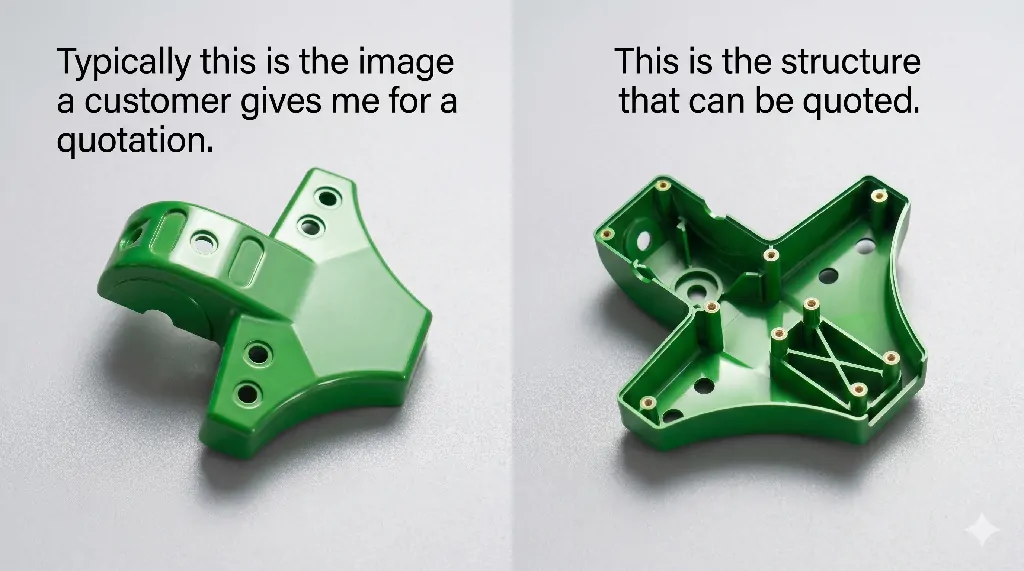
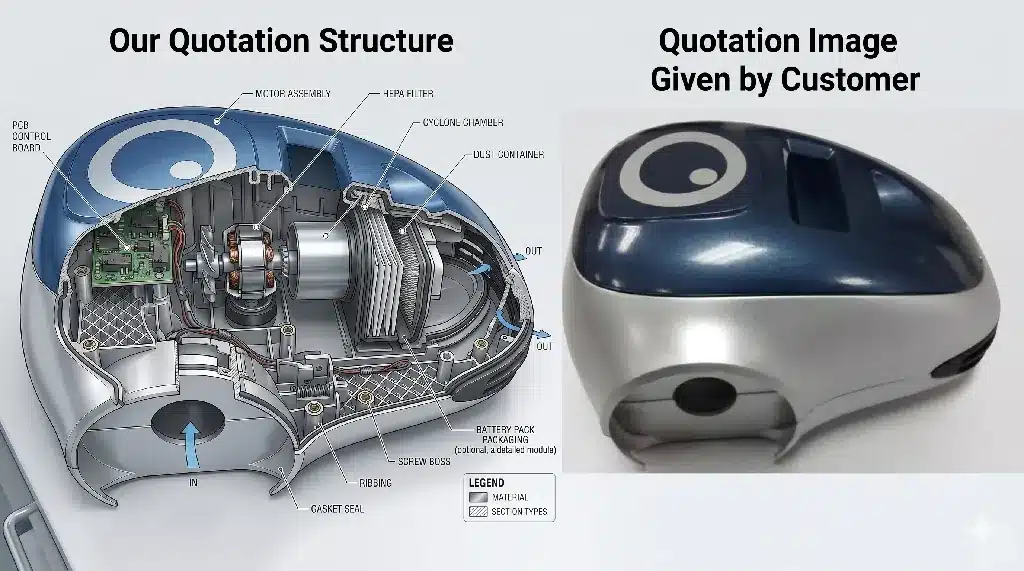
Archivos CAD 3D
- Preferiblemente archivos STEP
- Formato del modelo sólido
- Geometría completa
Especificaciones materiales
- Tipo de resina (ABS, PP, PC, etc.)
- Grado específico si se conoce
- Aditivos y colorantes
Dimensiones y tolerancias
- Dimensiones totales de la pieza
- Tolerancias críticas
- Dibujos 2D con GD&T
Volumen de producción
- Consumo anual estimado
- Cantidad de pedido inicial
- Volumen proyectado para toda la vida
Detalles de la solicitud
- Aplicación final
- Requisitos de rendimiento
- Condiciones medioambientales
Requisitos cosméticos
- Especificaciones del acabado superficial
- Preferencias de ubicación de las puertas
- Requisitos estéticos
Sección 02
Sólo moho frente a servicio completo
| # | Requisito | Sólo construcción de moldes | Construcción de moldes y moldeo por inyección |
|---|---|---|---|
| 1 | Recuento de cavidades | ✦ Obligatorio | |
| 2 | Resina plástica | ✦ Obligatorio | Resina + peso (a menos que se proporcione el modelo 3D) |
| 3 | Acero para moldes y dureza | ✦ Obligatorio | |
| 4 | Cantidad moldeada | ✦ Obligatorio | ✦ Obligatorio |
| 5 | Requisitos de superficie y puertas | Acabado del molde + ubicación de la puerta | Color, acabado, puerta y más |
| 6 | Gotas de corredor caliente | ✦ Obligatorio | |
| 7 | Tamaños críticos y montaje | ✦ Obligatorio | ✦ Obligatorio |
| 8 | Embalaje | ✦ Obligatorio | |
| 9 | Operaciones secundarias | Pintura, impresión, montaje, etc. |
Sección 03
Formatos de archivo aceptados
Los más preferidos
Geometría sólida fiable
También aceptable
CAD nativo y Parasolid
Sólo referencia
Dibujos 2D sólo como referencia
Opciones del sistema de rodadura
Sección 04
Especificaciones de la máquina necesarias
Fuerza de sujeción
- Requisitos de tonelaje
- Poder de retención del molde
Tamaño del disparo
- Capacidad de volumen de inyección
- Volumen de la pieza y del sistema de rodadura
Espacio para moldes
- Distancia entre tirantes
- Límites de altura del molde
- Apertura máxima de la luz diurna
Sección 05
Servicios adicionales
Análisis DFM
Optimización del diseño para la fabricación y la reducción de costes antes de iniciar el mecanizado.
Diseño de piezas
Creación completa de modelos CAD 3D a partir de conceptos, bocetos o muestras físicas.
Impresión 3D
Creación de prototipos SLA, SLS y FDM para una rápida validación del diseño antes de comprometerse con el utillaje.
Prototipos CNC
Prototipos de materiales destinados a la producción para pruebas funcionales y de ajuste sólidas.
Herramientas blandas
Moldes de aluminio o acero P20 para producción de bajo volumen y utillaje puente.
Fundición en vacío
Fundición en molde de silicona para pequeñas series de preproducción con buena calidad superficial.
Sección 06
Calendario del proyecto
Desde el diseño inicial hasta la producción en serie: fases y duración típicas de un proyecto.
- 01Diseño de componentes ~7 díasOptimizar el diseño para ahorrar costes y facilitar la fabricación.
- 02Prototipos de piezas 2-3 díasPrototipos mecanizados mediante CNC o impresión 3D para la validación del diseño.
- 03Diseño de herramientas 3-7 díasHoja de trabajo de información de utillaje utilizada para diseñar con precisión el utillaje del molde.
- 04Comprobación del diseño de la herramienta 2-3 díasValidación de la precisión del diseño de la herramienta antes de iniciar la fabricación.
- 05Fabricación de herramientas 3-8 semanasFabricación precisa mediante mecanizado CNC y EDM.
- 06Primeros disparos al cliente (T1) 2-5 díasLas primeras tomas de prueba se envían por mensajero una vez terminados los moldes.
- 07Modificaciones de herramientas y texturas 3-7 díasCambios de conformidad y texturizado: último paso antes de la producción en serie.
- 08Producción en serie / Exportación de herramientas ListoListo para la producción a gran escala o la exportación de herramientas.
Total aproximado para proyectos típicos
Incluidas las modificaciones y los ciclos de aprobación
Del diseño a la producción en serie
Sección 07
Calendario de citas
Cuánto tiempo esperar un presupuesto dependiendo de la complejidad de la pieza y la información proporcionada.
- 01Piezas simples - Información completa 24-72 horasCuando se facilitan por adelantado todos los detalles necesarios, incluidos los archivos 3D, el material, la cantidad y las tolerancias.
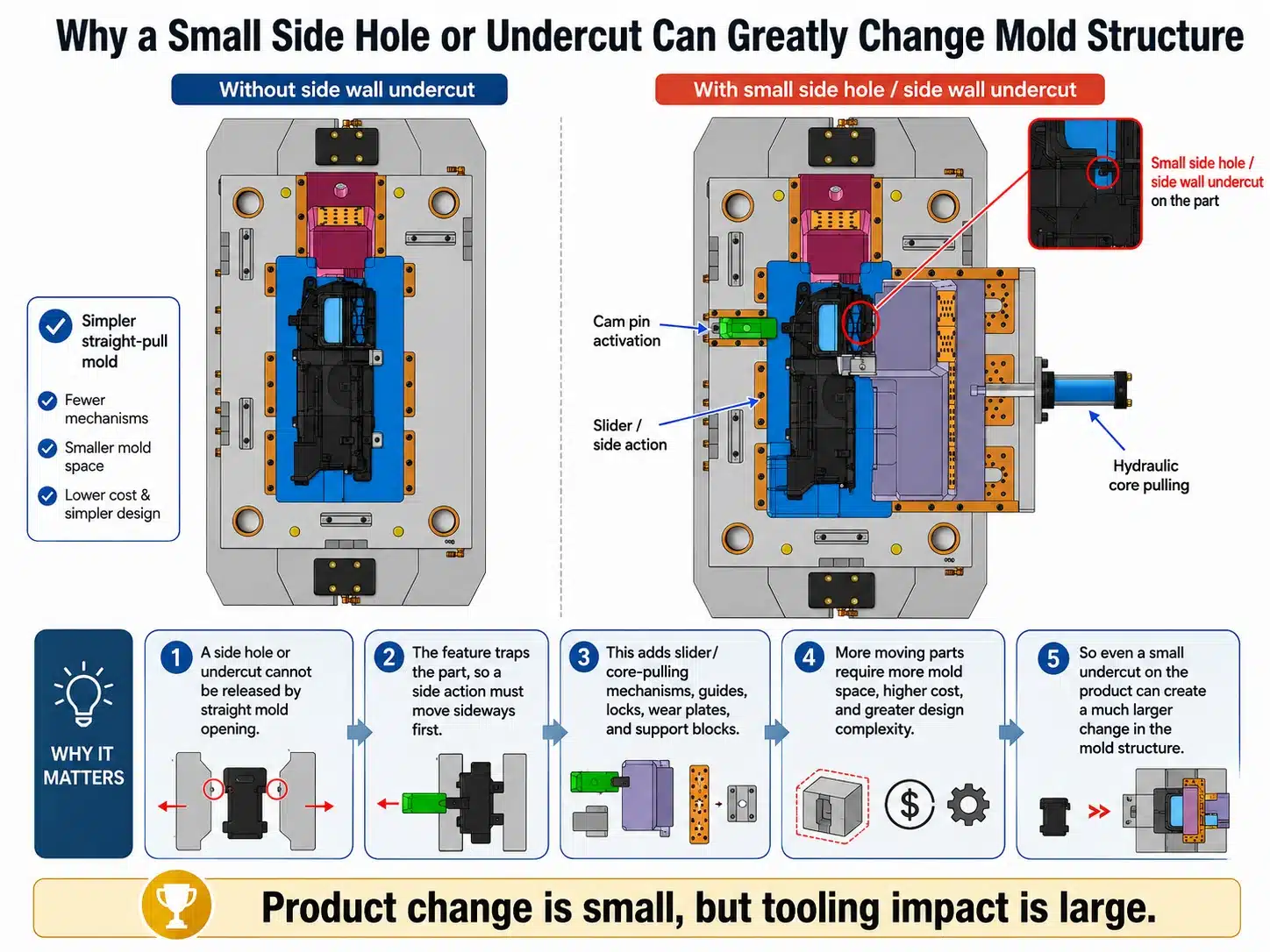
- 02Piezas complejas - Análisis necesario 3-10 díasPara piezas con socavados, geometría compleja, tolerancias estrechas o requisitos de varias cavidades.
Sección 08
Consejos para simplificar el proceso de compra de moldes
Peticiones de oferta detalladas Obtenga presupuestos precisos
Presente una petición de oferta que no deje lugar a conjeturas. Incluya el tipo de molde, el número de cavidades, la preferencia de acero, la vida útil prevista del molde y las expectativas de garantía.
Sea transparente en su solicitud
Explique claramente el motivo del presupuesto. No pidas un análisis de ingeniería completo para un proyecto a años vista.
Respetar la propiedad intelectual
Sea discreto al solicitar presupuestos. No comparta ideas de fabricantes de moldes de la competencia.
Colabore con su fabricante de moldes desde el principio
Hable de costes y plazos antes de comprometerse con un diseño. Una colaboración eficaz desde el principio evita costosas revisiones.
Mantener la comunicación
Pida actualizaciones periódicas. Muchos fabricantes de moldes utilizan diagramas de Gantt o portales de proyectos para mantener informados a los clientes.
Acuerde las condiciones de pago
Planifique pagos iniciales y pagos basados en hitos, con pago final en muestras aprobadas y envío de moldes.
Minimizar los cambios de diseño
Los cambios en el diseño de las piezas una vez iniciado el mecanizado retrasan los plazos de entrega y aumentan considerablemente los costes.
Definir los criterios de finalización
Un molde está completo cuando produce piezas que cumplen las especificaciones de impresión. Todos los cambios posteriores a la aprobación requieren ECO.
Cuidado con las ofertas poco realistas
Si una oferta parece demasiado buena para ser cierta, normalmente lo es. La calidad del molde afecta directamente a la calidad de la pieza durante millones de ciclos.
¿Listo para empezar su proyecto?
Póngase en contacto con nosotros con sus requisitos para obtener un presupuesto detallado.
Obtener un presupuesto →